Tense in English & Hindi (काल)
Definition
Tense is a grammatical form of the verb that tells the time of an action , event, or state of being. It shows whether something happens in the present, occurred in the past, or will happen in the future.
In simple words, tense connects time with action. It helps us know when the action takes place.
पऱिभाषा
काल (tense) वह व्याकरणिक रुप है जो यह बताता है कि कोई कार्य कब होता है, हुआ है या होगा।
यह समय और क्रिया के बीच संबंध को प्रकट करता है।
सरल शब्दों में हम कह सकते हैं काल वह माध्यम है जो किसी क्रिया को समय से जोड़ता है।
Types of Tense (काल के भेद)
In English Grammar, tense helps us understand whether an action is happening now, happened before, or will happen later.
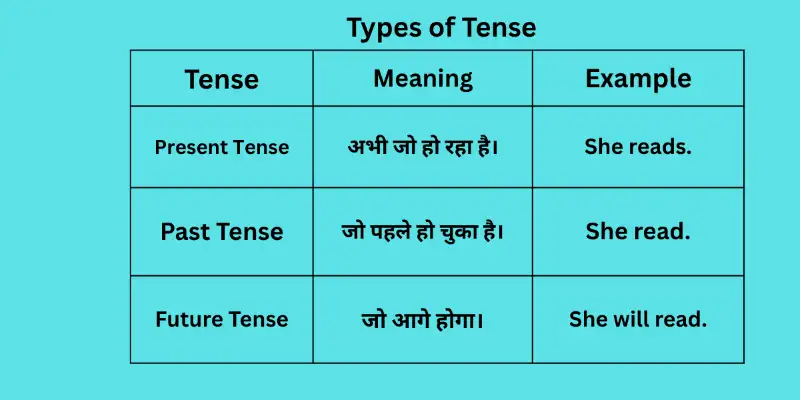
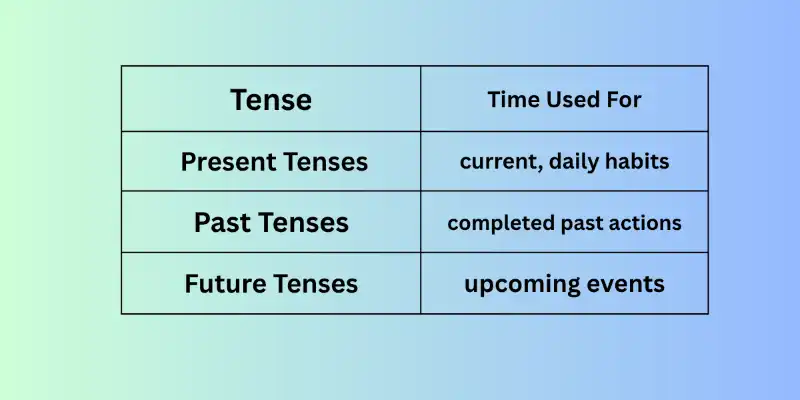
Tense are three main types:
1. Present tense (वर्तमान काल)
2. Past tense (भूतकाल)
3. Future tense (भविष्यकाल)
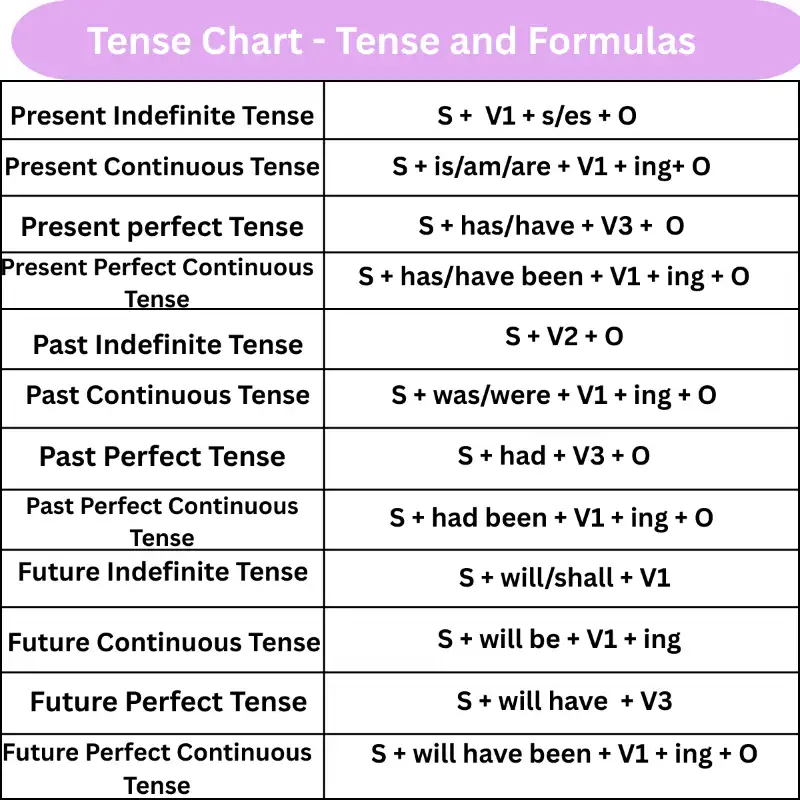
Each of these Tenses has four forms:
1. Simple (Indefinite)
2. Continuous (Progressive)
3. Perfect
4. Perfect Continuous
So, there are a total of 12 tenses in English Grammar.
हर काल के चार रुप होते हैं-
1. साधारण (Simple)
2. निरंतर (Continuous)
3. परिपूर्ण (Perfect)
4. परिपूर्ण निरंतर (perfect Continuous)
इस प्रकार अंग्रेजी में कुल 12 काल होते हैं।
1. Present tense (वर्तमान काल)
Definition-
Present Tense is the tense that shows an action happening now, a habitual action, or a universal truth.
It tells us what is going on at present or what happens regularly.
In simple words When the action happens in the present time, it is called Present Tense.
परिभाषा -
वर्तमान काल (Present Tense) वह काल है जो बताता है कि कार्य अभी हो रहा है, हमेशा होता है या सामान्य सत्य है।
अर्थात जब क्रिया वर्तमान समय में घटित होती है, तो वह वर्तमान काल कहलाती है।
इन के वाक्यों के अंत में ता है, ती है, ता हूँ, रहा है, रही है, रहे हैं, चुका है, चुकी है आदि शब्द आते हैं। इन वाक्यों में क्रिया वर्तमान समय में घटित होती है।
Learn more About Present tense (वर्तमान काल)
Examples :
1. I go to school every day.
मैं हर दिन स्कूल जाता हूँ।
2. She reads the newspaper in the morning.
वह सुबह अख़बार पढ़ती है।
3. They play football in the park.
वे पार्क में फुटबॉल खेलते हैं।
4. He drinks a glass of milk daily.
वह रोज़ एक गिलास दूध पीता है।
5. The sun rises in the east.
सूरज पूर्व दिशा में उगता है।
6. We study English at school.
हम स्कूल में अंग्रेज़ी पढ़ते हैं।
7. Birds fly in the sky.
पक्षी आसमान में उड़ते हैं।
8. My mother cooks delicious food.
मेरी माँ स्वादिष्ट खाना बनाती हैं।
9. I write in my notebook.
मैं अपनी कॉपी में लिखता हूँ।
10. Children love to play games.
बच्चे खेल खेलना पसंद करते हैं।
Read Also
• Parts of Speech • Noun
• Pronoun • Verb
• Adverb • Adjective
• Conjunction • Preposition
• Interjection • Active & Passive voice
Parts of Present Tense (वर्तमान काल के भाग)
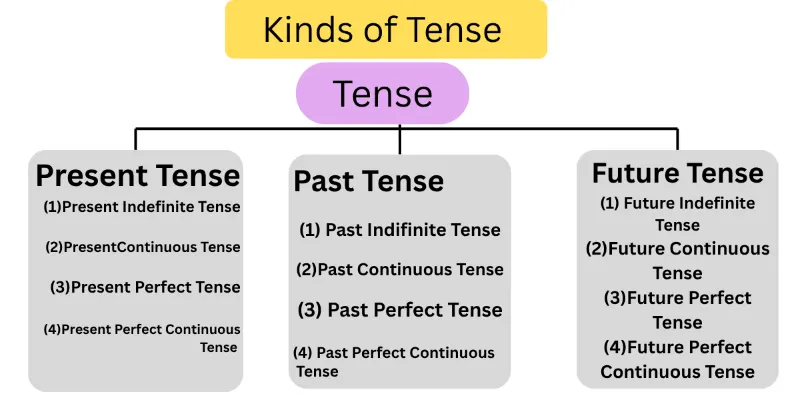
There are four types of present tense:
वर्तमान काल के चार भाग होते हैं:
(I) Present Indefinite (Simple) Tense (सामान्य वर्तमान काल)
(II) Present Countinuous Tense (अपूर्ण वर्तमान काल)
(III) Present Perfect Tense (वर्तमान पूर्ण काल)
(IV) Present Perfect Continuous Tense (वर्तमान पूर्ण सतत काल)
(I).Present Indefinite tense (सामान्य वर्तमान काल)
Definition-
The Present Indefinite Tense is used to express habitual actions, general truths, repeated actions, and daily routines.
It also shows facts and universal truths.
It tells what we do regularly or what always happens.
परिभाषा -
Present Indefinite Tense (साधारण वर्तमान काल) वह काल है जो यह बताता है कि कोई कार्य रोज़ाना होता है, बार-बार होता है, या सामान्य सत्य (universal truth) है।
यह हमारे आदतों (habits) या नियमित क्रियाओं (daily actions) को व्यक्त करता है।
इन वाक्यों के अंत में ता है, ती है, ते हैं, तो हैं आदि शब्द जुड़े होते हैं।
Learn more About Present Indefinite Tense
Examples:
(A) Affirmative / Positive Sentence (सकारात्मक वाक्य)
(B) Negative Sentence (नकारात्मक वाक्य)
(C) Interrogative Sentence (प्रश्नवाचक वाक्य)
(A) Affirmative / Positive Sentence ( सकारात्मक वाक्य):
Examples:
1. I play cricket.
मैं क्रिकेट खेलता हूँ।
2. He goes to school.
वह स्कूल जाता है।
3. They watch TV.
वे टीवी देखते हैं।
Read Also
• Affirmative Sentence
• Model Verbs
(B) Negative Sentence (नकारात्मक वाक्य):
Examples:
1. I do not (don’t) play cricket.
मैं क्रिकेट नहीं खेलता हूँ।
2. He does not (doesn’t) go to school.
वह स्कूल नहीं जाता है।
3. They do not watch TV.
वे टीवी नहीं देखते हैं।
Read Also
• Negative Sentence
• Use of Do & Does
(C) Interrogative Sentence (प्रश्नवाचक वाक्य):
Examples:
1. Do you play cricket?
क्या तुम क्रिकेट खेलते हो?
2. Does he go to school?
क्या वह स्कूल जाता है?
3. Do they watch TV?
क्या वे टीवी देखते हैं?
Read Also
• Interrogative Sentence
• Use of Can & Could
(II). Present Continuous Tense (अपूर्ण वर्तमान काल)
Definition-
The Present Continuous Tense is used to express an action that is happening right now or is going on at the present moment.
It can also show an action that is temporary or continuing at the moment of speaking.
It tells what is happening now.
परिभाषा -
Present Continuous Tense (वर्तमान निरंतर काल) वह काल है जो यह बताता है कि कोई कार्य अभी इस समय हो रहा है या चल रहा है।
यह उन क्रियाओं को व्यक्त करता है जो वर्तमान में जारी हैं या अस्थायी रूप से हो रही हैं।
इन वाक्यों के अंत में रहा है, रही है, रहे हैं, आदि शब्द जुड़े होते हैं।
Learn More About Present Continuous Tense
Examples:
(A) Affirmative / Positive Sentence (सकारात्मक वाक्य)
(B) Negative Sentence (नकारात्मक वाक्य)
(C) Interrogative Sentence (प्रश्नवाचक वाक्य)
(A) Affirmative / Positive Sentence (सकारात्मक वाक्य)
Examples:
1. I am eating food.
मैं खाना खा रहा हूँ।
2. She is dancing.
वह नाच रही है।
3. They are playing football.
वे फुटबॉल खेल रहे हैं।
(B) Negative Sentence (नकारात्मक वाक्य):
Examples:
1. I am not eating food.
मैं खाना नहीं खा रहा हूँ।
2. He is not studying.
वह पढ़ नहीं रहा है।
3. They are not running.
वे दौड़ नहीं रहे हैं।
(C) Interrogative Sentence (प्रश्नवाचक वाक्य):
Examples:
1. Are you eating food?
क्या तुम खाना खा रहे हो?
2. Is she dancing?
क्या वह नाच रही है?
3. Am I speaking clearly?
क्या मैं साफ बोल रहा हूँ?
Read Also
• Use of Ise/am/are
• Gender
(III). Present Perfect Tense (वर्तमान पूर्णकाल)
Definition
The Present Perfect Tense is used to express an action that has just been completed or has happened at some time before now but is still connected with the present.
It shows completed actions whose result or effect continues in the present.
It tells that the action is complete, but its result exists now.
परिभाषा
Present Perfect Tense वह काल है जो बताता है कि कोई कार्य अभी-अभी पूरा हुआ है या जिसका परिणाम वर्तमान में बना हुआ है।
यह भूतकाल में हुए कार्य को वर्तमान समय से जोड़ता है।
इन वाक्यों के अंत में चुका हैं, चुकी है, चुके हैं, लिया है आदि शब्दों का प्रयोग होता है।
Read More About Present Perfect Tense (वर्तमान पूर्णकाल)
Examples:
(A) Affirmative / Positive Sentence (सकारात्मक वाक्य)
(B) Negative Sentence (नकारात्मक वाक्य)
(C) Interrogative Sentence (प्रश्नवाचक वाक्य)
(A) Affirmative Sentence (सकारात्मक वाक्य)
Examples:
1. I have eaten my lunch.
मैंने अपना खाना खा लिया है।
2. She has finished her work.
उसने अपना काम पूरा कर लिया है।
(B) Negative Sentence (नकारात्मक वाक्य):
Examples:
1. I have not eaten my lunch.
मैंने अपना खाना नहीं खाया है।
2. He has not completed his homework.
उसने अपना होमवर्क पूरा नहीं किया है।
(C) Interrogative Sentence (प्रश्नवाचक वाक्य):
Examples:
1. Have you done your homework?
क्या तुमने अपना होमवर्क किया है?
2. Has she cooked food?
क्या उसने खाना बनाया है?
Examples:
1.I have finished my homework.
मैंने अपना होमवर्क पूरा कर लिया है।
2.She has written a letter.
उसने एक पत्र लिखा है।
3.They have gone to school.
वे स्कूल जा चुके हैं।
4.He has eaten his food.
उसने अपना खाना खा लिया है।
5.We have seen that movie.
हमने वह फ़िल्म देख ली है।
6.You have completed your work.
तुमने अपना काम पूरा कर लिया है।
7.The teacher has come to class.
अध्यापक कक्षा में आ चुके हैं।
8.I have learned many new words.
मैंने कई नए शब्द सीख लिए हैं।
9.She has opened the window.
उसने खिड़की खोल दी है।
10.They have played the match.
उन्होंने मैच खेल लिया है।
Read Also
• Use of Has & have
• Conditional Sentence
(IV). Present Perfect Continuous Tense (वर्तमान पूर्ण सतत्काल)
Definition
The Present Perfect Continuous Tense is used to show that an action started in the past and is still continuing in the present.
It tells us how long the action has been going on till now.
It connects the past with the present and focuses on the duration of the action.
परिभाषा
Present Perfect Continuous Tense वह काल है जो बताता है कि कोई कार्य भूतकाल में शुरू हुआ था और अभी तक जारी है।
यह किसी कार्य की समय-अवधि (duration) को दर्शाता है — अर्थात कार्य कब से या कितने समय से चल रहा है।
इन वाक्यों के अंत में रहा है, रही है, रहे हैं, रहा हूँ आदि शब्द आते हैं।
Read More About Present Perfect Continuous Tense (वर्तमान पूर्ण सतत्काल)
Examples:
(A) Affirmative / Positive Sentence (सकारात्मक वाक्य)
(B) Negative Sentence (नकारात्मक वाक्य)
(C) Interrogative Sentence (प्रश्नवाचक वाक्य)
(A) Affirmative / Positive Sentence (सकारात्मक वाक्य)
Examples:
1. I have been studying for two hours.
मैं दो घंटे से पढ़ रहा हूँ।
2. She has been cooking since morning.
वह सुबह से खाना बना रही है।
3. They have been playing football for an hour.
वे एक घंटे से फुटबॉल खेल रहे हैं।
(B) Negative Sentence (नकारात्मक वाक्य):
Examples:
1. I have not been studying for two hours.
मैं दो घंटे से नहीं पढ़ रहा हूँ।
2. He has not been sleeping since night.
वह रात से नहीं सो रहा है।
3. They have not been working for a week.
वे एक हफ़्ते से काम नहीं कर रहे हैं।
(C) Interrogative Sentence (प्रश्नवाचक वाक्य):
Examples:
1. Have you been reading since morning?
क्या तुम सुबह से पढ़ रहे हो?
2. Has she been working here for a year?
क्या वह यहाँ एक साल से काम कर रही है?
3. Have they been playing since evening?
क्या वे शाम से खेल रहे हैं?
2. Past Tense (भूतकाल)
The Past Tense is the tense that expresses an action or event that happened in the past — that is, before the present moment.
It shows that the action has already been completed or took place earlier.
It tells what happened before now.
परिभाषा -
Past Tense (भूतकाल) वह काल है जो यह बताता है कि कोई कार्य अतीत में हुआ था या पूरा हो चुका है।
अर्थात, जब क्रिया वर्तमान समय से पहले घटित होती है, तो उसे भूतकाल कहा जाता है।
इन वाक्यों के अंत में ता था, ती थी, ते थे, रहा था, रही थी, चुका था आदि शब्द आते हैं।
Read More About Past Tense (भूतकाल)
Examples:
1. I visited my uncle last week.
मैं पिछले हफ़्ते अपने चाचा से मिलने गया था।
2. She danced on the stage.
उसने मंच पर नृत्य किया था।
3. They studied hard for the exam.
उन्होंने परीक्षा के लिए कड़ी मेहनत की थी।
4. He watched a movie yesterday.
उसने कल एक फ़िल्म देखी थी।
5. We played cricket in the park.
हमने पार्क में क्रिकेट खेला था।
6. The teacher taught us a new lesson.
अध्यापक ने हमें एक नया पाठ पढ़ाया था।
7. I read that book last night.
मैंने वह किताब पिछली रात पढ़ी थी।
8. She cooked delicious food.
उसने स्वादिष्ट खाना बनाया था।
9. They went to Delhi.
वे दिल्ली गए थे।
10. He spoke politely.
उसने विनम्रता से बात की थी।
Read ALso
• Exclamatory Sentence
• Imperative Sentence
Parts of Past Tense (भूतकाल के भाग)
(I) Simple Past Tense (अनिश्चित भूतकाल)
(II) Past Continuous Tense (अपूर्ण भूतकाल)
(III) Past Perfect Tense (पूर्ण भूत काल)
(IV) Past Perfect Continuous Tense (भूतकाल पूर्ण सतत काल)
(I) Past Indefinite Tense (अनिश्चित भूतकाल)
Definition -
The Past Indefinite Tense (also called Simple Past Tense) is used to express an action that happened in the past. It tells that the action is completed before the present time.
परिभाषा -
Past Indefinite Tense - अनिश्चित भूतकाल (जिसे Simple Past Tense भी कहते हैं) का प्रयोग उन कार्यों के लिए किया जाता है जो अतीत में हो चुके हैं या समाप्त हो चुके हैं।
इन वाक्यों के अंत में गया था, गयी थी, गय़ी थे, खेला, गया, आदि शब्द आते हैं।
Read More About Past Indefinite Tense (अनिश्चित भूतकाल)
Examples:
(A) Affirmative / Positive Sentence (सकारात्मक वाक्य)
(B) Negative Sentence (नकारात्मक वाक्य)
(C) Interrogative Sentence (प्रश्नवाचक वाक्य)
(A) Affirmative Sentences (सकारात्मक वाक्य)
Examples:
1. I went to school yesterday.
मैं कल स्कूल गया।
2. She sang a sweet song.
उसने एक मीठा गीत गाया।
3. They played cricket in the evening.
उन्होंने शाम को क्रिकेट खेला।
4. He wrote a letter to his friend.
उसने अपने दोस्त को पत्र लिखा।
5. We watched a movie last night.
हमने पिछली रात एक फिल्म देखी।
(B) Negative Sentences (नकारात्मक वाक्य)
Examples:
1. I did not go to school.
मैं स्कूल नहीं गया।
2. She did not sing a song.
उसने गीत नहीं गाया।
3. They did not play football.
उन्होंने फुटबॉल नहीं खेला।
4. He did not write a letter.
उसने पत्र नहीं लिखा।
5. We did not watch TV.
हमने टीवी नहीं देखा।
(C) Interrogative Sentences (प्रश्नवाचक वाक्य)
Examples:
1. Did you go to school?
क्या तुम स्कूल गए थे?
2. Did she sing a song?
क्या उसने गीत गाया था?
3. Did they play cricket?
क्या उन्होंने क्रिकेट खेला था?
4. Did he write a letter?
क्या उसने पत्र लिखा था?
5. Did we watch the movie?
क्या हमने फिल्म देखी थी?
(II) Past Continuous Tense (अपूर्ण भूतकाल)
Definition -
The Past Continuous Tense (also called the Past Progressive Tense) is used to express an action that was going on in the past for some time. It shows that the action started before a certain time in the past and was still continuing at that time.
परिभाषा -
Past Continuous Tense - अपूर्ण भूतकाल का प्रयोग उस कार्य के लिए किया जाता है जो अतीत में किसी समय जारी था या चल रहा था।
यह बताता है कि कोई कार्य अतीत में कुछ समय तक होता रहा।
इन वाक्यों के अंत में रहा था, रही थी, रहे थे आदि शब्द आते हैं।
Read More About Past Continuous Tense (अपूर्ण भूतकाल)
Examples:
(A) Affirmative / Positive Sentence (सकारात्मक वाक्य)
(B) Negative Sentence (नकारात्मक वाक्य)
(C) Interrogative Sentence (प्रश्नवाचक वाक्य)
(A) Affirmative Sentences (सकारात्मक वाक्य)
Examples:
1. I was reading a book.
मैं एक किताब पढ़ रहा था।
2. She was cooking food.
वह खाना बना रही थी।
3. They were playing football.
वे फुटबॉल खेल रहे थे।
4. He was writing a letter.
वह एक पत्र लिख रहा था।
5. We were watching TV.
हम टीवी देख रहे थे।
(B) Negative Sentences (नकारात्मक वाक्य)
Examples:
1. I was not reading a book.
मैं किताब नहीं पढ़ रहा था।
2. She was not cooking food.
वह खाना नहीं बना रही थी।
3. They were not playing cricket.
वे क्रिकेट नहीं खेल रहे थे।
4. He was not writing a story.
वह कहानी नहीं लिख रहा था।
5. We were not sleeping.
हम सो नहीं रहे थे।
(C) Interrogative Sentences (प्रश्नवाचक वाक्य)
Examples:
1. Was I reading a book?
क्या मैं किताब पढ़ रहा था?
2. Was she cooking food?
क्या वह खाना बना रही थी?
3. Were they playing football?
क्या वे फुटबॉल खेल रहे थे?
4. Was he writing a letter?
क्या वह पत्र लिख रहा था?
5. Were we watching TV?
क्या हम टीवी देख रहे थे?
Read Also
• Use of Was & Were
• Use of This & That
• Types of Sentence
• Parts of Sentence Sentence
(III) Past Perfect Tense (पूर्ण भूतकाल)
Definition -
The Past Perfect Tense is used to express an action that was completed before another action took place in the past.
It shows the earlier of two past actions or an action that had already been finished before a specific time in the past.
परिभाषा -
Past Perfect Tense - पूर्ण भूतकाल का प्रयोग उस कार्य के लिए किया जाता है जो भूतकाल में किसी दूसरे कार्य से पहले पूरा हो चुका था।
यह दर्शाता है कि दो कार्यों में से पहला कार्य पहले ही समाप्त हो चुका था।
इन वाक्यों के अंत में लिया था, किय़ा था, दिया था, चुका था आदि शब्द आते हैं।
Read More About Past Perfect Tense (पूर्ण भूतकाल)
Examples:
(A) Affirmative / Positive Sentence (सकारात्मक वाक्य)
(B) Negative Sentence (नकारात्मक वाक्य)
(C) Interrogative Sentence (प्रश्नवाचक वाक्य)
(A) Affirmative Sentences (सकारात्मक वाक्य)
Examples:
1. I had finished my homework before dinner.
मैंने रात के खाने से पहले अपना होमवर्क पूरा कर लिया था।
2. She had cooked food before her mother came.
उसने अपनी माँ के आने से पहले खाना बना लिया था।
3. They had played cricket before it rained.
बारिश होने से पहले उन्होंने क्रिकेट खेल लिया था।
4. He had gone to school before 8 o’clock.
वह आठ बजे से पहले स्कूल चला गया था।
5. We had completed our project before the deadline.
हमने समय सीमा से पहले अपना प्रोजेक्ट पूरा कर लिया था।
(B) Negative Sentences (नकारात्मक वाक्य)
Examples:
1. I had not finished my homework before dinner.
मैंने रात के खाने से पहले अपना होमवर्क पूरा नहीं किया था।
2. She had not cooked food before her mother came.
उसने अपनी माँ के आने से पहले खाना नहीं बनाया था।
3. They had not played cricket before it rained.
बारिश से पहले उन्होंने क्रिकेट नहीं खेला था।
4. He had not gone to school before 8 o’clock.
वह आठ बजे से पहले स्कूल नहीं गया था।
5. We had not completed our project before the deadline.
हमने समय सीमा से पहले अपना प्रोजेक्ट पूरा नहीं किया था।
(C) Interrogative Sentences (प्रश्नवाचक वाक्य)
Examples:
1. Had you finished your homework before dinner?
क्या तुमने रात के खाने से पहले अपना होमवर्क पूरा कर लिया था?
2. Had she cooked food before her mother came?
क्या उसने अपनी माँ के आने से पहले खाना बना लिया था?
3. Had they played cricket before it rained?
क्या उन्होंने बारिश से पहले क्रिकेट खेल लिया था?
4. Had he gone to school before 8 o’clock?
क्या वह आठ बजे से पहले स्कूल गया था?
5. Had we completed our project before the deadline?
क्या हमने समय सीमा से पहले अपना प्रोजेक्ट पूरा कर लिया था?
Read Also
• Singular & Plural Numbers
• Use of Dare
• Use of has & have
• Articles
(IV) Past Perfect Continuous Tense (भूतकाल पूर्ण सतत्काल)
Definition -
The Past Perfect Continuous Tense is used to express an action that had been continuing for some time in the past before another action occurred or before a certain point of time in the past.
It shows the duration of an action that was going on up to a certain time in the past.
परिभाषा -
Past Perfect Continuous Tense - भूतकाल पूर्ण सतत्काल का प्रयोग उस कार्य के लिए किया जाता है जो भूतकाल में कुछ समय तक लगातार चल रहा था और किसी दूसरे कार्य या समय से पहले तक जारी था।
यह काल कार्य की अवधि (Duration) को भी दर्शाता है।
इन वाक्यों के अंत में रहा था, रही थी, रहे थे, आदि शब्द आते हैं।
Read More About Past Perfect Continuous Tense (भूतकाल पूर्ण सतत्काल)
Examples:
(A) Affirmative / Positive Sentence (सकारात्मक वाक्य)
(B) Negative Sentence (नकारात्मक वाक्य)
(C) Interrogative Sentence (प्रश्नवाचक वाक्य)
(A) Affirmative Sentences (सकारात्मक वाक्य)
Examples:
1. I had been studying for two hours before you came.
तुम्हारे आने से पहले मैं दो घंटे से पढ़ रहा था।
2. She had been cooking food since morning.
वह सुबह से खाना बना रही थी।
3. They had been playing cricket for three hours.
वे तीन घंटे से क्रिकेट खेल रहे थे।
4. He had been working in this office since 2015.
वह 2015 से इस कार्यालय में काम कर रहा था।
5. We had been waiting for the bus for half an hour.
हम आधे घंटे से बस का इंतज़ार कर रहे थे।
(B) Negative Sentences (नकारात्मक वाक्य)
Examples:
1. I had not been studying for two hours before you came.
तुम्हारे आने से पहले मैं दो घंटे से नहीं पढ़ रहा था।
2. She had not been cooking food since morning.
वह सुबह से खाना नहीं बना रही थी।
3. They had not been playing cricket for three hours.
वे तीन घंटे से क्रिकेट नहीं खेल रहे थे।
4. He had not been working in this office since 2015.
वह 2015 से इस कार्यालय में काम नहीं कर रहा था।
5. We had not been waiting for the bus for half an hour.
हम आधे घंटे से बस का इंतज़ार नहीं कर रहे थे।
(C) Interrogative Sentences (प्रश्नवाचक वाक्य)
Examples:
1. Had you been studying for two hours before I came?
क्या तुम मेरे आने से पहले दो घंटे से पढ़ रहे थे?
2. Had she been cooking food since morning?
क्या वह सुबह से खाना बना रही थी?
3. Had they been playing cricket for three hours?
क्या वे तीन घंटे से क्रिकेट खेल रहे थे?
4. Had he been working in this office since 2015?
क्या वह 2015 से इस कार्यालय में काम कर रहा था?
5. Had we been waiting for the bus for half an hour?
क्या हम आधे घंटे से बस का इंतज़ार कर रहे थे?
Read Also
• Use of Had
• Use of These & Those
• Use of Was & Were
• Active & Passive voice
3.Future Tense (भविष्यकाल)
Definition -
The Future Tense is used to express an action that will happen or is going to happen in the future (after the present time).
It tells us about planned actions, predictions, or intentions that are not yet done but are expected to occur.
Helping verbs used: will / shall
परिभाषा -
Future Tense – भविष्यकाल का प्रयोग उस कार्य के लिए किया जाता है जो भविष्य में होगा या होने वाला है।
यह उन कार्यों को दर्शाता है जो अभी नहीं हुए हैं, परंतु आगे चलकर होंगे।
सहायक क्रियाएँ (Helping Verbs): will / shall का प्रयोग किया जाता है।
इन वाक्यों के अंत में गा, गे, गी, होगें, होगी आदि शब्द आते हैं।
Read More About Future Tense (भविष्यकाल)
Examples:
1. I will study hard for my exam.
मैं अपनी परीक्षा के लिए खूब मेहनत से पढ़ाई करूँगा।
2. She will come here soon.
वह यहाँ जल्द ही आएगी।
3. They will start a new business next month.
वे अगले महीने नया व्यवसाय शुरू करेंगे।
4. He will meet me tomorrow.
वह मुझसे कल मिलेगा।
5. We shall go on a trip next year.
हम अगले साल घूमने जाएँगे।
6. The sun will rise at 6 o’clock.
सूरज छह बजे उगेगा।
7. I will send you a message.
मैं तुम्हें एक संदेश भेजूँगा।
8. She will dance on the stage.
वह मंच पर नाचेगी।
9. They will build a new house.
वे एक नया घर बनाएँगे।
10. He will read this book tonight.
वह आज रात यह किताब पढ़ेगा।
Parts of Future Tense :
(I) Future Indefinite Tense (भविष्य अनिश्चित काल)
(II) Future Continuous Tense (भविष्य अपूर्ण काल)
(III) Future Perfect Tense (भविष्य पूर्ण काल)
(IV) Future Perfect Continuous Tense (भविष्य पूर्ण सतत काल)
(I) Future Indefinite Tense (भविष्य अनिश्चित काल)
Definition -
The Future Indefinite Tense (also called Simple Future Tense) is used to express an action that will happen in the future.
It tells about something that has not yet happened but is expected to happen later.
परिभाषा -
Future Indefinite Tense - भविष्य अनिश्चित काल (जिसे Simple Future Tense भी कहा जाता है) का प्रयोग उस कार्य के लिए किया जाता है जो भविष्य में होगा या होने वाला है।
यह बताता है कि कोई काम अभी नहीं हुआ है, लेकिन आगे होगा।
इन वाक्यों के अंत में गा, गी, गे आदि शब्द आते हैं।
Read More About Future Indefinite Tense (भविष्य अनिश्चित काल)
Examples:
(A) Affirmative / Positive Sentence (सकारात्मक वाक्य)
(B) Negative Sentence (नकारात्मक वाक्य)
(C) Interrogative Sentence (प्रश्नवाचक वाक्य)
(A) Affirmative Sentences (सकारात्मक वाक्य)
Examples:
1. I will go to school tomorrow.
मैं कल स्कूल जाऊँगा।
2. She will sing a song.
वह एक गीत गाएगी।
3. They will play cricket in the evening.
वे शाम को क्रिकेट खेलेंगे।
4. He will write a letter.
वह एक पत्र लिखेगा।
5. We shall meet next week.
हम अगले हफ़्ते मिलेंगे।
(B) Negative Sentences (नकारात्मक वाक्य)
Examples:
1. I will not go to school tomorrow.
मैं कल स्कूल नहीं जाऊँगा।
2. She will not sing a song.
वह गीत नहीं गाएगी।
3. They will not play football.
वे फुटबॉल नहीं खेलेंगे।
4. He will not write a letter.
वह पत्र नहीं लिखेगा।
5. We shall not meet tomorrow.
हम कल नहीं मिलेंगे।
(C) Interrogative Sentences (प्रश्नवाचक वाक्य)
Examples:
1. Will you go to school tomorrow?
क्या तुम कल स्कूल जाओगे?
2. Will she sing a song?
क्या वह एक गीत गाएगी?
3. Will they play cricket?
क्या वे क्रिकेट खेलेंगे?
4. Will he write a letter?
क्या वह पत्र लिखेगा?
5. Shall we meet tomorrow?
क्या हम कल मिलेंगे?
Read Also
• Use of Shall & Will
• Use of Should & Would
• Use of Dare
(II) Future Continuous Tense (भविष्य अपूर्ण काल)
Definition -
The Future Continuous Tense (also called Future Progressive Tense) is used to express an action that will be in progress at a particular time in the future.
It shows that the action will continue for some time in the future.
परिभाषा -
Future Continuous Tense - भविष्य अपूर्ण काल का प्रयोग उस कार्य के लिए किया जाता है जो भविष्य में किसी निश्चित समय पर जारी रहेगा या चल रहा होगा।
यानि आने वाले समय में कोई कार्य कुछ समय तक चलता रहेगा।
इन वाक्यों के अंत में रहा होगा, रही होगी, रहे होगें, आदि शब्द आते हैं।
Read More About Future Continuous Tense (भविष्य अपूर्ण काल)
Examples:
(A) Affirmative / Positive Sentence (सकारात्मक वाक्य)
(B) Negative Sentence (नकारात्मक वाक्य)
(C) Interrogative Sentence (प्रश्नवाचक वाक्य)
(A) Affirmative Sentences (सकारात्मक वाक्य)
Examples:
1. I will be reading a book at 9 p.m.
मैं रात 9 बजे एक किताब पढ़ रहा होऊँगा।
2. She will be cooking food.
वह खाना बना रही होगी।
3. They will be playing football tomorrow evening.
वे कल शाम फुटबॉल खेल रहे होंगे।
4. He will be writing a letter.
वह पत्र लिख रहा होगा।
5. We shall be watching TV at that time.
हम उस समय टीवी देख रहे होंगे।
(B) Negative Sentences (नकारात्मक वाक्य)
Examples:
1. I will not be reading a book at 9 p.m.
मैं रात 9 बजे किताब नहीं पढ़ रहा होऊँगा।
2. She will not be cooking food.
वह खाना नहीं बना रही होगी।
3. They will not be playing cricket tomorrow.
वे कल क्रिकेट नहीं खेल रहे होंगे।
4. He will not be writing a story.
वह कहानी नहीं लिख रहा होगा।
5. We shall not be going to school.
हम स्कूल नहीं जा रहे होंगे।
(C) Interrogative Sentences (प्रश्नवाचक वाक्य)
Examples:
1. Will you be reading a book at 9 p.m.?
क्या तुम रात 9 बजे किताब पढ़ रहे होगे?
2. Will she be cooking food?
क्या वह खाना बना रही होगी?
3. Will they be playing football tomorrow?
क्या वे कल फुटबॉल खेल रहे होंगे?
4. Will he be writing a letter?
क्या वह पत्र लिख रहा होगा?
5. Shall we be waiting for you?
क्या हम तुम्हारा इंतज़ार कर रहे होंगे?
Read Also
• Use of May & Might
• Use of Must & Ought
(III) Future Perfect Tense (भविष्य पूर्णकाल)
Definition -
The Future Perfect Tense is used to describe an action that will have been completed before a specific time in the future.
It shows that the action will be finished before another future event or time.
परिभाषा -
Future Perfect Tense - भविष्य पूर्णकाल का प्रयोग उस कार्य के लिए किया जाता है जो भविष्य में किसी निश्चित समय से पहले पूरा हो जाएगा।
यानि आने वाले समय में कोई काम एक निश्चित समय तक पूर्ण हो चुका होगा।
इन वाक्यों के अंत में चुकेगा, चुकेगी, चुकेगें, चुकुंगा आदि शब्द आते हैं।
Read More About Future Perfect Tense (भविष्य पूर्णकाल)
Examples:
(A) Affirmative / Positive Sentence (सकारात्मक वाक्य)
(B) Negative Sentence (नकारात्मक वाक्य)
(C) Interrogative Sentence (प्रश्नवाचक वाक्य)
(A) Affirmative Sentences (सकारात्मक वाक्य)
Examples:
1. I will have finished my homework by 8 p.m.
मैं रात 8 बजे तक अपना गृहकार्य पूरा कर चुका होऊँगा।
2. She will have cooked the food by then.
वह तब तक खाना बना चुकी होगी।
3. They will have played the match before sunset.
वे सूर्यास्त से पहले मैच खेल चुके होंगे।
4. He will have written the letter by tomorrow.
वह कल तक पत्र लिख चुका होगा।
5. We shall have reached home before it rains.
बारिश होने से पहले हम घर पहुँच चुके होंगे।
(B) Negative Sentences (नकारात्मक वाक्य)
Examples:
1. I will not have finished my work by 9 p.m.
मैं रात 9 बजे तक अपना काम पूरा नहीं कर चुका होऊँगा।
2. She will not have cooked food by that time.
वह उस समय तक खाना नहीं बना चुकी होगी।
3. They will not have played cricket before lunch.
वे दोपहर के भोजन से पहले क्रिकेट नहीं खेल चुके होंगे।
4. He will not have written the story by tomorrow.
वह कल तक कहानी नहीं लिख चुका होगा।
5. We shall not have reached home before night.
हम रात से पहले घर नहीं पहुँच चुके होंगे।
(C) Interrogative Sentences (प्रश्नवाचक वाक्य)
Examples:
1. Will you have finished your homework by 8 p.m.?
क्या तुम रात 8 बजे तक अपना गृहकार्य पूरा कर चुके होगे?
2. Will she have cooked the food by then?
क्या वह तब तक खाना बना चुकी होगी?
3. Will they have played the match before sunset?
क्या वे सूर्यास्त से पहले मैच खेल चुके होंगे?
4. Will he have written the letter by tomorrow?
क्या वह कल तक पत्र लिख चुका होगा?
5. Shall we have reached home before it rains?
क्या हम बारिश होने से पहले घर पहुँच चुके होंगे?
Read Also
• Use of Shall & Will
• Use of Should & Would
(IV) Future Perfect Continuous Tense (भविष्य पूर्ण सतत्काल)
Definition -
The Future Perfect Continuous Tense is used to describe an action that will have been continuing for a certain period of time at a specific moment in the future.
It shows how long an action will have been in progress before a particular time or event in the future.
परिभाषा -
Future Perfect Continuous Tense - भविष्य पूर्ण सतत्काल का प्रयोग उस कार्य के लिए किया जाता है जो भविष्य में किसी निश्चित समय तक लगातार चलता रहेगा।
यह दर्शाता है कि कोई कार्य कितने समय से चल रहा होगा जब भविष्य का कोई निश्चित समय आएगा।
इन वाक्यों के अंत में रहा होगा, रही होगी, रहे होगें आदि शब्द आते हैं।
Read More About Future Perfect Continuous Tense (भविष्य पूर्ण सतत्काल)
Examples:
(A) Affirmative / Positive Sentence (सकारात्मक वाक्य)
(B) Negative Sentence (नकारात्मक वाक्य)
(C) Interrogative Sentence (प्रश्नवाचक वाक्य)
(A) Affirmative Sentences (सकारात्मक वाक्य)
Examples:
1. I will have been studying for two hours by 8 p.m.
रात 8 बजे तक मैं दो घंटे से पढ़ रहा होऊँगा।
2. She will have been cooking food for her family since morning.
वह सुबह से अपने परिवार के लिए खाना बना रही होगी।
3. They will have been playing cricket for three hours.
वे तीन घंटे से क्रिकेट खेल रहे होंगे।
4. He will have been working in this company for five years.
वह पाँच साल से इस कंपनी में काम कर रहा होगा।
5. We shall have been waiting for you since 6 o’clock.
हम 6 बजे से तुम्हारा इंतज़ार कर रहे होंगे।
(B) Negative Sentences (नकारात्मक वाक्य)
Examples:
1. I will not have been studying for two hours by 8 p.m.
रात 8 बजे तक मैं दो घंटे से पढ़ नहीं रहा होऊँगा।
2. She will not have been cooking since morning.
वह सुबह से खाना नहीं बना रही होगी।
3. They will not have been playing football for long.
वे लंबे समय से फुटबॉल नहीं खेल रहे होंगे।
4. He will not have been working in this office for five years.
वह पाँच साल से इस दफ़्तर में काम नहीं कर रहा होगा।
5. We shall not have been waiting since morning.
हम सुबह से इंतज़ार नहीं कर रहे होंगे।
(C) Interrogative Sentences (प्रश्नवाचक वाक्य)
Examples:
1. Will you have been studying for two hours by 8 p.m.?
क्या रात 8 बजे तक तुम दो घंटे से पढ़ रहे होगे?
2. Will she have been cooking since morning?
क्या वह सुबह से खाना बना रही होगी?
3. Will they have been playing cricket for three hours?
क्या वे तीन घंटे से क्रिकेट खेल रहे होंगे?
4. Will he have been working in this company for five years?
क्या वह पाँच साल से इस कंपनी में काम कर रहा होगा?
5. Shall we have been waiting for you since 6 o’clock?
क्या हम 6 बजे से तुम्हारा इंतज़ार कर रहे होंगे?
Read Also
• Use of Used To
• Use of Need To