Present Perfect Tense (पूर्ण वर्तमान काल)
Definition -
The Present Perfect Tense is used to express an action that has been completed in the recent past but its result or effect is still connected to the present time.
It tells us that something happened in the past, yet it is important or relevant now.
This tense is formed by using has / have + past participle (V₃ form of the verb).
It shows the link between a finished action and the present moment.
Example: He has written a letter. (The letter is now written, and the result exists in the present.)
परिभाषा -
Present Perfect Tense उस क्रिया को दर्शाता है जो अतीत में पूरी हो चुकी है लेकिन उसका प्रभाव या परिणाम वर्तमान में बना हुआ है।
यह काल बताता है कि कार्य तो पहले हो चुका है, पर उसका संबंध वर्तमान समय से जुड़ा हुआ है।
इन वाक्यों के अंत में चुका है, चुकी है, चुके हैं, दिया है, लिया है, आदि शब्द आते हैं।
इस काल में has / have सहायक क्रिया (Helping Verb) और मुख्य क्रिया का तीसरा रूप (V₃) प्रयोग होता है।
यह काल भूतकाल में संपन्न कार्य और वर्तमान परिणाम के बीच का संबंध स्पष्ट करता है।
उदाहरण: उसने पत्र लिखा है। (पत्र लिखने का कार्य पूरा हो चुका है और अब वह पत्र मौजूद है।)
Read Also
• Present Tense
• Present Indefinite Tense • Present Continuous Tense
• Present Perfect Tense • Present Perfect Continuous Tense
Examples :
1. I have eaten my food.
मैंने अपना खाना खा लिया है।
2. She has written a letter.
उसने एक पत्र लिखा है।
3. They have finished their work.
उन्होंने अपना काम पूरा कर लिया है।
4. He has gone to school.
वह स्कूल गया है।
5. We have learned English.
हमने अंग्रेज़ी सीखी है।
6. You have cleaned the room.
तुमने कमरा साफ़ कर लिया है।
7. The teacher has come to class.
शिक्षक कक्षा में आ चुके हैं।
8. It has stopped raining.
बारिश रुक गई है।
9. I have completed my homework.
मैंने अपना गृहकार्य पूरा कर लिया है।
10. She has cooked the food.
उसने खाना पका लिया है।
Note: उपयुक्त वाक्यों में लिया है, गई है, चुका है आदि शब्द आये हैं तो ये सभी वाक्य पूर्ण वर्तमान काल के उदाहरण हैं।
Rules of Present Perfect Tense(वर्तमान पूर्ण काल के नियम) :
1. Helping Verbs (सहायक क्रियाएँ):
• Has — Singular subjects (He, She, It, Ram, Sita) के साथ प्रयोग होता है।
• Have — Plural subjects (I, We, You, They) के साथ प्रयोग होता है।
Examples:
• He has completed his work.
• They have finished their homework.
“Has” का प्रयोग एकवचन (एक व्यक्ति या वस्तु) के साथ होता है, और “Have” का प्रयोग बहुवचन (एक से अधिक व्यक्ति या वस्तु) के साथ किया जाता है।
2. Main Verb (मुख्य क्रिया):
जैसे —
Write → written,
go → gone,
eat → eaten,
finish → finished.
Examples:
• She has written a letter.
• I have eaten my breakfast.
मुख्य क्रिया हमेशा अपने तीसरे रूप में होती है क्योंकि यह बताती है कि कार्य पूरा हो चुका है।
3. Time Expressions (समय सूचक शब्द):
इन शब्दों से यह काल आसानी से पहचाना जा सकता है:
just, already, yet, ever, never, recently, so far, till now, up to now, today, this week आदि।
Examples:
• I have just eaten my lunch.
• She has already finished her work.
• Have you done it yet?
यदि वाक्य में ऐसे शब्द आए हों जो “अभी-अभी”, “पहले ही”, “अब तक” आदि अर्थ दें, तो वह Present Perfect Tense होता है।
4. जिन वाक्यों के अंत में “चुका है, चुकी है, चुके हैं” या “लिया है, दी है, गया है” जैसे शब्द आते हैं,
वे Present Perfect Tense के वाक्य होते हैं।
Examples:
• मैंने खाना खा लिया है। (I have eaten the food.)
• वह स्कूल गया है। (He has gone to school.)
• उन्होंने काम पूरा कर लिया है। (They have completed the work.)
5. Present Perfect Tense में “Since” और “For” का प्रयोग
1. Use of “Since” (का प्रयोग)
“Since” is used to show the starting point of an action — that is, when the action began and is still continuing.
It tells us from when the action started.
“Since” का प्रयोग उस समय के साथ किया जाता है जब कोई कार्य शुरू हुआ था और अब तक जारी है।
इसका अर्थ होता है — “से”।
Examples:
1. I have lived here since 2010.
मैं यहाँ 2010 से रह रहा हूँ।
2. She has worked in this office since Monday.
वह इस दफ्तर में सोमवार से काम कर रही है।
3. They have known each other since childhood.
वे एक-दूसरे को बचपन से जानते हैं।
4. He has not eaten anything since morning.
उसने सुबह से कुछ नहीं खाया है।
Note:
“Since” के बाद exact point of time (समय की शुरुआत) आता है, जैसे – morning, 2015, Monday, January, yesterday, 5 o’clock, आदि।
2. Use of “For” (का प्रयोग)
“For” is used to show the duration or period of time — that is, how long an action has been continuing.
“For” का प्रयोग समय की अवधि (Duration) बताने के लिए किया जाता है — यानी कितने समय से कोई कार्य चल रहा है।
इसका अर्थ होता है — “से” या “के लिए” (समय की अवधि के साथ)।
Examples:
1. I have lived here for ten years.
मैं यहाँ दस साल से रह रहा हूँ।
2. She has studied English for two months.
वह दो महीने से अंग्रेज़ी पढ़ रही है।
3. They have played cricket for three hours.
वे तीन घंटे से क्रिकेट खेल रहे हैं।
4. He has not slept for two days.
वह दो दिनों से नहीं सोया है।
Note:
“For के बाद time duration (समय की अवधि) आती है, जैसे – two days, three weeks, five years, a long time, an hour, आदि।
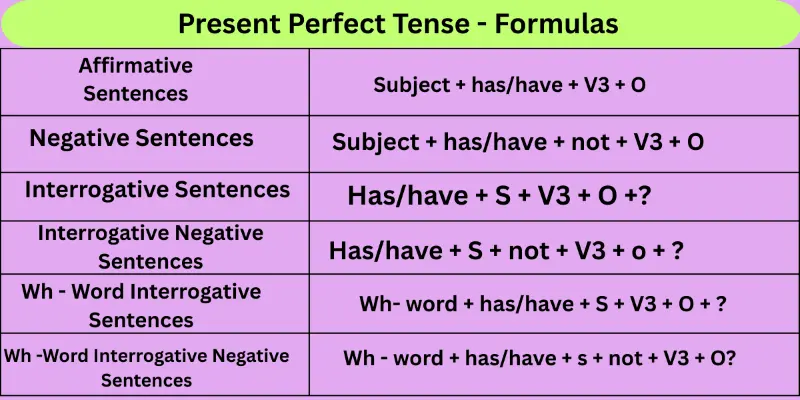
1. Affirmative Sentences of Present Perfect Tense (सकारात्मक वाक्य)
Definition -
An affirmative sentence in the Present Perfect Tense expresses an action that has been completed recently or whose result is still important in the present.
It connects past action with present effect using has/have + V₃.
परिभाषा -
Present Perfect Tense के सकारात्मक (Affirmative) वाक्य वे होते हैं जो यह बताते हैं कि कोई कार्य पूरा हो चुका है और उसका परिणाम वर्तमान में मौजूद है।
इसमें has / have और मुख्य क्रिया का तीसरा रूप (V₃) प्रयोग होता है।
Rule (नियम):
1. Helping Verb (सहायक क्रिया):
• Has – Singular subjects (He, She, It, Name) के साथ।
• Have – Plural subjects (I, We, You, They) के साथ।
2. Main Verb (मुख्य क्रिया):
हमेशा क्रिया का तीसरा रूप (V₃) प्रयोग किया जाता है।
3. Time words (समय सूचक शब्द):
Present Perfect Tense में प्रायः just, already, yet, recently, since, for, ever, never, today, this week, now आदि आते हैं।
ऊपर दिए गए फॉर्मूले को देखकर नीचे दिए गए सकारात्मक वाक्यों को ध्यान से पड़े और सीखें।
Examples:
1. I have completed my homework.
मैंने अपना गृहकार्य पूरा कर लिया है।
2. She has cleaned the kitchen.
उसने रसोई साफ़ कर ली है।
3. They have built a new house.
उन्होंने एक नया घर बना लिया है।
4. He has written a beautiful poem.
उसने एक सुंदर कविता लिखी है।
5. We have learned the present tense.
हमने वर्तमान काल सीखा है।
6. You have cooked delicious food.
तुमने स्वादिष्ट खाना बनाया है।
7. The teacher has checked all copies.
शिक्षक ने सभी कॉपियाँ जाँच ली हैं।
8. I have read that story before.
मैंने वह कहानी पहले पढ़ी है।
9. She has gone to the market.
वह बाज़ार गई है।
10. They have reached the station.
वे स्टेशन पहुँच गए हैं।
11. He has bought a new car.
उसने एक नई कार खरीदी है।
12. I have seen this movie twice.
मैंने यह फ़िल्म दो बार देखी है।
13. We have finished our breakfast.
हमने अपना नाश्ता पूरा कर लिया है।
14. She has opened the window.
उसने खिड़की खोल दी है।
15. They have started the meeting.
उन्होंने बैठक शुरू कर दी है।
16. He has improved his handwriting.
उसने अपनी लिखावट सुधारी है।
17. I have sent the email.
मैंने ईमेल भेज दी है।
18. You have helped me a lot.
तुमने मेरी बहुत मदद की है।
19. We have cleaned the classroom.
हमने कक्षा साफ़ की है।
20. She has planted many trees.
उसने बहुत से पेड़ लगाए हैं।
21. He has repaired his mobile.
उसने अपना मोबाइल ठीक कर लिया है।
22. They have won the match.
उन्होंने मैच जीत लिया है।
23. I have visited the Taj Mahal.
मैंने ताजमहल देखा है।
24. She has painted a picture.
उसने एक चित्र बनाया है।
25. We have joined a new course.
हमने एक नया कोर्स जॉइन किया है।
26. You have told me the truth.
तुमने मुझे सच बताया है।
27. He has washed the clothes.
उसने कपड़े धो लिए हैं।
28. I have lost my pen.
मैंने अपनी पेन खो दी है।
29. They have opened a new shop.
उन्होंने एक नई दुकान खोली है।
30. We have completed our project.
हमने अपना प्रोजेक्ट पूरा कर लिया है।
Read Also
• Affirmative Sentence • Use of Had
• Active & Passive Voice • Gender
• Use of Has & Have • Use of Use of Is/am/are
2. Negative Sentences of Present Perfect Tense (नकारात्मक वाक्य)
Definition -
A negative sentence in the Present Perfect Tense expresses that an action has not been completed or something has not happened till now.
It is formed by adding “not” after has/have and before the V₃ (third form of verb).
परिभाषा -
Present Perfect Tense के नकारात्मक वाक्य वे होते हैं जो यह बताते हैं कि कोई कार्य अभी तक पूरा नहीं हुआ है या घटित नहीं हुआ है।
ऐसे वाक्यों में has/have के बाद not लगाया जाता है और मुख्य क्रिया का तीसरा रूप (V₃) प्रयोग होता है।
Rules (नियम):
Rule 1: Helping Verb (सहायक क्रिया)
• Has का प्रयोग एकवचन (Singular) subject के साथ होता है → He, She, It, Name
• Have का प्रयोग बहुवचन (Plural) subject के साथ होता है → I, We, You, They
Example:• He has not completed his work.
• They have not come yet.
यहाँ “not” को has/have के तुरंत बाद लगाया गया है ताकि यह नकारात्मक वाक्य बने।
Rule 2: Main Verb (मुख्य क्रिया)
मुख्य क्रिया हमेशा अपने तीसरे रूप (V₃) में होती है, क्योंकि यह Perfect Tense है।
go → gone,
eat → eaten,
write → written,
do → done,
Example:
• I have not done my homework.
• She has not written the letter.
क्रिया का तीसरा रूप यह दर्शाता है कि कार्य पूरा नहीं हुआ है।
Rule 3: Time Words (समय के शब्द)
Present Perfect Negative में “yet, ever, never, recently, till now, so far” जैसे शब्द अक्सर प्रयोग होते हैं।
इनसे पता चलता है कि कार्य अब तक पूरा नहीं हुआ है।
Example:
• I have not seen that movie yet.
मैंने वह फ़िल्म अभी तक नहीं देखी है।
Rule 4: Hindi Identification (पहचान)
हिन्दी में जिन वाक्यों के अंत में “नहीं किया है, नहीं खाया है, नहीं देखा है, नहीं गया है” आता है —
वे Present Perfect Tense (Negative Form) के वाक्य होते हैं।
उपयुक्त दिए गए फॉर्मूला द्वारा नीचे दिए गए वाक्यों को समझें।
Example:
1. I have not completed my work.
मैंने अपना काम पूरा नहीं किया है।
2. She has not cooked the food.
उसने खाना नहीं बनाया है।
3. They have not gone to school.
वे स्कूल नहीं गए हैं।
4. He has not written the letter.
उसने पत्र नहीं लिखा है।
5. We have not read this book.
हमने यह किताब नहीं पढ़ी है।
6. You have not cleaned your room.
तुमने अपना कमरा साफ़ नहीं किया है।
7. The teacher has not checked the papers.
शिक्षक ने पेपर नहीं जाँचे हैं।
8. I have not seen him today.
मैंने उसे आज नहीं देखा है।
9. She has not finished her homework yet.
उसने अभी तक अपना गृहकार्य पूरा नहीं किया है।
10. They have not started the meeting.
उन्होंने मीटिंग शुरू नहीं की है।
11. He has not taken his breakfast.
उसने नाश्ता नहीं किया है।
12. I have not learned the lesson.
मैंने पाठ नहीं सीखा है।
13. We have not visited Delhi yet.
हमने अभी तक दिल्ली का दौरा नहीं किया है।
14. You have not told me the truth.
तुमने मुझे सच नहीं बताया है।
15. She has not opened the door.
उसने दरवाज़ा नहीं खोला है।
16. They have not watched this show.
उन्होंने यह शो नहीं देखा है।
17. He has not repaired his car.
उसने अपनी कार ठीक नहीं की है।
18. I have not heard that song.
मैंने वह गीत नहीं सुना है।
19. We have not cleaned the garden.
हमने बगीचा साफ़ नहीं किया है।
20. She has not taken her medicine.
उसने अपनी दवा नहीं ली है।
21. He has not washed his clothes.
उसने कपड़े नहीं धोए हैं।
22. I have not met him for a long time.
मैं उससे लंबे समय से नहीं मिला हूँ।
23. They have not played cricket this week.
उन्होंने इस सप्ताह क्रिकेट नहीं खेला है।
24. You have not completed your project yet.
तुमने अभी तक अपना प्रोजेक्ट पूरा नहीं किया है।
25. She has not called her friend.
उसने अपनी दोस्त को फोन नहीं किया है।
26. He has not come home yet.
वह अभी तक घर नहीं आया है।
27. I have not seen the sunrise today.
मैंने आज सूर्योदय नहीं देखा है।
28. We have not taken our lunch.
हमने अपना दोपहर का भोजन नहीं किया है।
29. They have not joined the meeting.
उन्होंने मीटिंग जॉइन नहीं की है।
30. You have not replied to my message.
तुमने मेरे संदेश का जवाब नहीं दिया है।
Read Also
• Sentence Structure • Negative Sentence
• Singular & Plural Number • Articles
• Use of Do & Does • Use of Had
3. Interrogative Sentences of Present Perfect Tense (प्रश्नवाचक वाक्य)
An interrogative sentence in the Present Perfect Tense is used to ask a question about an action that has been completed recently or whose result still affects the present.
It begins with Has or Have, followed by the Subject, then the third form of the verb (V₃).
Present Perfect Tense के प्रश्नवाचक वाक्य वे होते हैं जिनसे हम यह पूछते हैं कि कोई कार्य पूरा हुआ है या नहीं।
ऐसे वाक्यों की शुरुआत Has या Have से होती है, फिर Subject और उसके बाद क्रिया का तीसरा रूप (V₃) आता है।
Rules (नियम):
Rule 1: Helping Verb (सहायक क्रिया)
• वाक्य की शुरुआत में हमेशा Has या Have आता है।
• Has → He, She, It, Name (Singular)
• Have → I, We, You, They (Plural)
Example:
• Has she finished her homework?
• Have they reached the station?
यहाँ has/have प्रश्नवाचक वाक्य में शुरुआत में लगाया गया है ताकि यह सवाल बने।
Rule 2: Main Verb (मुख्य क्रिया)
• हमेशा तीसरे रूप (V₃) में प्रयोग की जाती है क्योंकि यह Perfect Tense है।
Example:
• Have you seen this movie?
• Has he written the letter?
Rule 3: Time Words (समय सूचक शब्द)
इसमें अक्सर ever, yet, just, recently, already, since, for आदि शब्द प्रयोग होते हैं।
Example:
• Have you ever visited Agra?
→ क्या तुमने कभी आगरा का दौरा किया है?
Rule 4: Hindi Identification (पहचान)
हिन्दी में जिन वाक्यों की शुरुआत “क्या” से होती है और अंत “किया है, गई है, हुए हैं” से होता है,
वे Present Perfect Tense (Interrogative Form) के वाक्य होते हैं।
Example:
• क्या तुमने नाश्ता किया है? → Have you taken breakfast?
उपयुक्त फॉर्मूले को ध्यान से पढ़ें ताकि आप नीचे दिए गए वाक्यों को सीख पाए।
Examples:
1. Have you finished your homework?
क्या तुमने अपना गृहकार्य पूरा किया है?
2. Has she cooked the food?
क्या उसने खाना बनाया है?
3. Have they gone to school?
क्या वे स्कूल गए हैं?
4. Has he written a letter?
क्या उसने एक पत्र लिखा है?
5. Have we read this book?
क्या हमने यह किताब पढ़ी है?
6. Have you cleaned the room?
क्या तुमने कमरा साफ़ किया है?
7. Has the teacher checked the copies?
क्या शिक्षक ने कॉपियाँ जाँची हैं?
8. Have I seen this movie before?
क्या मैंने यह फ़िल्म पहले देखी है?
9. Has she finished her work yet?
क्या उसने अभी तक अपना काम पूरा किया है?
10. Have they started the meeting?
क्या उन्होंने मीटिंग शुरू की है?
11. Has he taken his breakfast?
क्या उसने नाश्ता किया है?
12. Have I learned this lesson?
मैंने यह पाठ सीखा है?
13. Have we visited the Taj Mahal?
क्या हमने ताजमहल देखा है?
14. Have you told the truth?
क्या तुमने सच बताया है?
15. Has she opened the door?
क्या उसने दरवाज़ा खोला है?
16. Have they watched the match?
क्या उन्होंने मैच देखा है?
17. Has he repaired his bike?
क्या उसने अपनी बाइक ठीक की है?
18. Have I heard that song?
क्या मैंने वह गाना सुना है?
19. Have we cleaned the garden?
क्या हमने बगीचा साफ़ किया है?
20. Has she taken her medicine?
क्या उसने दवा ली है?
21. Has he washed his clothes?
क्या उसने अपने कपड़े धोए हैं?
22. Have you met your friend?
क्या तुम अपने दोस्त से मिले हो?
23. Have they played cricket this week?
क्या उन्होंने इस हफ्ते क्रिकेट खेला है?
24. Have you completed your project?
क्या तुमने अपना प्रोजेक्ट पूरा किया है?
25. Has she called her parents?
क्या उसने अपने माता-पिता को फोन किया है?
26. Has he come home yet?
क्या वह अभी तक घर आया है?
27. Have I seen the sunrise today?
क्या मैंने आज सूर्योदय देखा है?
28. Have we taken our lunch?
क्या हमने अपना दोपहर का भोजन किया है?
29. Have they joined the new company?
क्या उन्होंने नई कंपनी जॉइन की है?
30. Have you replied to my message?
क्या तुमने मेरे संदेश का उत्तर दिया है?
Read Also
• Parts of Sentence • Interrogative Sentence
• Use of These & Those • Use of This & That
• Use of Was & Were • Noun
4. Interrogative Negative Sentences of Present Perfect Tense (प्रश्नवाचक नकारात्मक वाक्य)
The Interrogative Negative Sentences in the Present Perfect Tense are used to ask negative questions about actions that have been completed or not completed till the present moment.
It shows doubt, surprise, or confirmation about an action that has not been done.
Present Perfect Tense के Interrogative Negative Sentences वे होते हैं जिनसे हम यह पूछते हैं कि कोई कार्य अभी तक नहीं हुआ है या पूरा नहीं किया गया है।
ऐसे वाक्यों में प्रश्नवाचक भाव और नकार (not) दोनों का प्रयोग होता है।
Rules (नियम):
Rule 1: Helping Verb (सहायक क्रिया)
• वाक्य की शुरुआत Has या Have से होती है।
• Has → He, She, It, Singular Noun
• Have → I, We, You, They, Plural Noun
Example:
• Hasn’t he come yet?
• Haven’t you finished your work?
Rule 2: Use of “Not” (नकार का प्रयोग)
• “Not” का प्रयोग Has/Have के बाद किया जाता है।
• जब “Has/Have” वाक्य की शुरुआत में हो, तो हम इसे Hasn’t / Haven’t के रूप में लिख सकते हैं।
Example:
• Has he not eaten his lunch?
• Haven’t they completed the task yet?
Rule 3: Main Verb (मुख्य क्रिया)
• मुख्य क्रिया हमेशा तीसरे रूप (V₃) में होती है।
Example:
• Has he not finished the homework?
Rule 4: Time Words (समय सूचक शब्द)
इन वाक्यों में yet, ever, just, already, since, for आदि का प्रयोग अक्सर होता है।
• “Yet” ज़्यादातर negative या interrogative sentences में प्रयोग होता है।
Example:
• Haven’t they started the meeting yet?
Rule 5: Hindi Identification (पहचान)
जिन वाक्यों की शुरुआत “क्या” से होती है और जिनमें “नहीं किया है, नहीं गए हैं, नहीं हुई है” जैसे शब्द हों,
वे Present Perfect Interrogative Negative Sentences होते हैं।
Example:
• क्या तुमने खाना नहीं खाया है? → Haven’t you eaten food?
उपयुक्त दिए गए फार्मूला के अनुसार नीचे दिए गए सभी उदाहरणों को ध्यानपूर्वक पढ़ें।
Examples:
1. Haven’t you called your friend yet?
क्या तुमने अभी तक अपने दोस्त को फोन नहीं किया है?
2. Hasn’t she painted the wall?
क्या उसने दीवार नहीं रंगी है?
3. Haven’t they cleaned the park?
क्या उन्होंने पार्क साफ़ नहीं किया है?
4. Hasn’t he completed his homework yet?
क्या उसने अभी तक अपना गृहकार्य पूरा नहीं किया है?
5. Haven’t we planted the trees?
क्या हमने पेड़ नहीं लगाए हैं?
6. Hasn’t the shop opened today?
क्या दुकान आज नहीं खुली है?
7. Haven’t you sent the email?
क्या तुमने ईमेल नहीं भेजी है?
8. Hasn’t he watered the plants?
क्या उसने पौधों में पानी नहीं डाला है?
9. Haven’t they invited you to the party?
क्या उन्होंने तुम्हें पार्टी में नहीं बुलाया है?
10. Hasn’t the train left the station yet?
क्या ट्रेन अभी तक स्टेशन से नहीं निकली है?
11. Haven’t you done your exercise today?
क्या तुमने आज व्यायाम नहीं किया है?
12. Hasn’t she washed the dishes?
क्या उसने बर्तन नहीं धोए हैं?
13. Haven’t they found the lost key?
क्या उन्होंने खोई हुई चाबी नहीं ढूँढी है?
14. Hasn’t he visited his grandparents this month?
उसने इस महीने अपने दादा-दादी से मुलाकात नहीं की है?
15. Haven’t we reached the bus stop yet?
क्या हम अभी तक बस स्टॉप नहीं पहुँचे हैं?
16. Hasn’t the teacher come to class yet?
क्या अध्यापक अभी तक कक्षा में नहीं आए हैं?
17. Haven’t you opened your notebook?
क्या तुमने अपनी नोटबुक नहीं खोली है?
18. Hasn’t she taken her medicine today?
क्या उसने आज अपनी दवा नहीं ली है?
19. Haven’t they painted their house?
क्या उन्होंने अपना घर नहीं रंगा है?
20. Hasn’t the baby slept yet?
क्या बच्चा अभी तक नहीं सोया है?
21. Haven’t you heard this song before?
क्या तुमने यह गाना पहले नहीं सुना है?
22. Hasn’t he bought new clothes?
क्या उसने नए कपड़े नहीं खरीदे हैं?
23. Haven’t they started the project yet?
क्या उन्होंने अभी तक प्रोजेक्ट शुरू नहीं किया है?
24. Hasn’t the rain stopped yet?
क्या बारिश अभी तक नहीं रुकी है?
25. Haven’t you paid the bill?
क्या तुमने बिल नहीं चुकाया है?
26. Hasn’t she completed her studies?
क्या उसने अपनी पढ़ाई पूरी नहीं की है?
27. Haven’t we seen that bird before?
क्या हमने वह पक्षी पहले नहीं देखा है?
28. Hasn’t he joined the new job?
क्या उसने नई नौकरी नहीं जॉइन की है?
29. Haven’t they called the doctor yet?
क्या उन्होंने अभी तक डॉक्टर को नहीं बुलाया है?
30. Hasn’t the movie started yet?
क्या फ़िल्म अभी तक शुरू नहीं हुई है?
Read Also
• Parts of Sentence • Conditional Sentence
• Model Verb • Use of Can & Could
• Use of Dare • Use of May & Might
5. Wh – Word Interrogative Sentences of Present Indefinite Tense (प्रश्नवाचक वाक्य)
The WH-word Interrogative Sentences in the Present Perfect Tense are used to ask questions using WH-words (What, Why, When, Where, Who, Whom, Which, How, etc.) about actions that have been completed recently or still affect the present time.
Present Perfect Tense के WH-word Interrogative Sentences वे होते हैं जिनसे हम What, Why, When, Where, Who, How जैसे शब्दों का प्रयोग करके यह पूछते हैं कि कोई कार्य कब, क्यों, कहाँ, किसने या कैसे हुआ है।
ये वाक्य उन कार्यों से सम्बंधित होते हैं जो अतीत में पूरे हो चुके हैं पर उनका प्रभाव वर्तमान में बना हुआ है।
Rules (नियम):
Rule 1: WH-word की शुरुआत वाक्य हमेशा WH-word (जैसे What, Why, When, Where, Who, How, etc.) से शुरू होता है।
Example:
What have you done?
Where has she gone?
Rule 2: Helping Verb (सहायक क्रिया)
• Has → He, She, It, Singular Noun
• Have → I, We, You, They, Plural Noun WH-word के बाद “Has/Have” आता है।
Example:
• Where have they gone?
• Why has he called you?
Rule 3: Verb Form (क्रिया का रूप)
हमेशा तीसरे रूप (V₃) का प्रयोग होता है क्योंकि यह Perfect Tense है।
Example:
• What have you done?
• Where has she gone?
Rule 4: Hindi Identification (पहचान)
हिन्दी में जिन वाक्यों की शुरुआत “क्या, कौन, क्यों, कब, कहाँ, कैसे” जैसे शब्दों से होती है
और अंत “किया है, गया है, हुई है” से होता है,
वे WH-word Interrogative Sentences (Present Perfect Tense) होते हैं।
उपयुक्त फॉर्म्युला को ध्यान में रखकर नीचे दिए गए वाक्य प्रयोगों को ध्यान से पढ़ें।
Examples:
1. What have you done today?
आज तुमने क्या किया है?
2. Where has she gone?
वह कहाँ गई है?
3. Why have they come here?
वे यहाँ क्यों आए हैं?
4. When have you seen him last?
तुमने उसे आख़िरी बार कब देखा है?
5. Who has opened the door?
दरवाज़ा किसने खोला है?
6. How have you made this cake?
तुमने यह केक कैसे बनाया है?
7. Which book have you read recently?
तुमने हाल ही में कौन-सी किताब पढ़ी है?
8. What has he said to you?
उसने तुमसे क्या कहा है?
9. Why have you not come on time?
तुम समय पर क्यों नहीं आए हो?
10. Where have they kept the keys?
उन्होंने चाबियाँ कहाँ रखी हैं?
11. When has the rain started?
बारिश कब शुरू हुई है?
12. Who has taken my pen?
मेरा पेन किसने लिया है?
13. How have you completed this project so fast?
तुमने यह प्रोजेक्ट इतनी जल्दी कैसे पूरा किया है?
14. What have we achieved today?
हमने आज क्या हासिल किया है?
15. Why has he gone out?
वह बाहर क्यों गया है?
16. Why has he gone out?
वह बाहर क्यों गया है?
17. Where have you been all this time?
तुम इतने समय से कहाँ थे?
18. Who has finished the homework?
गृहकार्य किसने पूरा किया है?
19. When have they reached home?
वे घर कब पहुँचे हैं?
20. What has she bought from the market?
उसने बाज़ार से क्या खरीदा है?
21. How have you solved this problem?
तुमने यह समस्या कैसे हल की है?
22. Why have you left your job?
तुमने अपनी नौकरी क्यों छोड़ी है?
23. Which place have you visited recently?
तुम हाल ही में कौन-सी जगह घूमे हो?
24. Who has written this poem?
यह कविता किसने लिखी है?
25. When has he gone to Delhi?
वह दिल्ली कब गया है?
26. Where have they shifted their house?
उन्होंने अपना घर कहाँ बदला है?
27. Why has she cried?
वह क्यों रोई है?
28. What have you told him?
तुमने उसे क्या बताया है?
29. How have we missed the train?
हम ट्रेन कैसे चूक गए हैं?
30. Who has broken this glass?
यह गिलास किसने तोड़ा है?
31. When have you completed your studies?
तुमने अपनी पढ़ाई कब पूरी की है?
Read Also
• Exclamatory Sentence • Imperative Sentence
• Use of Must & Ought • Use of Shall & Will
• Use of Should & Would • Use of Used to
6. Wh – Word Interrogative Negative Sentences of Present Perfect Tense (प्रश्नवाचक नकारात्मक वाक्य)
The WH-word Interrogative Negative Sentences in the Present Perfect Tense are used to ask negative questions using WH-words (What, Why, Where, When, Who, How, etc.) about actions that have not been completed till now.
These sentences express doubt, surprise, or inquiry about an unfinished action.
Present Perfect Tense के WH-word Interrogative Negative Sentences वे वाक्य हैं जिनमें WH शब्द (क्या, क्यों, कहाँ, कब, कौन, कैसे) का प्रयोग करते हुए यह पूछा जाता है कि कोई कार्य अभी तक नहीं हुआ है या पूरा नहीं किया गया है।
इन वाक्यों में प्रश्नवाचक और नकारात्मक (not) दोनों भाव होते हैं।
Rules (नियम):
Rule 1: Start with a WH-word (शुरुआत WH शब्द से होती है)
वाक्य की शुरुआत हमेशा What, Why, When, Where, Who, How आदि से होती है।
Example: Why haven’t you come yet?
Rule 2: Helping Verb (सहायक क्रिया)
• WH-word के बाद Has/Have आता है।
• “Not” का प्रयोग Has/Have के बाद किया जाता है।
• “Hasn’t” या “Haven’t” का छोटा रूप भी प्रयोग हो सकता है।
Example:
• Where have you not gone yet?
• Why hasn’t he completed his work?
Rule 3: Main Verb (मुख्य क्रिया)
मुख्य क्रिया हमेशा तीसरे रूप (V₃) में प्रयोग होती है।
Example:
• What haven’t you done yet?
Rule 4: Hindi Identification (पहचान)
हिन्दी में ऐसे वाक्यों की शुरुआत “क्या, क्यों, कहाँ, कब, किसने, कैसे” से होती है
और अंत “नहीं किया है, नहीं गए हैं, नहीं हुई है” से होता है।
Example:
• तुमने अब तक क्या नहीं किया है? → What haven’t you done yet?
Examples:
1. Why haven’t you come to school today?
तुम आज स्कूल क्यों नहीं आए हो?
2. Where haven’t they gone yet?
वे अभी तक कहाँ नहीं गए हैं?
3. What haven’t you done yet?
तुमने अभी तक क्या नहीं किया है?
4. Who hasn’t finished the homework?
किसने गृहकार्य पूरा नहीं किया है?
5. Why hasn’t he called you?
उसने तुम्हें फोन क्यों नहीं किया है?
6. When haven’t we met each other?
हम एक-दूसरे से कब नहीं मिले हैं?
7. How haven’t they solved the problem?
उन्होंने यह समस्या कैसे नहीं सुलझाई है?
8. Why hasn’t she come home yet?
वह अभी तक घर क्यों नहीं आई है?
9. What haven’t you learned from this?
तुमने इससे क्या नहीं सीखा है?
10. Where haven’t we visited this year?
हम इस साल कहाँ नहीं गए हैं?
11. Who hasn’t taken the medicine yet?
किसने अभी तक दवा नहीं ली है?
12. Why haven’t you started your project?
तुमने अपना प्रोजेक्ट क्यों नहीं शुरू किया है?
13. What hasn’t he told you?
उसने तुम्हें क्या नहीं बताया है?
14. Where haven’t they planted trees?
उन्होंने पेड़ कहाँ नहीं लगाए हैं?
15. Who hasn’t attended the class today?
आज किसने कक्षा में भाग नहीं लिया है?
16. Why haven’t you replied to my message?
तुमने मेरे संदेश का उत्तर क्यों नहीं दिया है?
17. What haven’t they completed yet?
उन्होंने अभी तक क्या पूरा नहीं किया है?
18. Where hasn’t he gone before?
वह पहले कहाँ नहीं गया है?
19. How haven’t you understood this topic?
तुमने यह विषय कैसे नहीं समझा है?
20. Why hasn’t the teacher come today?
शिक्षक आज क्यों नहीं आए हैं?
21. Who hasn’t joined the new company?
किसने नई कंपनी जॉइन नहीं की है?
22. What haven’t you cleaned in the house?
तुमने घर में क्या नहीं साफ़ किया है?
23. Where haven’t we seen him?
हमने उसे कहाँ नहीं देखा है?
24. Why hasn’t the rain stopped yet?
बारिश अभी तक क्यों नहीं रुकी है?
25. Who hasn’t paid the fees?
किसने फीस नहीं भरी है?
26. How haven’t you prepared for the test?
तुमने परीक्षा की तैयारी कैसे नहीं की है?
27. What hasn’t she brought from the market?
उसने बाज़ार से क्या नहीं लाया है?
28. Where hasn’t he kept his bag?
उसने अपना बैग कहाँ नहीं रखा है?
29. Why haven’t they come on time?
वे समय पर क्यों नहीं आए हैं?
30. Who hasn’t eaten breakfast yet?
किसने अभी तक नाश्ता नहीं किया है?
Uses of Present Perfect Tense :
1. To express an action that has just been completed
(ऐसी क्रिया बताने के लिए जो अभी-अभी पूरी हुई हो)
Used when the action is finished only a moment ago.
Examples:
• He has just finished his homework.
उसने अभी-अभी अपना गृहकार्य पूरा किया है।
2. To show an action completed in the past but result is still visible now
(अतीत में हुई क्रिया जिसका प्रभाव अभी भी मौजूद हो)
Action happened earlier, but its result is seen in the present.
Examples:
• She has broken her leg.
उसकी टांग टूट गई है (अभी भी असर है)।
3. To express experiences of life
(जीवन के अनुभव बताने के लिए)
Used to talk about things you have done/experienced at any time in your life.
Examples:
• I have visited the Taj Mahal.
मैं ताजमहल जा चुका/चुकी हूँ।
4. To express repeated actions in the past till now
(अतीत से अब तक दोहराई गई क्रियाएँ)
Used when something has happened many times until the present.
Examples:
• They have called me three times today.
उन्होंने आज मुझे तीन बार फोन किया है।
5. To show actions that started in the past and continue till the present (with since/for)
(अतीत में शुरू हुई और अभी तक जारी क्रिया – since/for के साथ)
Used to show continuity or duration of an action from past to present.
Examples:
• I have lived here for five years.
मैं यहाँ पाँच साल से रह रहा/रही हूँ।
6. To talk about achievements or inventions
(उपलब्धियों या आविष्कारों को बताने के लिए)
Used to express discoveries or achievements up to now.
Examples:
• Scientists have discovered a new planet.
वैज्ञानिकों ने एक नया ग्रह खोजा है।
7. To describe changes over time
(समय के साथ होने वाले बदलाव बताने के लिए)
Used to show how something has changed till now.
Examples:
• The city has grown a lot.
यह शहर बहुत बढ़ चुका है।
Read Also
• Parts of Speech
• Noun • Pronoun
• Verb • Adverb
• Adjective • Conjunction
• Interjection • Preposition
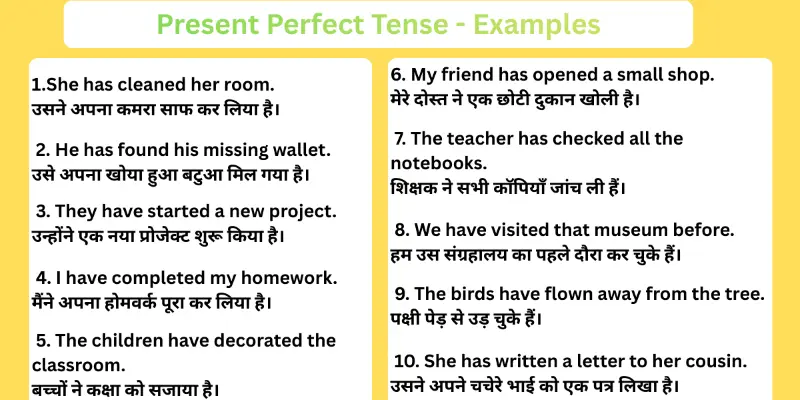
Examples of Present Perfect Tense:
1. I have cleaned my study table.
मैंने अपनी पढ़ाई की मेज़ साफ़ की है।
2. She has written a new poem today.
उसने आज एक नई कविता लिखी है।
3. They have repaired the old bicycle.
उन्होंने पुरानी साइकिल ठीक कर दी है।
4. He has bought a smart watch.
उसने एक स्मार्ट वॉच खरीदी है।
5. We have booked our train tickets.
हमने अपनी ट्रेन की टिकटें बुक कर ली हैं।
6. The teacher has checked all the notebooks.
अध्यापक ने सभी नोटबुक जाँच ली हैं।
7. I have found my lost charger.
मुझे मेरा खोया हुआ चार्जर मिल गया है।
8. She has decorated the living room.
उसने लिविंग रूम सजाया है।
9. They have opened a new shop.
उन्होंने एक नई दुकान खोली है।
10. He has learned basic computer skills.
उसने बुनियादी कंप्यूटर कौशल सीख लिए हैं।
11. We have planted five new trees.
हमने पाँच नए पेड़ लगाए हैं।
12. I have joined an online class.
मैंने एक ऑनलाइन क्लास जॉइन की है।
13. She has washed all her clothes.
उसने अपने सभी कपड़े धो लिए हैं।
14. They have reached the stadium.
वे स्टेडियम पहुँच चुके हैं।
15. He has solved the math puzzle.
उसने गणित की पहेली हल कर ली है।
16. I have saved your phone number.
मैंने आपका फोन नंबर सेव कर लिया है।
17. We have arranged the chairs for guests.
हमने मेहमानों के लिए कुर्सियाँ लगा दी हैं।
18. She has updated her profile picture.
उसने अपनी प्रोफ़ाइल तस्वीर अपडेट की है।
19. They have shifted to a new apartment.
वे एक नए अपार्टमेंट में शिफ्ट हो गए हैं।
20. He has forgotten the meeting time.
वह मीटिंग का समय भूल गया है।
21. I have checked all the emails.
मैंने सभी ईमेल चेक कर ली हैं।
22. She has brought fresh fruits.
वह ताज़े फल लेकर आई है।
23. They have chosen a new team leader.
उन्होंने एक नए टीम लीडर का चुनाव किया है।
24. We have visited the art gallery.
हम कला प्रदर्शनी देख चुके हैं।
25. He has repaired his mobile phone.
उसने अपना मोबाइल फोन ठीक कर लिया है।
26. I have organized my bookshelf.
मैंने अपनी किताबों की अलमारी व्यवस्थित कर ली है।
27. She has baked a chocolate cake.
उसने चॉकलेट केक बनाया है।
28. They have learned the national anthem.
उन्होंने राष्ट्रीय गान सीख लिया है।
29. He has completed the registration process.
उसने पंजीकरण प्रक्रिया पूरी कर ली है।
30. We have prepared a welcome message.
हमने एक स्वागत संदेश तैयार किया है।
Read Tense and There Types
• Tense
• Present Tense
• Present Indefinite Tense • Present continuous tense
• Present Perfect Tense • Present Perfect Continuous Tense
• Past Tense
• Past Indefinite Tense • Past continuous tense
• Past Perfect Tense • Past Perfect Continuous Tense
• Future Tense
• Future Indefinite Tense
• future continuous tense • Future Perfect Tense
• Future Perfect Continuous Tense