Future Continuous Tense (अपूर्ण भविष्यकाल)
Definition -
Future Continuous Tense is the tense that describes an action that will be happening at a particular time in the future.
In this tense, we use “will be + verb-ing” to show that an action will continue for some time in the future.
It tells about an action that will be in progress in the future.
परिभाषा -
Future Continuous Tense वह काल है जो किसी ऐसे कार्य को बताता है जो भविष्य में किसी निश्चित समय पर जारी रहेगा।
इसमें हम “will be + verb-ing” का प्रयोग करते हैं ताकि यह दिखा सकें कि कोई काम भविष्य में कुछ समय तक चलता रहेगा।
यह बताता है कि कोई कार्य भविष्य में किसी समय पर होता हुआ मिलेगा।
इन वाक्यों के अंत में रहा होगा, रही होगी, रहे होगें आदि शब्द आते हैं।
Examples :
1. I will be studying at 8 PM.
मैं रात 8 बजे पढ़ रहा होऊँगा।
2. She will be cooking dinner in the evening.
वह शाम को खाना बना रही होगी।
3. They will be traveling to Jaipur tomorrow.
वे कल जयपुर जा रहे होंगे।
4. We will be watching a movie at this time tomorrow.
हम कल इसी समय एक फिल्म देख रहे होंगे।
5. He will be repairing his bike in the afternoon.
वह दोपहर में अपनी बाइक ठीक कर रहा होगा।
6. The children will be playing in the park.
बच्चे पार्क में खेल रहे होंगे।
7. I will be attending an online class at 10 AM.
मैं सुबह 10 बजे ऑनलाइन क्लास में शामिल हो रहा होऊँगा।
8. She will be writing notes during the lecture.
वह लेक्चर के दौरान नोट्स लिख रही होगी।
9. They will be celebrating their anniversary tonight.
वे आज रात अपनी सालगिरह मना रहे होंगे।
10. We will be waiting for you at the station.
हम स्टेशन पर तुम्हारा इंतजार कर रहे होंगे।
उपयुक्त सभी वाक्यों के अंत में रहा होगी, रही होगी, रहे होगें आदि शब्द आ रहे हैं अर्थात सभी वाक्य Future Continuous Tense के हैं।
Read Also
• Use of Can & Could • Use of Dare
• Use of May & Might • Use of Must & Ought
• Use of Shall & Will • Use of Should & Would
• Use of Used to • Use of Need to
• Rules of Future Continuous Tense (अपूर्ण भविष्यकाल के नियम) :
Rule 1 – Always use “will be” for future progressive actions
भविष्य में जो काम एक समय पर जारी रहेगा, वहाँ हमेशा will be का प्रयोग होता है।
Rule 2 – Main verb हमेशा V¹ + ing रूप में होगी
क्योंकि यह continuous tense है, इसलिए verb में “ing” ज़रूरी है।
(Eat → eating, go → going, walk → walking)
Rule 3 – Time reference अक्सर दिया जाता है
जैसे:
tomorrow, next week, at this time, in the evening, etc.
ताकि यह स्पष्ट हो कि काम किस समय पर चल रहा होगा।
Rule 4 – Helping verb “will be” सभी subjects के साथ same रहती है
I, you, we, they, he, she, it
सबके साथ → will be
Rule 5 – Sentence में “progressive action” का भाव ज़रूरी है
मतलब काम चल रहा होगा।
Rule 6 - Identification (कैसे पहचानें?)
If a sentence talks about an action that will be going on in the future, it is Future Continuous Tense.
अगर वाक्य में ये महसूस हो कि काम भविष्य में एक निश्चित समय पर चलता हुआ मिलेगा, तो वह Future Continuous Tense है।
मुख्य पहचान:
“…रहा होगा / रही होगी / रहे होंगे”
(हिन्दी वाक्य के अंत में)
• Future Continuous Tense – Table
| Topic |
Explanation |
| Definition |
It shows an action that will be happening at an particular time in the future. |
| Helping verb (all Subjects) |
Will be ( I, you , we, they etc.) |
| Main verb |
Verb + ing (Go – going) |
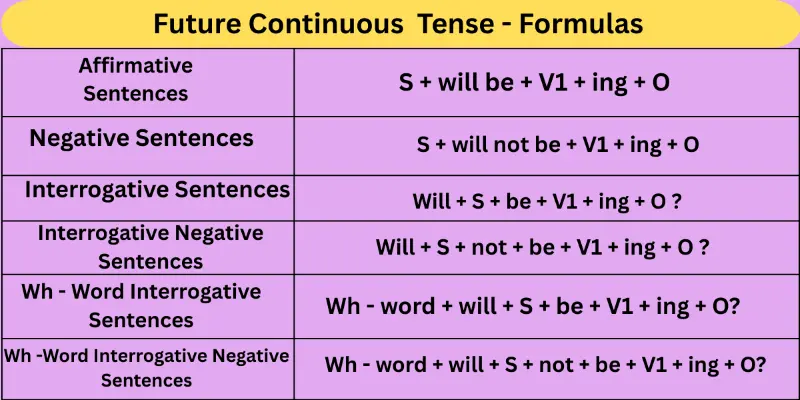
| Affirmative |
Subject + will be + V1 + ing + object |
| Negative |
Subject + will not be + V1 + ing + obj |
| Interrogative |
Will + subject + be + V1 + ing + ob? |
| Wh – word |
Wh -Word + will + subject + be + V1 + Ing + object + ? |
| Identification |
वाक्य के अंत में रहा होगा, रही होगी आदि आयेगा |
| Key time words |
Tomorrow, next week, tonight etc. |
उपयुक्त दी गयी टेबल के अनुसार नीचे दिए गए वाक्यों को ध्यान से पढ़ें और सीखें तभी आप अंग्रेजी से हिंदी ट्रांसलेट करना सीख पाएंगे।
Read Also
• Parts of Speech
• Noun • Verb
• Adverb • Pronoun
• Adjective • Conjunction
• Interjection
1. Affirmative Sentences (सकारात्मक वाक्य) of Future Continuous Tense
An affirmative sentence in the Future Continuous Tense expresses an action that will be in progress at a specific time in the future.
Future Continuous Tense का affirmative sentence वह वाक्य होता है जिसमें भविष्य में किसी निश्चित समय पर चल रहा कार्य बताया जाता है।
ऐसे वाक्यों में “रहा होगा / रही होगी / रहे होंगे” आता है।
• Rules of Affirmative Sentence
Rule 1: Use “will be” after the subject.
(Subject के बाद हमेशा will be लगेगा)
Rule 2 - Use Verb + ing form.
(Main verb हमेशा V¹ + ing में होगा)
Rule 3: Time reference is often used.
(अक्सर समय का उल्लेख किया जाता है – जैसे tonight, tomorrow, next week)
Rule 4: Same structure for all subjects
(I, You, We, They, He, She, It → सब में “will be” ही लगता है)
Examples:
1. I will be attending the seminar tomorrow.
मैं कल सेमिनार में शामिल हो रहा होऊँगा।
2. She will be writing notes in the evening.
वह शाम को नोट्स लिख रही होगी।
3. They will be planting trees next Sunday.
वे अगले रविवार पेड़ लगा रहे होंगे।
4. We will be preparing for the exam at 6 PM.
हम शाम 6 बजे परीक्षा की तैयारी कर रहे होंगे।
5. He will be fixing his bicycle in the morning.
वह सुबह अपनी साइकिल ठीक कर रहा होगा।
6. You will be learning new skills next month.
तुम अगले महीने नए कौशल सीख रहे होंगे।
7. The students will be practicing dance tomorrow.
विद्यार्थी कल नृत्य का अभ्यास कर रहे होंगे।
8. My father will be driving to the office at 9 AM.
मेरे पिता सुबह 9 बजे ऑफिस जा रहे होंगे।
9. I will be visiting my grandparents next week.
मैं अगले सप्ताह अपने दादा-दादी से मिलने जा रहा होऊँगा।
10. She will be decorating her room tonight.
वह आज रात अपना कमरा सजा रही होगी।
11. They will be playing cricket in the ground.
वे मैदान में क्रिकेट खेल रहे होंगे।
12. We will be shifting to a new house soon.
हम जल्द ही नए घर में शिफ्ट हो रहे होंगे।
13. He will be recording a video in the studio.
वह स्टूडियो में वीडियो रिकॉर्ड कर रहा होगा।
14. You will be waiting for the bus at that time.
तुम उस समय बस का इंतजार कर रहे होंगे।
15. I will be joining the online class in the evening.
मैं शाम को ऑनलाइन क्लास जॉइन कर रहा होऊँगा।
16. She will be reading stories to the children.
वह बच्चों को कहानियाँ पढ़ रही होगी।
17. They will be watching a movie at night.
वे रात को फिल्म देख रहे होंगे।
18. We will be celebrating the festival next month.
हम अगले महीने त्योहार मना रहे होंगे।
19. He will be working on his project tomorrow.
वह कल अपने प्रोजेक्ट पर काम कर रहा होगा।
20. I will be cooking breakfast in the morning.
मैं सुबह नाश्ता बना रहा होऊँगा।
21. She will be cleaning the house at noon.
वह दोपहर को घर साफ कर रही होगी।
22. They will be traveling to Delhi next week.
वे अगले सप्ताह दिल्ली जा रहे होंगे।
23. You will be practicing yoga every morning.
तुम हर सुबह योग कर रहे होंगे।
24. We will be attending the meeting at 10 AM.
हम सुबह 10 बजे मीटिंग में शामिल हो रहे होंगे।
25. He will be repairing the computer tonight.
वह आज रात कंप्यूटर ठीक कर रहा होगा।
26. I will be writing my assignment tomorrow.
मैं कल अपना असाइनमेंट लिख रहा होऊँगा।
27. She will be shopping for the event on Sunday.
वह रविवार को कार्यक्रम के लिए खरीदारी कर रही होगी।
28. They will be enjoying the party in the evening.
वे शाम को पार्टी का आनंद ले रहे होंगे।
29. We will be discussing the plan soon.
हम जल्द ही योजना पर चर्चा कर रहे होंगे।
30. He will be watering the plants in the morning.
वह सुबह पौधों में पानी डाल रहा होगा।
Read Also
• Sentence Structure
• Affirmative Sentence • Conditional Sentence
2. Negative Sentences (नकारात्मक वाक्य) of Future Continuous Tense
A negative sentence in the Future Continuous Tense shows an action that will not be happening at a particular time in the future.
We use “will not be + verb-ing” to express that the action will not continue in the future.
Future Continuous Tense का negative sentence वह वाक्य है जिसमें बताया जाता है कि भविष्य में किसी निश्चित समय पर कोई कार्य नहीं हो रहा होगा।
इन वाक्यों में “will not be + verb-ing” का प्रयोग किया जाता है।
• Rules of Negative Sentence
Rule 1:Subject के बाद हमेशा will not be लगेगा।
(किसी भी subject के साथ will not be ही आता है)
Rule 2:Main verb हमेशा V¹ + ing (verb-ing) रूप में होगी।
Rule 3:Object और time expression अंत में आएंगे।
Rule 4:Negative बनाने के लिए सिर्फ not को “will be” के बीच में जोड़ते हैं।
will + not + be
Example:
1. I will not be joining the music class tomorrow.
मैं कल म्यूज़िक क्लास नहीं जॉइन कर रहा होऊँगा।
2. She will not be preparing lunch in the afternoon.
वह दोपहर में खाना नहीं बना रही होगी।
3. They will not be attending the workshop next week.
वे अगले सप्ताह वर्कशॉप में शामिल नहीं हो रहे होंगे।
4. We will not be playing badminton in the evening.
हम शाम को बैडमिंटन नहीं खेल रहे होंगे।
5. He will not be driving the car at night.
वह रात में कार नहीं चला रहा होगा।
6. You will not be cleaning the room tomorrow.
तुम कल कमरा साफ नहीं कर रहे होंगे।
7. I will not be reading any book tonight.
मैं आज रात कोई किताब नहीं पढ़ रहा होऊँगा।
8. She will not be designing posters in the morning.
वह सुबह पोस्टर डिज़ाइन नहीं कर रही होगी।
9. They will not be celebrating the event this year.
वे इस साल कार्यक्रम नहीं मना रहे होंगे।
10. We will not be visiting the museum on Sunday.
हम रविवार को म्यूज़ियम नहीं जा रहे होंगे।
11. He will not be using his laptop tomorrow.
वह कल अपना लैपटॉप इस्तेमाल नहीं कर रहा होगा।
12. You will not be practicing singing tonight.
तुम आज रात गायन अभ्यास नहीं कर रहे होंगे।
13. I will not be packing my bags tomorrow morning.
मैं कल सुबह अपना बैग नहीं पैक कर रहा होऊँगा।
14. She will not be attending the online session today.
वह आज ऑनलाइन सेशन में शामिल नहीं हो रही होगी।
15. They will not be watching TV after dinner.
वे रात के खाने के बाद टीवी नहीं देख रहे होंगे।
16. We will not be working on the project tonight.
हम आज रात प्रोजेक्ट पर काम नहीं कर रहे होंगे।
17. He will not be watering the plants in the evening.
वह शाम को पौधों में पानी नहीं डाल रहा होगा।
18. You will not be buying vegetables tomorrow.
तुम कल सब्जियाँ नहीं खरीद रहे होंगे।
19. I will not be repairing my cycle this week.
मैं इस सप्ताह अपनी साइकिल नहीं ठीक कर रहा होऊँगा।
20. She will not be recording any video today.
वह आज कोई वीडियो रिकॉर्ड नहीं कर रही होगी।
21. They will not be preparing for the test tomorrow.
वे कल टेस्ट की तैयारी नहीं कर रहे होंगे।
22. We will not be traveling anywhere next month.
हम अगले महीने कहीं यात्रा नहीं कर रहे होंगे।
23. He will not be taking part in the match.
वह मैच में हिस्सा नहीं ले रहा होगा।
24. You will not be arranging the chairs for the event.
तुम कार्यक्रम के लिए कुर्सियाँ नहीं लगा रहे होंगे।
25. I will not be attending the meeting at 5 PM.
मैं शाम 5 बजे मीटिंग में शामिल नहीं हो रहा होऊँगा।
26. She will not be sewing clothes in the afternoon.
वह दोपहर में कपड़े नहीं सी रही होगी।
27. They will not be organizing any function next week.
वे अगले सप्ताह कोई कार्यक्रम नहीं करा रहे होंगे।
28. We will not be discussing the topic tomorrow.
हम कल विषय पर चर्चा नहीं कर रहे होंगे।
29. He will not be exercising in the morning.
वह सुबह व्यायाम नहीं कर रहा होगा।
30. You will not be writing notes during the lecture.
तुम लेक्चर के दौरान नोट्स नहीं लिख रहे होंगे।
Read Also
• Parts of Sentences
• Negative Sentence • Exclamatory Sentence
3. Interrogative Sentences (प्रश्नवाचक वाक्य) of Future Continuous Tense
An interrogative sentence in the Future Continuous Tense is a question that asks about an action that will be happening at a specific time in the future.
We use “Will + subject + be + verb-ing…?” to form a question.
Future Continuous Tense का interrogative sentence वह प्रश्नवाचक वाक्य है जो यह पूछता है कि भविष्य में किसी समय पर कोई काम हो रहा होगा या नहीं।
इन वाक्यों में शुरुआत “Will” से होती है और फिर subject + be + verb-ing आता है।
• Rules of Interrogative Sentences
Rule 1:Question हमेशा Will से शुरू होगा।
(Will is placed at the beginning)
Rule 2:Will के बाद हमेशा subject आएगा।
Rule 3:Subject के बाद be लगेगा।
Rule 4:Main verb हमेशा V¹ + ing रूप में होगी।
Rule 5:Object और time expression अंत में आएंगे।
Rule 6:Question mark (?) लगाना जरूरी है।
Examples:
1. Will he be polishing his shoes in the morning?
क्या वह सुबह अपने जूते पॉलिश कर रहा होगा?
2. Will you be preparing the speech tonight?
क्या तुम आज रात भाषण तैयार कर रहे होंगे?
3. Will they be planting flowers next Sunday?
क्या वे अगले रविवार फूल लगा रहे होंगे?
4. Will she be practicing piano in the evening?
क्या वह शाम को पियानो का अभ्यास कर रही होगी?
5. Will I be completing my notes tomorrow?
क्या मैं कल अपने नोट्स पूरा कर रहा होऊँगा?
6. Will we be traveling to Mumbai next month?
क्या हम अगले महीने मुंबई जा रहे होंगे?
7. Will he be attending the conference at noon?
क्या वह दोपहर में कॉन्फ्रेंस में शामिल हो रहा होगा?
8. Will you be decorating the hall for the event?
क्या तुम कार्यक्रम के लिए हॉल सजा रहे होंगे?
9. Will they be playing football after school?
क्या वे स्कूल के बाद फुटबॉल खेल रहे होंगे?
10. Will she be cooking dinner at 8 PM?
क्या वह रात 8 बजे खाना पका रही होगी?
11. Will I be working on my project tonight?
क्या मैं आज रात अपने प्रोजेक्ट पर काम कर रहा होऊँगा?
12. Will we be waiting for the guests tomorrow?
क्या हम कल मेहमानों का इंतजार कर रहे होंगे?
13. Will he be cleaning the garden in the evening?
क्या वह शाम को बगीचा साफ कर रहा होगा?
14. Will you be watching the live match tonight?
क्या तुम आज रात लाइव मैच देख रहे होंगे?
15. Will they be shifting to a new flat soon?
क्या वे जल्द ही नए फ्लैट में शिफ्ट हो रहे होंगे?
16. Will she be attending dance practice today?
क्या वह आज डांस प्रैक्टिस में शामिल हो रही होगी?
17. Will I be repairing my scooter tomorrow?
क्या मैं कल अपनी स्कूटर ठीक कर रहा होऊँगा?
18. Will we be organizing the meeting next week?
क्या हम अगले सप्ताह मीटिंग आयोजित कर रहे होंगे?
19. Will he be reading the newspaper in the morning?
क्या वह सुबह अख़बार पढ़ रहा होगा?
20. Will you be taking notes during the lecture?
क्या तुम लेक्चर के दौरान नोट्स लिख रहे होंगे?
21. Will they be visiting the zoo on Saturday?
क्या वे शनिवार को चिड़ियाघर जा रहे होंगे?
22. Will she be sewing the costumes tonight?
क्या वह आज रात कॉस्ट्यूम सी रही होगी?
23. Will I be printing the documents tomorrow?
क्या मैं कल दस्तावेज़ प्रिंट कर रहा होऊँगा?
24. Will we be celebrating your birthday next month?
क्या हम अगले महीने तुम्हारा जन्मदिन मना रहे होंगे?
25. Will he be shopping for groceries in the evening?
क्या वह शाम को किराने का सामान खरीद रहा होगा?
26. Will you be joining the training session today?
क्या तुम आज ट्रेनिंग सेशन जॉइन कर रहे होंगे?
27. Will they be participating in the marathon?
क्या वे मैराथन में भाग ले रहे होंगे?
28. Will she be checking the reports tomorrow?
क्या वह कल रिपोर्ट जाँच रही होगी?
29. Will I be learning new software next week?
क्या मैं अगले सप्ताह नया सॉफ़्टवेयर सीख रहा होऊँगा?
30. Will we be enjoying the trip this weekend?
क्या हम इस वीकेंड यात्रा का आनंद ले रहे होंगे?
Read Also
• Interrogative Sentence
• Imperative Sentence • Use of Shall & Will
4. Interrogative Negative Sentences (प्रश्नवाचक नकारात्मक वाक्य) of Future Continuous Tense
An interrogative negative sentence in the Future Continuous Tense is a question that asks whether an action will NOT be happening at a specific time in the future.
These sentences use “Will + subject + not be + verb-ing…?”
Future Continuous Tense का interrogative negative sentence वह प्रश्नवाचक वाक्य है जिसमें पूछा जाता है कि भविष्य में किसी निश्चित समय पर कोई कार्य नहीं हो रहा होगा?
इन वाक्यों की शुरुआत Will से होती है और बीच में not be आता है।
• Rules of Interrogative Negative Sentences
Rule 1:Sentence हमेशा Will से शुरू होगा।
Rule 2:Will के बाद subject आएगा।
Rule 3:Subject के तुरंत बाद not be लगाया जाएगा।
Rule 4:इसके बाद V¹ + ing (verb-ing) आएगा।
Rule 5:Object और time आख़िर में आएंगे।
Rule 6:अंत में question mark (?) ज़रूरी है।
Examples:
1. Will he not be finishing his homework tonight?
क्या वह आज रात अपना होमवर्क पूरा नहीं कर रहा होगा?
2. Will you not be attending the workshop tomorrow?
क्या तुम कल वर्कशॉप में शामिल नहीं हो रहे होंगे?
3. Will they not be painting the walls this weekend?
क्या वे इस वीकेंड दीवारें नहीं पेंट कर रहे होंगे?
4. Will she not be baking a cake in the evening?
क्या वह शाम को केक नहीं बना रही होगी?
5. Will I not be joining the webinar at 5 PM?
क्या मैं शाम 5 बजे वेबिनार जॉइन नहीं कर रहा होऊँगा?
6. Will we not be traveling to Jaipur next month?
क्या हम अगले महीने जयपुर नहीं जा रहे होंगे?
7. Will he not be repairing his bike tomorrow?
क्या वह कल अपनी बाइक ठीक नहीं कर रहा होगा?
8. Will you not be writing the assignment tonight?
क्या तुम आज रात असाइनमेंट नहीं लिख रहे होंगे?
9. Will they not be practicing music in the studio?
क्या वे स्टूडियो में संगीत का अभ्यास नहीं कर रहे होंगे?
10. Will she not be attending the class in the morning?
क्या वह सुबह क्लास में शामिल नहीं हो रही होगी?
11. Will I not be cooking dinner at 9 PM?
क्या मैं रात 9 बजे खाना नहीं बना रहा होऊँगा?
12. Will we not be meeting the manager tomorrow?
क्या हम कल मैनेजर से नहीं मिल रहे होंगे?
13. Will he not be reading the novel tonight?
क्या वह आज रात उपन्यास नहीं पढ़ रहा होगा?
14. Will you not be cleaning the balcony in the morning?
क्या तुम सुबह बालकनी साफ नहीं कर रहे होंगे?
15. Will they not be visiting the doctor today?
क्या वे आज डॉक्टर के पास नहीं जा रहे होंगे?
16. Will she not be recording her speech tomorrow?
क्या वह कल अपना भाषण रिकॉर्ड नहीं कर रही होगी?
17. Will I not be shopping for groceries this evening?
क्या मैं आज शाम किराने का सामान नहीं खरीद रहा होऊँगा?
18. Will we not be preparing for the test next week?
क्या हम अगले सप्ताह टेस्ट की तैयारी नहीं कर रहे होंगे?
19. Will he not be attending the meeting at noon?
क्या वह दोपहर की मीटिंग में शामिल नहीं हो रहा होगा?
20. Will you not be practicing yoga tomorrow morning?
क्या तुम कल सुबह योग नहीं कर रहे होंगे?
21. Will they not be enjoying the picnic this Saturday?
क्या वे इस शनिवार पिकनिक का आनंद नहीं ले रहे होंगे?
22. Will she not be visiting her aunt tonight?
क्या वह आज रात अपनी आंटी से मिलने नहीं जा रही होगी?
23. Will I not be learning new software next month?
क्या मैं अगले महीने नया सॉफ्टवेयर नहीं सीख रहा होऊँगा?
24. Will we not be organizing the event next Sunday?
क्या हम अगले रविवार कार्यक्रम आयोजित नहीं कर रहे होंगे?
25. Will he not be fixing the computer today?
क्या वह आज कंप्यूटर ठीक नहीं कर रहा होगा?
26. Will you not be watching the documentary tonight?
क्या तुम आज रात डॉक्यूमेंट्री नहीं देख रहे होंगे?
27. Will they not be sewing the costumes tomorrow?
क्या वे कल कॉस्ट्यूम नहीं सी रहे होंगे?
28. Will she not be checking the emails in the morning?
क्या वह सुबह ई-मेल नहीं चेक कर रही होगी?
29. Will I not be attending tuition at 4 PM?
क्या मैं शाम 4 बजे ट्यूशन नहीं जा रहा होऊँगा?
30. Will we not be discussing the plan tonight?
क्या हम आज रात योजना पर चर्चा नहीं कर रहे होंगे?
Read Also
• Interrogative Sentence • Active & Passive Voice
• Negative Sentence • Gender
5. Wh – Word Interrogative Sentences (प्रश्नवाचक वाक्य) of Future Continuous Tense
A WH-word interrogative sentence in the Future Continuous Tense is a question beginning with a WH-word (What, When, Why, Where, Who, Whom, Which, How) to ask about an action that will be happening at a particular time in the future.
These sentences follow the pattern: WH-word + Will + subject + be + verb-ing…?
Future Continuous Tense का WH-word interrogative sentence वह प्रश्नवाचक वाक्य है जो WH-word (क्या, कब, क्यों, कहाँ, कौन, किससे, कैसे आदि) से शुरू होता है और पूछता है कि भविष्य में किसी निश्चित समय पर कोई कार्य कैसे/कब/कहाँ/कौन-सा हो रहा होगा?
इन वाक्यों में WH-word के बाद Will + subject + be + verb-ing आता है।
Rules (नियम):
Rule 1:WH-word हमेशा सबसे पहले आता है।
(What, When, Why, Where, Who, How आदि)
Rule 2:WH-word के बाद Will लिखा जाता है।
Rule 3:Will के बाद subject आएगा।
Rule 4:Subject के बाद be + V¹ + ing आएगा।
Rule 5:Object और time expression अंत में आएँगे।
Rule 6:वाक्य के अंत में हमेशा question mark (?) होगा।
Examples:
(What)
1. What will you be cooking for dinner tonight?
तुम आज रात खाने में क्या पका रहे होंगे?
2. What will he be studying at 9 PM?
वह रात 9 बजे क्या पढ़ रहा होगा?
3. What will they be discussing in the meeting tomorrow?
वे कल मीटिंग में क्या चर्चा कर रहे होंगे?
4. What will she be drawing in her sketchbook in the evening?
वह शाम को अपनी स्केचबुक में क्या बना रही होगी?
5. What will I be buying from the market tomorrow?
मैं कल बाजार से क्या खरीद रहा होऊँगा?
(When)
6. When will you be returning home tonight?
तुम आज रात घर कब लौट रहे होंगे?
7. When will he be leaving for school tomorrow?
वह कल स्कूल कब जा रहा होगा?
8. When will they be starting the project work?
वे प्रोजेक्ट का काम कब शुरू कर रहे होंगे?
9. When will she be meeting her friend next week?
वह अगले सप्ताह अपनी दोस्त से कब मिल रही होगी?
10. When will we be attending the seminar?
हम सेमिनार में कब शामिल हो रहे होंगे?
(Where)
11. Where will you be waiting for me in the evening?
तुम शाम को मेरा इंतजार कहाँ कर रहे होंगे?
12. Where will he be practicing guitar tomorrow?
वह कल गिटार का अभ्यास कहाँ कर रहा होगा?
13. Where will they be staying during the trip?
यात्रा के दौरान वे कहाँ ठहरे होंगे?
14. Where will she be working after lunch?
वह दोपहर के भोजन के बाद कहाँ काम कर रही होगी?
15. Where will we be playing cricket on Sunday?
हम रविवार को क्रिकेट कहाँ खेल रहे होंगे?
(Why)
16. Why will you be studying so late tonight?
तुम आज इतना देर तक क्यों पढ़ रहे होंगे?
17. Why will he be calling the manager tomorrow?
वह कल मैनेजर को क्यों फोन कर रहा होगा?
18. Why will they be arranging extra chairs for the event?
वे कार्यक्रम के लिए अतिरिक्त कुर्सियाँ क्यों लगा रहे होंगे?
19. Why will she be visiting the hospital in the morning?
वह सुबह अस्पताल क्यों जा रही होगी?
20. Why will we be working overtime next week?
हम अगले सप्ताह ओवरटाइम क्यों कर रहे होंगे?
(Who / Which)
21. Who will you be talking to at that time?
तुम उस समय किससे बात कर रहे होंगे?
22. Who will she be helping tomorrow morning?
वह कल सुबह किसकी मदद कर रही होगी?
23. Who will they be meeting in the office?
वे ऑफिस में किससे मिल रहे होंगे?
24. Which book will he be reading tonight?
वह आज रात कौन-सी किताब पढ़ रहा होगा?
25. Which topic will we be discussing in the class?
हम कक्षा में कौन-सा विषय चर्चा कर रहे होंगे?
(How / How long)
26. How will you be completing the task tomorrow?
तुम कल यह कार्य कैसे पूरा कर रहे होंगे?
27. How will he be traveling to the city next week?
वह अगले सप्ताह शहर कैसे जा रहा होगा?
28. How will they be preparing for the competition?
वे प्रतियोगिता की तैयारी कैसे कर रहे होंगे?
29. How long will she be staying at her cousin’s house?
वह अपनी कज़िन के घर कब तक रुकी होगी?
30. How will I be managing all the work tonight?
मैं आज रात सारा काम कैसे संभाल रहा होऊँगा?
Read Also
• Use of Has & Have • Use of Is/am/are
• Singular & Plural • Article
6. Wh – Word Interrogative Negative Sentences (प्रश्नवाचक नकारात्मक वाक्य ) of Future Continuous Tense
A WH-word interrogative negative sentence in Future Continuous Tense asks a question about a future action that will not be happening at a specific time, and the question starts with a WH-word (What, Why, When, Where, Who, Whom, Which, How).
Future Continuous Tense में WH-word interrogative negative sentence वह वाक्य है जो किसी ऐसे कार्य के बारे में प्रश्न पूछता है जो भविष्य में किसी विशेष समय पर नहीं हो रहा होगा, और जिसकी शुरुआत WH-word से होती है।
Rules (नियम):
1. Rule: WH-Word Sentence की शुरुआत में आता है
Every WH-word question must start with a WH-word like What, Why, When, Where, Who, Which, How.
हर WH-word वाक्य की शुरुआत WH-word से होती है, जैसे: क्या, क्यों, कब, कहाँ, कौन, कौन-सा, कैसे।
2. Rule: WH-Word के बाद हमेशा “Will” आता है
After the WH-word, WILL must be used.
WH-word के तुरंत बाद WILL का प्रयोग किया जाता है।
3. Rule: “Will” के बाद Subject आता है
After “will”, the subject is placed (I, you, he, she, they, etc.)
‘Will’ के बाद subject लगाया जाता है।
4. Rule: Negative बनाने के लिए “NOT” हमेशा WILL और BE के बीच आता है
For negative questions, NOT is placed between WILL and BE:
will + subject + not + be
Negative वाक्य बनाने के लिए NOT, ‘WILL’ और ‘BE’ के बीच आता है,
जैसे: Will + Subject + Not + Be
5. Rule: BE के बाद Verb का ING रूप आता है
After be, use verb + ing.
BE के बाद क्रिया का ing रूप लगाया जाता है।
6. Rule: Object / Time / Place अंत में आते है
Objects, time expressions, and place words come after the verb-ing.
क्रिया + ing के बाद object, समय और स्थान आते हैं।
7. Rule: Sentence हमेशा Question Mark (?) के साथ समाप्त होता है
Every interrogative negative WH-sentence ends with a question mark.
हर प्रश्नवाचक नकारात्मक वाक्य का अंत ? से होता है।
Examples:
1. Why will you not be attending the online meeting tomorrow?
तुम कल ऑनलाइन मीटिंग में शामिल क्यों नहीं हो रहे होंगे?
2. Where will she not be staying during the festival week?
वह त्योहार वाले हफ्ते में कहाँ नहीं ठहर रही होगी?
3. When will they not be working on the new project?
वे नए प्रोजेक्ट पर कब काम नहीं कर रहे होंगे?
4. What will you not be preparing for the event?
तुम कार्यक्रम के लिए क्या तैयार नहीं कर रहे होंगे?
5. Who will not be helping you with the assignment tonight?
आज रात असाइनमेंट में तुम्हारी मदद कौन नहीं कर रहा होगा?
6. Which book will he not be reading next month?
वह अगले महीने कौन-सी किताब नहीं पढ़ रहा होगा?
7. How will the team not be managing the late-night schedule?
टीम लेट-नाइट शेड्यूल कैसे मैनेज नहीं कर रही होगी?
8. Why will the students not be practicing for the competition?
विद्यार्थी प्रतियोगिता के लिए अभ्यास क्यों नहीं कर रहे होंगे?
9. Where will the guests not be waiting during the ceremony?
मेहमान समारोह के दौरान कहाँ इंतज़ार नहीं कर रहे होंगे?
10. What will she not be cooking for the family dinner tomorrow?
वह कल पारिवारिक डिनर के लिए क्या नहीं पका रही होगी?
11. Who will not be joining the team call in the evening?
शाम को टीम कॉल में कौन शामिल नहीं हो रहा होगा?
12. Why will he not be traveling with his friends next week?
वह अगले हफ्ते अपने दोस्तों के साथ यात्रा क्यों नहीं कर रहा होगा?
13. How will you not be using the new software tomorrow?
तुम कल नए सॉफ़्टवेयर का इस्तेमाल कैसे नहीं कर रहे होंगे?
14. Where will she not be going after the session?
सत्र के बाद वह कहाँ नहीं जा रही होगी?
15. Which task will they not be completing on Friday?
वे शुक्रवार को कौन-सा कार्य पूरा नहीं कर रहे होंगे?
16. When will the workers not be fixing the lights?
कामगार लाइट्स कब ठीक नहीं कर रहे होंगे?
17. Why will you not be joining the celebration tonight?
तुम आज रात जश्न में शामिल क्यों नहीं हो रहे होंगे?
18. What will the teacher not be explaining in the next class?
अगली क्लास में शिक्षक क्या नहीं समझा रहे होंगे?
19. Who will not be participating in the discussion tomorrow?
कल चर्चा में कौन भाग नहीं ले रहा होगा?
20. How will they not be arranging the meeting setup?
वे मीटिंग की व्यवस्था कैसे नहीं कर रहे होंगे?
21. Where will you not be sitting during the workshop?
कार्यशाला के दौरान तुम कहाँ नहीं बैठ रहे होंगे?
22. Why will she not be presenting her idea in the seminar?
वह सेमिनार में अपना विचार क्यों प्रस्तुत नहीं कर रही होगी?
23. When will he not be checking the reports?
वह रिपोर्ट्स कब नहीं देख रहा होगा?
24. Which plan will the company not be following next year?
कंपनी अगले साल कौन-सी योजना नहीं अपना रही होगी?
25. What will you not be discussing in the meeting?
तुम मीटिंग में क्या चर्चा नहीं कर रहे होंगे?
26. Who will not be attending the training session on Monday?
सोमवार को ट्रेनिंग सेशन में कौन शामिल नहीं हो रहा होगा?
27. How will she not be improving her performance next month?
वह अगले महीने अपना प्रदर्शन कैसे नहीं सुधार रही होगी?
28. Where will the children not be playing in the evening?
बच्चे शाम को कहाँ नहीं खेल रहे होंगे?
29. Why will the manager not be reviewing the files tomorrow?
मैनेजर कल फाइलें क्यों नहीं देख रहा होगा?
30. What will they not be repairing during the weekend?
वे वीकेंड में क्या ठीक नहीं कर रहे होंगे?
Read Also
• Use of Do & Does • Use of Had
• Use of These & Those • Use of This & That
• Uses Of Future Continuous Tense (अपूर्ण भविष्यकाल के प्रयोग) :
USE 1: To show an action that will be happening at a specific time in the future
We use the future continuous tense when we want to show that an action will be in progress at a particular time in the future.
इसका उपयोग तब किया जाता है जब हमें बताना हो कि भविष्य में किसी निश्चित समय पर कोई काम चल रहा होगा।
Examples:
1. At 9 PM, I will be studying for my exam.
रात 9 बजे मैं अपनी परीक्षा की तैयारी कर रहा होऊँगा।
2. She will be cooking dinner when you reach home.
जब तुम घर पहुँचोगे तब वह खाना बना रही होगी।
3. They will be traveling to Delhi this time tomorrow.
कल इसी समय वे दिल्ली की यात्रा कर रहे होंगे।
4. We will be playing football at the ground in the evening.
शाम को हम मैदान में फुटबॉल खेल रहे होंगे।
USE 2: To indicate a planned or expected future activity
It is used to express an action that is already planned or expected to happen in the future.
इसका उपयोग किसी ऐसे कार्य के लिए किया जाता है जो पहले से तय हो या भविष्य में होने की उम्मीद हो।
Examples:
1. The manager will be meeting us at 10 AM tomorrow.
मैनेजर कल सुबह 10 बजे हमसे मिल रहे होंगे।
2. My parents will be visiting my school next week.
मेरे माता-पिता अगले हफ्ते मेरे स्कूल आ रहे होंगे।
3. The team will be launching the new product next month.
टीम अगले महीने नया प्रोडक्ट लॉन्च कर रही होगी।
4. Students will be giving their presentations on Friday.
विद्यार्थी शुक्रवार को अपनी प्रस्तुतियाँ दे रहे होंगे।
USE 3: To talk about actions happening around a future event
We use it when one future action happens around the same time as another event.
जब एक भविष्य की घटना के आसपास दूसरे काम चल रहे हों, तब इस tense का प्रयोग होता है।
Examples:
1. When you arrive, I will be finishing my homework.
जब तुम पहुँचोगे, मैं अपना होमवर्क पूरा कर रहा होऊँगा।
2. When the show starts, people will be taking their seats.
जब शो शुरू होगा, लोग अपनी सीटें ले रहे होंगे।
3. When she calls, I will be driving to the office.
जब वह कॉल करेगी, मैं ऑफिस जा रहा होऊँगा।
4. When the bell rings, teachers will be checking the attendance.
जब घंटी बजेगी, शिक्षक उपस्थिति देख रहे होंगे।
USE 4: To talk politely about someone’s future plans
Future continuous can be used to ask or talk about someone’s future plans in a polite and respectful way.
किसी के भविष्य की योजनाओं के बारे में शिष्टता से बात करने या पूछने के लिए भी इसका उपयोग किया जाता है।
Examples:
1. Will you be joining us for dinner tonight?
क्या आप आज रात हमारे साथ डिनर कर रहे होंगे?
2. Will she be attending the workshop tomorrow?
क्या वह कल वर्कशॉप में शामिल हो रही होगी?
3. Will they be coming to the function next Sunday?
क्या वे अगले रविवार को समारोह में आ रहे होंगे?
4. Will you be using the laptop in the evening?
क्या आप शाम को लैपटॉप का उपयोग कर रहे होंगे?
Read Also
• Use of Was & Were • Active & Passive Voice
• Negative Sentence • Gender
• Examples of Future Continuous Tense
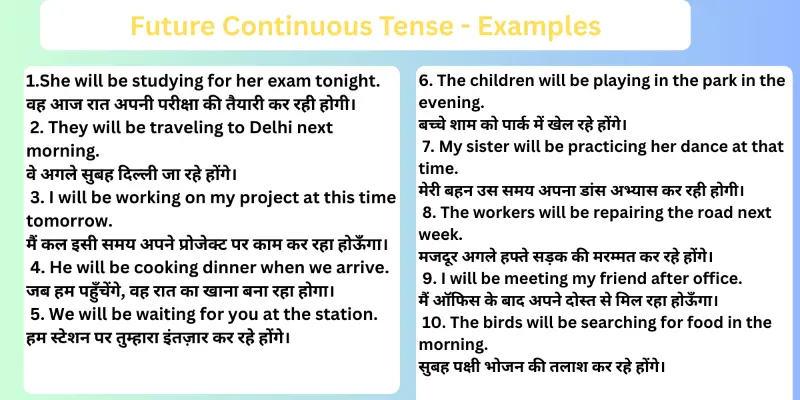
1. I will be organizing my study notes in the morning.
मैं सुबह अपने अध्ययन नोट्स व्यवस्थित कर रहा होऊँगा।
2. She will be watering the plants when you message her.
जब तुम उसे मैसेज करोगे, वह पौधों को पानी दे रही होगी।
3. They will be decorating the hall for the celebration.
वे समारोह के लिए हॉल सजा रहे होंगे।
4. We will be cleaning the terrace this evening.
हम आज शाम टैरेस साफ कर रहे होंगे।
5. He will be repairing his old camera tomorrow.
वह कल अपना पुराना कैमरा ठीक कर रहा होगा।
6. The children will be practicing a new dance at school.
बच्चे स्कूल में नया डांस अभ्यास कर रहे होंगे।
7. I will be searching for my lost documents in the afternoon.
मैं दोपहर में अपने खोए दस्तावेज़ ढूँढ रहा होऊँगा।
8. She will be designing a poster for the event.
वह कार्यक्रम के लिए पोस्टर डिज़ाइन कर रही होगी।
9. They will be painting the walls next weekend.
वे अगले वीकेंड दीवारें पेंट कर रहे होंगे।
10. We will be arranging chairs before the meeting starts.
मीटिंग शुरू होने से पहले हम कुर्सियाँ लगा रहे होंगे।
11. He will be recording a new song at the studio.
वह स्टूडियो में एक नया गीत रिकॉर्ड कर रहा होगा।
12. I will be learning a new software during the workshop.
वर्कशॉप के दौरान मैं नया सॉफ़्टवेयर सीख रहा होऊँगा।
13. They will be preparing breakfast when I reach home.
जब मैं घर पहुँचूँगा, वे नाश्ता तैयार कर रहे होंगे।
14. She will be writing notes for her next lecture.
वह अपने अगले लेक्चर के लिए नोट्स लिख रही होगी।
15. We will be waiting for the bus near the library.
हम लाइब्रेरी के पास बस का इंतज़ार कर रहे होंगे।
16. The shopkeeper will be opening the store at 7 AM.
दुकानदार सुबह 7 बजे दुकान खोल रहा होगा।
17. The students will be drawing maps in the geography class.
विद्यार्थी भूगोल की कक्षा में नक्शे बना रहे होंगे।
18. I will be checking my emails after dinner.
डिनर के बाद मैं अपने ईमेल देख रहा होऊँगा।
19. They will be installing new computers in the lab.
वे लैब में नए कंप्यूटर इंस्टॉल कर रहे होंगे।
20. She will be packing her luggage for the trip.
वह यात्रा के लिए अपना सामान पैक कर रही होगी।
21. He will be exercising at the park early in the morning.
वह सुबह-सुबह पार्क में व्यायाम कर रहा होगा।
22. We will be preparing notes for the group study.
हम ग्रुप स्टडी के लिए नोट्स तैयार कर रहे होंगे।
23. I will be editing my project late at night.
मैं देर रात अपना प्रोजेक्ट एडिट कर रहा होऊँगा।
24. They will be arranging flowers for the ceremony.
वे समारोह के लिए फूल सजा रहे होंगे।
25. She will be attending an online seminar in the afternoon.
वह दोपहर में एक ऑनलाइन सेमिनार में शामिल हो रही होगी।
26. The workers will be repairing the road after sunset.
मजदूर सूर्यास्त के बाद सड़क ठीक कर रहे होंगे।
27. We will be preparing slides for tomorrow’s presentation.
हम कल की प्रस्तुति के लिए स्लाइड्स तैयार कर रहे होंगे।
28. He will be meeting his cousin at the café.
वह कैफ़े में अपने कज़िन से मिल रहा होगा।
29. I will be checking the weather updates before leaving.
निकलने से पहले मैं मौसम अपडेट देख रहा होऊँगा।
30. They will be practicing yoga during the morning session.
वे सुबह के सत्र में योग अभ्यास कर रहे होंगे।
Read Tense and There Types
• Tense
• Present Tense
• Present Indefinite Tense • Present continuous tense
• Present Perfect Tense • Present Perfect Continuous Tense
• Past Tense
• Past Indefinite Tense • Past continuous tense
• Past Perfect Tense • Past Perfect Continuous Tense
• Future Tense
• Future Indefinite Tense
• future continuous tense • Future Perfect Tense
• Future Perfect Continuous Tense