24-day-image

24th Day Learning English – 24th day Challenge

Today is our twenty-fourth day of learning English. We are gradually learning to form sentences. Today, we will study and learn about negative sentences. How are negative sentences formed? And how can we learn to use them? We will learn and understand all of this here today.

आज हमारा अंग्रेजी सीखने का चौबीसवां दिन है। धीरे धीरे हम सेंटेस बनाना सीख पा रहे हैं आज हम नकारात्मक वाक्य के बारे में पढ़ेंगे तथा सीखेंगे। नकारात्मक वाक्य कैसे बनाए जाते हैं तथाकिस प्रकार नकारात्मक वाक्य हम सीख पाएंगे? यह आज हम जानेंगें और पढ़ेंगे।

Negative Sentences (नकारात्मक वाक्य)

A Negative Sentence is a sentence that denies, rejects, or shows the absence of something.
It tells that something is not true or not happening.
These sentences always use negative words such as not, never, no, nothing, none, nobody, etc.

In short:

A Negative Sentence expresses a negative meaning or denial of a statement.

Negative Sentence (नकारात्मक वाक्य) वह वाक्य होता है जो किसी बात का इंकार (इंकार करना), अस्वीकार या अभाव प्रकट करता है। ऐसे वाक्य बताते हैं कि कोई कार्य नहीं हो रहा है या सत्य नहीं है। इन वाक्यों में हमेशा नकारात्मक शब्द जैसे not, never, no, nothing, none, nobody आदि का प्रयोग किया जाता है।

Examples:

1. I do not like tea.
मुझे चाय पसंद नहीं है।

As explained in the first example, "I don't like tea" means "I don't like tea," and it uses the word "not." Therefore, this is a negative sentence. A sentence that contains words like "no," "not," or other words expressing negation is called a negative sentence.

जैसा कि पहले उदाहरण में बताया गया है, आई डोंट लाइक टी मतलब मुझे चाय पसंद नहीं है, इसमें नहीं का प्रयोग हुआ है। अथार्त यह वाक्य नकारात्मक वाक्य है, जिंस वाक्य में ना, नहीं, इनकार आता है, वहाँ वाक्य नकारात्मक कहलाता है।

2. She is not a doctor.
वह डॉक्टर नहीं है।

As we read about positive sentences in the previous section, similarly, sentences can be positive or negative. A sentence that contains a negative word like "no" or "not" is called a negative sentence. We use negative sentences in our everyday conversations. Therefore, we should be able to identify negative sentences and understand how they are formed. To understand this, examples of negative sentences in a conversation are given below. Please read and learn them carefully.

जैसे कि हमने पिछले में सकारात्मक वाकय के बारे में पढ़ा। उसी प्रकार सकारात्मक और नकारात्मक बदला जाता है तथा उसने नकारात्मक वाक्य कहा जाता है जिसे ना , नहीं प्रयोग किया जाता है, उसे नकारात्मक वाक्य कहते हैं।इस प्रकार नकारात्मक वाक्य का प्रयोग अपने बोलचाल में भी करते हैं। इसलिए हम नकारात्मक वाकया की पहचान करना आना चाहिए तथा समझना चाहिए कि नकारात्मक वाक्य कैसे बनाए जाते हैं। इसे समझने के लिए नीचे कन्वर्सेशन नकारात्मक वाक्य के उदाहरण दे रहे हैं, जो कि आप ध्यान से पढ़ें और सीखें।

Read Also

Negative Sentences
Interrogative Sentences
Imperative Sentence
Exlamatory Sentences
Conditional Sentences

Negative Sentence Conversation Examples

1. A: I do not like this movie.
B: I do not enjoy it either.
A: मुझे यह फिल्म पसंद नहीं है।
B: मुझे भी यह पसंद नहीं है।

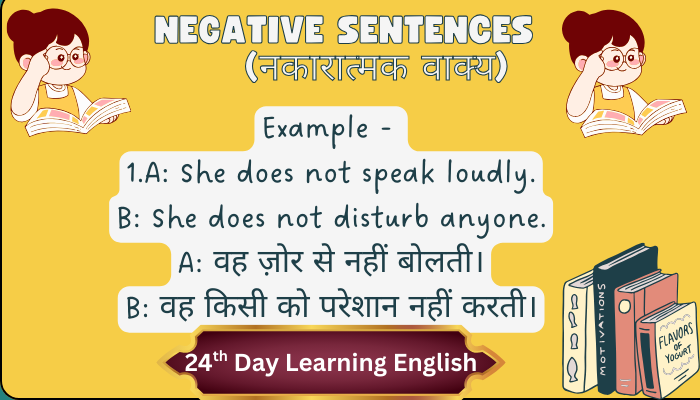
2. A: She does not speak loudly.
B: She does not disturb anyone.
A: वह ज़ोर से नहीं बोलती।
B: वह किसी को परेशान नहीं करती।

3. A: We are not late today.
B: We are not worried now.
A: हम आज देर से नहीं हैं।
B: हम अब चिंतित नहीं हैं।

4. A: He does not skip classes.
B: He does not miss lessons.
A: वह कक्षाएँ नहीं छोड़ता।
B: वह पाठ नहीं छोड़ता।

5. A: I am not tired today.
B: I am not feeling weak.
A: मैं आज थका हुआ नहीं हूँ।
B: मैं कमज़ोर महसूस नहीं कर रहा हूँ।

6. A: She does not wake up late.
B: She does not waste time.
A: वह देर से नहीं उठती।
B: वह समय बर्बाद नहीं करती।

7. A: We do not forget our homework.
B: We do not make excuses.
A: हम अपना होमवर्क नहीं भूलते।
B: हम बहाने नहीं बनाते।

8. A: He does not play carelessly.
B: He does not get injured.
A: वह लापरवाही से नहीं खेलता।
B: वह घायल नहीं होता।

9. A: She does not argue much.
B: She does not create problems.
A: वह ज़्यादा बहस नहीं करती।
B: वह समस्याएँ पैदा नहीं करती।

10. A: I do not feel sad now.
B: I do not think negatively.
A: मैं अब उदास महसूस नहीं करता।
B: मैं नकारात्मक नहीं सोचता।

11. A: We do not waste water.
B: We do not harm nature.
A: हम पानी बर्बाद नहीं करते।
B: हम प्रकृति को नुकसान नहीं पहुँचाते।

12. A: He does not speak rudely.
B: He does not hurt anyone.
A: वह बदतमीज़ी से बात नहीं करता।
B: वह किसी को ठेस नहीं पहुँचाता।

13. A: She is not afraid of hard work.
B: She is not lazy.
A: वह मेहनत से डरती नहीं है।
B: वह आलसी नहीं है।

14. A: I do not depend on others.
B: I do not lose confidence.
A: मैं दूसरों पर निर्भर नहीं रहता।
B: मैं आत्मविश्वास नहीं खोता।

15. A: We do not ignore rules.
B: We do not break discipline.
A: हम नियमों की अनदेखी नहीं करते।
B: हम अनुशासन नहीं तोड़ते।

16. A: He does not complain much.
B: He does not spread negativity.
A: वह ज़्यादा शिकायत नहीं करता।
B: वह नकारात्मकता नहीं फैलाता।

17. A: She does not miss practice.
B: She does not give up easily.
A: वह अभ्यास नहीं छोड़ती।
B: वह आसानी से हार नहीं मानती।

18. A: I am not confused now.
B: I am not making mistakes.
A: मैं अब उलझन में नहीं हूँ।
B: मैं गलतियाँ नहीं कर रहा हूँ।

19. A: We do not disrespect elders.
B: We do not use bad words.
A: हम बड़ों का अपमान नहीं करते।
B: हम गलत शब्दों का उपयोग नहीं करते।

20. A: He does not feel nervous.
B: He does not lose focus.
A: वह घबराया हुआ महसूस नहीं करता।
B: वह ध्यान नहीं खोता।

21. A: She does not forget her goals.
B: She does not lose hope.
A: वह अपने लक्ष्य नहीं भूलती।
B: वह उम्मीद नहीं खोती।

22. A: I do not complain about work.
B: I do not avoid responsibility.
A: मैं काम की शिकायत नहीं करता।
B: मैं ज़िम्मेदारी से नहीं बचता।

23. A: We are not careless in exams.
B: We are not afraid of questions.
A: हम परीक्षा में लापरवाह नहीं होते।
B: हम सवालों से नहीं डरते।

24. A: He does not lie to anyone.
B: He does not cheat others.
A: वह किसी से झूठ नहीं बोलता।
B: वह दूसरों को धोखा नहीं देता।

25. A: She does not stop learning.
B: She does not waste opportunities.
A: वह सीखना नहीं छोड़ती।
B: वह मौकों को बर्बाद नहीं करती।

26. A: I am not angry with you.
B: I am not upset now.
A: मैं तुमसे नाराज़ नहीं हूँ।
B: मैं अब परेशान नहीं हूँ।

27. A: We do not fear failure.
B: We do not stop trying.
A: हम असफलता से नहीं डरते।
B: हम कोशिश करना नहीं छोड़ते।

28. A: He does not feel lonely.
B: He does not lose motivation.
A: वह अकेलापन महसूस नहीं करता।
B: वह प्रेरणा नहीं खोता।

29. A: She does not depend on luck.
B: She does not avoid effort.
A: वह किस्मत पर निर्भर नहीं रहती।
B: वह मेहनत से नहीं बचती।

30. A: I do not regret my decision.
B: I do not feel helpless.
A: मुझे अपने फैसले का पछतावा नहीं है।
B: मैं असहाय महसूस नहीं करता।

Read Also

Sentences
Parts of Sentence
Affirmative Sentences

Exercise-1

Part–A: Fill in the Blanks

(do not / does not / am not / are not ka sahi use karein)

1. I __ like this movie.
2. She __ speak loudly.
3. We __ late today.
4. He __ skip classes.
5. I __ tired now.
6. She __ wake up late.
7. We __ forget our homework.
8. He __ play carelessly.
9. She __ argue much.
10. I __ feel sad today.
11. We __ waste water.
12. He __ speak rudely.
13. She __ afraid of hard work.
14. I __ depend on others.
15. We __ ignore the rules.
16. He __ complain much.
17. She __ miss practice.
18. I __ confused now.
19. We __ disrespect elders.
20. He __ feel nervous.

Part–B: Change into Negative Sentences

21. I like this book.
22. She speaks English well.
23. We are ready for the exam.
24. He helps everyone.
25. I am happy today.
26. She wakes up early.
27. We follow the rules.
28. He plays football.
29. She respects her parents.
30. We believe in hard work.

ANSWER KEY

Part–A: Fill in the Blanks

1. I do not like this movie.
2. She does not speak loudly.
3. We are not late today.
4. He does not skip classes.
5. I am not tired now.
6. She does not wake up late.
7. We do not forget our homework.
8. He does not play carelessly.
9. She does not argue much.
10. I do not feel sad today.
11. We do not waste water.
12. He does not speak rudely.
13. She is not afraid of hard work.
14. I do not depend on others.
15. We do not ignore the rules.
16. He does not complain much.
17. She does not miss practice.
18. I am not confused now.
19. We do not disrespect elders.
20. He does not feel nervous.

Part–B: Change into Negative Sentences

21. I do not like this book.
22. She does not speak English well.
23. We are not ready for the exam.
24. He does not help everyone.
25. I am not happy today.
26. She does not wake up early.
27. We do not follow the rules.
28. He does not play football.
29. She does not respect her parents.
30. We do not believe in hard work.