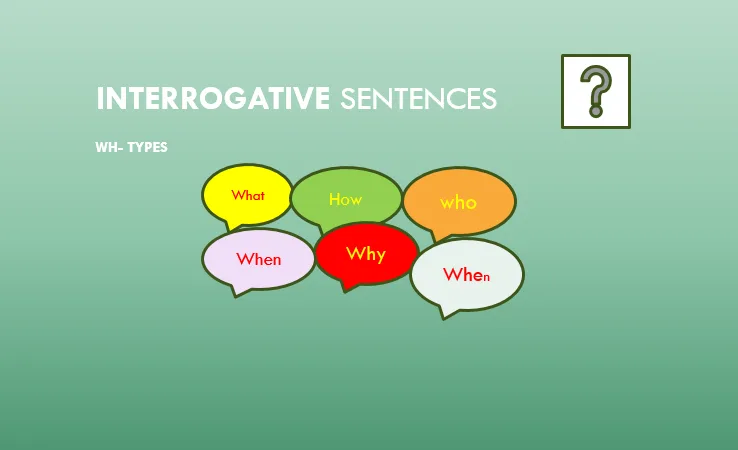
Definition
An Interrogative Sentence is a sentence that is used to ask a question.
It always seeks information, ends with a question mark ( ? ), and usually begins with a helping verb or a question word (Wh-word) such as what, where, when, why, who, how, which, etc.
Or
An interrogative sentence is used to ask questions and to get answers.
परिभाषा
Interrogative Sentence (प्रश्नवाचक वाक्य) वह वाक्य होता है
जिसका प्रयोग किसी से प्रश्न पूछने या जानकारी प्राप्त करने के लिए किया जाता है।
ऐसे वाक्य हमेशा प्रश्नवाचक चिन्ह ( ? ) से समाप्त होते हैं और अक्सर helping verb या question word (Wh-word) से शुरू होते हैं।
Examples:
1. Are you ready for the test?
क्या तुम परीक्षा के लिए तैयार हो?
2. Does she speak English?
क्या वह अंग्रेज़ी बोलती है?
3. Will it rain today?
क्या आज बारिश होगी?
4. What do you want?
तुम क्या चाहते हो?
5. Who is knocking at the door?
दरवाज़े पर कौन खटखटा रहा है?
6. When did he leave the office?
वह ऑफिस से कब गया था?
7. How are you feeling now?
अब तुम कैसा महसूस कर रहे हो?
8. Why were they laughing?
वे क्यों हँस रहे थे?
9. Which color do you prefer?
तुम्हें कौन सा रंग पसंद है?
10. Have they finished their work?
क्या उन्होंने अपना काम पूरा कर लिया है?
इन सभी उदाहरणों द्वारा आप सभी को पता लग गया होगा कि सभी उदाहरणों में प्रश्न पूछा गया है अतः सभी उदाहरण प्रश्नवाचक वाक्य हैं।
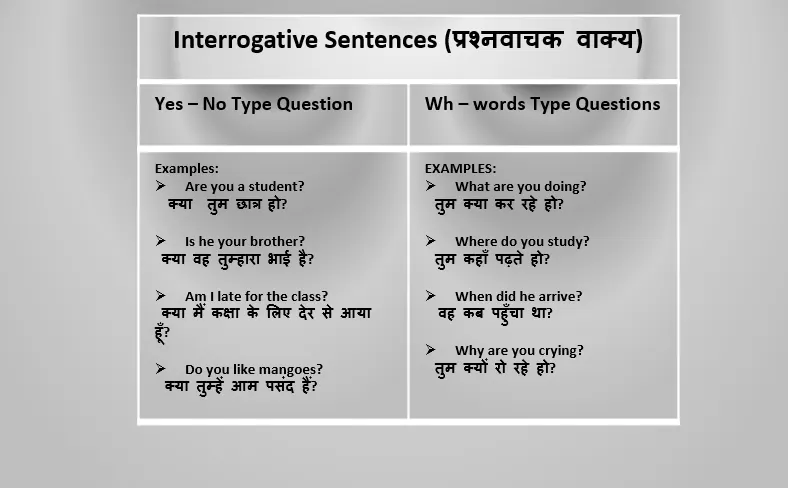
❖ Types of Interrogative Sentence (प्रश्नवाचक वाक्य के प्रकार)
प्रश्नवाचक वाक्य दो प्रकार के होते हैं –
1. Yes – No Type Question
2. Wh- words Type Question
1. Yes – No Type Question
Definition
A Yes/No Type Question is a question that can be answered simply with “Yes” or “No.”
These questions usually begin with a Helping Verb (is, am, are, do, does, did, was, were, will, shall, have, has, had, etc.) and end with a Question Mark ( ? ).
Or
A Yes/No Question asks whether something is true or not — it does not need a detailed answer.
परिभाषा
Yes/No Type Question (हाँ/ना प्रकार के प्रश्न) वे वाक्य होते हैं
जिनका उत्तर केवल “हाँ (Yes)” या “ना (No)” में दिया जा सकता है।
ऐसे प्रश्न हमेशा helping verb (जैसे is, am, are, do, does, did, will, shall आदि) से शुरू होते हैं
और अंत में प्रश्नवाचक चिन्ह (?) लगाया जाता है।
नीचे दिए गए उदाहरणों में आपको पूर्ण रूप से प्रश्न वाचक वाक्य के बारे में तथा स्ट्रक्चर द्वारा समझाया गया है। ध्यान से पढ़ें और समझें।
यदि मुख्य क्रिया नहीं है (main verb absent है),तो केवल helping verb + subject से प्रश्न बनता है।
Examples:
1. Are you a student?
क्या तुम छात्र हो?
2. Is he your brother?
क्या वह तुम्हारा भाई है?
3. Am I late for the class?
क्या मैं कक्षा के लिए देर से आया हूँ?
4. Do you like mangoes?
क्या तुम्हें आम पसंद हैं?
5. Does she play the guitar?
क्या वह गिटार बजाती है?
6. Did they watch the movie?
क्या उन्होंने फिल्म देखी थी?
7. Was he reading a book?
क्या वह किताब पढ़ रहा था?
8. Were you sleeping?
क्या तुम सो रहे थे?
9. Have you finished your homework?
क्या तुमने अपना होमवर्क पूरा कर लिया है?
10. Has she called you?
क्या उसने तुम्हें फोन किया है?
11. Had they left before you came?
क्या वे तुम्हारे आने से पहले चले गए थे?
12. Will it rain today?
क्या आज बारिश होगी?
13. Shall we go now?
क्या हम अब चलें?
14. Can you help me?
क्या तुम मेरी मदद कर सकते हो?
15. May I come in?
क्या मैं अंदर आ सकता हूँ?
Note: जानकारी प्राप्त करने या पुष्टि करने के लिए।
• Answer: केवल Yes या No में दिया जाता है।
• Start: हमेशा helping verb से होता है।
• End: हमेशा question mark ( ? ) से होता है।
Read
• Sentence- Types of Sentence
• Affirmative Sentence
• Negative Sentence
• Conditional Sentence
2. Wh – words Type Questions
Definition
A Wh-type Question is a question that begins with a question word such as
What, Where, When, Why, Who, Whom, Which, Whose, How, etc.
These questions cannot be answered with just “Yes” or “No” — they need detailed information in the answer.
Or
A Wh-type question asks for specific information about something or someone.
परिभाषा
Wh-type Question (प्रश्नवाचक वाक्य) वे वाक्य होते हैं
जो प्रश्नवाचक शब्दों (Wh-words) जैसे — What (क्या), Where (कहाँ), When (कब), Why (क्यों), Who (कौन), How (कैसे) आदि से शुरू होते हैं।
इनका उत्तर केवल “हाँ” या “ना” में नहीं दिया जा सकता, बल्कि पूरा विवरण (information) देना पड़ता है।
Examples:
Note:
यदि Wh-word ही subject है (जैसे Who), तो helping verb subject के बाद आता है।
1. What are you doing?
तुम क्या कर रहे हो?
2. Where do you study?
तुम कहाँ पढ़ते हो?
3. When did he arrive?
वह कब पहुँचा था?
4. Why are you crying?
तुम क्यों रो रहे हो?
5. Who is sitting on the chair?
कुर्सी पर कौन बैठा है?
6. Which dress will you wear today?
आज तुम कौन-सी ड्रेस पहनोगे?
7. Whose bag is this?
यह बैग किसका है?
8. How did you make this cake?
तुमने यह केक कैसे बनाया?
9. What does he want?
वह क्या चाहता है?
10. Where were they going?
वे कहाँ जा रहे थे?
11. Why did you leave early?
तुम जल्दी क्यों चले गए?
12. Who helped you yesterday?
कल तुम्हारी मदद किसने की थी?
13. How many books do you have?
तुम्हारे पास कितनी किताबें हैं?
14. When will they return?
वे कब लौटेंगे?
15. Which subject do you like the most?
तुम्हें कौन-सा विषय सबसे ज़्यादा पसंद है?
Read Also
• Parts of speech
• Imperative Sentence
• Exclamatory Sentence
🞴 Important Rule (मुख्य नियम) –
1. Wh-type questions हमेशा Wh-word से शुरू होते हैं।
2. Helping verb subject से पहले आता है (जैसे do, does, did, is, are, will, have, आदि)।
3. यदि Wh-word खुद subject है (जैसे Who, What), तो helping verb subject के बाद आता है।
4. वाक्य के अंत में question mark (?) अवश्य लगाया जाता है।
नीचे आपको Wh – Word की एक टेबल(Table) बनाकर दे दी गई है जिसमें आपको Wh-word का हिंदी अर्थ तथा उसके उपयोग सीखने को मिलेंगे। इस टेबल को ध्यान से पढ़ें और सीखें तभी आप प्रश्नवाचक वाक्य प्रयोग आसानी से कर पाएंगे।
| Wh-word |
Hindi Meaning |
Use |
| What |
क्या |
किसी वस्तु, कार्य या बात के बारे में पूछने के लिए |
| Where |
कहाँ |
स्थान या जगह पूछने के लिए |
| When |
कब |
समय के बारे में पूछने के लिए |
| Why |
क्यों |
कारण या वजह पूछने के लिए |
| Who |
कौन |
किसी व्यक्ति के बारे में पूछने के लिए |
| Whom |
किसे / किसको |
क्रिया के object के बारे में पूछने के लिए |
| Whose |
किसका / किसकी / किसके |
स्वामित्व या अधिकार पूछने के लिए |
| Which |
कौन-सा / कौन-सी / कौन-से |
किसी एक विकल्प को चुनने के लिए |
| How |
कैसे |
तरीका या अवस्था पूछने के लिए |
| How many |
कितने / कितनी |
गिनने योग्य चीज़ों के लिए (countable nouns) |
| How much |
कितना / कितनी |
अगिनती योग्य नहीं चीज़ों के लिए (uncountable nouns) |
| How old |
कितनी उम्र |
उम्र पूछने के लिए |
| How long |
कितनी देर / कितने समय तक |
समय की अवधि पूछने के लिए |
| How far |
कितनी दूर |
दूरी पूछने के लिए |
| How often |
कितनी बार |
आवृत्ति (frequency) पूछने के लिए |
| How tall |
कितनी ऊँचाई |
ऊँचाई पूछने के लिए |
| How fast |
कितनी तेजी से |
गति पूछने के लिए |
| How soon |
कितनी जल्दी |
समय की शीघ्रता पूछने के लिए |
| How much time |
कितना समय |
समय की मात्रा पूछने के लिए |
Many Examples of Interrogative Sentences English to Hindi
नीचे आपको दोनों टाइप्स (Types) के उदाहरण अंग्रेजी से हिंदी अनुवाद में दिए गए हैं। इन उदाहरणों की सहायता से आप प्रश्न वाचक वाक्य को समझ पाओगे।
Examples:
1. Are they your friends?
क्या वे तुम्हारे दोस्त हैं?
2. Do you speak English?
क्या तुम अंग्रेज़ी बोलते हो?
3. Does he go to gym daily?
क्या वह रोज़ जिम जाता है?
4. Is your father at home?
क्या तुम्हारे पिताजी घर पर हैं?
5. Was she crying yesterday?
क्या वह कल रो रही थी?
6. Did they win the match?
क्या उन्होंने मैच जीता था?
7. Have you seen my notebook?
क्या तुमने मेरी नोटबुक देखी है?
8. Will you come with me tomorrow?
क्या तुम कल मेरे साथ आओगे?
9. Can I use your phone?
क्या मैं तुम्हारा फोन इस्तेमाल कर सकता हूँ?
10. May I sit here?
क्या मैं यहाँ बैठ सकता हूँ?
11. What do you want to eat?
तुम क्या खाना चाहते हो?
12. Where did you buy this dress from?
तुमने यह ड्रेस कहाँ से खरीदी?
13. When does the train leave?
ट्रेन कब चलती है?
14. Why did he leave the meeting early?
वह मीटिंग जल्दी क्यों छोड़ गया?
15. Who is standing near the gate?
गेट के पास कौन खड़ा है?
16. Whose phone is ringing?
किसका फोन बज रहा है?
17. Which subject do you find difficult?
तुम्हें कौन-सा विषय कठिन लगता है?
18. How did you solve this question?
तुमने यह प्रश्न कैसे हल किया?
19. How long will you stay in Delhi?
तुम दिल्ली में कितने समय तक रहोगे?
20. How far is your village from here?
तुम्हारा गाँव यहाँ से कितनी दूर है?
Read Also
• Active & Passive voice
• Article-A
Read Tenses & there Types
• Tense • Present Tense
• Present Indefinite Tense • Present Perfect Tense
• Present Continuous Tense • Present Perfect Continuous Tense
• Past Tense • Past Indefinite Tense
• Past Perfect Tense • Past Continuous Tense
• Past Perfect Continuous Tense • Future Tense
• Future Indefinite Tense • Future Perfect Tense
• Future Continuous Tense • Future Perfect Continuous Tense