Past Perfect Tense (पूर्ण भूतकाल)
Definition -
Past Perfect Tense is used to show an action that was completed before another action in the past.
It tells that one action happened earlier, and then the next action happened.
We use the Past Perfect Tense when we talk about two actions in the past and we want to show which action happened first.
The action that happened earlier takes Past Perfect (had + V3) and the action that happened later takes Past Indefinite (V2).
परिभाषा -
Past Perfect Tense उस क्रिया को दिखाता है जो अतीत में किसी दूसरी क्रिया से पहले पूरी हो चुकी थी।
यह बताता है कि पहला काम पहले खत्म हुआ, फिर दूसरा काम हुआ।
जब अतीत में दो क्रियाएँ हों और हमें यह बताना हो कि पहली क्रिया कौन-सी थी, तब Past Perfect Tense का प्रयोग किया जाता है।
पहली (Earlier) क्रिया में had + V3 लगता है और जो क्रिया बाद में हुई वह Past Indefinite (V2) में आती है।
• RULES OF PAST PERFECT TENSE: पूर्ण भूतकाल के नियम
RULE 1 — Use “had” with every subject
In Past Perfect, had is used with all subjects (I, we, you, he, she, they, etc.).
Past Perfect में हर subject के साथ had ही लगता है।
RULE 2 — Verb must be in V3 (third form)
The main verb always takes third form (V3) after “had”.
“had” के बाद हमेशा क्रिया की तीसरी रूप का प्रयोग होता है।
RULE 3 — Show two actions: earlier action = Past Perfect
Past Perfect is used only for the first completed action.
Past Perfect का प्रयोग सिर्फ उस क्रिया के लिए होता है जो सबसे पहले हुई हो।
RULE 4 — Second action goes in Past Indefinite
The second action is written in Past Indefinite (V2 form).
दूसरी क्रिया Past Indefinite (क्रिया का दूसरी रूप) में होती है।
RULE 5 — Use words like before, when, after
Words like before, when, after, show the connection between two past actions.
जब, पहले, बाद में जैसे शब्द दो क्रियाओं के संबंध को स्पष्ट करते हैं।
Rule 6 - Past Perfect की पहचान इन endings से होती है:
1. चुका था
2. चुकी थी
3. चुके थे
4. लिया था
5. ली थी
6. लिए थे
7. दिया था
8. दी थी
9. दिए थे
10. हो चुका था / हो चुकी थी / हो चुके थे
इनसे साफ़ पता चलता है कि क्रिया पूरी हो चुकी थी और पहले हो चुकी थी।
Read Also
• Past Tense
• Past Indefinite Tense • Past Continuous Tense
• Past Perfect Tense • Past Perfect Continuous Tense
Examples:
1. I had completed my homework before the class started.
कक्षा शुरू होने से पहले मैं अपना होमवर्क पूरा कर चुका था।
2. She had left the room before I reached.
मेरे पहुँचने से पहले वह कमरे से जा चुकी थी।
3. They had eaten dinner when we arrived.
जब हम पहुँचे, वे खाना खा चुके थे।
4. He had repaired the bike before evening.
वह शाम से पहले बाइक ठीक कर चुका था।
5. We had planned the trip before the holidays came.
छुट्टियाँ आने से पहले हम यात्रा की योजना बना चुके थे।
6. The train had departed when I reached the station.
जब मैं स्टेशन पहुँचा, ट्रेन निकल चुकी थी।
7. She had written the letter before night.
रात होने से पहले वह पत्र लिख चुकी थी।
8. They had cleaned the hall before the guests arrived.
मेहमानों के आने से पहले वे हॉल साफ़ कर चुके थे।
9. I had forgotten my keys at home.
मैं अपनी चाबियाँ घर पर भूल चुका था।
10. He had studied the chapter before the test began.
परीक्षा शुरू होने से पहले वह अध्याय पढ़ चुका था।
उपरोक्त दिए गए वाक्यों के अंत में चुकी थी, चुका था, चूके थे आदि शब्द आ रहे हैं सभी वाक्य पूर्ण भूतकाल के हैं।
Past Perfect Tense – Table
| Topic |
Explanation |
| Definition |
Past Perfect shown an action completed Before another past action. |
| Identification |
वाक्य अंत में चुका था,चुकी थी,चुके थे आदि। |
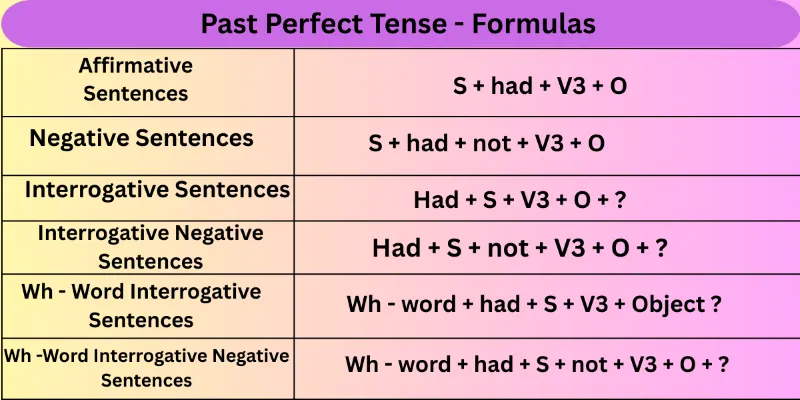
| Affirmative |
Subject + had + v3 + object |
| Negative |
Subject + had + not + v3 + object |
| Interrogative |
Had + subject + v3 + object +? |
| Interrogative Negative |
Had + subject + not + v3 + object ? |
| Wh-Questions |
Wh – word + had + subject + v3? |
1. Affirmative Sentences (सकारात्मक वाक्य) of Past Perfect Tense
A Past Perfect Affirmative Sentence tells that an action was completely finished before another action in the past.
It shows the earlier completed action using had + V3.
Past Perfect के Affirmative वाक्य यह बताते हैं कि अतीत में एक क्रिया दूसरी क्रिया से पहले पूरी हो चुकी थी।
इसमें सबसे पहले हुई क्रिया को had + क्रिया की तीसरी रूप के साथ लिखा जाता है।
Rule (नियम):
Rule 1: Use “had” with every subject.
I, you, we, they, he, she, it — सबके साथ had लगता है।
हर subject के साथ “had” ही आता है।
Rule 2 : Verb must be in V3 form.
After “had”, always use third form of verb (V3).
“had” के बाद हमेशा क्रिया की तीसरी रूप लगती है।
Rule 3 : Used for the action that happened earlier.
Past Perfect shows the first completed action.
यह tense पहले पूरी हुई क्रिया के लिए प्रयोग होता है।
Rule 4 : Second action (later action) comes in Past Indefinite (V2).
बाद में हुई क्रिया Past Indefinite (V2) में आती है।
Rule 5: Use connectors like before, when, after, already.
before, when, after आदि शब्द दो क्रियाओं को जोड़ते हैं।
Examples:
1. I had finished the project before the deadline came.
मैंने अंतिम तिथि आने से पहले प्रोजेक्ट पूरा कर लिया था।
2. She had washed the clothes before noon.
उसने दोपहर से पहले कपड़े धो लिए थे।
3. They had left the ground before the rain started.
बारिश शुरू होने से पहले वे मैदान छोड़ चुके थे।
4. He had learned the poem before the exam began.
परीक्षा शुरू होने से पहले वह कविता सीख चुका था।
5. We had decorated the hall before the guests arrived.
मेहमानों के आने से पहले हमने हॉल सजा लिया था।
6. I had taken the medicine before I slept.
मैं सोने से पहले दवा ले चुका था।
7. She had bought vegetables before the market closed.
बाज़ार बंद होने से पहले वह सब्ज़ियाँ खरीद चुकी थी।
8. They had booked the tickets before the prices increased.
कीमतें बढ़ने से पहले उन्होंने टिकटें बुक कर ली थीं।
9. He had prepared tea before anyone woke up.
किसी के जागने से पहले उसने चाय बना ली थी।
10. We had cleaned the classroom before lunch.
दोपहर के भोजन से पहले हमने कक्षा साफ कर ली थी।
11. I had visited the library before the bell rang.
घंटी बजने से पहले मैं पुस्तकालय जा चुका था।
12. She had arranged the files before the meeting started.
मीटिंग शुरू होने से पहले वह फाइलें व्यवस्थित कर चुकी थी।
13. They had eaten breakfast before the bus arrived.
बस आने से पहले वे नाश्ता कर चुके थे।
14. He had packed his luggage before the trip began.
यात्रा शुरू होने से पहले उसने सामान पैक कर लिया था।
15. We had found the keys before it got dark.
अँधेरा होने से पहले हमें चाबियाँ मिल गई थीं।
16. I had written the notes before the class ended.
कक्षा समाप्त होने से पहले मैं नोट्स लिख चुका था।
17. She had completed the form before the office closed.
ऑफिस बंद होने से पहले वह फॉर्म पूरा कर चुकी थी।
18. They had repaired the car before the journey started.
यात्रा शुरू होने से पहले वे कार ठीक कर चुके थे।
19. He had painted the wall before the rain came.
बारिश आने से पहले वह दीवार पेंट कर चुका था।
20. We had planned the event before the teacher asked.
शिक्षक के पूछने से पहले हम कार्यक्रम की योजना बना चुके थे।
21. I had opened the window before the room became hot.
कमरा गर्म होने से पहले मैंने खिड़की खोल दी थी।
22. She had learned the chapter before the test day.
परीक्षा के दिन से पहले वह अध्याय सीख चुकी थी।
23. They had planted trees before summer arrived.
गर्मी आने से पहले उन्होंने पेड़ लगा दिए थे।
24. He had checked the emails before office hours.
ऑफिस समय से पहले उसने ईमेल चेक कर ली थीं।
25. We had shifted the furniture before the workers came.
मजदूरों के आने से पहले हमने फर्नीचर हटा दिया था।
26. I had cooked dinner before everyone came home.
सबके घर आने से पहले मैंने खाना बना लिया था।
27. She had visited her friend before the festival started.
त्योहार शुरू होने से पहले वह अपनी दोस्त से मिल चुकी थी।
28. They had stored water before the supply stopped.
पानी की सप्लाई बंद होने से पहले उन्होंने पानी भर लिया था।
29. He had solved the puzzle before anyone helped.
किसी के मदद करने से पहले उसने पहेली सुलझा ली थी।
30. We had finished the homework before the movie started.
फिल्म शुरू होने से पहले हमने होमवर्क पूरा कर लिया था।
Read Also
• Affirmative Sentence • Use of Had
• Active & Passive Voice • Gender
• Use of Has & Have • Use of Use of Is/am/are
2. Negative Sentences (नकारात्मक वाक्य) of Past Perfect Tense
Past Perfect Negative Sentence tells that an action had NOT been completed before another action in the past.
It shows the earlier action did not happen, using had not + V3.
Past Perfect के Negative वाक्य बताते हैं कि अतीत में कोई क्रिया दूसरी क्रिया से पहले पूरी नहीं हुई थी।
इसमें पहले वाली क्रिया के साथ had not + क्रिया की तीसरी रूप (V3) लगता है।
Rules of Past Perfect Negative:
Rule 1 (English): Use “had not / hadn’t” with all subjects.
I, you, we, they, he, she, it — सभी के साथ had not ही लगता है।
हर subject के साथ “had not / hadn’t” आएगा।
Rule 2 (English): Verb must be in V3 (third form).
After had not, always use V3.
“had not” के बाद क्रिया की तीसरी रूप (V3) ही लगेगी।
Rule 3 : Negative form shows the earlier action was NOT completed.
Negative वाक्य यह दिखाता है कि पहली क्रिया हुई ही नहीं थी।
Rule 4 : The second action (later action) stays in Past Indefinite (V2).
बाद में हुई क्रिया Past Indefinite में रहती है।
Rule 5 : Use connectors like before, when, after to show time relation.
before, when, after आदि दो क्रियाओं का क्रम बताते हैं।
Example:
1. I had not locked the drawer before the servant arrived.
नौकर के आने से पहले मैंने दराज़ बंद नहीं की थी।
2. She had not watered the plants before the sun rose.
सूरज निकलने से पहले उसने पौधों को पानी नहीं दिया था।
3. They had not started the engine before the mechanic checked it.
मकैनिक के जाँच करने से पहले उन्होंने इंजन चालू नहीं किया था।
4. He had not counted the money before the shop closed.
दुकान बंद होने से पहले उसने पैसे नहीं गिने थे।
5. We had not switched on the lights before the guests came in.
मेहमानों के अंदर आने से पहले हमने लाइट्स नहीं जलाई थीं।
6. I had not painted the picture before the exhibition day.
प्रदर्शनी के दिन से पहले मैंने चित्र नहीं बनाया था।
7. She had not ironed the clothes before her friend arrived.
दोस्त के आने से पहले उसने कपड़े प्रेस नहीं किए थे।
8. They had not arranged the chairs before the meeting began.
मीटिंग शुरू होने से पहले उन्होंने कुर्सियाँ नहीं लगाई थीं।
9. He had not saved the document before the computer shut down.
कंप्यूटर बंद होने से पहले उसने दस्तावेज़ सेव नहीं किया था।
10. We had not paid the bill before the due date passed.
अंतिम तिथि निकलने से पहले हमने बिल नहीं भरा था।
11. I had not sharpened my pencils before the exam started.
परीक्षा शुरू होने से पहले मैंने अपनी पेंसिलें नहीं काटी थीं।
12. She had not washed her hands before eating food.
खाना खाने से पहले उसने हाथ नहीं धोए थे।
13. They had not fixed the fan before the heat increased.
गर्मी बढ़ने से पहले उन्होंने पंखा ठीक नहीं किया था।
14. He had not mailed the parcel before the courier office closed.
कूरियर ऑफिस बंद होने से पहले उसने पार्सल नहीं भेजा था।
15. We had not taken the printout before the class started.
कक्षा शुरू होने से पहले हमने प्रिंटआउट नहीं निकाला था।
16. I had not washed the fruits before serving them.
उन्हें परोसने से पहले मैंने फल नहीं धोए थे।
17. She had not opened the notebook before the teacher arrived.
शिक्षक के आने से पहले उसने कॉपी नहीं खोली थी।
18. They had not worn their uniforms before the assembly began.
सभा शुरू होने से पहले उन्होंने यूनिफ़ॉर्म नहीं पहनी थी।
19. He had not fed the dog before leaving home.
घर से निकलने से पहले उसने कुत्ते को खाना नहीं दिया था।
20. We had not started cooking before our relatives visited.
रिश्तेदारों के आने से पहले हमने खाना बनाना शुरू नहीं किया था।
21. I had not cleaned my shoes before stepping outside.
बाहर जाने से पहले मैंने अपने जूते साफ नहीं किए थे।
22. She had not switched off the fan before she left the room.
कमरा छोड़ने से पहले उसने पंखा बंद नहीं किया था।
23. They had not brought notebooks before the new session started.
नया सत्र शुरू होने से पहले वे नोटबुक्स नहीं लाए थे।
24. He had not taken rest before he fainted.
बेहोश होने से पहले उसने आराम नहीं किया था।
25. We had not collected the certificates before the office closed.
ऑफिस बंद होने से पहले हमने प्रमाणपत्र नहीं लिए थे।
26. I had not cleaned the table before the guests sat down.
मेहमानों के बैठने से पहले मैंने मेज़ साफ नहीं की थी।
27. She had not tied her hair before going outside.
बाहर जाने से पहले उसने अपने बाल नहीं बाँधे थे।
28. They had not checked the answer sheets before submitting them.
जमा करने से पहले उन्होंने उत्तर-पत्रक नहीं जाँचे थे।
29. He had not arranged the tools before starting the repair.
मरम्मत शुरू करने से पहले उसने औज़ार व्यवस्थित नहीं किए थे।
30. We had not packed the lunch before leaving for school.
स्कूल के लिए निकलने से पहले हमने खाना पैक नहीं किया था।
Read Also
• Sentence Structure • Negative Sentence
• Singular & Plural Number • Articles
• Use of Do & Does • Use of Had
3. Interrogative Sentences (प्रश्नवाचक वाक्य) of Past Perfect Tense
Past Perfect Interrogative Sentences are questions that ask whether an action had been completed before another action in the past.
They begin with Had, followed by the subject and V3.
Past Perfect के Interrogative वाक्य वे प्रश्न होते हैं जिनमें पूछा जाता है कि
अतीत में कोई क्रिया दूसरी क्रिया से पहले पूरी हुई थी या नहीं।
इन वाक्यों की शुरुआत Had से होती है, फिर subject आता है, और उसके बाद क्रिया की तीसरी रूप (V3)।
Rules (नियम):
Rule 1 : Start the sentence with “Had”.
वाक्य की शुरुआत “Had” से होगी।
Rule 2: After ‘Had’, put the Subject + V3.
Had के बाद Subject और फिर Verb की तीसरी रूप आएगी।
Rule 3 : Second action stays in Past Indefinite (V2).
दूसरी क्रिया Past Indefinite (V2) में लिखी जाती है।
Rule 4 : Use before, when, after to connect events.
घटनाओं को जोड़ने के लिए before, when, after आदि का प्रयोग होता है।
Rule 5 The sentence ends with a question mark (?).
वाक्य के अंत में प्रश्नवाचक चिन्ह (?) लगेगा।
Examples:
1. Had you washed the utensils before the maid came?
क्या आपने बर्तन धो दिए थे इससे पहले कि नौकरानी आई?
2. Had she visited the clinic before her fever increased?
क्या वह बुखार बढ़ने से पहले क्लिनिक गई थी?
3. Had they painted the gate before the rain started?
क्या उन्होंने बारिश शुरू होने से पहले गेट पेंट किया था?
4. Had he cleaned his bike before his father returned?
क्या उसने अपने पिता के लौटने से पहले बाइक साफ की थी?
5. Had we arranged the books before the bell rang?
क्या हमने घंटी बजने से पहले किताबें व्यवस्थित कर ली थीं?
6. Had you eaten lunch before the call came?
क्या आपने कॉल आने से पहले दोपहर का खाना खा लिया था?
7. Had she booked the room before the guests arrived?
क्या उसने मेहमानों के आने से पहले कमरा बुक कर लिया था?
8. Had they switched off the lights before leaving?
क्या वे जाने से पहले लाइटें बंद कर चुके थे?
9. Had he solved the exercise before the teacher checked?
क्या उसने शिक्षक के जाँचने से पहले अभ्यास हल कर लिया था?
10. Had we washed the vegetables before cooking began?
क्या हमने खाना पकाना शुरू होने से पहले सब्ज़ियाँ धो ली थीं?
11. Had you locked the main gate before going to sleep?
क्या आपने सोने से पहले मुख्य गेट बंद कर दिया था?
12. Had she written the speech before the program started?
क्या उसने कार्यक्रम शुरू होने से पहले भाषण लिख लिया था?
13. Had they arranged the stage before the performers reached?
क्या उन्होंने कलाकारों के पहुँचने से पहले मंच तैयार कर लिया था?
14. Had he filled the bottle before leaving the classroom?
क्या उसने कक्षा छोड़ने से पहले बोतल भर ली थी?
15. Had we packed the luggage before the cab arrived?
क्या हमने कैब आने से पहले सामान पैक कर लिया था?
16. Had you cleaned the mirror before the guests entered?
क्या आपने मेहमानों के आने से पहले शीशा साफ किया था?
17. Had she submitted the assignment before the deadline passed?
क्या उसने अंतिम तिथि बीतने से पहले असाइनमेंट जमा कर दिया था?
18. Had they checked the machine before starting the work?
क्या उन्होंने काम शुरू करने से पहले मशीन चेक कर ली थी?
19. Had he repaired the tap before the plumber came?
क्या उसने प्लंबर के आने से पहले नल ठीक कर लिया था?
20. Had we found the lost keys before it became dark?
क्या अँधेरा होने से पहले हमें खोई हुई चाबियाँ मिल गई थीं?
21. Had you arranged the chairs before the event began?
क्या आपने कार्यक्रम शुरू होने से पहले कुर्सियाँ लगा दी थीं?
22. Had she cleaned the whiteboard before the new class started?
क्या उसने नई कक्षा शुरू होने से पहले बोर्ड साफ किया था?
23. Had they collected the forms before the counter closed?
क्या उन्होंने काउंटर बंद होने से पहले फॉर्म जमा कर लिए थे?
24. Had he fed the birds before he went outside?
क्या वह बाहर जाने से पहले पक्षियों को खिला चुका था?
25. Had we changed the bedsheet before the guests arrived?
क्या हमने मेहमानों के आने से पहले चादर बदल दी थी?
26. Had you opened the windows before the room got hot?
क्या कमरा गर्म होने से पहले आपने खिड़कियाँ खोल ली थीं?
27. Had she completed the drawing before the bell rang?
क्या उसने घंटी बजने से पहले चित्र पूरा कर लिया था?
28. Had they checked their bags before entering the hall?
क्या उन्होंने हॉल में प्रवेश करने से पहले अपने बैग जाँच लिए थे?
29. Had he posted the letter before the post office closed?
क्या उसने पोस्ट ऑफिस बंद होने से पहले पत्र डाल दिया था?
30. Had we finished our tea before the train started?
क्या ट्रेन चलने से पहले हमने चाय खत्म कर ली थी?
Read Also
• Parts of Sentence • Interrogative Sentence
• Use of These & Those • Use of This & That
• Use of Was & Were • Noun
4. Interrogative Negative Sentences (प्रश्नवाचक नकारात्मक वाक्य) of Past Perfect Tense
Past Perfect Interrogative Negative Sentences are questions that ask whether an action had NOT been completed before another action in the past.
They begin with Had, followed by the subject + not + V3.
Past Perfect Interrogative Negative वाक्य ऐसे प्रश्न होते हैं जिनमें पूछा जाता है कि अतीत में कोई क्रिया दूसरी क्रिया से पहले पूरी नहीं हुई थी क्या?
इन वाक्यों की शुरुआत Had से होती है, फिर Subject + not + क्रिया की तीसरी रूप आता है।
Rules (नियम):
Rule 1: Start the sentence with “Had”.
वाक्य की शुरुआत “Had” से होती है।
Rule 2: After Had, write Subject + NOT + V3.
Had के बाद Subject + NOT + क्रिया की तीसरी रूप आती है।
Rule 3 - The second action remains in Past Indefinite (V2).
दूसरी क्रिया Past Indefinite (V2) में रहती है।
Rule 4: Use connectors like before/when/after.
before/when/after से दोनों क्रियाओं का क्रम बताया जाता है।
Rule 5 - End with a question mark (?).
वाक्य के अंत में प्रश्नवाचक चिन्ह (?) आता है।
Examples:
1. Had you not finished the report before the manager arrived?
क्या आपने मैनेजर के आने से पहले रिपोर्ट पूरी नहीं की थी?
2. Had she not washed the fruits before serving them?
क्या उसने फल परोसने से पहले नहीं धोए थे?
3. Had they not locked the cupboard before leaving the house?
क्या वे घर से निकलने से पहले अलमारी बंद नहीं कर गए थे?
4. Had he not written the email before the internet stopped?
क्या उसने इंटरनेट बंद होने से पहले ईमेल नहीं लिखा था?
5. Had we not cleaned the corridor before the guests reached?
क्या हम मेहमानों के पहुँचने से पहले कॉरिडोर साफ नहीं कर पाए थे?
6. Had you not organized the table before the class started?
क्या आपने कक्षा शुरू होने से पहले मेज़ व्यवस्थित नहीं की थी?
7. Had she not charged her phone before the battery died?
क्या उसने बैटरी खत्म होने से पहले फोन चार्ज नहीं किया था?
8. Had they not completed the drawing before the teacher entered?
क्या उन्होंने शिक्षक के आने से पहले चित्र पूरा नहीं किया था?
9. Had he not collected the tickets before the gate opened?
क्या उसने गेट खुलने से पहले टिकटें नहीं ली थीं?
10. Had we not arranged the files before the meeting started?
क्या हमने मीटिंग शुरू होने से पहले फाइलें व्यवस्थित नहीं की थीं?
11. Had you not closed the door before the cat ran out?
क्या आपने दरवाज़ा बंद नहीं किया था इससे पहले कि बिल्ली बाहर भाग गई?
12. Had she not made the list before going to the market?
क्या वह बाज़ार जाने से पहले सूची नहीं बना पाई थी?
13. Had they not repaired the computer before the exam day?
क्या उन्होंने परीक्षा के दिन से पहले कंप्यूटर ठीक नहीं किया था?
14. Had he not greeted the teacher before taking his seat?
क्या उसने अपनी सीट लेने से पहले शिक्षक को नमस्ते नहीं किया था?
15. Had we not done the warm-up before the practice began?
क्या हमने अभ्यास शुरू होने से पहले वार्म-अप नहीं किया था?
16. Had you not read the notice before entering the office?
क्या आपने ऑफिस में प्रवेश करने से पहले नोटिस नहीं पढ़ा था?
17. Had she not folded the clothes before keeping them in the cupboard?
क्या उसने कपड़ों को अलमारी में रखने से पहले तह नहीं किया था?
18. Had they not washed their hands before sitting for dinner?
क्या वे रात का खाना खाने से पहले हाथ नहीं धोए थे?
19. Had he not taken rest before starting the journey?
क्या उसने यात्रा शुरू करने से पहले आराम नहीं किया था?
20. Had we not informed the teacher before changing the group?
क्या हमने समूह बदलने से पहले शिक्षक को सूचित नहीं किया था?
21. Had you not filled the bottle before the break ended?
क्या आपने ब्रेक खत्म होने से पहले बोतल नहीं भरी थी?
22. Had she not cleaned her spectacles before reading the book?
क्या उसने किताब पढ़ने से पहले चश्मा साफ नहीं किया था?
23. Had they not checked their answers before submitting the sheet?
क्या उन्होंने शीट जमा करने से पहले उत्तर नहीं जाँचे थे?
24. Had he not saved the project before shutting down the laptop?
क्या उसने लैपटॉप बंद करने से पहले प्रोजेक्ट सेव नहीं किया था?
25. Had we not finished the tea before the train arrived?
क्या हमने ट्रेन आने से पहले चाय खत्म नहीं की थी?
26. Had you not watered the garden before the sun appeared?
क्या आपने सूरज निकलने से पहले बगीचे में पानी नहीं दिया था?
27. Had she not collected the coins before the box fell down?
क्या उसने डिब्बा गिरने से पहले सिक्के नहीं उठाए थे?
28. Had they not arranged the instruments before the music class began?
क्या उन्होंने म्यूजिक क्लास शुरू होने से पहले उपकरण नहीं लगाए थे?
29. Had he not put the milk in the fridge before it got spoiled?
क्या उसने दूध को खराब होने से पहले फ्रिज में नहीं रखा था?
30. Had we not noted the homework before the teacher left?
क्या हमने शिक्षक के जाने से पहले होमवर्क नहीं लिखा था?
Read Also
• Parts of Sentence • Conditional Sentence
• Model Verb • Use of Can & Could
• Use of Dare • Use of May & Might
5. Wh – word Interrogative Sentences (प्रश्नवाचक वाक्य) of Past Perfect Tense
When a question in Past Perfect Tense begins with a WH-word (what, why, when, where, who, whom, which, how), and it asks about an action that had been completed before another action, such sentences are called WH-Word Interrogative Past Perfect sentences.
Past Perfect Tense में जब कोई प्रश्न WH-word (क्या, क्यों, कब, कहाँ, कौन, किसे, कौन-सा, कैसे) से शुरू होता है और वह यह पूछता है कि कोई क्रिया अतीत में किसी दूसरी क्रिया से पहले पूरी हुई थी या नहीं, तो ऐसे वाक्य WH-Word Interrogative Past Perfect कहलाते हैं।
Rules (नियम):
Rule 1-Start the sentence with a WH-word.
वाक्य की शुरुआत WH-word से होती है।
Rule 2 : After WH-word, use Had + Subject + V3.
WH-word के बाद Had + Subject + Verb की तीसरी रूप आता है।
Rule 3: Second action remains in Past Indefinite (V2).
दूसरी क्रिया Past Indefinite (V2) में रहेगी।
Rule 4:Use connectors like before, when, after.
before, when, after से दोनों क्रियाओं का क्रम बताया जाता है।
Rule 5 - Sentence ends with a question mark (?).
Examples:
1. What had you written before the teacher checked your notebook?
आपने शिक्षक के नोटबुक जाँचने से पहले क्या लिखा था?
2. Why had she left the room before her mother arrived?
वह अपनी माँ के आने से पहले कमरे से क्यों चली गई थी?
3. When had they completed the project before the final day came?
उन्होंने अंतिम दिन आने से पहले प्रोजेक्ट कब पूरा किया था?
4. Where had he hidden the keys before everyone searched for them?
उसने चाभियाँ कहाँ छिपाई थीं इससे पहले कि सब उन्हें खोजें?
5. Who had called you before the meeting started?
मीटिंग शुरू होने से पहले आपको किसने फोन किया था?
6. Whom had they invited before the event began?
कार्यक्रम शुरू होने से पहले उन्होंने किसे आमंत्रित किया था?
7. Which book had you read before you joined the library?
लाइब्रेरी जॉइन करने से पहले आपने कौन-सी किताब पढ़ी थी?
8. How had she solved the problem before the teacher explained it?
शिक्षक के समझाने से पहले उसने समस्या कैसे हल कर ली थी?
9. Why had he cancelled the plan before talking to his friends?
उसने अपने दोस्तों से बात करने से पहले योजना क्यों रद्द कर दी थी?
10. What had they prepared before the guests arrived?
मेहमानों के आने से पहले उन्होंने क्या तैयार किया था?
11. Where had you kept the documents before the meeting began?
मीटिंग शुरू होने से पहले आपने दस्तावेज़ कहाँ रखे थे?
12. When had she packed her luggage before the taxi arrived?
टैक्सी आने से पहले उसने अपना सामान कब पैक किया था?
13. Who had helped him before the doctor reached?
डॉक्टर के पहुँचने से पहले उसकी मदद किसने की थी?
14. Which place had they visited before they returned home?
घर लौटने से पहले उन्होंने कौन-सी जगह देखी थी?
15. How had he repaired the cycle before the shop opened?
दुकान खुलने से पहले उसने साइकिल कैसे ठीक की थी?
16. Why had you ignored the message before the class ended?
कक्षा खत्म होने से पहले आपने संदेश क्यों अनदेखा किया था?
17. What had she cooked before her guests knocked at the door?
मेहमानों के दरवाज़ा खटखटाने से पहले उसने क्या पकाया था?
18. Where had they placed the chairs before the program started?
कार्यक्रम शुरू होने से पहले उन्होंने कुर्सियाँ कहाँ रखी थीं?
19. When had he completed his homework before he went to play?
खेलने जाने से पहले उसने अपना होमवर्क कब पूरा किया था?
20. Who had guided them before the exam began?
परीक्षा शुरू होने से पहले उन्हें किसने मार्गदर्शन दिया था?
21. Which movie had you watched before the theatre closed?
थिएटर बंद होने से पहले आपने कौन-सी फ़िल्म देखी थी?
22. How had she cleaned the room before the guests entered?
मेहमानों के अंदर आने से पहले उसने कमरा कैसे साफ किया था?
23. Why had they postponed the meeting before the principal arrived?
प्रिंसिपल के आने से पहले उन्होंने मीटिंग क्यों टाल दी थी?
24. What had he brought before everyone reached the party?
सबके पार्टी में पहुँचने से पहले वह क्या लेकर आया था?
25. Where had you seen him before the ceremony began?
समारोह शुरू होने से पहले आपने उसे कहाँ देखा था?
26. When had she switched off the lights before leaving the hall?
हॉल छोड़ने से पहले उसने लाइट कब बंद की थी?
27. Who had completed the chart before the teacher checked it?
शिक्षक के जाँचने से पहले चार्ट किसने पूरा किया था?
28. Which topic had they discussed before the class ended?
कक्षा खत्म होने से पहले उन्होंने कौन-सा विषय चर्चा किया था?
29. How had he reached school before the gate was closed?
गेट बंद होने से पहले वह स्कूल कैसे पहुँचा था?
30. Why had we forgotten the keys before we left home?
घर छोड़ने से पहले हम चाबियाँ क्यों भूल गए थे?
Read Also
• Exclamatory Sentence • Imperative Sentence
• Use of Must & Ought • Use of Shall & Will
• Use of Should & Would • Use of Used to
6. Wh – word Interrogative Negative Sentences (प्रश्नवाचक नकारात्मक वाक्य )of Past Perfect Tense
When a WH-word (what, why, when, where, who, whom, which, how) is used to ask a negative question about an action that had not been completed before another past action, the sentence becomes a WH-word interrogative negative sentence of Past Perfect Tense.
जब Past Perfect Tense में कोई प्रश्न WH-word (क्या, क्यों, कब, कहाँ, कौन, किसे, कौन-सा, कैसे) से शुरू हो और उस क्रिया के बारे में पूछा जाए जो अतीत में दूसरी क्रिया से पहले पूरी नहीं हुई थी, तो वह वाक्य WH-word interrogative negative Past Perfect कहलाता है।
Rules (नियम):
Rule 1 - Start with WH-word.
वाक्य की शुरुआत WH-word से करें।
Rule 2- After WH-word use: Had + subject + not + V3
WH-word के बाद Had + subject + not + V3 आएगा।
Rule 3- Second action remains in Past Indefinite (V2).
दूसरी घटना Past Indefinite (V2) में होगी।
Rule 4 -Use connectors: before / when / until
before, when, until से समय का क्रम दिखाएँ।
Rule 5- End with ?
वाक्य प्रश्नवाचक चिन्ह से समाप्त होगा।
Examples:
1. Why had you not finished the report before the meeting began?
मीटिंग शुरू होने से पहले आपने रिपोर्ट क्यों नहीं पूरी की थी?
2. What had she not prepared before her guests arrived?
मेहमानों के आने से पहले उसने क्या तैयार नहीं किया था?
3. When had they not checked the engine before starting the truck?
ट्रक शुरू करने से पहले उन्होंने इंजन कब नहीं जाँचा था?
4. Where had he not kept the files before the office closed?
ऑफिस बंद होने से पहले उसने फाइलें कहाँ नहीं रखी थीं?
5. Who had not informed you before the event started?
कार्यक्रम शुरू होने से पहले आपको किसने नहीं बताया था?
6. Whom had they not invited before the program began?
कार्यक्रम शुरू होने से पहले उन्होंने किसे आमंत्रित नहीं किया था?
7. Which dress had she not ironed before leaving for the function?
कार्यक्रम में जाने से पहले उसने कौन-सी ड्रेस प्रेस नहीं की थी?
8. How had he not solved the question before the bell rang?
घंटी बजने से पहले उसने प्रश्न कैसे नहीं हल किया था?
9. Why had we not cleaned the hall before the guests entered?
मेहमानों के आने से पहले हमने हॉल क्यों नहीं साफ किया था?
10. What had he not brought before everyone reached the party?
सबके पार्टी में पहुँचने से पहले वह क्या नहीं लाया था?
11. When had you not completed your homework before going out?
बाहर जाने से पहले आपने होमवर्क कब पूरा नहीं किया था?
12. Where had they not arranged the chairs before the seminar began?
सेमिनार शुरू होने से पहले उन्होंने कुर्सियाँ कहाँ नहीं लगाई थीं?
13. Who had not guided him before he appeared for the test?
परीक्षा देने से पहले उसे किसने मार्गदर्शन नहीं दिया था?
14. Which topic had you not revised before the exam started?
परीक्षा शुरू होने से पहले आपने कौन-सा विषय दोहराया नहीं था?
15. How had she not decorated the room before the celebration started?
जश्न शुरू होने से पहले उसने कमरा कैसे नहीं सजाया था?
16. Why had he not locked the gate before he left the house?
घर छोड़ने से पहले उसने गेट क्यों नहीं बंद किया था?
17. What had they not repaired before the school reopened?
स्कूल खुलने से पहले उन्होंने क्या ठीक नहीं किया था?
18. Where had you not searched before calling the watchman?
चौकीदार को बुलाने से पहले आपने कहाँ खोजा नहीं था?
19. When had we not watered the plants before the sun set?
सूरज ढलने से पहले हमने पौधों को कब पानी नहीं दिया था?
20. Who had not packed the bags before the taxi arrived?
टैक्सी आने से पहले बैग किसने पैक नहीं किए थे?
21. Which file had he not submitted before the office closed?
ऑफिस बंद होने से पहले उसने कौन-सी फ़ाइल जमा नहीं की थी?
22. How had they not understood the chapter before the teacher revised it?
शिक्षक के अध्याय दोहराने से पहले उन्होंने अध्याय कैसे नहीं समझा था?
23. Why had you not charged your phone before leaving for school?
स्कूल जाने से पहले आपने फोन क्यों चार्ज नहीं किया था?
24. What had she not written before the bell rang?
घंटी बजने से पहले उसने क्या नहीं लिखा था?
25. Where had he not stored the goods before the rain started?
बारिश शुरू होने से पहले उसने सामान कहाँ नहीं रखा था?
26. When had they not planned the trip before the holidays began?
छुट्टियाँ शुरू होने से पहले उन्होंने यात्रा की योजना कब नहीं बनाई थी?
27. Who had not washed the utensils before the cook arrived?
रसोइया आने से पहले बर्तन किसने नहीं धोए थे?
28. Which experiment had you not completed before the lab closed?
लैब बंद होने से पहले आपने कौन-सा प्रयोग पूरा नहीं किया था?
29. How had we not prepared the charts before the competition began?
प्रतियोगिता शुरू होने से पहले हमने चार्ट कैसे तैयार नहीं किए थे?
30. Why had she not opened the window before the room became hot?
कमरा गर्म होने से पहले उसने खिड़की क्यों नहीं खोली थी?
• Uses of Past Perfect Tense (पूर्ण भूतकाल के प्रयोग) :
USE 1 — To show an action completed before another past action
(किसी दूसरी भूतकाल की क्रिया से पहले पूरी हुई क्रिया को दिखाने के लिए)
Past Perfect is used to express an action that was fully completed before another action happened in the past.
Past Perfect का प्रयोग तब होता है जब कोई क्रिया अतीत में दूसरी क्रिया से पहले पूरी हो चुकी हो।
Examples:
1. I had finished my work before my friend arrived.
मेरे दोस्त के आने से पहले मैं अपना काम खत्म कर चुका था।
2. She had cooked dinner before the children came home.
बच्चों के घर आने से पहले वह खाना पका चुकी थी।
3. They had locked the gate before it started raining.
बारिश शुरू होने से पहले उन्होंने गेट बंद कर दिया था।
4. He had washed his hands before he ate food.
खाना खाने से पहले उसने हाथ धो लिए थे।
5. We had cleaned the room before the guests entered.
मेहमानों के आने से पहले हमने कमरा साफ कर लिया था।
USE 2 — To show cause and effect in the past
(अतीत में कारण–परिणाम का संबंध बताने के लिए)
Past Perfect shows the reason of something that happened later in the past.
Past Perfect में वह क्रिया होती है जो कारण होती है, और उसके बाद की क्रिया परिणाम होती है।
Examples:
1. He had eaten too much, so he fell sick.
उसने ज़्यादा खा लिया था, इसलिए वह बीमार पड़ गया।
2. She had not slept well, so she felt tired.
उसने ठीक से नींद नहीं ली थी, इसलिए वह थकी हुई महसूस कर रही थी।
3. They had argued earlier, so they didn’t talk in the meeting.
वे पहले झगड़ चुके थे, इसलिए उन्होंने मीटिंग में बात नहीं की।
4. I had forgotten my umbrella, so I got wet.
मैं छाता भूल गया था, इसलिए मैं भीग गया।
5. The shop had closed early, so we returned home.
दुकान जल्दी बंद हो गई थी, इसलिए हम घर लौट आए।
USE 3 — To mention something that happened long before another past event
(किसी पुराने भूतकाल की क्रिया का उल्लेख करने के लिए)
Used to describe something that happened a long time before another past event.
Past Perfect का प्रयोग तब भी होता है जब कोई घटना दूसरी घटना से काफी पहले हुई हो।
Examples:
1. I had learned painting years before I joined college.
मैंने कॉलेज ज्वाइन करने से कई साल पहले पेंटिंग सीख ली थी।
2. She had visited Delhi long before she moved there.
वहाँ शिफ्ट होने से काफी पहले वह दिल्ली घूम चुकी थी।
3. He had met me long before we became friends.
दोस्त बनने से बहुत पहले वह मुझसे मिल चुका था।
4. They had planned this trip months before they traveled.
यात्रा करने से महीनों पहले उन्होंने यह ट्रिप प्लान की थी।
5. We had known the truth before anyone told us.
किसी के बताने से पहले ही हम सच्चाई जान चुके थे।
USE 4 — To show unreal or imaginary past (with “if”, “wish”)
(अतीत में काल्पनिक/अवास्तविक स्थितियों को दिखाने के लिए)
Used with If or Wish to express regret or an unreal situation in the past.
“If” या “Wish” के साथ Past Perfect का प्रयोग अतीत की पछतावा/असंभव घटना दिखाने के लिए किया जाता है।
Examples:
1. If I had studied, I would have passed.
अगर मैंने पढ़ाई की होती, तो मैं पास हो जाता।
2. If she had left early, she would have caught the bus.
अगर वह जल्दी निकलती, तो बस पकड़ लेती।
3. I wish I had met him earlier.
काश मैं उससे पहले मिला होता।
4. If they had practiced, they would have won.
अगर उन्होंने अभ्यास किया होता, तो वे जीत जाते।
5. I wish we had stayed longer.
काश हम थोड़ा और रुकते।
USE 5 — To show a past habit completed before another past routine
(अतीत की आदत जो किसी अन्य आदत से पहले पूरी होती थी)
Sometimes used to express an old habit that happened regularly before another past habit.
कभी-कभी यह किसी ऐसी आदत को दर्शाता है जो दूसरी पुरानी आदत से पहले होती थी।
Examples:
1. She had prayed before she went to school every day.
वह रोज़ स्कूल जाने से पहले प्रार्थना कर लेती थी।
2. He had read the newspaper before breakfast daily.
वह रोज़ नाश्ते से पहले अखबार पढ़ लेता था।
3. They had walked in the park before sunset regularly.
वे रोज़ सूरज ढलने से पहले पार्क में टहलते थे।
4. I had completed my homework before dinner every night.
मैं हर रात खाने से पहले होमवर्क पूरा कर लेता था।
5. We had met at the café before going to tuition daily.
हम रोज़ ट्यूशन जाने से पहले कैफ़े में मिलते थे।
Read Also
• Parts of Speech
• Noun • Pronoun
• Verb • Adverb
• Adjective • Conjunction
• Interjection • Preposition
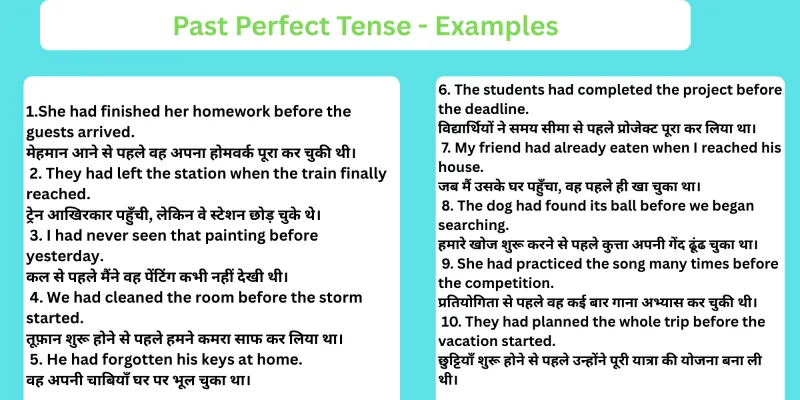
• Examples of Past Perfect Tense :
1. I had locked the gate before the storm started.
तूफ़ान शुरू होने से पहले मैंने गेट बंद कर दिया था।
2.She had finished her sketch before her friends arrived.
अपने दोस्तों के आने से पहले उसने अपनी स्केच पूरी कर ली थी।
3. They had left the park before the rain began.
बारिश शुरू होने से पहले वे पार्क से निकल चुके थे।
4. We had cleaned the room before the guests called.
मेहमानों के फोन करने से पहले हमने कमरा साफ कर लिया था।
5. The teacher had checked my notebook before I reached school.
मेरे स्कूल पहुँचने से पहले टीचर मेरी नोटबुक जाँच चुकी थीं।
6. He had eaten his lunch before the bell rang.
घंटी बजने से पहले वह अपना भोजन खा चुका था।
7. I had saved the file before the laptop shut down.
लैपटॉप बंद होने से पहले मैंने फ़ाइल सेव कर ली थी।
8. She had packed her clothes before the taxi arrived.
टैक्सी आने से पहले उसने अपने कपड़े पैक कर लिए थे।
9. They had decorated the hall before the party started.
पार्टी शुरू होने से पहले उन्होंने हॉल सजाया था।
10. He had repaired the cycle before evening.
शाम होने से पहले उसने साइकिल ठीक कर दी थी।
11. I had written the letter before he came home.
उसके घर आने से पहले मैंने पत्र लिख लिया था।
12. The children had slept before their mother returned.
उनकी माँ के लौटने से पहले बच्चे सो चुके थे।
13. She had washed the vegetables before starting to cook.
खाना बनाना शुरू करने से पहले उसने सब्जियाँ धो ली थीं।
14. They had taken photos before the sun set.
सूरज ढलने से पहले उन्होंने फोटो खींच ली थीं।
15. We had reached the station before the ticket counter closed.
टिकट काउंटर बंद होने से पहले हम स्टेशन पहुँच चुके थे।
16. I had watered the plants before going out.
बाहर जाने से पहले मैंने पौधों में पानी दे दिया था।
17. He had washed his hands before eating.
खाना खाने से पहले उसने हाथ धो लिए थे।
18. She had read the book before the test started.
टेस्ट शुरू होने से पहले उसने किताब पढ़ ली थी।
19. They had planned the trip before summer vacation began.
गर्मी की छुट्टियाँ शुरू होने से पहले उन्होंने यात्रा की योजना बना ली थी।
20. I had opened the window before the room got hot.
कमरा गर्म होने से पहले मैंने खिड़की खोल दी थी।
21. We had bought the gifts before the shop closed.
दुकान बंद होने से पहले हमने उपहार खरीद लिए थे।
22. She had drawn the map before the class ended.
क्लास खत्म होने से पहले उसने नक्शा बना लिया था।
23. He had booked the tickets before the prices increased.
दाम बढ़ने से पहले उसने टिकटें बुक कर ली थीं।
24. They had switched off the lights before leaving the room.
कमरे से निकलने से पहले उन्होंने लाइट बंद कर दी थीं।
25. I had cleaned my shoes before the match began.
मैच शुरू होने से पहले मैंने अपने जूते साफ कर लिए थे।
26. She had solved the puzzle before anyone else tried.
किसी और के कोशिश करने से पहले उसने पहेली हल कर ली थी।
27. We had stored the grains before the rain came.
बारिश आने से पहले हमने अनाज सुरक्षित रख लिया था।
28. He had taken the medicine before going to bed.
सोने से पहले उसने दवाई ले ली थी।
29. They had opened the shop before sunrise.
सूर्योदय से पहले उन्होंने दुकान खोल ली थी।
30. I had completed the design before the meeting started.
मीटिंग शुरू होने से पहले मैंने डिज़ाइन पूरा कर लिया था।
Read Tense and There Types
• Tense
• Present Tense
• Present Indefinite Tense • Present continuous tense
• Present Perfect Tense • Present Perfect Continuous Tense
• Past Tense
• Past Indefinite Tense • Past continuous tense
• Past Perfect Tense • Past Perfect Continuous Tense
• Future Tense
• Future Indefinite Tense
• future continuous tense • Future Perfect Tense
• Future Perfect Continuous Tense