Use of “WAS” and “WERE” in Hindi
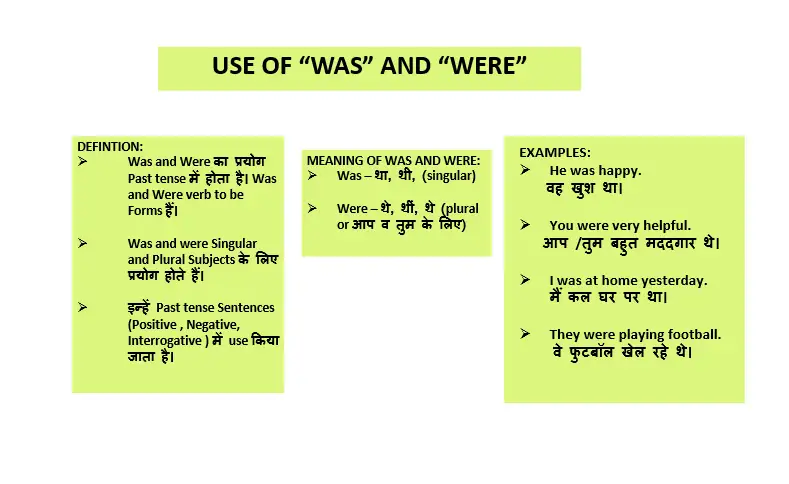
• Was and Were का प्रयोग Past tense में होता है। Was and Were verb to be Forms हैं।
• Was and were Singular and Plural Subjects के लिए प्रयोग होते हैं।
• इन्हें Past tense Sentences (Positive , Negative, Interrogative ) में use किया जाता है।
Was and Were Meaning in Hindi:
Was – था, थी, (singular)
Were – थे, थीं, थे (plural or आप व तुम के लिए)
नीचे दी गई टेबल को ध्यान से समझें।
| Person |
Singular |
Plural |
| 1st person |
I was |
We were |
| 2nd person |
You were |
You were |
| 3rd person |
He, She, It was |
They were |
◕ Rules
Rule 1 – Singular के साथ Was का प्रयोग करते हैं।
Rule 2 – Were का use Plural के साथ करते हैं।
Rule 1 – Singular के साथ Was का प्रयोग करते हैं।
Example:
1. He was happy. –
वह खुश था।
2. He was a good player. -
वह अच्छा खिलाड़ी था।
3. She was at home. -
वह घर पर थी।
4. She was feeling sad. -
वह उदास महसूस कर रही थी।
5. It was very cold. -
बहुत ठंड थी।
6. It was broken. –
यह टूट गया था।
7. This was my favorite book. -
यह मेरी पसंदीदा किताब थी।
8. This was an interesting movie. -
यह एक रोचक फ़िल्म थी।
9. That was a great performance. -
वह शानदार प्रदर्शन था।
10. That was his car. -
वह उसकी कार थी।
11. This was the best day of my life. -
यह मेरे जीवन का सबसे अच्छा दिन था।
12. It was nice day. -
दिन अच्छा था।
13. The child was crying. -
बच्चा रो रहा था।
14. The man was tall and strong. -
आदमी लम्बा और मजबूत था।
15. The woman was cooking in the kitchen. -
महिला रसोई में खाना बना रही थी।
16. The house was near the river. -
घर नदी के पास था।
17. The lamp was broken. -
लैंप टूटा हुआ था।
18. The phone was on the desk. –
फॉन डेस्क पर था।
19. The flower was beautiful. -
स्कूल सुन्दर था।
20. The moon was shining brightly. –
चाँद चमक रहा था।
Read Also
• Article - A
• Use of isa/am/are
• Numbers - Singular & Plural
• Gender
Rule 2 – Were का use Plural के साथ करते हैं।
Examples:
1. You were late for the meeting.
आप /तुम मीटिंग में देर से आए।
2. You were very helpful.
आप /तुम बहुत मददगार थे।
3. They were at school.
वे स्कूल में थे।
4. They were waiting for the bus.
वे बस का इंतजार कर रहे थे।
5. We were tired after the journey.
यात्रा के बाद हम थके हुए थे।
6. We were late for class.
हम क्लाश में देर से पहुंचे।
7. These were my books.
ये मेरी किताबें थी।
8. These were very expensive gifts.
ये बहुत महंगे उपहार थे।
9. Those were beautiful flowers.
वह सुंदर फूल थे।
10. Those were old house.
वे पुराने घर थे।
11. Those were my favorite toys.
वह मेरे पसंदीदा खिलौने थे।
12. These were interesting stories.
ये रोचक कहानियाँ थी।
13. We were happy to see you.
हम आपको देखकर खुशी हुई।
14. You were at the party yesterday.
तुम कल पार्टी में थे।
15. They were very excited.
वह बहुत उत्साहित थे।
16. The boys were playing cricket.
लड़के क्रिकेट खेल रहे थे।
17. The girls were singing a song.
लड़कियां एक गीत गा रही थी।
18. The students were in the classroom.
छात्र कक्षा में थे।
19. The cars were parked outside.
कारें बाहर खड़ी थी।
20. The trees were very tall.
पेड़ बहुत ऊंचे थे।
Read Also
• Modal Auxiliary Verb
• Use of isa/am/are
• Use of Used ot
• Gender
Postive Sentences of “Was” and “Were”
Examples:
1. I was at home yesterday.
मैं कल घर पर था।
2. He was very tired.
वह बहुत थका हुआ था।
3. She was happy with the gift.
वह उपहार से खुश थी।
4. It was raining in the morning.
सुबह बारिश हो रही थी।
5. The boy was playing in the garden.
लड़का बाग में खेल रहा था।
6. The girl was reading a book.
लड़की किताब पढ़ रही थी।
7. The dog was barking loudly.
कुत्ता ज़ोर से भौंक रहा था।
8. The teacher was kind to the students.
शिक्षक छात्रों के प्रति दयालु था।
9. This was my favorite movie.
यह मेरी पसंदीदा फिल्म है।
10. That was a great perfomance.
वह शानदार प्रदर्शन था।
11. We were at the park yesterday.
हम कल पार्क में थे।
12. They were playing football.
वे फुटबॉल खेल रहे थे।
13. 4You were very helpful.
तुम बहुत मददगार थे।
14. The boys were studying in the library.
लड़के लाइब्रेरी में पढ़ रहे थे।
15. The girls were singing a song.
लड़कियां एक गीत गा रही थी।
16. These were delicious cakes.
वे स्वादिष्ट केक थे।
17. Those were my old shoes.
वे मेरे पुराने जूते थे।
18. The students were in the classroom.
छात्र कक्षा में थे।
19. The cars were parked outside.
कारें बाहर खड़ी थी।
20. The trees were very tall.
पेड़ बहुत ऊंचे थे।
Read Also
• Affirmative Sentence
• Modal auxiliary Verb
• Use of Can & Could
• Use of Dare
Negative Sentences of “Was” and “Were”
Examples:
1. I was not late for the class.
मैं क्लास के लिए देर से नहीं था।
2. He was not my best friend.
वह मेरा सबसे अच्छा दोस्त नहीं था।
3. She was not in the market.
वह बाजार में नहीं थी।
4. It was not a holiday yesterday.
कल छुट्टी नहीं थी।
5. The child was not crying.
बच्चा नहीं रो रहा था।
6. The house was not big.
घर बड़ा नहीं था।
7. The lamp was not new.
लैंप नया नहीं था।
8. The phone was not on the bed.
फोन बिस्तर पर नहीं था।
9. The shopkeeper was not rude.
दुकानदार रुखा नहीं था।
10. The student was not lazy.
छात्र आलसी नहीं था।
11. We were not ready for the test.
हम टेस्ट के लिए तैयार नहीं थे।
12. They were not in the park.
वे पार्क में नहीं थे।
13. You were not at the station.
तुम स्टेशन पर नहीं थे।
14. The boys were not playing cricket.
लड़के क्रिकेट नहीं खेल रहे थे।
15. The girls were not dancing.
लड़कियां नाच नहीं रही थी।
16. These were not cheap toys.
ये सस्ते खिलौने नहीं थे।
17. Those were not good ideas.
वे अच्छे विचार नहीं थे।
18. The students were not attentive in class.
छात्र क्लाश में ध्यान नहीं दे रहे थे।
19. The cars were not expensive.
कारें महंगी नहीं थी।
20. The shops were not open.
दुकानें खुली नहीं थी।
Read Also
• Negative Sentence
• Use of Need to
• Active & Passive Voice
• Exclamatory Sentence
• Interrogative Sentences of “Was’’ and “Were”
Examples:
1. Was I wrong ?
क्या मैं गलत था?
2. Was he at home yesterday?
क्या वह कल घर पर था?
3. Was she happy with the gift?
क्या वह उपहार से खुश थी?
4. Was it raining in the morning ?
क्या सुबह बारिश हो रही थी?
5. Was the boy in the garden?
क्या लड़का बाग में था?
6. Was the girl reading a book?
क्या लड़की किताब पढ़ रही थी?
7. Was the dog barking loudly?
क्या कुत्ता जोर से भौंक रहा था?
8. Was the teacher strict?
क्या शिक्षक सख्त थे?
9. Was this your favorite movie?
क्या यह तुम्हारी पसंदीदा फ़िल्म थी?
10. Was that a good perfomance?
क्या वह अच्छा प्रदर्शन था?
11. Were we in the park yesterday?
क्या हम कल पार्क में थे?
12. Were they playing football?
क्या वह फुटबॉल खेल रहे थे?
13. Were you at the party?
क्या तुम पार्टी में थे?
14. Were the boys in the classroom?
क्या लड़के कक्षा में थे?
15. Were the girls singing a song?
क्या लड़कियां गीत गा रही थी?
16. Were these your books?
क्या ये तुम्हारी किताबें थी?
17. Were those your old shoes?
क्या वे तुम्हारे पुराने जूते थे?
18. Were the students attentive?
क्या छात्र ध्यान दे रहे थे?
19. Were the cars parked outside?
क्या कारें बाहर खड़ी थी?
20. Were the trees very tall?
क्या पेड़ बहुत ऊंचे थे?
Read Also
• Interrogative Sentence
• Use of Used to
• Conditional Sentence
• Gender
• Interrogative negative Sentences of “Was’’ and “Were”
Examples:
1. Was he not at school yesterday?
क्या वह कल स्कूल में नहीं था?
2. Was she not angery with you?
क्या वह तुमसे नाराज नहीं थी?
3. Was it not raining in the morning?
क्या सुबह बारिश नहीं हो रही थी?
4. Was I not your best friend?
क्या मैं तुम्हारा सबसे अच्छा दोस्त नहीं था?
5. Was Ram not at home last night?
क्या राम कल रात घर पर नहीं था?
6. Was the movie not intersting?
क्या फ़िल्म रोचक नहीं थी?
7. Was this book not helpful for you?
क्या यह किताब तुम्हारे लिए उपयोग ही नहीं थी?
8. Was that boy not your classmate?
क्या वह लड़का तुम्हारा सहपाठी नहीं था?
9. Was the teacher not strict in class?
क्या अध्यापक कक्षा में सख्त नहीं थे?
10. Was the room not clean yesterday?
क्या कमरा कल साफ नहीं था?
11. Were the not late for school?
क्या तुम स्कूल के लिए देर से नहीं थे?
12. Were the not playing in the park?
क्या वे पार्क में खेल नहीं रहे थे?
13. Were we not good friends before?
क्या हम पहले अच्छे दोस्त नहीं थे?
14. Were this clothes not expensive?
क्या ये कपड़े महंगे नहीं थे?
15. Were those boys not shouting loudly?
क्या वे लड़के ज़ोर से चिल्ला नहीं रहे थे?
16. Were the students not ready for the exam?
क्या विद्यार्थी परीक्षा के लिए तैयार नहीं थे?
17. Were your parents not at the party? क्या तुम्हारे माता पिता पार्टी में नहीं थे?
18. Were these fruits not fresh?
क्या ये फल ताजे नहीं थे?
19. Were the shops not closed yesterday?
क्या दुकानें कल बंद नहीं थी?
20. Were we not waiting for the bus?
क्या हम बस का इंतजार नहीं कर रहे थे?
Read Also
• Use of Was & Were
• Use of These & Those
• Use of Do & Does
Wh-Word Interrogative Sentences of “Was” and “Were”
Examples:
1. Where was he yesterday?
वह कल कहाँ था?
2. Why was she sad?
वह उदास क्यों थी?
3. When was it raining?
बारिश कब हो रही थी?
4. Who was at the door?
दरवाजे पर कौन था?
5. Whose book was this?
यह किताब किसकी थी?
6. Which subject was difficult for you?
कौन सा विषय तुम्हारे लिए कठिन था?
7. What was the resone for his absence?
उसकी अनुपस्थिति का कारण क्या था?
8. How was your journey?
तुम्हारी यात्रा कैसी थी?
9. How many students was there in the class?
कक्षा में कितने विद्यार्थी थे?
10. What time was the train late?
ट्रेन कितने बजे लेट थी?
11. Where were you last night?
तुम कल रात कहाँ थे?
12. Why were they absent yesterday?
वे कल अनुपस्थित क्यों थे?
13. When were we at the park?
हम पार्क में कब थे?
14. Who were those people at the meeting?
मीटिंग में वे लोग कौन थे?
15. Whose friends were playing outside?
बाहर खेल रहे दोस्त किसके थे?
16. Which books were on the table?
मेज पर कौन सी किताबें थी?
17. What were they talking about?
वह किस बारे में बात कर रहे थे?
18. How were your exam?
तुम्हारे इम्तहान कैसे थे?
19. How many boys were in the playground?
खेल के मैदान में कितने लड़के थे?
20. What kind of songs were popular then?
तब किस तरह के गाने लोकप्रिय थे?
Read Also
• Parts of speech • Noun
• Pronoun • Preposition
Wh-Word Interrogative Negative Sentences Of “Was” and “Were”
Examples:
1. Why was he not in class yesterday?
वह कल कक्षा में क्यों नहीं था?
2. Where was she not present?
वह कहाँ उपस्थित नहीं थी?
3. When it was not possible?
यह कब संभव नहीं था?
4. Who was not ready for the test?
परीक्षा के लिए कौन तैयार नहीं था?
5. Whose pen was not working?
किसकी पेन काम नहीं कर रही थी?
6. Which subject was not intersting for you?
कौन सा विषय तुम्हारे लिए रोचक नहीं था?
7. What was not the resone for his anger?
उसके गुस्से का कारण क्या नहीं था?
8. How was the plan not successful?
योजना सफल कैसे नहीं हुई थी?
9. At what time was the shop not open?
दुकान किस समय खुली नहीं थी?
10. Why was Ram not happy yesterday?
राम कल खुश क्यों नहीं था?
11. Why were you not at the party?
तुम पार्टी में क्यों नहीं थे?
12. Where were they not playing?
वह कहाँ खेल नहीं रहे थे?
13. When were we not together?
हम कब साथ नहीं थे?
14. Who were not invited to the wedding?
शादी में किसे निमंत्रित नहीं किया गया था?
15. Whose friend were not helping him?
किसके दोस्त उसकी मदद नहीं कर रहे थे?
16. Which books were not useful for the exam?
कौन सी किताब परीक्षा के लिए उपयोगी नहीं थी?
17. What were they not discussing in the meeting?
वे मीटिंग में किस बारे में चर्चा नहीं कर रहे थे?
18. How were your answer not correct?
तुम्हारे उत्तर सही कैसे नहीं थे?
19. How many boys were not present in the ground?
मैदान में कितने लड़के मौजूद नहीं थे?
20. What kind of songs were not popular in those days?
उन दिनों किस प्रकार के गाने लोकप्रिय नहीं थे?
Read Tenses & there Types
• Tense • Present Tense
• Present-indefinite-Tense • Present - Perfect Tense
• Present- continuous - Tense • Present - perfect - continuous -Tense
• Past Tense • Past Indefinite Tense
• Past Perfect Tense • Past continuous Tense
• Past- Perfect- continuous- Tense • Future Tense
• Future- Perfect- Tense • Future- Indefinite- Tense
• Future- continuous- Tense • Future- Perfect- continuous- Tense
Use of Was and Were In Past Continuous Tense In Hindi
• Was, Were का use Past Continuous Tense में Helping Verb के रुप में Subject के बाद करते हैं। इस टेंस के वाक्य के अंत में रहा था, रहा थी, रहे थे, हुआ था आदि शब्द आते हैं।
• किसी काम का अतीत में लगातार रहना दर्शाने के लिए Past Continuous tense का प्रयोग होता है।
Examples:
1. I was reading a book.
मैं एक किताब पढ़ रहा था।
2. He was playing football.
वह फुटबॉल खेल रहा था।
3. She was cooking food.
वह खाना बना रही थी।
4. It was raining heavily.
तेज बारिश हो रही थी।
5. Ankit was sleeping in his room.
अंकित अपने कमरे में सो रहा था।
6. We were watchig TV.
हम टीवी देख रहे थे।
7. You were talking loudly.
तुम ज़ोर से बात कर रहे थे।
8. They were playing in the garden.
वह बगीचे में खेल रहे थे।
9. The students were writing in their notebooks.
विद्यार्थी अपनी कॉपियों में लिख रहे थे।
10. Dogs were barking outside.
कुत्ते बाहर भौंक रहे थे।
Read Also
• Verb • Adverb
• Adjective • conjunction
• Interjection • Sentence Parts of Sentence
Use of Was, were in Passive Voice
Rule 1 : Was and Were का use Passive Voice में Past indefinite tense की Helping Verb के रुप में करते हैं।
Examples:
1.Active:
Ankit wrote a letter.
अंकित ने एक पत्र लिखा।
Passive :
A letter was written by Ankit.
पत्र अंकित द्वारा लिखा गया।
2.Active:
She closed the door.
उसने दरवाजा बंद किया।
Passive :
The door was closed by her.
दरवाजा उसके द्वारा बंद किया गया।
3.Active:
The teacher punished the boys.
अध्यापक ने लड़कों को दंड दिया।
Passive :
The boys were punished by the teacher.
लड़कों को अध्यापक द्वारा दंडित किया गया।
4.Active:
She told a story.
उसने एक कहानी सुनाई।
Passive :
A story was told by her.
एक कहानी उसके द्वारा सुनाई गई।
5.Active:
The police caught the thief.
पुलिस ने चोर को पकड़ा।
Passive :
The thief was caught by the police.
चोर पुलिस द्वारा पकड़ा गया।
Read Also
• Use of Was & Were
• Use of This & That
• Use of These & Those
• Use of Do & Does
Rule 2 – Passive Voice में Past Continuous Tense में was, were को was being, were being में बदलते हैं।
Examples:
1.Active:
She was cooking food.
वह खाना बना रही थी।
Passive :
Food was being cooked by her.
खाना उसके द्वारा बनाया जा रहा।
2.Active:
The teacher was teaching the students.
अध्यापक विद्यार्थियों को पढ़ा रहे थे।
Passive :
The students were being taught by the teacher.
विद्यार्थियों को अध्यापक द्वारा पढ़ाया जा रहा था।
3.Active:
They were playing cricket.
वे क्रिकेट खेल रहे थे।
Passive :
Cricket was being played by them.
क्रिकेट उनके द्वारा खेला जा रहा था।
4.Active:
He was repairing the car.
वह गाड़ी की मरम्मत कर रहा था।
Passive :
the car was being repaired by him.
गाड़ी उसकी द्वारा ठीक की जा रही थी।
5.Active:
We were watching a movie.
हम एक फ़िल्म देख रहे थे।
Passive :
A movie was being watched by us.
एक फ़िल्म हमारे द्वारा देखी जा रही थी।
Read Also
• Use of Need to
• Active & Passive Voice
• Exclamatory Sentence