Present Continuous Tense (वर्तमान अपूर्ण काल)
Definition -
The Present Continuous Tense is a tense that shows an action which is happening at the present moment or is still continuing.
It is also called the Present Progressive Tense because the action is in progress while we are speaking.
This tense is used when an action:
1. Begins in the present and has not finished yet.
2. Is temporary or in progress.
3. May continue for some time in the near future.
It tells us that something is taking place right now or is continuing around this time.
In this tense, the main verb takes the -ing form (present participle), and the helping verbs is, am, or are are used according to the subject.
In short, the Present Continuous Tense expresses an unfinished action that is happening now or around the present time.
Example Sentences:
• I am reading a book. (The action is happening now.)
• She is cooking dinner. (The action is going on.)
• They are playing football. (The activity is continuing.)
परिभाषा -
Present Continuous Tense वह काल है जो यह बताता है कि कोई कार्य इस समय चल रहा है या अभी बोलते समय हो रहा है।
इसे वर्तमान अपूर्ण काल या वर्तमान निरंतर काल भी कहा जाता है, क्योंकि इसमें कार्य चलते रहते हैं (अपूर्ण होते हैं)।
इन वाक्यों के अंत में रहा है, रही है, रहे हैं, रहा हूँ, किया है, हुआ है, आदि शब्द आते हैं।
यह काल उस कार्य को दर्शाता है जो —
1. वर्तमान में शुरू हुआ है और अभी पूरा नहीं हुआ है।
2. कुछ समय तक चलता रहेगा।
3. अस्थायी रूप से हो रहा है।
इसमें मुख्य क्रिया (Verb) के साथ -ing लगाया जाता है, और is, am, are जैसे सहायक क्रियाओं (Helping Verbs) का प्रयोग किया जाता है।
यह काल वर्तमान में होते हुए कार्यों (actions in progress) को स्पष्ट रूप से दर्शाता है।
उदाहरण :
• मैं किताब पढ़ रहा हूँ। (कार्य अभी चल रहा है।)
• वह खाना बना रही है। (कार्य इस समय जारी है।)
• वे खेल रहे हैं। (कार्य पूरा नहीं हुआ है, जारी है।)
Examples :
1. I am writing a letter.
मैं एक पत्र लिख रहा हूँ।
2. She is watering the plants.
वह पौधों को पानी दे रही है।
3. They are playing in the park.
वे पार्क में खेल रहे हैं।
4. He is watching a movie.
वह एक फ़िल्म देख रहा है।
5. We are learning English now.
हम अभी अंग्रेज़ी सीख रहे हैं।
6. You are talking too loudly.
तुम बहुत ज़ोर से बात कर रहे हो।
7. The birds are singing sweet songs.
पक्षी मीठे गीत गा रहे हैं।
8. My mother is cooking breakfast.
मेरी माँ नाश्ता बना रही है।
9. The children are drawing pictures.
बच्चे चित्र बना रहे हैं।
10. I am waiting for my friend.
मैं अपने दोस्त का इंतज़ार कर रहा हूँ।
उपरोक्त वाक्य में सभी वाक्य के अंत में रहा है, रही है, रहे हैं, आदि शब्द का प्रयोग हुआ है अतः सभी वाक्य Present Continuous tense के हैं।
Rules of Present Continuous Tense (वर्तमान अपूर्ण काल के नियम)
Rule 1: Helping verb का प्रयोग
Helping verb subject के अनुसार बदलती है।
| Subject |
Helping Verb |
| I |
am |
| He, She, It, Name |
is |
| You, We, They |
are |
Examples:
1. I am writing a story.
मैं कहानी लिख रहा हूँ।
2. He is watching a movie.
वह फिल्म देख रहा है।
3. They are going to school.
वे स्कूल जा रहे हैं।
Rule 2 – Main Verb में “-ing” लगाएँ (Add -ing to the main verb)
Present Continuous में हमेशा मुख्य क्रिया के साथ “-ing” जोड़ा जाता है।
यह कार्य के चल रहे होने को दर्शाता है।
Examples:
1. She is cooking food.
वह खाना बना रही है।
2. We are playing cricket.
हम क्रिकेट खेल रहे हैं।
Rule 3 – Verb की spelling बदलने के नियम (Rules for adding “-ing”)
| क्रिया के प्रकार |
नियम |
उदाहरण |
| सामान्य क्रिया |
ing |
play-playing |
| “e” पर समाप्त क्रिया |
e हटाकर – ing लगाएँ |
write – writing |
| छोटी स्वर + व्यंजन से अंत होने वाली क्रिया |
अंतिम अक्षर दोहराकर “ing” लगाएँ |
run - running |
| “ie” पर समाप्त क्रिया |
“ie” हटाकर “y+ing लगाएँ |
lie - lying |
Rule 4 – Continuous Verbs के साथ सावधानी (Non-Continuous Verbs)
कुछ verbs जैसे — know, like, love, hate, understand, believe, remember — आम तौर पर continuous रूप में नहीं आते।
Incorrect: I am knowing the answer.
Correct: I know the answer.
Read Also
• Present Tense
• Present Indefinite Tense • Present Continuous Tense
• Present Perfect Tense • Present Perfect Continuous Tense
1. Affirmative Sentences of Present Continuous Tense (सकारात्मक वाक्य)
An affirmative sentence in the Present Continuous Tense shows that an action is happening right now or is continuing in the present moment.
Present Continuous Tense का affirmative वाक्य उस कार्य को दर्शाता है जो अभी चल रहा है या बोलते समय हो रहा है।
Rule (नियम):
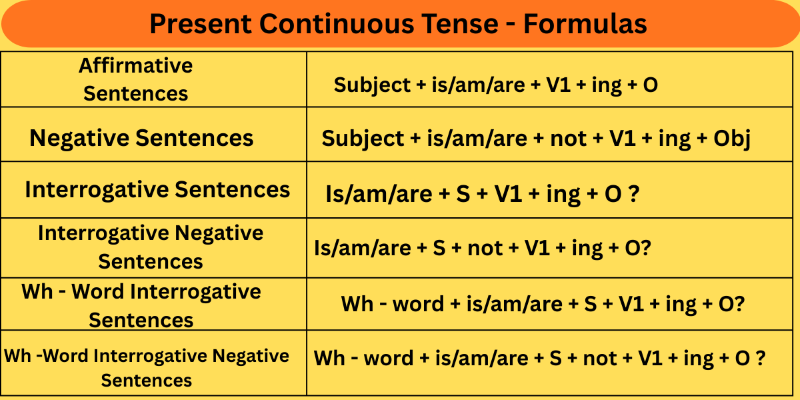
1. Helping Verb का प्रयोग करें:
“is, am, are” का प्रयोग Subject के अनुसार करें।
2. Main Verb में “-ing” लगाएँ
Verb (मुख्य क्रिया) में “-ing” जोड़कर उसे continuous बनाया जाता है।
3. वाक्य में Object या Extra Part जोड़े जा सकते हैं।
दिए गए फॉर्मूला के अनुसार नीचे दिए गए उदाहरणों को ध्यान से पढें तभी आप वर्तमान अपूर्ण काल के सकारात्मक वाक्य प्रयोग कर पाएंगे।
Examples:
1.I am reading a newspaper.
मैं अख़बार पढ़ रहा हूँ।
2. She is cooking dinner.
वह रात का खाना बना रही है।
3. They are playing cricket.
वे क्रिकेट खेल रहे हैं।
4. He is watching TV.
वह टीवी देख रहा है।
5. We are going to school.
हम स्कूल जा रहे हैं।
6. You are learning English.
तुम अंग्रेज़ी सीख रहे हो।
7. The birds are singing sweetly.
पक्षी मीठे स्वर में गा रहे हैं।
8. My father is driving the car.
मेरे पिताजी कार चला रहे हैं।
9. I am writing in my notebook.
मैं अपनी कॉपी में लिख रहा हूँ।
10. The baby is sleeping in the bed.
बच्चा बिस्तर पर सो रहा है।
11. She is talking to her friend.
वह अपनी सहेली से बात कर रही है।
12. We are studying for the test.
हम परीक्षा की तैयारी कर रहे हैं।
13. He is cleaning his room.
वह अपना कमरा साफ कर रहा है।
14. I am drinking a glass of milk.
मैं एक गिलास दूध पी रहा हूँ।
15. They are watching the match.
वे मैच देख रहे हैं।
16. The teacher is teaching English.
शिक्षक अंग्रेज़ी पढ़ा रहे हैं।
17. I am waiting for the bus.
मैं बस का इंतज़ार कर रहा हूँ।
18. You are helping your brother.
तुम अपने भाई की मदद कर रहे हो।
19. The students are writing notes.
विद्यार्थी नोट्स लिख रहे हैं।
20. She is painting a picture.
वह एक चित्र बना रही है।
21. We are walking in the garden.
हम बगीचे में टहल रहे हैं।
22. He is repairing his bicycle.
वह अपनी साइकिल ठीक कर रहा है।
23. I am listening to music.
मैं संगीत सुन रहा हूँ।
24. They are planting new trees.
वे नए पेड़ लगा रहे हैं।
25. My mother is washing clothes.
मेरी माँ कपड़े धो रही हैं।
26. We are watching the sunrise.
हम सूर्योदय देख रहे हैं।
27. The dog is barking loudly.
कुत्ता ज़ोर से भौंक रहा है।
28. She is opening the window.
वह खिड़की खोल रही है।
29. I am brushing my teeth.
मैं अपने दाँत साफ कर रहा हूँ।
30. They are dancing happily.
वे खुशी-खुशी नाच रहे हैं।
Read Also
• Affirmative Sentence • Use of Had
• Active & Passive Voice • Gender
• Use of Has & Have • Use of Use of Is/am/are
2.Negative Sentences of Present Continuous Tense (नकारात्मक वाक्य)
A Negative Sentence in the Present Continuous Tense shows an action that is not happening now or not going on at the moment of speaking.
It tells that the subject is not performing a continuous action in the present time.
In short, it expresses something that is not taking place right now.
Present Continuous Tense का Negative Sentence उस कार्य को दर्शाता है जो अभी नहीं हो रहा है या बोलते समय जारी नहीं है।
यह बताता है कि वर्तमान में कार्य रुक गया है या हो नहीं रहा है।
Rules (नियम):
1. Helping verb is/am/are के बाद हमेशा not का प्रयोग किया जाता है।
Example: She is not dancing.
2. Main verb में हमेशा -ing जोड़ा जाता है ताकि “action in progress” दिखे, भले वह न हो रहा हो।
3. “I” के साथ हमेशा am not आता है,He/She/It/Name के साथ is not, और You/We/They के साथ are not।
4. यह tense केवल वर्तमान समय के न हो रहे कार्यों को दर्शाता है।
5. “not” का प्रयोग यह स्पष्ट करने के लिए होता है कि कार्य निरंतर नहीं चल रहा है।
उपयुक्त दिये गए फार्मूला के अनुसार नीचे दिए गए वाक्य प्रयोग को ध्यान से पढ़ें और सीखें।
Example:
1. I am not reading a book.
मैं किताब नहीं पढ़ रहा हूँ।
2. She is not cooking dinner.
वह रात का खाना नहीं बना रही है।
3. They are not playing outside.
वे बाहर नहीं खेल रहे हैं।
4. He is not watching television.
वह टीवी नहीं देख रहा है।
5. We are not studying right now.
हम अभी पढ़ाई नहीं कर रहे हैं।
6. You are not listening to me.
तुम मेरी बात नहीं सुन रहे हो।
7. The baby is not sleeping.
बच्चा नहीं सो रहा है।
8. My father is not driving the car.
मेरे पिता कार नहीं चला रहे हैं।
9. The students are not sitting quietly.
छात्र चुपचाप नहीं बैठे हैं।
10. I am not writing a letter.
मैं पत्र नहीं लिख रहा हूँ।
11. She is not wearing a red dress.
वह लाल ड्रेस नहीं पहन रही है।
12. They are not talking to each other.
वे एक-दूसरे से बात नहीं कर रहे हैं।
13. He is not working today.
वह आज काम नहीं कर रहा है।
14. We are not going to the park.
हम पार्क नहीं जा रहे हैं।
15. You are not using your phone.
तुम अपना फोन इस्तेमाल नहीं कर रहे हो।
16. The birds are not flying now.
पक्षी अभी नहीं उड़ रहे हैं।
17. My mother is not washing the clothes.
मेरी माँ कपड़े नहीं धो रही हैं।
18. The dog is not barking.
कुत्ता भौंक नहीं रहा है।
19. I am not waiting for anyone.
मैं किसी का इंतज़ार नहीं कर रहा हूँ।
20. She is not studying English.
वह अंग्रेज़ी नहीं पढ़ रही है।
21. They are not playing football today.
वे आज फुटबॉल नहीं खेल रहे हैं।
22. He is not reading the newspaper.
वह अख़बार नहीं पढ़ रहा है।
23. We are not cleaning the house.
हम घर साफ़ नहीं कर रहे हैं।
24. You are not preparing for the exam.
तुम परीक्षा की तैयारी नहीं कर रहे हो।
25. The teacher is not teaching now.
शिक्षक अभी नहीं पढ़ा रहे हैं।
26. I am not eating my breakfast.
मैं नाश्ता नहीं कर रहा हूँ।
27. She is not painting a picture.
वह चित्र नहीं बना रही है।
28. They are not helping their parents.
वे अपने माता-पिता की मदद नहीं कर रहे हैं।
29. He is not opening the door.
वह दरवाज़ा नहीं खोल रहा है।
30. We are not working on that project.
हम उस प्रोजेक्ट पर काम नहीं कर रहे हैं।
Read Also
• Sentence Structure • Negative Sentence
• Singular & Plural Number • Articles
• Use of Do & Does • Use of Had
3. Interrogative Sentences of Present Continuous Tense (प्रश्नवाचक वाक्य)
An Interrogative Sentence in the Present Continuous Tense is used to ask a question about an action that is happening right now or continuing at the moment of speaking.
It is formed by placing the helping verb (is/am/are) before the subject.
In short, it asks what someone is doing at present.
Present Continuous Tense के Interrogative Sentences वे वाक्य होते हैं जिनका उपयोग किसी ऐसे कार्य के बारे में प्रश्न पूछने के लिए किया जाता है जो इस समय चल रहा है या बोलते समय हो रहा है।
इन वाक्यों में is, am, are को subject (कर्ता) से पहले लगाया जाता है।
Rules (नियम):
1. Helping verb (is/am/are) को हमेशा Subject से पहले रखा जाता है।
Example: Are you coming?
2. Verb हमेशा “-ing” रूप में होती है क्योंकि यह कार्य के जारी रहने को दर्शाती है।
3. प्रश्नवाचक वाक्य के अंत में हमेशा प्रश्नवाचक चिन्ह ( ? ) लगाया जाता है।
4. “I” के साथ Am, “He/She/It/Name” के साथ Is, और “You/We/They” के साथ Are का प्रयोग किया जाता है।
दिए गए फॉर्मूला के अनुसार नीचे दिए गए प्रश्नों वाचक वाक्य को अंग्रेजी से हिंदी अनुवाद करना सीखिए।
Examples:
1. Am I speaking clearly?
क्या मैं साफ़ बोल रहा हूँ?
2. Are you listening to me?
क्या तुम मेरी बात सुन रहे हो?
3. Is he coming to school today?
क्या वह आज स्कूल आ रहा है?
4. Is she reading the newspaper?
क्या वह अख़बार पढ़ रही है?
5. Are they playing football?
क्या वे फुटबॉल खेल रहे हैं?
6. Are we studying for the test?
क्या हम परीक्षा की तैयारी कर रहे हैं?
7. Is the baby sleeping now?
क्या बच्चा अभी सो रहा है?
8. Is your brother working in the office?
क्या तुम्हारा भाई ऑफिस में काम कर रहा है?
9. Am I disturbing you?
क्या मैं तुम्हें परेशान कर रहा हूँ?
10. Are you doing your homework?
क्या तुम अपना होमवर्क कर रहे हो?
11. Is she cooking dinner now?
क्या वह अभी खाना बना रही है?
12. Are they watching a movie?
क्या वे फिल्म देख रहे हैं?
13. Is he writing a letter?
क्या वह एक पत्र लिख रहा है?
14. Are we learning English together?
क्या हम साथ में अंग्रेज़ी सीख रहे हैं?
15. Is it raining outside?
क्या बाहर बारिश हो रही है?
16. Are the students sitting quietly?
क्या छात्र चुपचाप बैठे हैं?
17. Is your mother talking on the phone?
क्या तुम्हारी माँ फोन पर बात कर रही हैं?
18. Are you waiting for someone?
क्या तुम किसी का इंतज़ार कर रहे हो?
19. Is he drinking coffee?
क्या वह कॉफी पी रहा है?
20. Are they coming to the party tonight?
क्या वे आज रात पार्टी में आ रहे हैं?
21. Is she painting a picture?
क्या वह चित्र बना रही है?
22. Am I doing it correctly?
क्या मैं इसे सही कर रहा हूँ?
23. Are you planning a trip?
क्या तुम एक यात्रा की योजना बना रहे हो?
24. Is he opening the door?
क्या वह दरवाज़ा खोल रहा है?
25. Are we going to the market now?
क्या हम अभी बाज़ार जा रहे हैं?
26. Is your dog barking loudly?
क्या तुम्हारा कुत्ता ज़ोर से भौंक रहा है?
27. Are they helping their parents?
क्या वे अपने माता-पिता की मदद कर रहे हैं?
28. Is she cleaning her room?
क्या वह अपना कमरा साफ़ कर रही है?
29. Are you using my phone?
क्या तुम मेरा फोन इस्तेमाल कर रहे हो?
30. Is he repairing his bike?
क्या वह अपनी बाइक ठीक कर रहा है?
Read Also
• Parts of Sentence • Interrogative Sentence
• Use of These & Those • Use of This & That
• Use of Was & Were • Noun
4.Interrogative Negative Sentences of Present Continuous Tense (प्रश्नवाचक नकारात्मक वाक्य)
Interrogative Negative Sentence in the Present Continuous Tense is used to ask a question about an action that is not happening right now or to confirm that something is not taking place at the moment of speaking.
It combines both interrogative (question) and negative (not) forms together.
It asks questions like — “Isn’t he coming?”, “Aren’t they studying?” etc.
Present Continuous Tense के Interrogative Negative Sentences वे वाक्य होते हैं जिनका प्रयोग ऐसे कार्य के बारे में प्रश्न पूछने के लिए किया जाता है जो अभी नहीं हो रहा है या यह सुनिश्चित करने के लिए किया जाता है कि कोई कार्य इस समय जारी नहीं है।
इन वाक्यों में is/am/are के बाद not आता है और वाक्य का अंत प्रश्नवाचक चिन्ह (?) से होता है।
Rules (नियम):
1. Helping verb (is/am/are) को वाक्य की शुरुआत में रखा जाता है।
2. not हमेशा subject के बाद आता है।
Example: Are you not coming?
3. Verb में हमेशा -ing जोड़ा जाता है क्योंकि यह कार्य के निरंतर रूप को दर्शाता है।
4. इन वाक्यों का प्रयोग किसी कार्य के न होने पर आश्चर्य या पुष्टि व्यक्त करने के लिए किया जाता है।
Example: Isn’t she studying? (क्या वह पढ़ नहीं रही है?)
ऊपर दिए गए फार्मूला के अनुसार नीचे दिए गए वाक्यों को ध्यान से पढ़ें और सीखें।
Examples:
1. Am I not doing it correctly?
क्या मैं इसे सही नहीं कर रहा हूँ?
2. Are you not coming to school today?
क्या तुम आज स्कूल नहीं आ रहे हो?
3. Is he not watching TV now?
क्या वह अभी टीवी नहीं देख रहा है?
4. Is she not cooking food?
क्या वह खाना नहीं बना रही है?
5. Are they not studying English?
क्या वे अंग्रेज़ी नहीं पढ़ रहे हैं?
6. Are we not going to the park?
क्या हम पार्क नहीं जा रहे हैं?
7. Is the baby not sleeping yet?
क्या बच्चा अभी तक नहीं सो रहा है?
8. Is your brother not working today?
क्या तुम्हारा भाई आज काम नहीं कर रहा है?
9. Are you not listening to me?
क्या तुम मेरी बात नहीं सुन रहे हो?
10. Am I not speaking clearly?
क्या मैं साफ़ नहीं बोल रहा हूँ?
11. Is she not helping her mother?
क्या वह अपनी माँ की मदद नहीं कर रही है?
12. Are they not playing cricket now?
क्या वे अभी क्रिकेट नहीं खेल रहे हैं?
13. Is he not reading his book?
क्या वह अपनी किताब नहीं पढ़ रहा है?
14. Are we not doing our homework?
क्या हम अपना होमवर्क नहीं कर रहे हैं?
15. Is it not raining outside?
क्या बाहर बारिश नहीं हो रही है?
16. Are the students not sitting quietly?
क्या छात्र चुपचाप नहीं बैठे हैं?
17. Is your father not driving the car?
क्या तुम्हारे पिता कार नहीं चला रहे हैं?
18. Are you not waiting for your friend?
क्या तुम अपने दोस्त का इंतज़ार नहीं कर रहे हो?
19. Is he not drinking water?
क्या वह पानी नहीं पी रहा है?
20. Are they not coming to the party?
क्या वे पार्टी में नहीं आ रहे हैं?
21. Is she not painting a picture?
क्या वह चित्र नहीं बना रही है?
22. Am I not improving my English?
क्या मैं अपनी अंग्रेज़ी में सुधार नहीं कर रहा हूँ?
23. Are you not preparing for the test?
क्या तुम परीक्षा की तैयारी नहीं कर रहे हो?
24. Is he not opening the door?
क्या वह दरवाज़ा नहीं खोल रहा है?
25. Are we not learning together?
क्या हम साथ में नहीं सीख रहे हैं?
26. Is your dog not barking now?
क्या तुम्हारा कुत्ता अभी नहीं भौंक रहा है?
27. Are they not helping their parents?
क्या वे अपने माता-पिता की मदद नहीं कर रहे हैं?
28. Is she not cleaning her room?
क्या वह अपना कमरा साफ़ नहीं कर रही है?
29. Are you not using my laptop?
क्या तुम मेरा लैपटॉप इस्तेमाल नहीं कर रहे हो?
30. Is he not fixing his bike?
क्या वह अपनी बाइक ठीक नहीं कर रहा है?
Read Also
• Parts of Sentence • Conditional Sentence
• Model Verb • Use of Can & Could
• Use of Dare • Use of May & Might
5. Wh – Word Interrogative Sentences of Present Continuous Tense (प्रश्नवाचक वाक्य)
Wh-word Interrogative Sentences in the Present Continuous Tense are used to ask questions about actions happening right now using question words such as What, Why, When, Where, Who, Whom, Whose, Which, How, etc.
These sentences help to get specific information about a continuous action that is taking place at the moment of speaking.
Present Continuous Tense के Wh-word Interrogative Sentences वे वाक्य होते हैं जिनमें प्रश्नवाचक शब्द (Wh-words) जैसे What (क्या), Why (क्यों), When (कब), Where (कहाँ), Who (कौन), How (कैसे) आदि का प्रयोग किया जाता है।
इनका प्रयोग किसी ऐसे कार्य के बारे में विशेष जानकारी पूछने के लिए किया जाता है जो इस समय हो रहा है या बोलते समय जारी है।
Rules (नियम):
1. Wh-word हमेशा वाक्य की शुरुआत में आता है।
Example: Where are you going?
2. Helping verb (is/am/are) Wh-word के बाद आता है।
3. Verb हमेशा -ing रूप में होती है क्योंकि यह जारी कार्य को दिखाती है।
4. Subject (कर्ता) helping verb के बाद आता है।
5. वाक्य के अंत में हमेशा question mark ( ? ) लगाया जाता है।
उपयुक्त दिए गए फॉर्मूला के अनुसार नीचे दिए गए सभी वाक्यों को ध्यान से पढ़िए, तभी आपको वाक्य प्रयोग करना आएगा।
Examples:
1. What are you drawing on the paper?
तुम कागज़ पर क्या बना रहे हो?
2. Where is your sister studying nowadays?
तुम्हारी बहन आजकल कहाँ पढ़ रही है?
3. Why are they fighting with each other?
वे एक-दूसरे से क्यों झगड़ रहे हैं?
4. Who is calling you at this time?
इस समय तुम्हें कौन बुला रहा है?
5. When are you joining your new job?
तुम अपनी नई नौकरी कब ज्वाइन कर रहे हो?
6. Which language are you learning online?
तुम ऑनलाइन कौन-सी भाषा सीख रहे हो?
7. Whose picture are you looking at?
तुम किसकी तस्वीर देख रहे हो?
8. How is she cooking such delicious food?
वह इतना स्वादिष्ट खाना कैसे बना रही है?
9. What are they building near the park?
वे पार्क के पास क्या बना रहे हैं?
10. Where are the children hiding?
बच्चे कहाँ छिप रहे हैं?
11. Why is your brother shouting so much?
तुम्हारा भाई इतना ज़ोर से क्यों चिल्ला रहा है?
12. Who is coming to meet the teacher?
शिक्षक से मिलने कौन आ रहा है?
13. When are we going to celebrate your birthday?
हम तुम्हारा जन्मदिन कब मना रहे हैं?
14. Which topic are you explaining to your friends?
तुम अपने दोस्तों को कौन-सा विषय समझा रहे हो?
15. Whose phone are you charging?
तुम किसका फोन चार्ज कर रहे हो?
16. Whose bag are you carrying?
तुम किसका बैग उठा रहे हो?
17. How is he driving the car so fast?
वह कार इतनी तेज़ कैसे चला रहा है?
18. What are they discussing in the meeting?
वे मीटिंग में क्या चर्चा कर रहे हैं?
19. Where are you staying these days?
तुम इन दिनों कहाँ ठहरे हो?
20. Why is the baby crying again?
बच्चा फिर से क्यों रो रहा है?
21. Who is waiting outside the gate?
गेट के बाहर कौन इंतज़ार कर रहा है?
22. When are you finishing your homework?
तुम अपना होमवर्क कब ख़त्म कर रहे हो?
23. Which subject are you studying right now?
तुम अभी कौन-सा विषय पढ़ रहे हो?
24. Whose shoes are lying on the floor?
फर्श पर किसके जूते पड़े हैं?
25. How are we solving this question?
हम इस प्रश्न को कैसे हल कर रहे हैं?
26. What are you searching for on the internet?
तुम इंटरनेट पर क्या ढूँढ रहे हो?
27. Where is the train going now?
ट्रेन अभी कहाँ जा रही है?
28. Why are they clapping so happily?
वे इतने खुश होकर तालियाँ क्यों बजा रहे हैं?
29. Who is playing the guitar in the hall?
हॉल में गिटार कौन बजा रहा है?
30. When are the guests arriving?
मेहमान कब आ रहे हैं?
31. How is your brother improving his English?
तुम्हारा भाई अपनी अंग्रेज़ी में सुधार कैसे कर रहा है?
Read Also
• Exclamatory Sentence • Imperative Sentence
• Use of Must & Ought • Use of Shall & Will
• Use of Should & Would • Use of Used to
6. Wh – Word Interrogative Negative Sentences of Present Continuous Tense (प्रश्नवाचक नकारात्मक वाक्य)
Wh-word Interrogative Negative Sentence in the Present Continuous Tense is used to ask a question about an action that is not happening right now, with the help of Wh-words (like What, Why, Where, When, Who, etc.) and the negative word “not.”
It asks for specific information about something that is not going on at the present moment.
Present Continuous Tense के Wh-word Interrogative Negative Sentences वे वाक्य होते हैं जिनका प्रयोग ऐसे कार्य के बारे में प्रश्न पूछने के लिए किया जाता है जो इस समय नहीं हो रहा है।
इनमें प्रश्नवाचक शब्द (What, Why, Where, etc.) और not दोनों का प्रयोग होता है।
Rules (नियम):
1. वाक्य की शुरुआत हमेशा Wh-word से होती है।
Example: Why are you not coming?
2. Helping verb (is/am/are), Wh-word के तुरंत बाद आता है।
3. Not हमेशा subject (कर्ता) के बाद लगाया जाता है।
4. Main verb हमेशा -ing रूप में होती है, क्योंकि यह जारी कार्य को दर्शाती है।
5. वाक्य के अंत में हमेशा question mark (?) लगाया जाता है।
Examples:
1. Why are you not studying today?
तुम आज पढ़ाई क्यों नहीं कर रहे हो?
2. What are you not doing properly?
तुम क्या ठीक से नहीं कर रहे हो?
3. Where are they not going now?
वे अभी कहाँ नहीं जा रहे हैं?
4. Who is not attending the meeting?
मीटिंग में कौन शामिल नहीं हो रहा है?
5. When are we not meeting again?
हम फिर कब नहीं मिल रहे हैं?
6. Which movie are you not watching?
तुम कौन-सी फिल्म नहीं देख रहे हो?
7. Whose phone are you not using?
तुम किसका फोन इस्तेमाल नहीं कर रहे हो?
8. How are they not helping their friends?
वे अपने दोस्तों की मदद कैसे नहीं कर रहे हैं?
9. Why is she not cooking dinner today?
वह आज रात का खाना क्यों नहीं बना रही है?
10. What is he not telling you?
वह तुम्हें क्या नहीं बता रहा है?
11. Where is your brother not working anymore?
तुम्हारा भाई अब कहाँ काम नहीं कर रहा है?
12. Who is not playing in the ground?
मैदान में कौन नहीं खेल रहा है?
13. When are they not visiting their uncle?
वे अपने चाचा से कब मिलने नहीं जा रहे हैं?
14. Which topic are you not understanding?
तुम कौन-सा विषय नहीं समझ रहे हो?
15. Whose bike is he not repairing?
वह किसकी बाइक ठीक नहीं कर रहा है?
16. How are you not completing your task?
तुम अपना काम कैसे पूरा नहीं कर रहे हो?
17. Why is the baby not sleeping yet?
बच्चा अभी तक क्यों नहीं सो रहा है?
18. What are we not discussing today?
हम आज क्या चर्चा नहीं कर रहे हैं?
19. Where are the students not sitting?
छात्र कहाँ नहीं बैठे हैं?
20. Who is not helping the teacher?
शिक्षक की मदद कौन नहीं कर रहा है?
21. When are you not playing football?
तुम फुटबॉल कब नहीं खेल रहे हो?
22. Which subject are you not studying?
तुम कौन-सा विषय नहीं पढ़ रहे हो?
23. Whose bag are you not carrying?
तुम किसका बैग नहीं उठा रहे हो?
24. How is he not answering your question?
वह तुम्हारे प्रश्न का उत्तर कैसे नहीं दे रहा है?
25. Why are they not participating in the event?
वे कार्यक्रम में भाग क्यों नहीं ले रहे हैं?
26. What is your friend not doing correctly?
तुम्हारा दोस्त क्या सही से नहीं कर रहा है?
27. Where is your mother not going this week?
तुम्हारी माँ इस हफ्ते कहाँ नहीं जा रही हैं?
28. Who is not calling you now?
अभी तुम्हें कौन नहीं बुला रहा है?
29. When are we not leaving for school?
हम स्कूल के लिए कब नहीं निकल रहे हैं?
30. How are you not improving your English?
तुम अपनी अंग्रेज़ी में सुधार कैसे नहीं कर रहे हो?
USES OF PRESENT CONTINUOUS TENSE
वर्तमान अपूर्ण काल के प्रयोग
Present Indefinite Tense का प्रयोग निम्नलिखित बातें प्रकट करने के लिए किया जाता है नीचे दिए गए सभी प्रयोग को ध्यान से पढ़ें तथा उनके साथ - साथ उनके उदाहरणों को भी पढ़े और समझे।
1. Use for an action happening right now
(वह कार्य जो अभी इसी समय हो रहा है)
Examples:
• She is writing a letter.
वह एक पत्र लिख रही है।
2. Use for an action happening around the present time
(वह कार्य जो वर्तमान समय के आस-पास हो रहा है, जरूरी नहीं इसी क्षण हो)
Examples:
• I am learning to drive these days.
मैं इन दिनों गाड़ी चलाना सीख रहा हूँ।
3. Use for temporary actions or situations
(वह कार्य या स्थिति जो अस्थायी हो)
Examples:
• He is staying with his uncle this week.
वह इस हफ्ते अपने चाचा के साथ रह रहा है।
4. Use for planned future actions (near future)
(निकट भविष्य की योजना के लिए प्रयोग)
Examples:
• We are going to Delhi tomorrow.
हम कल दिल्ली जा रहे हैं।
5. Use to express annoyance or irritation
(झुंझलाहट या परेशानी व्यक्त करने के लिए)
Examples:
• You are always losing your keys!
तुम हमेशा अपनी चाबियाँ खो देते हो!
6. Use for repeated actions (with “always”)
(बार-बार होने वाले कार्यों के लिए जब वक्ता परेशान हो)
Examples:
• He is always talking in the class.
वह हमेशा कक्षा में बात करता रहता है।
7. Use to describe change or development
(बदलाव या विकास को दर्शाने के लिए)
Examples:
• The weather is getting colder.
मौसम ठंडा होता जा रहा है।
8. Use in storytelling or commentary
Examples:
• The player is running fast towards the goal.
खिलाड़ी तेज़ी से गोल की ओर दौड़ रहा है।
9. Use to show actions happening at the same time
(एक ही समय पर दो कार्य हो रहे हों)
Examples:
• I am watching TV while she is cooking dinner.
मैं टीवी देख रहा हूँ जबकि वह रात का खाना बना रही है।
10. Use to describe gradual progress or improvement
(धीरे-धीरे हो रहे सुधार या प्रगति के लिए)
Examples:
• My English is improving day by day.
मेरी अंग्रेज़ी दिन-ब-दिन बेहतर हो रही है।
Read Also
• Parts of Speech
• Noun • Pronoun
• Verb • Adverb
• Adjective • Conjunction
• Interjection • Preposition
Present Continuous Tense Examples in English to Hindi
1. I am cleaning my study table.
मैं अपनी पढ़ाई की मेज़ साफ कर रहा हूँ।
2. She is painting a beautiful sunset.
वह एक सुंदर सूर्यास्त की पेंटिंग बना रही है।
3. They are planting new trees in the garden.
वे बगीचे में नए पेड़ लगा रहे हैं।
4. We are decorating our classroom.
हम अपनी कक्षा सजा रहे हैं।
5. He is repairing his old watch.
वह अपनी पुरानी घड़ी ठीक कर रहा है।
6. The students are preparing for the science fair.
छात्र विज्ञान मेले की तैयारी कर रहे हैं।
7. You are typing a long message.
तुम एक लंबा संदेश टाइप कर रहे हो।
8. The baby is playing with colorful blocks.
बच्चा रंग-बिरंगे ब्लॉकों से खेल रहा है।
9. My father is reading the newspaper in the balcony.
मेरे पिता बालकनी में अख़बार पढ़ रहे हैं।
10. Birds are flying over the lake.
पक्षी झील के ऊपर उड़ रहे हैं।
11. The chef is mixing all the ingredients.
शेफ सभी सामग्री मिला रहा है।
12. I am drawing a picture of my pet dog.
मैं अपने पालतू कुत्ते की तस्वीर बना रहा हूँ।
13. She is watering the small plants every morning.
वह हर सुबह छोटे पौधों को पानी दे रही है।
14. The teacher is checking the answer sheets.
शिक्षक उत्तर पुस्तिकाएँ जांच रहे हैं।
15. We are watching the sunset together.
हम सब साथ में सूर्यास्त देख रहे हैं।
16. The kids are jumping in the puddles.
बच्चे पानी के गड्ढों में कूद रहे हैं।
17. My sister is listening to her favorite song.
मेरी बहन अपना पसंदीदा गाना सुन रही है।
18. He is fixing the broken chair.
वह टूटी हुई कुर्सी ठीक कर रहा है।
19. The cat is sleeping on the sofa.
बिल्ली सोफ़े पर सो रही है।
20. I am learning how to bake a cake.
मैं सीख रहा हूँ कि केक कैसे बनाया जाता है।
21. They are watching stars through a telescope.
वे दूरबीन से तारों को देख रहे हैं।
22. The children are helping their teacher in the garden.
बच्चे बगीचे में अपने शिक्षक की मदद कर रहे हैं।
23. You are holding the umbrella tightly.
तुम छतरी को कसकर पकड़े हुए हो।
24. My friends are laughing at a funny joke.
मेरे दोस्त एक मज़ेदार मज़ाक पर हँस रहे हैं।
25. The wind is blowing softly through the trees.
हवा पेड़ों के बीच से धीरे-धीरे बह रही है।
26. We are packing our bags for the trip.
हम यात्रा के लिए अपने बैग पैक कर रहे हैं।
27. She is looking for her missing earring.
वह अपनी खोई हुई बाली ढूँढ़ रही है।
28. I am feeding the pigeons near the temple.
मैं मंदिर के पास कबूतरों को दाना खिला रहा हूँ।
29. The farmer is ploughing his field.
किसान अपना खेत जोत रहा है।
30. The sun is shining brightly in the sky.
सूरज आसमान में तेज़ी से चमक रहा है।
Read Tense and There Types
• Tense
• Present Tense
• Present Indefinite Tense • Present continuous tense
• Present Perfect Tense • Present Perfect Continuous Tense
• Past Tense
• Past Indefinite Tense • Past continuous tense
• Past Perfect Tense • Past Perfect Continuous Tense
• Future Tense
• Future Indefinite Tense
• future continuous tense • Future Perfect Tense
• Future Perfect Continuous Tense