Past Tense (भूतकाल)
Definition -
Past Tense is the form of a verb that shows an action or situation which happened earlier than the present time. It is used to talk about completed events, past habits, or conditions that existed in the past.
The Past Tense helps us to describe things that are no longer happening now.
It tells us that the action already took place before the current moment.
परिभाषा -
Past Tense (भूतकाल) वह काल है जो किसी ऐसी क्रिया या घटना को व्यक्त करता है जो वर्तमान समय से पहले घटित हो चुकी हो। इसका प्रयोग उन कार्यों, आदतों या स्थितियों के लिए किया जाता है जो भूतकाल में घटित या मौजूद थीं।
भूतकाल वह समय है जो बीत चुका है। जब हम किसी ऐसे कार्य की बात करते हैं जो पहले हो चुका है या जो किसी निश्चित समय तक चलता रहा था, तब हम Past Tense का प्रयोग करते हैं।
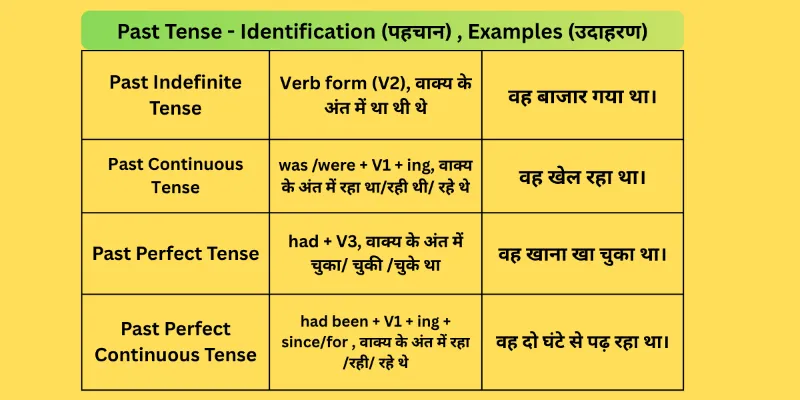
इन वाक्यों के अंत में होगा, रहा था, रही थी, गया था, आदि शब्द आते हैं।
Examples :
1. She visited her grandmother yesterday.
वह कल अपनी दादी से मिलने गई।
2. They watched a movie last night.
उन्होंने पिछली रात एक फिल्म देखी।
3. I met my old friend in the park.
मैं पार्क में अपने पुराने दोस्त से मिला।
4. He cleaned his room in the morning.
उसने सुबह अपना कमरा साफ किया।
5. The teacher praised the students.
शिक्षक ने छात्रों की प्रशंसा की।
6. We played cricket after school.
हमने स्कूल के बाद क्रिकेट खेला।
7. The train arrived on time.
ट्रेन समय पर पहुँची।
8. She cooked a delicious meal.
उसने स्वादिष्ट भोजन बनाया।
9. He was reading a story when I called him.
जब मैंने उसे फोन किया, वह कहानी पढ़ रहा था।
10. They were playing football in the rain.
वे बारिश में फुटबॉल खेल रहे थे।
11. I was watching TV at 8 p.m.
मैं रात आठ बजे टीवी देख रहा था।
12. She was writing a letter to her friend.
वह अपने दोस्त को पत्र लिख रही थी।
13. The children were singing loudly.
बच्चे ज़ोर से गाना गा रहे थे।
14. We were studying for our exams.
हम अपनी परीक्षा की तैयारी कर रहे थे।
15. The sun was shining brightly.
सूरज तेज़ चमक रहा था।
16. He was sleeping when the lights went off.
जब बत्ती गई, वह सो रहा था।
17. She had finished her homework before dinner.
उसने रात के खाने से पहले अपना होमवर्क पूरा कर लिया था।
18. I had already seen that movie.
मैं वह फिल्म पहले ही देख चुका था।
19. They had left the station before the train arrived.
ट्रेन के आने से पहले वे स्टेशन छोड़ चुके थे।
20. He had written three pages before the bell rang.
घंटी बजने से पहले उसने तीन पेज लिख लिए थे।
21. The rain had stopped before we went out.
हमारे बाहर जाने से पहले बारिश रुक चुकी थी।
22. We had eaten our lunch by that time.
उस समय तक हम अपना दोपहर का खाना खा चुके थे।
23. The teacher had taught the lesson before the exam.
परीक्षा से पहले शिक्षक ने वह पाठ पढ़ा दिया था।
24. She had lost her keys before reaching home.
घर पहुँचने से पहले उसकी चाबियाँ खो गई थीं।
25. He had been working for three hours before he took a break.
ब्रेक लेने से पहले वह तीन घंटे से काम कर रहा था।
26. They had been studying since morning.
वे सुबह से पढ़ रहे थे।
27. She had been cooking for two hours before guests arrived.
मेहमानों के आने से पहले वह दो घंटे से खाना बना रही थी।
28. I had been waiting for the bus for half an hour.
मैं आधे घंटे से बस का इंतज़ार कर रहा था।
29. The students had been practicing before the competition.
प्रतियोगिता से पहले छात्र अभ्यास कर रहे थे।
30. We had been living in that city for five years before we moved.
वहाँ से जाने से पहले हम उस शहर में पाँच साल से रह रहे थे।
उपरोक्त सभी वाक्य भूतकाल के उदाहरण हैं। इन वाक्यों के अंत में रहा था, रही थी, रहे थे आदि शब्द आ रहे है। आप ने समझ लिया होगा कि भूतकाल किसे कहते हैं? अब आपको भूतकाल के चारों भागों के बारे में नीचे विस्तार से समझाया गया है। निम्नलिखित की परिभाषा तथा उदाहरण को ध्यान से पढ़ें और सीखें।
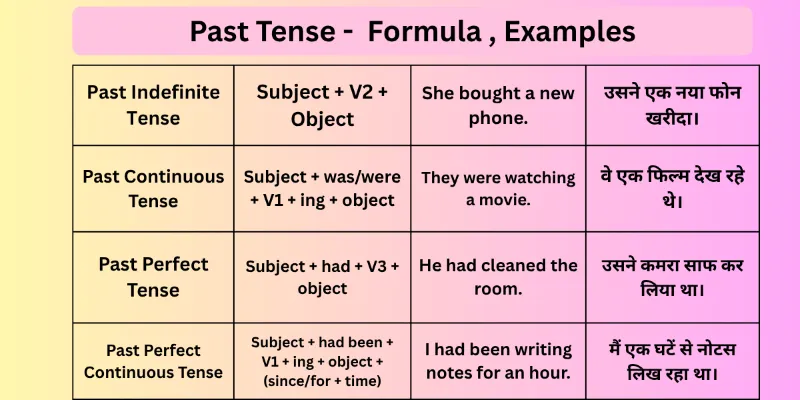
Parts of Past Tense :
भूतकाल के भाग :
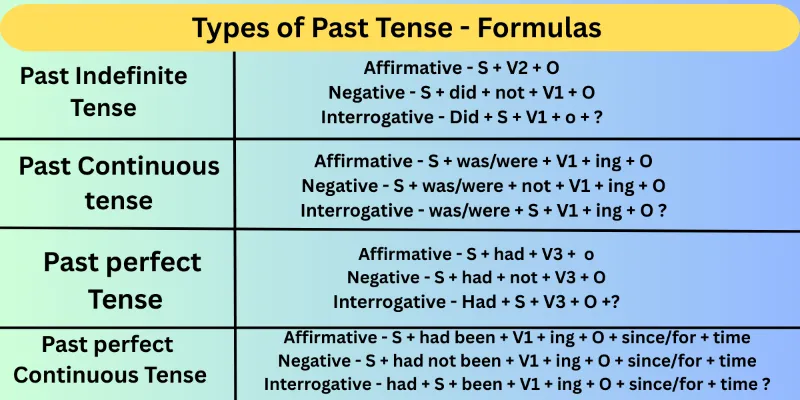
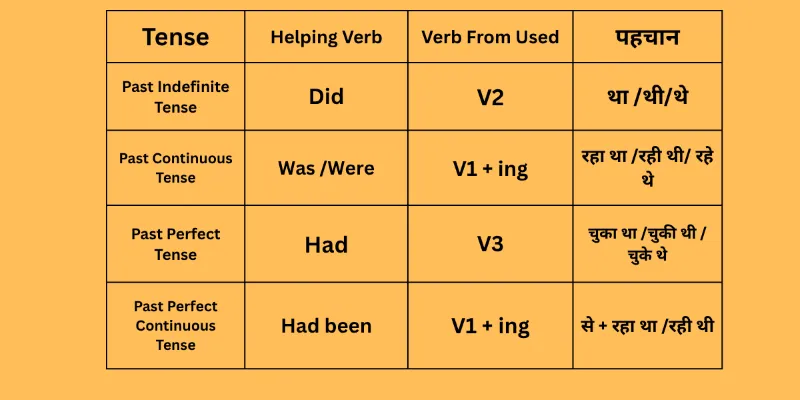
1. Past Indefinite Tense (Simple Past tense) (सामान्य भूतकाल)
2. Past Continuous Tense (अपूर्ण भूतकाल)
3. Past Perfect Tense (पूर्ण भूतकाल)
4. Past Perfect Continuous Tense (भूतकाल पूर्ण सतत्काल)
नीचे आपको सभी भागों के प्रत्येक भाग की परिभाषा, उदाहरण अंग्रेजी और हिंदी दोनों भाषाओं में बताई गई है जिससे आपको भूतकाल के बारे में पूर्ण जानकारी प्राप्त होगी।
1. Past Indefinite Tense (सामान्य भूतकाल)
Definition -
Past Indefinite Tense is the tense that expresses an action that happened and was completed in the past.
It is used to talk about a finished action, past habits, or events that occurred at a specific time in the past.
It tells what someone did in the past.
In this tense, the second form of the verb (V₂) is used for all subjects.
परिभाषा -
Past Indefinite Tense - साधारण भूतकाल वह काल है जिसके द्वारा उस कार्य का बोध होता है जो भूतकाल में हुआ और समाप्त हो गया।
इसका प्रयोग हम तब करते हैं जब कोई कार्य अतीत में किसी निश्चित समय पर घटित हुआ हो।
यह बताता है कि कोई कार्य पहले ही हो चुका है।
इस काल में क्रिया का दूसरा रूप (V₂) प्रयोग किया जाता है। इन वाक्यों के अंत में होगा, खेलेगा, गया, रहा था, रही थी, रहे थे आदि शब्द आते हैं।
Read More About Past Indefinite Tense (सामान्य भूतकाल)
Examples:
1. She visited the temple yesterday.
वह कल मंदिर गई।
2. They played cricket in the evening.
उन्होंने शाम को क्रिकेट खेला।
3. I met my best friend last week.
मैं पिछले हफ्ते अपने सबसे अच्छे दोस्त से मिला।
4. He cleaned his room in the morning.
उसने सुबह अपना कमरा साफ किया।
5. We watched a movie together.
हमने साथ में एक फिल्म देखी।
6. The teacher praised the students.
शिक्षक ने छात्रों की प्रशंसा की।
7. She cooked dinner for her family.
उसने अपने परिवार के लिए रात का खाना बनाया।
8. The train arrived late.
ट्रेन देर से पहुँची।
9. He helped the poor man.
उसने गरीब आदमी की मदद की।
10. I learned a new lesson yesterday.
मैंने कल एक नया पाठ सीखा।
Read Also
• Parts of Speech
• Noun • Pronoun
• Verb • Adverb
• Conjunction • Interjection
• Preposition • Adjective
2. Past Continuous Tense (अपूर्ण भूतकाल)
Definition -
Past Continuous Tense is the tense that expresses an action which was going on for some time in the past.
It tells that the action started in the past and was still continuing at a certain time in the past.
It shows an action that was happening in the past.
In this tense, we use was or were with the -ing form of the main verb.
परिभाषा -
Past Continuous Tense - अपूर्ण भूतकाल वह काल है जो उस क्रिया को दर्शाता है जो भूतकाल में कुछ समय तक चल रही थी।
अर्थात जब कोई कार्य भूतकाल में किसी समय हो रहा था, तब उसका प्रयोग किया जाता है।
यह बताता है कि कोई कार्य भूतकाल में चल रहा था।
इसमें was या were के साथ क्रिया में “ing” लगाया जाता है। इन वाक्यों के अंत में रहा था, रही थी, रहे थे आदि शब्द आते हैं।
Read More About Past Continuous Tense (अपूर्ण भूतकाल)
Example:
1. She was reading a storybook.
वह एक कहानी की किताब पढ़ रही थी।
2. They were playing football in the ground.
वे मैदान में फुटबॉल खेल रहे थे।
3. I was watching TV when my mother called me.
जब मेरी माँ ने मुझे बुलाया, मैं टीवी देख रहा था।
4. He was writing a letter to his friend.
वह अपने दोस्त को पत्र लिख रहा था।
5. We were studying for our exams.
हम अपनी परीक्षा की तैयारी कर रहे थे।
6. Children were singing a beautiful song.
बच्चे एक सुन्दर गीत गा रहे थे।
7. It was raining heavily yesterday evening.
कल शाम तेज़ बारिश हो रही थी।
8. The teacher was teaching in the classroom.
शिक्षक कक्षा में पढ़ा रहे थे।
9. I was walking in the garden when it started to rain.
जब बारिश शुरू हुई, मैं बगीचे में टहल रहा था।
10. They were talking about their future plans.
वे अपने भविष्य की योजनाओं के बारे में बात कर रहे थे।
Read Also
• Model Verb
• Use of Can & Could • Use of Dare
• Use of May & Might • Use of Must & Ought
• Use of Shall & Will • Use of Should & Would
• Use of Used to • Use of Need to
3. Past Perfect Tense (पूर्ण भूतकाल)
Definition -
Past Perfect Tense is the tense that expresses an action that was completed before another action or time in the past.
It shows which of the two past actions happened first.
It tells about an action that had already been completed in the past.
We use “had + past participle (V₃)” with all subjects (He, She, It, I, We, You, They).
परिभाषा -
Past Perfect Tense - पूर्ण भूतकाल वह काल है जो किसी ऐसे कार्य को दर्शाता है जो भूतकाल में किसी दूसरे कार्य से पहले पूरा हो चुका था।
अर्थात जब भूतकाल में दो कार्य हुए हों और उनमें से एक पहले समाप्त हुआ हो, तो पहले समाप्त हुए कार्य को Past Perfect में व्यक्त किया जाता है।
यह बताता है कि कोई कार्य भूतकाल में पहले ही पूरा हो चुका था।
इस काल में had + क्रिया का तीसरा रूप (V₃) प्रयोग किया जाता है।
सभी subjects (I, We, You, He, She, They) के साथ had ही लगता है।
इन वाक्यों के अंत में चुका था, चुकी थी, चुके थे आदि शब्द आते हैं।
Read More About Past Perfect Tense (पूर्ण भूतकाल)
Examples:
1. She had completed her work before sunset.
उसने सूरज ढलने से पहले अपना काम पूरा कर लिया था।
2. They had left before I reached home.
मेरे घर पहुँचने से पहले वे जा चुके थे।
3. I had eaten my lunch before you arrived.
तुम्हारे आने से पहले मैंने खाना खा लिया था।
4. He had finished the book before the exam.
परीक्षा से पहले उसने किताब पूरी कर ली थी।
5. We had studied the lesson before the teacher came.
शिक्षक के आने से पहले हमने पाठ पढ़ लिया था।
6. The rain had stopped before we went out.
हमारे बाहर जाने से पहले बारिश रुक चुकी थी।
7. She had cooked dinner before her guests came.
मेहमानों के आने से पहले उसने रात का खाना बना लिया था।
8. They had played the match before it got dark.
अंधेरा होने से पहले उन्होंने मैच खेल लिया था।
9. I had lost my pen before the exam started.
परीक्षा शुरू होने से पहले मैंने अपनी पेन खो दी थी।
10. He had cleaned the room before his mother arrived.
अपनी माँ के आने से पहले उसने कमरा साफ कर लिया था।
Read Also
• Sentence & Structure of Sentence • Parts of Sentence
• Affirmative Sentence • Negative Sentence
• Interrogative Sentence • Conditional Sentence
• Exclamatory Sentence • Imperative Sentence
4. Past Perfect Continuous tense (भूतकाल पूर्ण सतत्काल)
Definition -
Past Perfect Continuous Tense is the tense that shows an action which started in the past and continued for some time before another past action or time.
It describes an action that had been going on for a certain period before something else happened in the past.
This tense is used to show that an action was continuing for some time in the past until another action took place.
It expresses both the duration and the continuity of a past action.
In this tense, we use had been + V₁ + ing with since (for a point of time) or for (for a period of time).
परिभाषा -
Past Perfect Continuous Tense (पूर्ण अपूर्ण भूतकाल) वह काल है जो किसी ऐसे कार्य को दर्शाता है जो भूतकाल में किसी समय से लगातार चल रहा था और किसी अन्य कार्य से पहले तक चलता रहा।
यह बताता है कि कोई कार्य भूतकाल में कुछ समय से चल रहा था और किसी दूसरी घटना से पहले तक जारी रहा।
इस काल में had been के साथ क्रिया में “ing” जोड़ते हैं।
यदि समय का एक निश्चित बिंदु बताया जाए तो since का प्रयोग होता है, और यदि समय की अवधि बताई जाए तो for का प्रयोग होता है।
इन वाक्यों के अंत में रहा था, रही थी, हुई थी, रहे थे आदि शब्द आते हैं।
Read More About Past Perfect Continuous tense (भूतकाल पूर्ण सतत्काल)
Examples:
1. He had been working for three hours before he took a rest.
वह तीन घंटे से काम कर रहा था, फिर उसने आराम किया।
2. She had been studying since morning.
वह सुबह से पढ़ रही थी।
3. They had been waiting for the bus for half an hour.
वे आधे घंटे से बस का इंतज़ार कर रहे थे।
4. I had been writing a story for two days.
मैं दो दिनों से एक कहानी लिख रहा था।
5. The children had been playing in the park since evening.
बच्चे शाम से पार्क में खेल रहे थे।
6. We had been living in Delhi for five years before we moved.
वहाँ से जाने से पहले हम पाँच साल से दिल्ली में रह रहे थे।
7. She had been cooking food for her family since 5 o’clock.
वह पाँच बजे से अपने परिवार के लिए खाना बना रही थी।
8. They had been talking for a long time before the meeting started.
मीटिंग शुरू होने से पहले वे लंबे समय से बात कर रहे थे।
9. It had been raining since morning.
सुबह से बारिश हो रही थी।
10. I had been learning English for six months before the course ended.
कोर्स खत्म होने से पहले मैं छह महीने से अंग्रेज़ी सीख रहा था।
Read Tense and There Types
• Tense
• Present Tense
• Present Indefinite Tense • Present continuous tense
• Present Perfect Tense • Present Perfect Continuous Tense
• Past Tense
• Past Indefinite Tense • Past continuous tense
• Past Perfect Tense • Past Perfect Continuous Tense
• Future Tense
• Future Indefinite Tense
• future continuous tense • Future Perfect Tense
• Future Perfect Continuous Tense