Present Perfect Continuous Tense (वर्तमान पूर्ण सतत्काल)
Definition -
Present Perfect Continuous Tense is used to express an action that started in the past, has been continuing till the present, and may still be happening. It shows the duration of an activity. This tense is formed using has/have + been + verb(-ing).
We use this tense to talk about actions that began earlier and are still in progress or have recently stopped but their effect is still felt. It mainly answers the question “For how long?” or “Since when?”.
For example: She has been studying for two hours.
This means she started studying two hours ago and is still studying.
परिभाषा -
Present Perfect Continuous Tense का प्रयोग किसी ऐसे कार्य के लिए किया जाता है जो अतीत में शुरू हुआ, अब तक चलता आ रहा है, और संभव है कि अभी भी जारी हो। इस tense का प्रयोग कार्य की अवधि (duration) बताने के लिए किया जाता है। इसे has/have + been + verb(+ing) से बनाया जाता है।
इन वाक्यों के अंत में रहा है, रही है, रहे हैं आदि शब्द आते हैं।
इस काल का प्रयोग हम तब करते हैं जब कोई कार्य पहले शुरू हुआ हो और अभी तक चलता आ रहा हो या अभी-अभी बंद हुआ हो लेकिन उसका प्रभाव अभी भी दिखाई दे रहा हो। यह tense आमतौर पर “कब से?” और “कितने समय से?” जैसे प्रश्नों के उत्तर देता है।
उदाहरण: वह दो घंटे से पढ़ रही है।
इसका अर्थ है कि पढ़ाई दो घंटे पहले शुरू हुई थी और अब तक जारी है।
Examples :
1. She has been watering the plants for thirty minutes.
वह तीस मिनट से पौधों को पानी दे रही है।
2. I have been learning computer skills for the last few weeks.
मैं पिछले कुछ हफ्तों से कंप्यूटर स्किल सीख रहा हूँ।
3. They have been repairing the road since yesterday evening.
वे कल शाम से सड़क की मरम्मत कर रहे हैं।
4. He has been searching for new job opportunities for months.
वह महीनों से नई नौकरी के अवसर खोज रहा है।
5. The children have been singing loudly for ten minutes.
बच्चे दस मिनट से ज़ोर से गा रहे हैं।
6. We have been planning our trip since last night.
हम कल रात से अपनी यात्रा की योजना बना रहे हैं।
7. She has been writing a story for three days.
वह तीन दिनों से एक कहानी लिख रही है।
8. I have been waiting for your message since morning.
मैं सुबह से आपके संदेश का इंतजार कर रहा हूँ।
9. They have been practicing the dance steps for two hours.
वे दो घंटे से डांस स्टेप्स का अभ्यास कर रहे हैं।
10. He has been fixing his bicycle since early morning.
वह सुबह-सुबह से अपनी साइकिल ठीक कर रहा है।
इन वाक्यों के अंत में रहा है, रही है, रहे हैं आदि शब्द आये हैं अतः ये सभी वाक्य Present Perfect Continuous Tense के उदाहरण हैं।
Read Also
• Present Tense
• Present Indefinite Tense • Present Continuous Tense
• Present Perfect Tense • Present Perfect Continuous Tense
Rules of Present Perfect Continuous Tense: (वर्तमान पूर्ण सतत्काल के नियम:)
Rule 1: Helping Verbs (Has been / Have been)
Use has been with he, she, it, singular noun.
Use have been with I, we, you, they, plural nouns.
Has been का प्रयोग he, she, it, किसी एकवचन के साथ होता है।
Have been का प्रयोग I, we, you, they और बहुवचन के साथ होता है।
Rule 2: Main verb हमेशा ‘ing’ रूप में होती है
Verb must be in V1 + ing form.
Example: going, eating, watching, studying.
क्रिया हमेशा ing रूप में लगती है।
जैसे: going = जा रहा है, reading = पढ़ रहा है।
Rule 3: Action started in the past and still continuing
Use this tense when the action began in the past and is still going on.
जब कोई काम पहले शुरू हुआ हो और अभी तक जारी हो, तब इस tense का उपयोग होता है।
Rule 4: Use of ‘Since’ and ‘For’ (बहुत महत्वपूर्ण)
Since
Used with point of time (specific time).
Examples: since 6 am, since Monday, since 2020.
Specific समय के साथ आता है।
जैसे: सुबह 6 बजे से, सोमवार से, 2020 से।
For
Used with period of time (duration).
Examples: for two hours, for three days, for five months.
समय अवधि के साथ आता है।
जैसे: दो घंटे से, तीन दिनों से, पाँच महीनों से।
Rule 5: Sentence Ending (Hindi में वाक्य का अंत)
Hindi वाक्यों के अंत में अक्सर ये आते हैं:
रहा हूँ / रही हूँ / रहे हैं / रहा है / रही है / रहे हैं
ये बताते हैं कि काम अभी भी जारी है।
Rule 6: Time expression required (optional but common)
Usually used with time expressions:
since morning, for two hours, since last night, for weeks.
अक्सर समय बताए जाता है:
सुबह से, दो घंटे से, कल रात से, कई हफ्तों से।
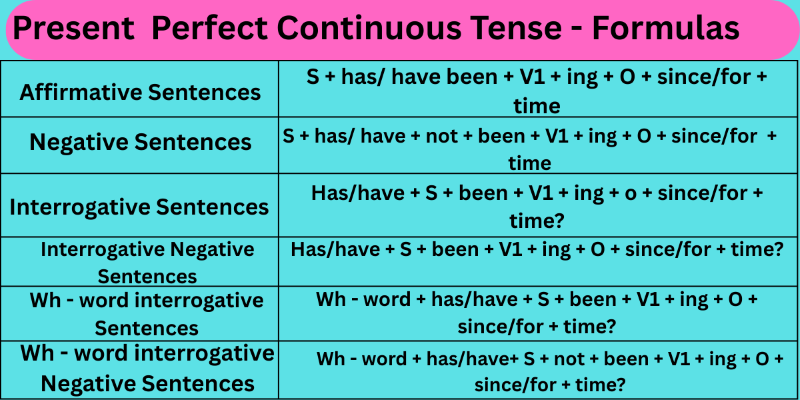
1. Affirmative Sentences of Present Perfect Continuous Tense (सकारात्मक वाक्य)
An affirmative sentence of Present Perfect Continuous Tense shows that an action started in the past and is still continuing in the present. It tells how long the action has been happening.
Present Perfect Continuous Tense का Affirmative Sentence वह वाक्य होता है जिसमें कोई कार्य अतीत में शुरू हुआ हो और अभी भी जारी हो। इसमें बताया जाता है कि काम कितने समय से हो रहा है।
Rule (नियम):
Rule 1: Use of “has been / have been”
• Has been → he, she, it, singular noun
• Have been → I, we, you, they, plural noun
Rule 2: Main verb must be in “V1 + ing” form
Example: going, playing, reading, speaking
क्रिया हमेशा ing रूप में होती है।
Rule 3: Action must be continuing till now
Use this tense only when the action is still going on.
इस काल का उपयोग तब होता है जब काम अभी तक जारी हो।
Rule 4: Use of “Since” and “For”
Since → Point of time (विशेष समय)
Examples: since morning, since 2010, since Monday
For → Period of time (समय अवधि)
Examples: for two hours, for three days, for six months
Rule 5: Sentence Ending Pattern in Hindi
हिंदी वाक्य का अंत आमतौर पर ऐसे होता है:
रहा हूँ / रही हूँ / रहे हैं / रहा है / रही है / रहे हैं
Rule 6: Time expression is often used
Examples: for two hours, since night, for many months
उपयुक्त दिए गए फार्मूले के अनुसार नीचे दिए गए वाक्यों को ध्यान से पढ़ें और समझें।
Examples:
1. I have been learning guitar for two weeks.
मैं दो हफ्तों से गिटार सीख रहा हूँ।
2. She has been cooking dinner for an hour.
वह एक घंटे से खाना बना रही है।
3. They have been fixing the roof since morning.
वे सुबह से छत ठीक कर रहे हैं।
4. He has been writing notes for three hours.
वह तीन घंटे से नोट्स लिख रहा है।
5. We have been discussing the project since yesterday.
हम कल से प्रोजेक्ट पर चर्चा कर रहे हैं।
6. The teacher has been explaining the topic for twenty minutes.
शिक्षक बीस मिनट से विषय समझा रहे हैं।
7. You have been practicing yoga for months.
आप महीनों से योग कर रहे हैं।
8. I have been waiting for your reply since noon.
मैं दोपहर से आपके जवाब का इंतजार कर रहा हूँ।
9. She has been painting a picture for five days.
वह पाँच दिनों से एक तस्वीर बना रही है।
10. They have been watching the match for two hours.
वे दो घंटे से मैच देख रहे हैं।
11. He has been repairing his laptop since last night.
वह कल रात से अपना लैपटॉप ठीक कर रहा है।
12. We have been preparing for the exam for weeks.
हम हफ्तों से परीक्षा की तैयारी कर रहे हैं।
13. I have been reading this novel for three days.
मैं तीन दिनों से यह उपन्यास पढ़ रहा हूँ।
14. She has been searching for her keys since morning.
वह सुबह से अपनी चाबी ढूँढ रही है।
15. They have been planting trees for an hour.
वे एक घंटे से पेड़ लगा रहे हैं।
16. He has been jogging in the park for half an hour.
वह आधे घंटे से पार्क में दौड़ रहा है।
17. You have been learning English for a long time.
आप लंबे समय से अंग्रेज़ी सीख रहे हैं।
18. We have been building this model for two months.
हम दो महीनों से यह मॉडल बना रहे हैं।
19. The baby has been crying for five minutes.
बच्चा पाँच मिनट से रो रहा है।
20. I have been organizing my room since morning.
मैं सुबह से अपना कमरा व्यवस्थित कर रहा हूँ।
21. They have been talking on the phone for an hour.
वे एक घंटे से फोन पर बात कर रहे हैं।
22. She has been cleaning the house since sunrise.
वह सूर्योदय से घर साफ कर रही है।
23. He has been collecting data for many days.
वह कई दिनों से डेटा इकट्ठा कर रहा है।
24. We have been listening to music for a while.
हम कुछ समय से संगीत सुन रहे हैं।
25. I have been improving my handwriting for months.
मैं महीनों से अपनी लिखावट सुधार रहा हूँ।
26. They have been waiting for the bus since 8 o’clock.
वे 8 बजे से बस का इंतजार कर रहे हैं।
27. She has been working on her artwork for the whole week.
वह पूरे हफ्ते से अपनी कला पर काम कर रही है।
28. He has been learning coding for six months.
वह छह महीनों से कोडिंग सीख रहा है।
29. We have been decorating the hall for the function.
हम समारोह के लिए हॉल सजाते आ रहे हैं।
30. I have been saving money for a new phone for many weeks.
मैं कई हफ्तों से नए फोन के लिए पैसे बचा रहा हूँ।
Read Also
• Affirmative Sentence • Use of Had
• Active & Passive Voice • Gender
• Use of Has & Have • Use of Use of Is/am/are
2. Negative Sentences of Present Perfect Continuous Tense (नकारात्मक वाक्य)
A negative sentence in Present Perfect Continuous Tense shows that an action has not been happening from the past till now.
It tells that the action started in the past but has not been continuing.
Present Perfect Continuous Tense का Negative Sentence वह वाक्य होता है जिसमें यह बताया जाता है कि कोई काम अतीत से अब तक नहीं हो रहा है।
मतलब—काम शुरू ही नहीं हुआ या जारी नहीं है।
Rules (नियम):
Rule 1: Use of “has not been / have not been”
• Has not been → he, she, it, singular
• Have not been → I, we, you, they, plural
Rule 2: Verb always in V1 + ing
Example: going, writing, reading
Hindi: क्रिया हमेशा ing रूप में होती है।
Rule 3: Use of “Since” & “For” is same
Since → Specific time
For → Time duration
Rule 4: Meaning must show “Work is NOT happening”
काम नहीं हो रहा है, इसलिए वाक्य में not जरूरी है।
Rule 5: Sentence Ending in Hindi
अंत में आमतौर पर ऐसे शब्द आते हैं—
नहीं रहा हूँ / नहीं रही हूँ / नहीं रहे हैं / नहीं रहा है / नहीं रही है
Example:
1. I have not been studying for two days.
मैं दो दिनों से पढ़ाई नहीं कर रहा हूँ।
2. She has not been cooking since morning.
वह सुबह से खाना नहीं बना रही है।
3. They have not been cleaning the room for an hour.
वे एक घंटे से कमरा साफ नहीं कर रहे हैं।
4. He has not been working on the project for weeks.
वह हफ्तों से प्रोजेक्ट पर काम नहीं कर रहा है।
5. We have not been exercising since last month.
हम पिछले महीने से व्यायाम नहीं कर रहे हैं।
6. You have not been attending classes for three days.
आप तीन दिनों से कक्षा में उपस्थित नहीं हो रहे हैं।
7. The baby has not been sleeping for an hour.
बच्चा एक घंटे से नहीं सो रहा है।
8. I have not been saving money for months.
मैं महीनों से पैसे नहीं बचा रहा हूँ।
9. She has not been preparing for the test since yesterday.
वह कल से टेस्ट की तैयारी नहीं कर रही है।
10. They have not been visiting us for many weeks.
वे कई हफ्तों से हमसे मिलने नहीं आ रहे हैं।
11. He has not been using his mobile since morning.
वह सुबह से अपना मोबाइल इस्तेमाल नहीं कर रहा है।
12. We have not been playing in the park for days.
हम कई दिनों से पार्क में नहीं खेल रहे हैं।
13. I have not been writing my notes for a week.
मैं एक हफ्ते से अपने नोट्स नहीं लिख रहा हूँ।
14. She has not been learning English for months.
वह महीनों से अंग्रेज़ी नहीं सीख रही है।
15. They have not been watering the plants since Sunday.
वे रविवार से पौधों को पानी नहीं दे रहे हैं।
16. He has not been watching TV for two hours.
वह दो घंटे से टीवी नहीं देख रहा है।
17. You have not been helping me since morning.
आप सुबह से मेरी मदद नहीं कर रहे हैं।
18. We have not been preparing food for the guests.
हम मेहमानों के लिए खाना नहीं बना रहे हैं।
19. I have not been checking my emails for days.
मैं कई दिनों से अपनी ईमेल नहीं देख रहा हूँ।
20. She has not been going to office since last week.
वह पिछले हफ्ते से ऑफिस नहीं जा रही है।
21. They have not been practicing dance for a month.
वे एक महीने से डांस अभ्यास नहीं कर रहे हैं।
22. He has not been reading the book since Monday.
वह सोमवार से किताब नहीं पढ़ रहा है।
23. We have not been repairing the car for hours.
हम घंटों से कार ठीक नहीं कर रहे हैं।
24. I have not been calling him since morning.
मैं सुबह से उसे फोन नहीं कर रहा हूँ।
25. She has not been working on her painting for two days.
वह दो दिनों से अपनी पेंटिंग पर काम नहीं कर रही है।
26. They have not been completing their homework for weeks.
वे हफ्तों से अपना होमवर्क पूरा नहीं कर रहे हैं।
27. He has not been following the instructions for days.
वह कई दिनों से निर्देशों का पालन नहीं कर रहा है।
28. You have not been learning typing for months.
आप महीनों से टाइपिंग नहीं सीख रहे हैं।
29. We have not been arranging the files since morning.
हम सुबह से फाइलें व्यवस्थित नहीं कर रहे हैं।
30. I have not been practicing meditation for many weeks.
मैं कई हफ्तों से ध्यान नहीं कर रहा हूँ।
Read Also
• Sentence Structure • Negative Sentence
• Singular & Plural Number • Articles
• Use of Do & Does • Use of Had
3. Interrogative Sentences of Present Perfect Continuous Tense (प्रश्नवाचक वाक्य)
An interrogative sentence in Present Perfect Continuous Tense is used to ask questions about an action that started in the past and is still continuing in the present.
These questions begin with Has/Have.
Present Perfect Continuous Tense का Interrogative Sentence वह प्रश्नवाचक वाक्य है जिसमें यह पूछा जाता है कि कोई काम अतीत से अब तक लगातार हो रहा है या नहीं।
ऐसे वाक्यों की शुरुआत Has/Have से होती है।
Rules (नियम):
Rule 1: Question starts with “Has / Have”
• Has → he, she, it, singular
• Have → I, we, you, they, plural
Rule 2: Verb must be in “V1 + ing” form
Example:eating, going, working
Rule 3: Use “Since/For” in the end (if needed)
• Since → Specific time
• For → Time duration
Rule 4: Hindi question endings
आम तौर पर अंत में आता है—
रहा है? / रही है? / रहे हैं?
Examples:
1. Have you been studying for the exam?
क्या आप परीक्षा के लिए पढ़ रहे हैं?
2. Has she been cooking since morning?
क्या वह सुबह से खाना बना रही है?
3. Have they been working on the project for a week?
क्या वे एक हफ्ते से प्रोजेक्ट पर काम कर रहे हैं?
4. Has he been writing notes for two hours?
क्या वह दो घंटे से नोट्स लिख रहा है?
5. Have we been waiting for the bus since 8 o’clock?
क्या हम 8 बजे से बस का इंतजार कर रहे हैं?
6. Has the baby been crying for ten minutes?
क्या बच्चा दस मिनट से रो रहा है?
7. Have you been practicing yoga for months?
क्या आप महीनों से योग कर रहे हैं?
8. Has she been looking for her bag since noon?
क्या वह दोपहर से अपना बैग ढूँढ रही है?
9. Have they been cleaning the room for an hour?
क्या वे एक घंटे से कमरा साफ कर रहे हैं?
10. Has he been reading this book for days?
क्या वह कई दिनों से यह किताब पढ़ रहा है?
11. Have you been learning English for a long time?
क्या आप लंबे समय से अंग्रेज़ी सीख रहे हैं?
12. Has she been preparing for the interview since yesterday?
क्या वह कल से इंटरव्यू की तैयारी कर रही है?
13. Have we been watching the match for two hours?
क्या हम दो घंटे से मैच देख रहे हैं?
14. Has he been repairing his bike since morning?
क्या वह सुबह से अपनी बाइक ठीक कर रहा है?
15. Have they been saving money for the trip?
क्या वे यात्रा के लिए पैसे बचा रहे हैं?
16. Has she been painting this picture for a week?
क्या वह एक हफ्ते से यह तस्वीर बना रही है?
17. Have I been improving my writing for months?
क्या मैं महीनों से अपनी लिखावट सुधार रहा हूँ?
18. Has he been searching for a new job since last month?
क्या वह पिछले महीने से नई नौकरी ढूँढ रहा है?
19. Have you been practicing dance for two hours?
क्या आप दो घंटे से डांस अभ्यास कर रहे हैं?
20. Has she been cleaning the house since sunrise?
क्या वह सूर्योदय से घर साफ कर रही है?
21. Have they been organizing the files since morning?
क्या वे सुबह से फाइलें व्यवस्थित कर रहे हैं?
22. Has he been learning coding for six months?
क्या वह छह महीनों से कोडिंग सीख रहा है?
23. Have you been waiting for my message since morning?
क्या आप सुबह से मेरे संदेश का इंतजार कर रहे हैं?
24. Has she been making tea for the guests?
क्या वह मेहमानों के लिए चाय बना रही है?
25. Have they been practicing for the competition for weeks?
क्या वे हफ्तों से प्रतियोगिता के लिए अभ्यास कर रहे हैं?
26. Has he been following the instructions for days?
क्या वह कई दिनों से निर्देशों का पालन कर रहा है?
27. Have we been attending the online classes since Monday?
क्या हम सोमवार से ऑनलाइन कक्षाओं में उपस्थित हो रहे हैं?
28. Has she been searching for her phone for an hour?
क्या वह एक घंटे से अपना फोन ढूँढ रही है?
29. Have you been preparing your presentation for days?
क्या आप कई दिनों से अपनी प्रस्तुति तैयार कर रहे हैं?
30. Has he been watering the plants since evening?
क्या वह शाम से पौधों को पानी दे रहा है?
Read Also
• Parts of Sentence • Interrogative Sentence
• Use of These & Those • Use of This & That
• Use of Was & Were • Noun
4. Interrogative Negative Sentences of Present Perfect Continuous Tense (प्रश्नवाचक नकारात्मक वाक्य)
An interrogative negative sentence in Present Perfect Continuous Tense is used to ask negative questions about an action that has not been continuing from the past till now.
These questions start with Has/Have and include not after the subject.
Present Perfect Continuous Tense का Interrogative Negative Sentence वह प्रश्नवाचक वाक्य है जिसमें पूछा जाता है कि कोई काम अतीत से अब तक नहीं हो रहा है।
इन वाक्यों की शुरुआत Has/Have से होती है और not Subject के बाद आता है।
Rules (नियम):
Rule 1: Start with “Has / Have”
Has → he, she, it, singular
Have → I, we, you, they, plural
Rule 2: Use “not” after the subject
Rule 3: Main verb must be in “V1 + ing” form
Rule 4: Use of “Since/For”
• Since = point of time
• For = period of time
Rule 5: Hindi question endings
अंत में आता है:
नहीं रहा है? / नहीं रही है? / नहीं रहे हैं?
Examples:
1. Have you not been calling me since last night?
क्या आप कल रात से मुझे कॉल नहीं कर रहे हैं?
2. Has she not been organizing her cupboard for two days?
क्या वह दो दिनों से अपनी आलमारी व्यवस्थित नहीं कर रही है?
3. Have they not been practicing for the event since Monday?
क्या वे सोमवार से कार्यक्रम के लिए अभ्यास नहीं कर रहे हैं?
4. Has he not been fixing the computer since morning?
क्या वह सुबह से कंप्यूटर ठीक नहीं कर रहा है?
5. Have you not been using this app for months?
क्या आप महीनों से इस ऐप का उपयोग नहीं कर रहे हैं?
6. Has the teacher not been checking assignments for an hour?
क्या शिक्षक एक घंटे से असाइनमेंट जांच नहीं रहे हैं?
7. Have we not been planning the trip since last week?
क्या हम पिछले हफ्ते से यात्रा की योजना नहीं बना रहे हैं?
8. Has she not been recording videos for her channel?
क्या वह अपने चैनल के लिए वीडियो रिकॉर्ड नहीं कर रही है?
9. Have they not been repairing the road for many days?
क्या वे कई दिनों से सड़क की मरम्मत नहीं कर रहे हैं?
10. Has he not been feeding the street dogs for a month?
क्या वह एक महीने से गली के कुत्तों को खाना नहीं खिला रहा है?
11. Have you not been attending online meetings since morning?
क्या आप सुबह से ऑनलाइन मीटिंग में शामिल नहीं हो रहे हैं?
12. Has she not been collecting data for the report?
क्या वह रिपोर्ट के लिए डेटा इकट्ठा नहीं कर रही है?
13. Have they not been training the new staff for two weeks?
क्या वे दो हफ्तों से नए स्टाफ को प्रशिक्षण नहीं दे रहे हैं?
14. Has he not been polishing his shoes for ten minutes?
क्या वह दस मिनट से अपने जूतों को पॉलिश नहीं कर रहा है?
15. Have we not been preparing the stage since afternoon?
क्या हम दोपहर से मंच तैयार नहीं कर रहे हैं?
16. Has she not been searching for her documents since yesterday?
क्या वह कल से अपने दस्तावेज़ नहीं खोज रही है?
17. Have you not been watering the garden in the evenings?
क्या आप शाम के समय बगीचे में पानी नहीं दे रहे हैं?
18. Has he not been checking the emails since lunch?
क्या वह लंच के बाद से ईमेल नहीं देख रहा है?
19. Have they not been painting the walls for three days?
क्या वे तीन दिनों से दीवारें नहीं पेंट कर रहे हैं?
20. Has she not been writing poems for months?
क्या वह महीनों से कविताएँ नहीं लिख रही है?
21. Have you not been learning guitar since last year?
क्या आप पिछले साल से गिटार नहीं सीख रहे हैं?
22. Has he not been printing the documents for the meeting?
क्या वह मीटिंग के लिए दस्तावेज़ प्रिंट नहीं कर रहा है?
23. Have we not been following this routine for a long time?
क्या हम लंबे समय से यह दिनचर्या नहीं अपना रहे हैं?
24. Has she not been updating the website regularly?
क्या वह नियमित रूप से वेबसाइट अपडेट नहीं कर रही है?
25. Have they not been rehearsing the drama since morning?
क्या वे सुबह से नाटक का अभ्यास नहीं कर रहे हैं?
26. Has he not been exercising at the gym for two hours?
क्या वह दो घंटे से जिम में व्यायाम नहीं कर रहा है?
27. Have you not been saving the project files properly?
क्या आप प्रोजेक्ट फाइलें ठीक से सेव नहीं कर रहे हैं?
28. Has she not been helping her mother in the kitchen lately?
क्या वह हाल ही में अपनी माँ की रसोई में मदद नहीं कर रही है?
29. Have they not been decorating the hall for the celebration?
क्या वे समारोह के लिए हॉल सजाने का काम नहीं कर रहे हैं?
30. Has he not been checking his bank balance since morning?
क्या वह सुबह से अपना बैंक बैलेंस नहीं देख रहा है?
Read Also
• Parts of Sentence • Conditional Sentence
• Model Verb • Use of Can & Could
• Use of Dare • Use of May & Might
5. Wh – Word Interrogative Sentences of Present Perfect Continuous Tense (प्रश्नवाचक वाक्य)
WH-word Interrogative sentences in Present Perfect Continuous Tense are used to ask questions starting with Wh-words (What, Where, Why, When, Who, How, How long, etc.) about an action that began in the past and is still continuing now.
Present Perfect Continuous Tense में WH-word Interrogative वाक्य वे होते हैं जिनमें प्रश्न What, Where, Why, How long, How, When, Who जैसे शब्दों से शुरू होता है, और जिनमें पूछा जाता है कि ऐसी क्रिया कब से, क्यों, कहाँ या कैसे चल रही है, जो अतीत में शुरू हुई थी और अब भी जारी है।
Rules (नियम):
1. Sentence हमेशा Wh-word से शुरू होगा।
2. Wh-word के बाद Has / Have आएगा।
3. फिर Subject आएगा।
4. फिर Been आएगा।
5. Verb का रूप V1 + ing होगा।
6. अंत में Object / Time / Place आदि आएगा।
7. प्रश्न होने के कारण अंत में ? लगेगा।
Examples:
1. Where have you been studying since morning?
आप सुबह से कहाँ पढ़ रहे हैं?
2. Why has she been crying for the last ten minutes?
वह पिछले दस मिनट से क्यों रो रही है?
3. What have they been discussing since yesterday?
वे कल से क्या चर्चा कर रहे हैं?
4. How long has he been repairing his bike?
वह कितने समय से अपनी बाइक ठीक कर रहा है?
5. Where has she been working for the last few years?
वह पिछले कुछ वर्षों से कहाँ काम कर रही है?
6. Why have you been avoiding my calls lately?
आप हाल ही में मेरी कॉल क्यों टाल रहे हैं?
7. What has he been searching on the internet?
वह इंटरनेट पर क्या खोज रहा है?
8. Who has been guiding you for the project?
आपके प्रोजेक्ट के लिए आपको कौन मार्गदर्शन दे रहा है?
9. Where have they been staying since Monday?
वे सोमवार से कहाँ ठहरे हुए हैं?
10. Why has the teacher been explaining the topic again?
शिक्षक विषय को फिर से क्यों समझा रहे हैं?
11. What have you been writing since afternoon?
आप दोपहर से क्या लिख रहे हैं?
12. How long have they been constructing the building?
वे इमारत का निर्माण कब से कर रहे हैं?
13. Where has he been traveling this week?
वह इस हफ्ते कहाँ यात्रा कर रहा है?
14. Why has she been ignoring your messages?
वह आपके संदेशों को क्यों अनदेखा कर रही है?
15. What have the students been preparing for the event?
छात्र कार्यक्रम के लिए क्या तैयार कर रहे हैं?
16. How long have you been learning English?
आप कब से अंग्रेज़ी सीख रहे हैं?
17. Why has he been shouting since morning?
वह सुबह से क्यों चिल्ला रहा है?
18. Where have you been going every evening?
आप हर शाम कहाँ जा रहे हैं?
19. What has she been painting for two hours?
वह दो घंटे से क्या पेंट कर रही है?
20. Who has been helping you with your homework?
आपका होमवर्क करने में आपको कौन मदद कर रहा है?
21. Why have they been delaying the work?
वे काम में देरी क्यों कर रहे हैं?
22. Where has he been spending most of his time lately?
वह हाल ही में अपना ज्यादातर समय कहाँ बिता रहा है?
23. What have you been cooking since morning?
आप सुबह से क्या पका रहे हैं?
24. How long has she been attending online classes?
वह कितने समय से ऑनलाइन कक्षाएँ ले रही है?
25. Why has the baby been laughing continuously?
बच्चा लगातार क्यों हँस रहा है?
26. Where have they been practicing the dance?
वे डांस का अभ्यास कहाँ कर रहे हैं?
27. What has he been reading for so long?
वह इतने लंबे समय से क्या पढ़ रहा है?
28. How long have you been waiting here?
आप यहाँ कब से इंतजार कर रहे हैं?
29. Why has she been collecting old photographs?
वह पुराने फोटोग्राफ क्यों इकट्ठा कर रही है?
30. Where has the team been playing their matches recently?
टीम हाल ही में अपने मैच कहाँ खेल रही है?
Read Also
• Exclamatory Sentence • Imperative Sentence
• Use of Must & Ought • Use of Shall & Will
• Use of Should & Would • Use of Used to
6. Wh – Word Interrogative Negative Sentences of Present Perfect Continuous Tense (प्रश्नवाचक नकारात्मक वाक्य)
WH-word Interrogative Negative sentences in Present Perfect Continuous Tense are used to ask negative questions with Wh-words (Why, Where, What, How long, etc.) about an action that started in the past but has not been happening as expected till now.
Present Perfect Continuous Tense में WH-word Interrogative Negative वाक्य ऐसे प्रश्न होते हैं जो Wh-word (Why, Where, What, How long आदि) से शुरू होते हैं और जिनमें यह पूछा जाता है कि कोई क्रिया जो पहले शुरू होनी चाहिए थी, वह क्यों या कब से नहीं हो रही है।
Rules (नियम):
1. Sentence begins with Wh-word.
2. Then use Has/Have.
3. Add Subject.
4. Add Not after subject.
5. Then use Been.
6. Verb will be in V1 + ing form.
7. End with required Object / Time / Place.
8. Sentence ends with ?
Examples:
1. Why have you not been attending the online classes lately?
आप हाल ही में ऑनलाइन कक्षाओं में शामिल क्यों नहीं हो रहे हैं?
2. Where has she not been going since last week?
वह पिछले हफ्ते से कहाँ नहीं जा रही है?
3. What have they not been preparing for the function?
वे कार्यक्रम के लिए क्या तैयार नहीं कर रहे हैं?
4. Why has he not been completing his assignments on time?
वह अपने असाइनमेंट समय पर पूरा क्यों नहीं कर रहा है?
5. How long have you not been practicing your music?
आप अपनी संगीत प्रैक्टिस कब से नहीं कर रहे हैं?
6. Why has the teacher not been explaining this chapter again?
शिक्षक यह अध्याय दोबारा क्यों नहीं समझा रहे हैं?
7. Where have they not been staying during the trip?
यात्रा के दौरान वे कहाँ नहीं ठहरे हैं?
8. What has she not been finishing since morning?
वह सुबह से क्या पूरा नहीं कर रही है?
9. Why have you not been watering the plants since Monday?
आप सोमवार से पौधों में पानी क्यों नहीं दे रहे हैं?
10. How long has he not been repairing his scooter?
वह अपना स्कूटर कब से नहीं ठीक कर रहा है?
11. Where has the team not been practicing their game?
टीम अपना खेल कहाँ नहीं अभ्यास कर रही है?
12. Why have they not been responding to your messages?
वे आपके संदेशों का जवाब क्यों नहीं दे रहे हैं?
13. What has he not been cooking for so long?
वह इतने समय से क्या नहीं पका रहा है?
14. Why has she not been cleaning her room regularly?
वह अपना कमरा नियमित रूप से क्यों नहीं साफ कर रही है?
15. Where have you not been looking for your lost keys?
आपने अपनी खोई हुई चाबियाँ कहाँ नहीं खोजी हैं?
16. What have they not been learning in their class?
वे अपनी कक्षा में क्या नहीं सीख रहे हैं?
17. Why has he not been helping his parents lately?
वह हाल ही में अपने माता-पिता की मदद क्यों नहीं कर रहा है?
18. How long has she not been writing her diary?
वह अपनी डायरी कब से नहीं लिख रही है?
19. Where have you not been going every morning?
आप हर सुबह कहाँ नहीं जा रहे हैं?
20. What has he not been repairing since yesterday?
वह कल से क्या नहीं ठीक कर रहा है?
21. Why have they not been practicing for the exam?
वे परीक्षा की तैयारी क्यों नहीं कर रहे हैं?
22. Where has she not been keeping her important documents?
वह अपने महत्वपूर्ण दस्तावेज़ कहाँ नहीं रख रही है?
23. What have you not been reading these days?
आप इन दिनों क्या नहीं पढ़ रहे हैं?
24. Why has he not been visiting the doctor lately?
वह हाल ही में डॉक्टर के पास क्यों नहीं जा रहा है?
25. How long have they not been cleaning the house?
वे घर की सफाई कब से नहीं कर रहे हैं?
26. Where has the child not been playing recently?
बच्चा हाल में कहाँ नहीं खेल रहा है?
27. What has she not been completing in her office work?
वह अपने ऑफिस के काम में क्या पूरा नहीं कर रही है?
28. Why have you not been following the new routine?
आप नई दिनचर्या का पालन क्यों नहीं कर रहे हैं?
29. How long has he not been visiting his relatives?
वह अपने रिश्तेदारों से कब से नहीं मिल रहा है?
30. Where have they not been travelling this year?
वे इस साल कहाँ यात्रा नहीं कर रहे हैं?
Uses of Present Perfect Continuous Tense
1. To show an action that started in the past and is still continuing.
Examples:
She has been studying since morning.
2. To express a long-duration action with “since” and “for”.
Examples:
They have been working here for five years.
3. To show an action that recently stopped but has a present effect.
Examples:
He is tired because he has been running
4. To express repeated or continuous activities.
Examples:
I have been calling you again and again.
5. To ask questions about ongoing actions.
Examples:
What have you been doing since yesterday?
वर्तमान पूर्ण सतत काल के प्रयोग
1. वह क्रिया बताने के लिए जो अतीत में शुरू हुई थी और अभी भी जारी है।
उदाहरण:
वह सुबह से पढ़ रही है।
2. “Since” और “For” के साथ लंबे समय से चल रही क्रिया दिखाने के लिए।
उदाहरण:
वे पाँच साल से यहाँ काम कर रहे हैं।
3. ऐसी क्रिया दिखाने के लिए जो अभी-अभी रुकी है लेकिन उसका प्रभाव वर्तमान में दिख रहा है।
उदाहरण:
वह थका हुआ है क्योंकि वह दौड़ता रहा है।
4. बार-बार होने वाली या लगातार जारी क्रियाओं के लिए।
उदाहरण:
मैं तुम्हें बार-बार कॉल कर रहा हूँ।
5. किसी जारी क्रिया के बारे में प्रश्न पूछने के लिए।
उदाहरण:
तुम कल से क्या कर रहे हो?
Read Also
• Parts of Speech
• Noun • Pronoun
• Verb • Adverb
• Adjective • Conjunction
• Interjection • Preposition
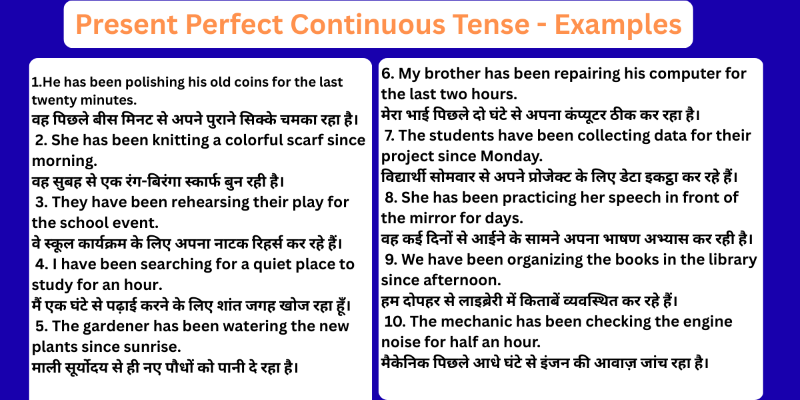
Examples of Present Perfect Continuous Tense
1. I have been learning sketching for the past two weeks.
मैं पिछले दो हफ्तों से स्केचिंग सीख रहा हूँ।
2. She has been polishing her silver jewellery since morning.
वह सुबह से अपने चाँदी के गहने पॉलिश कर रही है।
3. They have been designing a new logo for their brand.
वे अपने ब्रांड के लिए नया लोगो डिज़ाइन कर रहे हैं।
4. He has been reading motivational books lately.
वह हाल ही में प्रेरणादायक किताबें पढ़ रहा है।
5. We have been discussing the project idea for hours.
हम घंटों से प्रोजेक्ट आइडिया पर चर्चा कर रहे हैं।
6. The baby has been smiling continuously for a long time.
बच्चा लंबे समय से लगातार मुस्कुरा रहा है।
7. The birds have been building a nest on the balcony.
पक्षी बालकनी पर घोंसला बना रहे हैं।
8. I have been following a healthy diet for months.
मैं महीनों से एक स्वस्थ डाइट का पालन कर रहा हूँ।
9. She has been recording her podcast since last evening.
वह कल शाम से अपना पॉडकास्ट रिकॉर्ड कर रही है।
10. They have been decorating their shop for the festival.
वे त्योहार के लिए अपनी दुकान सजाने में लगे हैं।
11. He has been learning to drive for three weeks.
वह तीन हफ्तों से ड्राइविंग सीख रहा है।
12. We have been collecting data for the survey.
हम सर्वे के लिए डेटा इकट्ठा कर रहे हैं।
13. I have been practicing yoga every morning.
मैं हर सुबह योग का अभ्यास कर रहा हूँ।
14. She has been searching for a suitable house to rent.
वह किराए पर लेने के लिए एक उपयुक्त घर खोज रही है।
15. They have been saving money for their vacation.
वे अपनी छुट्टियों के लिए पैसे बचा रहे हैं।
16. He has been trying to fix the internet connection.
वह इंटरनेट कनेक्शन ठीक करने की कोशिश कर रहा है।
17. The students have been preparing charts for the exhibition.
छात्र प्रदर्शनी के लिए चार्ट तैयार कर रहे हैं।
18. I have been cleaning my old books since afternoon.
मैं दोपहर से अपनी पुरानी किताबें साफ कर रहा हूँ।
19. She has been organizing the kitchen for the past hour.
वह पिछले एक घंटे से रसोई व्यवस्थित कर रही है।
20. They have been practicing the new song for the competition.
वे प्रतियोगिता के लिए नया गीत अभ्यास कर रहे हैं।
21. He has been watching tutorial videos to improve his skills.
वह अपनी स्किल सुधारने के लिए ट्यूटोरियल वीडियो देख रहा है।
22. We have been planting new flowers in the garden.
हम बगीचे में नए फूल लगा रहे हैं।
23. I have been updating my portfolio since last night.
मैं कल रात से अपना पोर्टफोलियो अपडेट कर रहा हूँ।
24. She has been helping her brother with homework.
वह अपने भाई को होमवर्क में मदद कर रही है।
25. They have been repairing their old furniture.
वे अपने पुराने फर्नीचर की मरम्मत कर रहे हैं।
26. He has been learning photography for a while.
वह कुछ समय से फोटोग्राफी सीख रहा है।
27. We have been planning a surprise for our friend.
हम अपने दोस्त के लिए सरप्राइज की योजना बना रहे हैं।
28. I have been rewriting my notes neatly.
मैं अपने नोट्स साफ-सुथरे तरीके से दोबारा लिख रहा हूँ।
29. She has been attending meditation classes regularly.
वह नियमित रूप से ध्यान की कक्षाओं में शामिल हो रही है।
30. They have been making handmade crafts for their online shop.
वे अपनी ऑनलाइन दुकान के लिए हस्तनिर्मित वस्तुएँ बना रहे हैं।
Read Tense and There Types
• Tense
• Present Tense
• Present Indefinite Tense • Present continuous tense
• Present Perfect Tense • Present Perfect Continuous Tense
• Past Tense
• Past Indefinite Tense • Past continuous tense
• Past Perfect Tense • Past Perfect Continuous Tense
• Future Tense
• Future Indefinite Tense
• future continuous tense • Future Perfect Tense
• Future Perfect Continuous Tense