Future Perfect Continuous Tense (भविष्य पूर्ण सतत्काल)
Definition -
Future Perfect Continuous Tense is used to show an action that will have been continuing for a specific duration up to a certain point in the future.
It expresses the length of time an action will have been happening before another future moment.
In simple words:
It tells how long an action will have been going on in the future.
This tense shows continuity + duration + future point together.
Three things always happen in this tense:
1. The action starts before the future time.
2. The action keeps going for some time.
3. The action is still continuing when the future moment comes.
Structure :will have been + verb (ing)
This tells that the action will have been continuing till that future time.
Duration words are necessary:
for 2 hours, for 5 days, since morning, since 2020, etc.
Because this tense always answers:
“For how long?” / “Since when?”
परिभाषा -
Future Perfect Continuous Tense का उपयोग तब किया जाता है जब कोई काम भविष्य के किसी निश्चित समय तक लगातार चलता आ रहा होगा।
यह बताता है कि भविष्य में किसी समय से पहले कोई कार्य कितने समय से जारी होगा।
सरल शब्दों में :
यह tense बताता है कि कोई काम भविष्य में कब तक और कितनी देर से चलता आ रहा होगा।
इन वाक्यों के अंत में से लगातार से काम कर रहा होगा, से पढ़ रही होगी आदि शब्द आते हैं।
यह tense तीन चीजें एक साथ दिखाता है:
1. काम future के समय से पहले शुरू होता है
2. काम कुछ समय तक लगातार चलता रहेगा
3. वह future के बताए हुए समय तक भी जारी रहेगा
इसकी पहचान है:
will have been + verb (ing)
यह बताता है कि कार्य लगातार जारी रहा होगा।
Duration हमेशा ज़रूरी है:
for तीन घंटे, for पाँच दिन, since सुबह, since जनवरी आदि।
क्योंकि यह tense हमेशा पूछता है:
“कब से?” या “कितने समय से?”
Examples :
1.She will have been reading this novel for two hours.
वह दो घंटे से इस उपन्यास को पढ़ रही होगी।
2.They will have been working on the project since morning.
वे सुबह से प्रोजेक्ट पर काम कर रहे होंगे।
3.I will have been waiting for you for a long time.
मैं बहुत समय से तुम्हारा इंतज़ार कर रहा होऊंगा।
4.The students will have been practicing the speech for three days.
विद्यार्थी तीन दिनों से भाषण का अभ्यास कर रहे होंगे।
5.He will have been repairing the bike since noon.
वह दोपहर से बाइक ठीक कर रहा होगा।
6.We will have been living in this house for five years.
हम पाँच साल से इस घर में रह रहे होंगे।
7.She will have been preparing for the exam since last week.
वह पिछले सप्ताह से परीक्षा की तैयारी कर रही होगी।
8.They will have been traveling together for several hours.
वे कई घंटों से एक साथ यात्रा कर रहे होंगे।
9.I will have been learning guitar since January.
मैं जनवरी से गिटार सीख रहा होऊंगा।
10.The workers will have been building the bridge for many months.
मज़दूर कई महीनों से पुल बना रहे होंगे।
उपरोक्त सभी वाक्यों के अंत में रहा होगा, रही होगी, रहे होगें आदि शब्द आ रहे हैं सभी वाक्य Future Perfect Continuous Tense के Examples हैं।
Read Also
• Future Tense
• Future Indefinite Tense
• future continuous tense
• Future Perfect Tense
• Future Perfect Continuous Tense
• Rules of Future Perfect Continuous Tense (भविष्य पूर्ण सतत्काल के नियम) :
RULE 1 — Use “Subject + will have been” at the beginning.
वाक्य की शुरुआत हमेशा Subject + will have been से होती है।
RULE 2 — Use the main verb in “V1 + ing” form after “will have been”.
“will have been” के बाद हमेशा Verb का V1 + ing रूप आता है।
(working, reading, writing, studying)
RULE 3 — Add duration of time using “for” or “since”.
समय अवधि बताने के लिए for या since का प्रयोग ज़रूरी है।
• for + अवधि (period)
• since + समय का बिंदु (point)
RULE 4 — Mention a future time limit (by tomorrow, by next week, etc.).
वाक्य में एक भविष्य की सीमा होनी चाहिए,
जैसे:
कल तक, अगले सप्ताह तक, शाम तक।
RULE 5 — The action will continue up to a certain time in the future.
काम भविष्य के किसी निश्चित समय तक लगातार चलता रहेगा।
RULE 6 — The tense shows continuity + completion together.
यह tense लगातार चल रहे काम को भविष्य में पूरी अवधि सहित दिखाता है।
RULE 7 — This tense always answers “How long?”
यह tense हमेशा बताता है —
“कितने समय से?” या “कब से?”
RULE 8 — Helping verb never changes (always “will have been”).
इस tense में helping verb कभी नहीं बदलती, हमेशा will have been ही आता है।
• Future Perfect Continuous Tense – Table
| Topic |
Explanation |
| Definition |
Shows an action that will have Been continuing for a certain Duration up to a future time. |
| Identification |
Will have been + V1 + ing + for/since + time |
| Helping verb |
will have been |
| Main verb |
V1 + ing (working) |
| Affirmative |
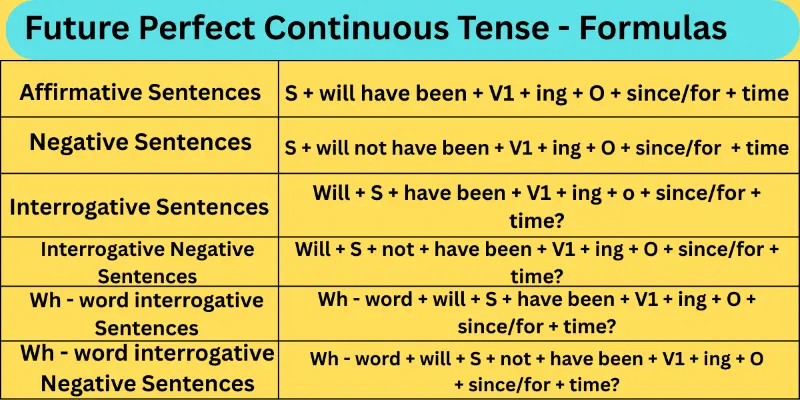
Subject + will have been + V1 + ing + for/since + time |
| Negative |
Subject + will not have been + V1 + ing + for/since + time |
| Interrogative |
Will + subject + have been + V1 + ing + for/since + time + ? |
| Interrogative Negative |
Will + subject + not have been + V1 + Ing + for/since + time + ? |
| Wh - word |
Wh -word + will + subject + have been + V1 + ing + for/since + time + ? |
| Time words |
for two hours, since morning etc.. |
उपरोक्त दिए गए टेबल Future Perfect Continuous Tense के बारे में पूर्ण रूप से बताया गया है ध्यानपूर्वक समझिए।
Read Also
• Parts of Speech
• Noun • Verb
• Adverb • Pronoun
• Adjective • Conjunction
• Interjection
1. Affirmative Sentences (सकारात्मक वाक्य) of Future Perfect Continuous Tense
An affirmative sentence of Future Perfect Continuous Tense shows that an action will have been continuing for a certain duration up to a future time.
Future Perfect Continuous Tense का affirmative वाक्य बताता है कि कोई कार्य भविष्य के किसी समय तक लगातार चलता आ रहा होगा।
Rules of Affirmative Sentences:
RULE 1 — Start with Subject
The sentence begins with a Subject (I, he, they, you, etc.)
वाक्य की शुरुआत हमेशा Subject से होती है।
RULE 2 — Use “will have been” after the subject
“will have been” हमेशा फिक्स रहता है।
Subject के बाद हमेशा will have been ही आता है, यह कभी नहीं बदलता।
RULE 3 — Use Main Verb in “V1 + ing” form
Verb must be in – working, reading, writing, studying…
मुख्य क्रिया V1 + ing रूप में होगी।
RULE 4 — Add Duration (Time) using “for” or “since”
• for + period (for 2 hours, for 5 days…)
• since + point of time (since morning, since 2021…)
• for = अवधि के लिए (दो घंटे से, पाँच दिन से)
• since = समय बिंदु से (सुबह से, 2021 से)
RULE 5 — The sentence must show a future time limit
by tomorrow, by evening, by next month etc.
कल तक, अगले महीने तक, शाम तक इत्यादि।
Examples:
1.She will have been polishing the glass vessels for an hour.
वह एक घंटे से काँच के बर्तनों को साफ कर रही होगी।
2.I will have been writing my travel notes since afternoon.
मैं दोपहर से अपनी यात्रा नोट्स लिख रहा होऊंगा।
3.They will have been organizing the files for many days.
वे कई दिनों से फ़ाइलें व्यवस्थित कर रहे होंगे।
4.He will have been feeding the birds since sunrise.
वह सूर्योदय से पक्षियों को दाना डाल रहा होगा।
5.We will have been decorating the hall for three hours.
हम तीन घंटे से हॉल सजा रहे होंगे।
6.The students will have been rehearsing the drama since Monday.
विद्यार्थी सोमवार से नाटक का अभ्यास कर रहे होंगे।
7.I will have been searching for that document for a long while.
मैं लंबे समय से उस दस्तावेज़ को खोज रहा होऊंगा।
8.She will have been preparing herbal tea since morning.
वह सुबह से हर्बल चाय तैयार कर रही होगी।
9.They will have been exploring new routes for several hours.
वे कई घंटों से नए रास्ते खोज रहे होंगे।
10.He will have been designing the poster since last night.
वह कल रात से पोस्टर डिज़ाइन कर रहा होगा।
11.We will have been repairing the old furniture for two days.
हम दो दिनों से पुराने फर्नीचर की मरम्मत कर रहे होंगे।
12.I will have been updating the website data since evening.
मैं शाम से वेबसाइट का डेटा अपडेट कर रहा होऊंगा।
13.The workers will have been fixing the electricity line for four hours.
मज़दूर चार घंटे से बिजली की लाइन ठीक कर रहे होंगे।
14.She will have been learning classical dance since last month.
वह पिछले महीने से शास्त्रीय नृत्य सीख रही होगी।
15.They will have been washing the tents for many hours.
वे कई घंटों से तंबू धो रहे होंगे।
16.He will have been sorting the old photographs since noon.
वह दोपहर से पुरानी तस्वीरें छांट रहा होगा।
17.We will have been practicing meditation for a long duration.
हम लंबे समय से ध्यान का अभ्यास कर रहे होंगे।
18.I will have been checking the machines since early morning.
मैं सुबह से मशीनें जांच रहा होऊंगा।
19.She will have been stitching the costumes for three days.
वह तीन दिनों से कॉस्ट्यूम सी रही होगी।
20.They will have been discussing the plan since yesterday.
वे कल से योजना पर चर्चा कर रहे होंगे।
21.He will have been painting the old gate for several hours.
वह कई घंटों से पुराना दरवाज़ा रंग रहा होगा।
22.We will have been arranging the books since morning.
हम सुबह से किताबें व्यवस्थित कर रहे होंगे।
23.I will have been preparing the project chart for two hours.
मैं दो घंटे से प्रोजेक्ट चार्ट तैयार कर रहा होऊंगा।
24.She will have been watering the plants since dawn.
वह भोर से पौधों को पानी दे रही होगी।
25.They will have been collecting data for many weeks.
वे कई सप्ताह से डेटा इकट्ठा कर रहे होंगे।
26.He will have been repairing the musical instrument since yesterday evening.
वह कल शाम से संगीत वाद्ययंत्र ठीक कर रहा होगा।
27.We will have been polishing the trophies for a long time.
हम लंबे समय से ट्रॉफियों को पॉलिश कर रहे होंगे।
28.I will have been recording the audio clips for two hours.
मैं दो घंटे से ऑडियो क्लिप रिकॉर्ड कर रहा होऊंगा।
29.She will have been learning new software since last week.
वह पिछले सप्ताह से नया सॉफ्टवेयर सीख रही होगी।
30.They will have been cleaning the storage room for several hours.
वे कई घंटों से स्टोर रूम साफ कर रहे होंगे।
Read Also
• Affirmative Sentence • Conditional Sentence
• Use of Can & Could • Use of Dare
• Use of May & Might • Use of Must & Ought
2. Negative Sentences (नकारात्मक वाक्य)of Future Perfect Continuous Tense
A Negative sentence in Future Perfect Continuous Tense shows that an action will not have been continuing for a specific duration in the future.
It denies the continuation of an action up to a point in the future.
Future Perfect Continuous Tense का negative वाक्य बताता है कि कोई कार्य भविष्य में किसी निश्चित समय तक लगातार नहीं चल रहा होगा।
इसमें कार्य की निरंतरता को नकारा जाता है
Rules of Negative Sentences:
RULE 1 — Start the sentence with the Subject.
वाक्य की शुरुआत हमेशा Subject से होती है।
(He, She, I, We, They, Name आदि)
RULE 2 — After the subject, use “will not have been”.
Subject के बाद हमेशा will not have been लगाया जाता है।
यही इस tense का negative बनाता है।
RULE 3 — Use the main verb in V1 + ing form.
“will not have been” के बाद Verb का V1 + ing रूप आता है।
जैसे: working, reading, writing, cooking
RULE 4 — Add the object (if needed).
Verb के बाद object (यदि हो) लगाया जाता है।
जैसे book, homework, project आदि।
RULE 5 — Add duration of time using “for” or “since”.
समय अवधि बताने के लिए for या since लगाना ज़रूरी है।
• for = अवधि (2 hours, 3 days, 5 months)
• since = समय का बिंदु (morning, 2010, Monday)
RULE 6 — The action must show continuity up to a future time.
वाक्य बताता है कि कोई काम भविष्य में किसी समय तक
लगातार नहीं हो रहा होगा।
RULE 7 — Negative sentences ALWAYS use “will not have been”.
Negative वाक्यों में helping verb कभी नहीं बदलती —
हमेशा will not have been ही रहता है।
Examples:
1.They will not have been training for the marathon for six months.
वे छह महीनों से मैराथन की तैयारी नहीं कर रहे होंगे।
2. She will not have been studying music since last winter.
वह पिछले सर्दियों से संगीत नहीं पढ़ रही होगी।
3. I will not have been working on this application for a full year.
मैं पूरे एक साल से इस एप्लिकेशन पर काम नहीं कर रहा होऊँगा।
4. The kids will not have been waiting for the bus for long.
बच्चे लंबे समय से बस का इंतज़ार नहीं कर रहे होंगे।
5. He will not have been fixing the machine since the morning.
वह सुबह से मशीन ठीक नहीं कर रहा होगा।
6. We will not have been searching for the files for two hours.
हम दो घंटों से फाइलें नहीं खोज रहे होंगे।
7. My brother will not have been practicing driving since Monday.
मेरा भाई सोमवार से ड्राइविंग का अभ्यास नहीं कर रहा होगा।
8. The team will not have been preparing for the match for weeks.
टीम हफ्तों से मैच की तैयारी नहीं कर रही होगी।
9. She will not have been painting the mural since yesterday.
वह कल से भित्ति-चित्र नहीं बना रही होगी।
10. I will not have been following this diet plan for a month.
मैं एक महीने से इस डाइट प्लान का पालन नहीं कर रहा होऊँगा।
11. They will not have been building the model house for many days.
वे कई दिनों से मॉडल हाउस नहीं बना रहे होंगे।
12. He will not have been learning coding since last year.
वह पिछले साल से कोडिंग नहीं सीख रहा होगा।
13. We will not have been cleaning the hall for the whole evening.
हम पूरी शाम हॉल की सफाई नहीं कर रहे होंगे।
14. The workers will not have been decorating the stage for long.
मजदूर लंबे समय से मंच को सजा नहीं रहे होंगे।
15. She will not have been teaching online classes since July.
वह जुलाई से ऑनलाइन क्लासेस नहीं ले रही होगी।
16. I will not have been using this software for six months.
मैं छह महीनों से यह सॉफ्टवेयर उपयोग नहीं कर रहा होऊँगा।
17. They will not have been organizing the event for days.
वे कई दिनों से कार्यक्रम आयोजित नहीं कर रहे होंगे।
18. He will not have been writing his research paper for two weeks.
वह दो हफ्तों से अपना शोध-पत्र नहीं लिख रहा होगा।
19. We will not have been checking the reports since the afternoon.
हम दोपहर से रिपोर्टें नहीं देख रहे होंगे।
20. My sister will not have been baking cookies for hours.
मेरी बहन घंटों से कुकीज़ नहीं बना रही होगी।
21. The students will not have been revising the lesson for long.
विद्यार्थी लंबे समय से पाठ की पुनरावृत्ति नहीं कर रहे होंगे।
22. She will not have been meditating since early morning.
वह सुबह से ध्यान नहीं कर रही होगी।
23. I will not have been preparing the presentation for three days.
मैं तीन दिनों से प्रस्तुति तैयार नहीं कर रहा होऊँगा।
24. They will not have been discussing the issue since yesterday.
वे कल से इस मुद्दे पर चर्चा नहीं कर रहे होंगे।
25. He will not have been practicing yoga for a long time.
वह लंबे समय से योग का अभ्यास नहीं कर रहा होगा।
26. We will not have been arranging the books for many hours.
हम कई घंटों से किताबें नहीं जमा रहे होंगे।
27. The team will not have been testing the new device since Monday.
टीम सोमवार से नए उपकरण का परीक्षण नहीं कर रही होगी।
28. She will not have been recording the audio for the whole night.
वह पूरी रात ऑडियो रिकॉर्ड नहीं कर रही होगी।
29. I will not have been learning French for the past few months.
मैं पिछले कुछ महीनों से फ़्रेंच नहीं सीख रहा होऊँगा।
30. They will not have been exploring the project idea for long.
वे लंबे समय से परियोजना के विचार की खोज नहीं कर रहे होंगे।
Read Also
• Parts of Sentences
• Negative Sentence • Exclamatory Sentence
• Parts of Speech
• Noun • Verb
• Adverb • Pronoun
3. Interrogative Sentences (प्रश्नवाचक वाक्य )Of Future Perfect Continuous Tense
An interrogative sentence of Future Perfect Continuous Tense asks a question about an action that will have been continuing for a certain duration of time up to a future moment.
Future Perfect Continuous Tense का interrogative वाक्य उस काम के बारे में सवाल पूछता है जो भविष्य के किसी निश्चित समय तक लगातार चल रहा होगा।
Rules of Interrogative Sentences:
RULE 1 — Start with “Will”.
वाक्य हमेशा Will से शुरू होता है।
RULE 2 — After “Will”, place the Subject.
“Will” के बाद Subject आता है।
(He, She, I, You, They, Name)
RULE 3 — Use “have been” after the subject.
Subject के तुरंत बाद have been आता है।
RULE 4 — Use “V1 + ing” form of the main verb.
इसके बाद मुख्य verb का V1 + ing रूप आता है।
जैसे : - working, reading, preparing, talking
RULE 5 — Add object (if needed).
Verb के बाद object लग सकता है (यदि वाक्य में हो)।
RULE 6 — Add “for/since + time” to show duration.
समय की अवधि बताने के लिए for/since का प्रयोग आवश्यक है।
RULE 7 — Put a question mark (?) at the end.
अंत में हमेशा ? लगाया जाता है।
Examples:
1. Will he have been studying for the final exam for three hours?
क्या वह तीन घंटों से फाइनल परीक्षा की तैयारी कर रहा होगा?
2. Will they have been working on the new website since morning?
क्या वे सुबह से नई वेबसाइट पर काम कर रहे होंगे?
3. Will she have been learning guitar for six months?
क्या वह छह महीनों से गिटार सीख रही होगी?
4. Will you have been practicing coding since last week?
क्या तुम पिछले सप्ताह से कोडिंग का अभ्यास कर रहे होंगे?
5. Will I have been writing my project report for two days?
क्या मैं दो दिनों से अपनी प्रोजेक्ट रिपोर्ट लिख रहा होऊँगा?
6. Will the students have been preparing for the competition since Tuesday?
क्या विद्यार्थी मंगलवार से प्रतियोगिता की तैयारी कर रहे होंगे?
7. Will your brother have been repairing the bike for many hours?
क्या तुम्हारा भाई कई घंटों से बाइक ठीक कर रहा होगा?
8. Will we have been discussing the new plan since yesterday?
क्या हम कल से नई योजना पर चर्चा कर रहे होंगे?
9. Will she have been painting the wall for four hours?
क्या वह चार घंटों से दीवार पेंट कर रही होगी?
10. Will they have been collecting data for the survey since morning?
क्या वे सुबह से सर्वे के लिए डेटा इकट्ठा कर रहे होंगे?
11. Will he have been waiting for the train for a long time?
क्या वह लंबे समय से ट्रेन का इंतज़ार कर रहा होगा?
12. Will you have been preparing the notes since Monday?
क्या तुम सोमवार से नोट्स तैयार कर रहे होंगे?
13. Will she have been cooking dinner for the whole evening?
क्या वह पूरी शाम से खाना बना रही होगी?
14. Will they have been exploring the new idea for months?
क्या वे महीनों से नए विचार की खोज कर रहे होंगे?
15. Will he have been practicing cricket since summer?
क्या वह गर्मियों से क्रिकेट का अभ्यास कर रहा होगा?
16. Will we have been checking the system for two hours?
क्या हम दो घंटों से सिस्टम चेक कर रहे होंगे?
17. Will I have been learning Spanish for the past few months?
क्या मैं पिछले कुछ महीनों से स्पेनिश सीख रहा होऊँगा?
18. Will she have been reading this novel since last night?
क्या वह कल रात से यह उपन्यास पढ़ रही होगी?
19. Will they have been preparing the stage for the event since afternoon?
क्या वे दोपहर से कार्यक्रम के लिए मंच तैयार कर रहे होंगे?
20. Will he have been organizing the files for days?
क्या वह कई दिनों से फाइलें व्यवस्थित कर रहा होगा?
21. Will you have been attending the online course for three weeks?
क्या तुम तीन सप्ताह से ऑनलाइन कोर्स कर रहे होंगे?
22. Will she have been watching the documentary since evening?
क्या वह शाम से डॉक्यूमेंट्री देख रही होगी?
23. Will the workers have been fixing the road for several days?
क्या मजदूर कई दिनों से सड़क ठीक कर रहे होंगे?
24. Will we have been analyzing the data for two months?
क्या हम दो महीनों से डेटा का विश्लेषण कर रहे होंगे?
25. Will he have been designing the logo since last Friday?
क्या वह पिछले शुक्रवार से लोगो डिजाइन कर रहा होगा?
26. Will they have been rehearsing the drama for weeks?
क्या वे हफ्तों से नाटक का अभ्यास कर रहे होंगे?
27. Will she have been editing the video since morning?
क्या वह सुबह से वीडियो एडिट कर रही होगी?
28. Will I have been checking messages for an hour?
क्या मैं एक घंटे से संदेश चेक कर रहा होऊँगा?
29. Will you have been taking care of the garden for days?
क्या तुम कई दिनों से बगीचे की देखभाल कर रहे होंगे?
30. Will the students have been completing the assignment since yesterday?
क्या विद्यार्थी कल से असाइनमेंट पूरा कर रहे होंगे?
Read Also
• Interrogative Sentence
• Imperative Sentence • Use of Shall & Will
4. Interrogative Negative Sentences (प्रश्नवाचक नकारात्मक वाक्य) of Future Prefect Continuous Tense
Interrogative negative sentences of Future Perfect Continuous Tense are used to ask questions that show an action will not have been continuing for a certain duration up to a future time.
Interrogative negative वाक्य उन कामों के बारे में सवाल पूछते हैं जो भविष्य के किसी समय तक लगातार नहीं चल रहे होंगे।
Rules of Interrogative Negative Sentences
RULE 1 — Start the sentence with “Will”.
वाक्य की शुरुआत Will से होती है।
RULE 2 — After “Will”, place the subject.
“Will” के बाद Subject आता है।
RULE 3 — Add “not” after the subject.
Subject के तुरंत बाद not लगाया जाता है।
यही वाक्य को negative बनाता है।
RULE 4 — Use “have been” after “not”.
“not” के बाद हमेशा have been आता है।
RULE 5 — Use the main verb in “V1 + ing” form.
उसके बाद verb का V1 + ing रूप लगता है।
(working, reading, singing, etc.)
RULE 6 — Add object (if needed).
Verb के बाद object लगाया जाता है (यदि हो)।
RULE 7 — Add time duration using “for” or “since”.
काम कितने समय से नहीं चल रहा होगा यह दिखाने के लिए
for या since ज़रूरी होता है।
RULE 8 — Put a question mark (?) at the end.
अंत में हमेशा प्रश्नवाचक चिन्ह लगाया जाता है।
Examples:
1. Will he not have been preparing for his interview for two weeks?
क्या वह दो हफ्तों से अपने इंटरव्यू की तैयारी नहीं कर रहा होगा?
2. Will they not have been working on the research project since Monday?
क्या वे सोमवार से रिसर्च प्रोजेक्ट पर काम नहीं कर रहे होंगे?
3. Will she not have been learning classical dance for months?
क्या वह महीनों से शास्त्रीय नृत्य नहीं सीख रही होगी?
4. Will you not have been practicing meditation since morning?
क्या तुम सुबह से ध्यान का अभ्यास नहीं कर रहे होंगे?
5. Will I not have been organizing the notes for an hour?
क्या मैं एक घंटे से नोट्स व्यवस्थित नहीं कर रहा होऊँगा?
6. Will the students not have been revising the chapter since yesterday?
क्या विद्यार्थी कल से अध्याय की पुनरावृत्ति नहीं कर रहे होंगे?
7. Will he not have been fixing the laptop for several hours?
क्या वह कई घंटों से लैपटॉप ठीक नहीं कर रहा होगा?
8. Will we not have been discussing the proposal for days?
क्या हम कई दिनों से प्रस्ताव पर चर्चा नहीं कर रहे होंगे?
9. Will she not have been preparing lunch since afternoon?
क्या वह दोपहर से खाना नहीं बना रही होगी?
10. Will they not have been collecting feedback for the event for long?
क्या वे लंबे समय से कार्यक्रम के लिए प्रतिक्रिया नहीं ले रहे होंगे?
11. Will he not have been sending emails since morning?
क्या वह सुबह से ईमेल नहीं भेज रहा होगा?
12. Will you not have been recording the lecture for an hour?
क्या तुम एक घंटे से लेक्चर रिकॉर्ड नहीं कर रहे होंगे?
13. Will she not have been teaching online classes since last week?
क्या वह पिछले सप्ताह से ऑनलाइन क्लास नहीं ले रही होगी?
14. Will they not have been repairing the school building for months?
क्या वे महीनों से स्कूल की इमारत नहीं ठीक कर रहे होंगे?
15. Will he not have been studying math for three hours?
क्या वह तीन घंटों से गणित नहीं पढ़ रहा होगा?
16. Will we not have been checking the accounts since evening?
क्या हम शाम से खातों की जाँच नहीं कर रहे होंगे?
17. Will I not have been editing the photos for two days?
क्या मैं दो दिनों से फोटो एडिट नहीं कर रहा होऊँगा?
18. Will she not have been reading the storybook since night?
क्या वह रात से कहानी की किताब नहीं पढ़ रही होगी?
19. Will they not have been practicing for the annual function for weeks?
क्या वे हफ्तों से वार्षिक कार्यक्रम का अभ्यास नहीं कर रहे होंगे?
20. Will he not have been repairing the watch since morning?
क्या वह सुबह से घड़ी ठीक नहीं कर रहा होगा?
21. Will you not have been arranging the documents for many hours?
क्या तुम कई घंटों से दस्तावेज़ नहीं जमा रहे होंगे?
22. Will she not have been designing the new poster for days?
क्या वह कई दिनों से नया पोस्टर डिजाइन नहीं कर रही होगी?
23. Will they not have been practicing yoga since last month?
क्या वे पिछले महीने से योग का अभ्यास नहीं कर रहे होंगे?
24. Will he not have been creating the animation since yesterday?
क्या वह कल से एनीमेशन नहीं बना रहा होगा?
25. Will we not have been helping the team for weeks?
क्या हम टीम की हफ्तों से मदद नहीं कर रहे होंगे?
26. Will I not have been collecting information for this topic for months?
क्या मैं महीनों से इस विषय के लिए जानकारी नहीं जुटा रहा होऊँगा?
27. Will she not have been searching for her documents since morning?
क्या वह सुबह से अपने दस्तावेज़ नहीं ढूँढ रही होगी?
28. Will they not have been preparing the stalls for the event since noon?
क्या वे दोपहर से कार्यक्रम के स्टॉल तैयार नहीं कर रहे होंगे?
29. Will he not have been practicing the speech for two days?
क्या वह दो दिनों से भाषण का अभ्यास नहीं कर रहा होगा?
30. Will you not have been checking the new software since last night?
क्या तुम कल रात से नया सॉफ़्टवेयर नहीं जाँच रहे होंगे?
Read Also
• Use of Can & Could • Use of Dare
• Use of May & Might • Use of Must & Ought
• Use of Shall & Will • Use of Should & Would
• Use of Used to • Use of Need to
5. Wh -word Interrogative Sentences (प्रश्नवाचक वाक्य) of Future Perfect Continuous Tense
Wh-word interrogative sentences of Future Perfect Continuous Tense are used to ask questions beginning with Wh-words (What, Why, Where, When, Who, How long, etc.) about an action that will have been continuing up to a specific time in the future.
Wh-word interrogative वाक्य उन प्रश्नों को दर्शाते हैं जो Wh-words (क्या, क्यों, कहाँ, कब, कौन, कितने समय से आदि) से शुरू होते हैं और ऐसे काम के बारे में पूछते हैं जो भविष्य के किसी निश्चित समय तक लगातार चल रहा होगा।
Rules of wh- word Interrogative Sentences
RULE 1 — Start the sentence with a Wh-word.
वाक्य की शुरुआत हमेशा Wh-word से होती है।
(What, Why, Where, When, Who, How long, etc.)
RULE 2 — After Wh-word, place “Will”.
Wh-word के तुरंत बाद Will आता है।
RULE 3 — Next, add the Subject.
“Will” के बाद Subject आता है।
RULE 4 — Use “have been” after the subject.
Subject के बाद have been लगाया जाता है।
RULE 5 — Put the main verb in “V1 + ing” form.
इसके बाद मुख्य verb का V1 + ing रूप आता है।
(working, writing, practicing…)
RULE 6 — Add object (if needed).
Verb के बाद object आ सकता है (यदि आवश्यक हो)।
RULE 7 — Add “for” or “since” to show duration of time.
समय अवधि बताने के लिए for/since का प्रयोग ज़रूरी है।
RULE 8 — End the sentence with a question mark (?).
अंत में हमेशा ? लगाया जाता है।
Examples:
1. Why will he have been studying for the exam for four hours?
वह चार घंटों से परीक्षा की तैयारी क्यों कर रहा होगा?
2. Where will they have been working since morning?
वे सुबह से कहाँ काम कर रहे होंगे?
3. What will she have been preparing for the event since yesterday?
वह कल से कार्यक्रम के लिए क्या तैयार कर रही होगी?
4. When will you have been practicing guitar for two hours?
तुम दो घंटों से गिटार का अभ्यास कब कर रहे होंगे?
5. How long will I have been learning coding by next Friday?
अगले शुक्रवार तक मैं कितने समय से कोडिंग सीख रहा होऊँगा?
6. Why will the students have been revising the lesson since afternoon?
विद्यार्थी दोपहर से पाठ की पुनरावृत्ति क्यों कर रहे होंगे?
7. Where will she have been painting since morning?
वह सुबह से कहाँ पेंटिंग कर रही होगी?
8. What will he have been writing in his diary for weeks?
वह हफ्तों से अपनी डायरी में क्या लिख रहा होगा?
9. How long will we have been preparing this project?
हम यह प्रोजेक्ट कितने समय से तैयार कर रहे होंगे?
10. Why will they have been cleaning the hall since last night?
वे कल रात से हॉल की सफाई क्यों कर रहे होंगे?
11. When will you have been waiting for the bus for an hour?
तुम एक घंटे से बस का इंतज़ार कब कर रहे होंगे?
12. What will she have been learning in the workshop for three days?
वह तीन दिनों से वर्कशॉप में क्या सीख रही होगी?
13. Where will the workers have been repairing the road for weeks?
मजदूर हफ्तों से सड़क कहाँ ठीक कर रहे होंगे?
14. How long will he have been practicing cricket since last month?
वह पिछले महीने से क्रिकेट का अभ्यास कितने समय से कर रहा होगा?
15. Why will we have been discussing the new plan since morning?
हम सुबह से नई योजना पर चर्चा क्यों कर रहे होंगे?
16. What will they have been designing for the competition for many days?
वे कई दिनों से प्रतियोगिता के लिए क्या डिज़ाइन कर रहे होंगे?
17. Where will she have been organizing files since afternoon?
वह दोपहर से फाइलें कहाँ व्यवस्थित कर रही होगी?
18. When will you have been reading this book for two hours?
तुम दो घंटों से यह किताब कब पढ़ रहे होंगे?
19. Why will he have been solving the questions since evening?
वह शाम से सवाल क्यों हल कर रहा होगा?
20. How long will they have been creating this presentation?
वे यह प्रस्तुति कितने समय से बना रहे होंगे?
21. What will she have been cooking for the guests since morning?
वह सुबह से मेहमानों के लिए क्या पका रही होगी?
22. Where will he have been collecting data for months?
वह महीनों से डेटा कहाँ इकट्ठा कर रहा होगा?
23. Why will we have been developing this app for so long?
हम इतने लंबे समय से यह ऐप क्यों बना रहे होंगे?
24. When will they have been checking the machines for hours?
वे कई घंटों से मशीनें कब चेक कर रहे होंगे?
25. How long will I have been following this routine by next month?
अगले महीने तक मैं इस रूटीन का पालन कितने समय से कर रहा होऊँगा?
26. What will the children have been drawing since morning?
बच्चे सुबह से क्या बना रहे होंगे?
27. Where will you have been attending online classes for three months?
तुम तीन महीनों से ऑनलाइन क्लासेस कहाँ कर रहे होंगे?
28. Why will she have been preparing notes since Monday?
वह सोमवार से नोट्स क्यों बना रही होगी?
29. What will he have been repairing in the workshop for hours?
वह घंटों से वर्कशॉप में क्या ठीक कर रहा होगा?
30. How long will they have been exploring this idea by tomorrow?
कल तक वे इस विचार की खोज कितने समय से कर रहे होंगे?
Read Also
• Use of Has & Have • Use of Is/am/are
• Singular & Plural • Article
6. Wh – word Interrogative Negative Sentences (प्रश्नवाचक नकारात्मक वाक्य )वाक्यof Future Perfect Continuous Tense
Wh-word interrogative negative sentences of Future Perfect Continuous Tense are used to ask negative questions starting with Wh-words about an action that will not have been continuing till a specific time in the future.
Future Perfect Continuous Tense के wh-word interrogative negative वाक्य उन प्रश्नों को दर्शाते हैं जो Wh-word से शुरू होते हैं और किसी ऐसे काम के बारे में नकारात्मक रूप में पूछते हैं जो भविष्य के किसी समय तक लगातार नहीं चल रहा होगा।
Rules of Wh – word Interrogative Negative Sentences
RULE 1 — Start with a Wh-word.
वाक्य की शुरुआत हमेशा Wh-word से होगी।
RULE 2 — After Wh-word use “Will”.
Wh-word के बाद “Will” आएगा।
RULE 3 — Use Subject after “Will”.
Will के बाद Subject लगाया जाता है।
RULE 4 — Add “Not” after the Subject.
Subject के बाद Not लगाया जाता है।
RULE 5 — Then use “Have been”.
Not के बाद Have been आता है।
RULE 6 — Use verb in V1 + ing form.
Verb हमेशा V1 + ing रूप में होगा।
RULE 7 — Use Object (if required).
आवश्यक हो तो Object आएगा।
RULE 8 — Add For/Since to show duration of time.
समय बताने के लिए For/Since ज़रूरी है।
RULE 9 — End with a question mark (?).
अंत में प्रश्नवाचक चिन्ह (?) लगाना अनिवार्य है।
Examples:
1.Why will she not have been searching for the keys for two hours?
वह दो घंटों से चाबियाँ क्यों नहीं खोज रही होगी?
2. Where will he not have been jogging since sunrise?
वह सूर्योदय से कहाँ जॉगिंग नहीं कर रहा होगा?
3. What will they not have been building for the science fair for a month?
वे एक महीने से विज्ञान मेले के लिए क्या नहीं बना रहे होंगे?
4. When will you not have been washing the clothes for half an hour?
तुम आधे घंटे से कपड़े कब नहीं धो रहे होंगे?
5. How long will I not have been recording this video by tomorrow?
कल तक मैं यह वीडियो कितने समय से रिकॉर्ड नहीं कर रहा होऊँगा?
6. Why will the team not have been planning the trip since Monday?
टीम सोमवार से यात्रा की योजना क्यों नहीं बना रही होगी?
7. Where will the students not have been practicing yoga for weeks?
छात्र हफ्तों से योग का अभ्यास कहाँ नहीं कर रहे होंगे?
8. What will she not have been researching for her project for days?
वह कई दिनों से अपने प्रोजेक्ट के लिए क्या शोध नहीं कर रही होगी?
9. How long will you not have been organizing this workshop by next month?
अगले महीने तक तुम यह कार्यशाला कितने समय से आयोजित नहीं कर रहे होंगे?
10. Why will he not have been watering the plants since morning?
वह सुबह से पौधों को पानी क्यों नहीं दे रहा होगा?
11. Where will they not have been practicing for the competition for months?
वे महीनों से प्रतियोगिता के लिए अभ्यास कहाँ नहीं कर रहे होंगे?
12. What will I not have been updating on my website for a week?
मैं एक सप्ताह से अपनी वेबसाइट पर क्या अपडेट नहीं कर रहा होऊँगा?
13. When will she not have been cleaning her room for an hour?
वह एक घंटे से अपना कमरा कब नहीं साफ कर रही होगी?
14. Why will you not have been preparing the presentation since evening?
तुम शाम से प्रस्तुति क्यों नहीं तैयार कर रहे होंगे?
15. Where will he not have been searching for a job for six months?
वह छह महीनों से नौकरी कहाँ नहीं ढूँढ रहा होगा?
16. What will they not have been discussing in the meeting for two hours?
वे दो घंटों से बैठक में क्या चर्चा नहीं कर रहे होंगे?
17. How long will she not have been sewing this dress by next week?
अगले सप्ताह तक वह यह ड्रेस कितने समय से नहीं सी रही होगी?
18. Why will the artist not have been sketching the portrait since yesterday?
कलाकार कल से पोर्ट्रेट क्यों नहीं बना रहा होगा?
19. Where will you not have been waiting for the taxi since noon?
दोपहर से तुम टैक्सी का इंतज़ार कहाँ नहीं कर रहे होंगे?
20. What will he not have been repairing in the garage for an hour?
वह एक घंटे से गैराज में क्या ठीक नहीं कर रहा होगा?
21. Why will the players not have been practicing fielding for days?
खिलाड़ी कई दिनों से फील्डिंग का अभ्यास क्यों नहीं कर रहे होंगे?
22. How long will we not have been maintaining this machine by next year?
अगले साल तक हम इस मशीन को कितने समय से मेंटेन नहीं कर रहे होंगे?
23. Where will she not have been teaching online since last winter?
वह पिछली सर्दियों से ऑनलाइन कहाँ नहीं पढ़ा रही होगी?
24. What will they not have been analyzing for the research for months?
वे महीनों से शोध के लिए क्या विश्लेषण नहीं कर रहे होंगे?
25. When will you not have been preparing breakfast for half an hour?
तुम आधे घंटे से नाश्ता कब नहीं बना रहे होंगे?
26. Why will he not have been fixing the lights since afternoon?
वह दोपहर से लाइटें ठीक क्यों नहीं कर रहा होगा?
27. Where will I not have been learning coding for two years?
मैं दो वर्षों से कोडिंग कहाँ नहीं सीख रहा होऊँगा?
28. What will she not have been uploading on her channel for a week?
वह एक सप्ताह से अपने चैनल पर क्या अपलोड नहीं कर रही होगी?
29. How long will they not have been decorating the hall by tomorrow?
कल तक वे हॉल को कितने समय से सजाकर नहीं रख रहे होंगे?
30. Why will you not have been saving money for the trip since last month?
तुम पिछले महीने से यात्रा के लिए पैसे क्यों नहीं बचा रहे होंगे?
Read Also
• Use of Do & Does • Use of Had
• Use of These & Those • Use of This & That
• Uses of Future Perfect Continuous Tense (भविष्य पूर्ण सतत काल के प्रयोग) :
USE 1: To show an action that will have been continuing for a specific duration in the future
This tense is used to express an action that will already be in progress for a certain time in the future.
इस tense का प्रयोग उस कार्य को बताने के लिए होता है जो भविष्य में किसी निश्चित समय तक लगातार चल रहा होगा।
Example:
1. I will have been working on this project for three hours by evening.
मैं शाम तक इस प्रोजेक्ट पर तीन घंटे से काम कर रहा होऊँगा।
USE 2: To show the reason behind a future situation (cause of the future result)
It explains that a future condition or result will occur because an action will have been continuing.
भविष्य की किसी स्थिति या परिणाम का कारण बताने के लिए इसका प्रयोग किया जाता है, जब कोई कार्य पहले से लगातार चलता आ रहा होगा।
Examples:
1. She will be tired because she will have been studying for hours.
वह थकी हुई होगी क्योंकि वह कई घंटों से पढ़ाई कर रही होगी।
USE 3: To express long-term future plans or ongoing actions
Used to talk about actions that someone will keep doing for a long time in the future.
भविष्य में किसी लंबे समय तक निरंतर होते रहने वाले कार्यों / योजनाओं को बताने के लिए।
Examples:
1. They will have been living in this city for ten years by next June.
अगले जून तक वे इस शहर में दस वर्षों से रह रहे होंगे।
USE 4: To show expectation of continued action in the future
To express what we expect someone to be doing continuously until a particular future time.
किसी ऐसे काम की उम्मीद बताने के लिए जो भविष्य के किसी विशेष समय तक लगातार चलता रहेगा।
Examples:
1. By tomorrow morning, he will have been repairing the machine for two days.
कल सुबह तक वह मशीन की मरम्मत दो दिनों से कर रहा होगा।
Read Also
• Use of Was & Were • Active & Passive Voice
• Negative Sentence • Gender
• Examples of Future Perfect Continuous Tense :
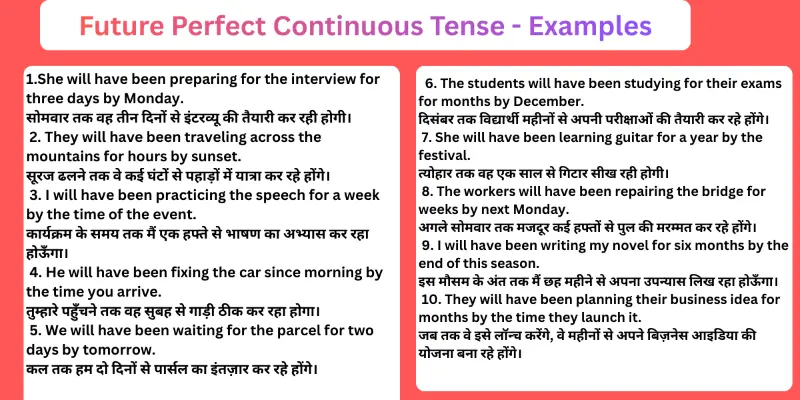
1.I will have been monitoring the weather report for three hours by night.
मैं रात तक तीन घंटे से मौसम रिपोर्ट पर नज़र रख रहा होऊँगा।
2. She will have been collecting old coins for years by next April.
अगले अप्रैल तक वह वर्षों से पुराने सिक्के इकट्ठा कर रही होगी।
3. They will have been organizing the annual function since last evening.
वे पिछली शाम से वार्षिक कार्यक्रम का आयोजन कर रहे होंगे।
4. He will have been polishing his shoes for half an hour by the time I arrive.
मेरे पहुँचने तक वह आधे घंटे से अपने जूते पॉलिश कर रहा होगा।
5. We will have been saving money for our new shop for months.
हम महीनों से अपनी नई दुकान के लिए पैसे बचा रहे होंगे।
6. You will have been reviewing the syllabus since sunrise.
तुम सूर्योदय से सिलेबस की समीक्षा कर रहे होंगे।
7. The children will have been preparing science models for the competition for a week.
बच्चे एक सप्ताह से प्रतियोगिता के लिए विज्ञान मॉडल बना रहे होंगे।
8. I will have been baking cakes for the event since morning.
मैं सुबह से कार्यक्रम के लिए केक बना रहा होऊँगा।
9. She will have been knitting a sweater for her mother for two days.
वह दो दिनों से अपनी माँ के लिए स्वेटर बुन रही होगी।
10. They will have been rehearsing their drama scene since last night.
वे पिछली रात से अपना ड्रामा सीन रिहर्स कर रहे होंगे।
11. He will have been fixing the bicycle for an hour by noon.
दोपहर तक वह एक घंटे से साइकिल ठीक कर रहा होगा।
12. We will have been updating the school website for several weeks.
हम कई हफ्तों से स्कूल वेबसाइट अपडेट कर रहे होंगे।
13. She will have been preparing herbal medicines since dawn.
वह सुबह-सुबह से जड़ी-बूटी की दवाइयाँ तैयार कर रही होगी।
14. I will have been scanning documents for two hours by evening.
शाम तक मैं दो घंटे से दस्तावेज़ स्कैन कर रहा होऊँगा।
15. They will have been repainting the office walls since Monday.
वे सोमवार से ऑफिस की दीवारें फिर से रंग रहे होंगे।
16. He will have been exercising regularly for six months by next week.
अगले सप्ताह तक वह छह महीनों से नियमित व्यायाम कर रहा होगा।
17. You will have been preparing breakfast for the family since early morning.
तुम सुबह-सुबह से परिवार के लिए नाश्ता तैयार कर रहे होंगे।
18. We will have been studying astronomy for two hours by night.
रात तक हम दो घंटे से खगोलशास्त्र पढ़ रहे होंगे।
19. She will have been searching for eco-friendly products for days.
वह कई दिनों से पर्यावरण-अनुकूल उत्पाद ढूँढ रही होगी।
20. I will have been planning my travel itinerary for weeks.
मैं हफ्तों से अपनी यात्रा की योजना बना रहा होऊँगा।
21. They will have been decorating the auditorium since afternoon.
वे दोपहर से सभागार को सजा रहे होंगे।
22. He will have been analyzing market data for hours by midnight.
आधी रात तक वह घंटों से मार्केट डेटा का विश्लेषण कर रहा होगा।
23. You will have been repairing the old radio since yesterday.
तुम कल से पुराना रेडियो ठीक कर रहे होंगे।
24. We will have been cleaning the storeroom for two days by tomorrow.
कल तक हम दो दिनों से स्टोररूम साफ कर रहे होंगे।
25. She will have been organizing her study table since morning.
वह सुबह से अपनी स्टडी टेबल व्यवस्थित कर रही होगी।
26. I will have been stitching cushion covers for hours by evening.
शाम तक मैं कई घंटों से कुशन कवर सिल रहा होऊँगा।
27. They will have been recording podcast episodes for a month.
वे एक महीने से पॉडकास्ट एपिसोड रिकॉर्ड कर रहे होंगे।
28. He will have been sketching landscapes since the afternoon.
वह दोपहर से लैंडस्केप स्केच कर रहा होगा।
29. We will have been preparing the guest list for the celebration for weeks.
हम कई हफ्तों से समारोह की गेस्ट लिस्ट तैयार कर रहे होंगे।
30. She will have been practicing meditation daily for years by next summer.
अगले गर्मियों तक वह वर्षों से रोज़ ध्यान कर रही होगी।
Read Tense and There Types
• Tense
• Present Tense
• Present Indefinite Tense • Present continuous tense
• Present Perfect Tense • Present Perfect Continuous Tense
• Past Tense
• Past Indefinite Tense • Past continuous tense
• Past Perfect Tense • Past Perfect Continuous Tense
• Future Tense
• Future Indefinite Tense
• future continuous tense • Future Perfect Tense
• Future Perfect Continuous Tense