SENTENCES
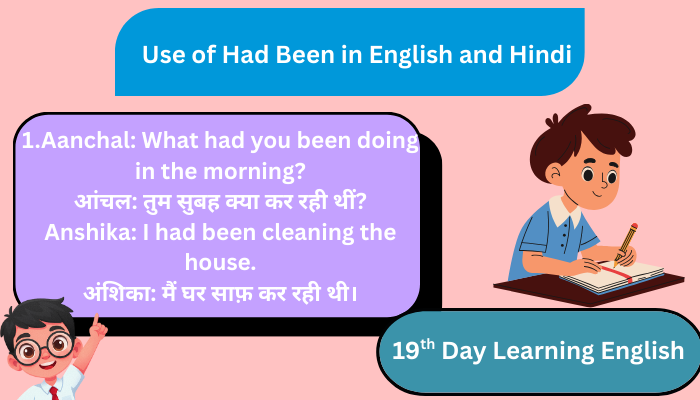
1. Aanchal: What had you been doing in the morning?
आंचल: तुम सुबह क्या कर रही थीं?
Anshika: I had been cleaning the house.
अंशिका: मैं घर साफ़ कर रही थी।
As we learned in the previous lesson, sentences ending with "raha tha" or "rahi thi" are related to the past continuous tense. Keeping this in mind, let's look at this sentence where two friends are talking: "What were you doing this morning?" The answer is, "I was cleaning the house." Here we see that time is also mentioned. As it is stated, "What were you doing this morning?" Considering the time, "this morning," we see that "had been" is used in the past perfect continuous tense, which is its identifying characteristic.
जैसा कि हमने पिछले अध्ययन में पड़ा था, जिसके अंत में रहा था, रही थी आते है वहा Past tense से रिलेटेड होता है। इस वाक्य को ध्यान में रखकर हम देखते हैं कि दो दोस्त आपस में बात कर रहे हैं, तुम सुबह क्या कर रही थी? मैं घर की सफाई कर रही थी। मैं हम यहाँ देखेंगे की इसमें टाइम का प्रयोग भी हुआ था। जैसे कि बताया गया है कि सुबह क्या कर रही थी। इस समय सुबह को ध्यान में देते हुए देखेंगे यह हेड बीन का प्रयोग पास परफेक्ट कंटिन्यू स्टेंस में किया जाता है जो कि इसकी पहचान होती है।
2. Aanchal: Had you been sweeping the floor?
आंचल: क्या तुम फ़र्श साफ़ कर रही थीं?
Anshika: Yes, I had been sweeping the floor.
अंशिका: हाँ, मैं फ़र्श साफ़ कर रही थी।
3. Aanchal: Had you been washing clothes?
आंचल: क्या तुम कपड़े धो रही थीं?
Anshika: Yes, I had been washing clothes.
अंशिका: हाँ, मैं कपड़े धो रही थी।
4. Aanchal: Since when had you been working?
आंचल: तुम कब से काम कर रही थीं?
Anshika: I had been working since morning.
अंशिका: मैं सुबह से काम कर रही थी।
5. Aanchal: Had you been cooking food?
आंचल: क्या तुम खाना बना रही थीं?
Anshika: Yes, I had been cooking lunch.
अंशिका: हाँ, मैं दोपहर का खाना बना रही थी।
6. Aanchal: Why were you tired?
आंचल: तुम थकी हुई क्यों थीं?
Anshika: I had been doing housework continuously.
अंशिका: मैं लगातार घर का काम कर रही थी।
7. Aanchal: Had you been cleaning the kitchen?
आंचल: क्या तुम रसोई साफ़ कर रही थीं?
Anshika: Yes, I had been cleaning the kitchen.
अंशिका: हाँ, मैं रसोई साफ़ कर रही थी।
8. Aanchal: Had you been washing utensils?
आंचल: क्या तुम बर्तन धो रही थीं?
Anshika: Yes, I had been washing utensils.
अंशिका: हाँ, मैं बर्तन धो रही थी।
9. Aanchal: Had you been working alone?
आंचल: क्या तुम अकेले काम कर रही थीं?
Anshika: Yes, I had been working alone.
अंशिका: हाँ, मैं अकेले काम कर रही थी।
10. Aanchal: Had you been arranging the room?
आंचल: क्या तुम कमरा सजा रही थीं?
Anshika: Yes, I had been arranging the room.
अंशिका: हाँ, मैं कमरा सजा रही थी।
11. Aanchal: Had you been dusting the furniture?
आंचल: क्या तुम फर्नीचर की धूल साफ़ कर रही थीं?
Anshika: Yes, I had been dusting it.
अंशिका: हाँ, मैं उसकी धूल साफ़ कर रही थी।
12. Aanchal: Had you been busy all day?
आंचल: क्या तुम पूरा दिन व्यस्त थीं?
Anshika: Yes, I had been busy all day.
अंशिका: हाँ, मैं पूरा दिन व्यस्त थी।
13. Aanchal: Had you been making tea when I came?
आंचल: जब मैं आई तब क्या तुम चाय बना रही थीं?
Anshika: Yes, I had been making tea.
अंशिका: हाँ, मैं चाय बना रही थी।
14. Aanchal: Had you been cleaning the windows?
आंचल: क्या तुम खिड़कियाँ साफ़ कर रही थीं?
Anshika: Yes, I had been cleaning them.
अंशिका: हाँ, मैं उन्हें साफ़ कर रही थी।
15. Aanchal: Had you been working for a long time?
आंचल: क्या तुम काफ़ी देर से काम कर रही थीं?
Anshika: Yes, I had been working for hours.
अंशिका: हाँ, मैं कई घंटों से काम कर रही थी।
16. Aanchal: Had you been taking care of everything?
आंचल: क्या तुम सब कुछ संभाल रही थीं?
Anshika: Yes, I had been taking care of everything.
अंशिका: हाँ, मैं सब कुछ संभाल रही थी।
17. Aanchal: Had you been cleaning the bathroom?
आंचल: क्या तुम बाथरूम साफ़ कर रही थीं?
Anshika: Yes, I had been cleaning the bathroom.
अंशिका: हाँ, मैं बाथरूम साफ़ कर रही थी।
18. Aanchal: Had you been preparing dinner early?
आंचल: क्या तुम जल्दी रात का खाना बना रही थीं?
Anshika: Yes, I had been preparing it early.
अंशिका: हाँ, मैं उसे जल्दी बना रही थी।
19. Aanchal: Had you been helping mother?
आंचल: क्या तुम माँ की मदद कर रही थीं?
Anshika: Yes, I had been helping her.
अंशिका: हाँ, मैं उनकी मदद कर रही थी।
20. Aanchal: Had you been arranging the kitchen shelves?
आंचल: क्या तुम रसोई की अलमारियाँ सजा रही थीं?
Anshika: Yes, I had been arranging them.
अंशिका: हाँ, मैं उन्हें सजा रही थी।
21. Aanchal: Had you been busy with housework?
आंचल: क्या तुम घर के काम में व्यस्त थीं?
Anshika: Yes, I had been busy with housework.
अंशिका: हाँ, मैं घर के काम में व्यस्त थी।
22. Aanchal: Had you been working without rest?
आंचल: क्या तुम बिना आराम के काम कर रही थीं?
Anshika: Yes, I had been working without rest.
अंशिका: हाँ, मैं बिना आराम के काम कर रही थी।
23. Aanchal: Had you been cleaning since morning?
आंचल: क्या तुम सुबह से सफ़ाई कर रही थीं?
Anshika: Yes, I had been cleaning since morning.
अंशिका: हाँ, मैं सुबह से सफ़ाई कर रही थी।
24. Aanchal: Had you been tired before lunch?
आंचल: क्या तुम दोपहर के खाने से पहले थक गई थीं?
Anshika: Yes, I had been tired.
अंशिका: हाँ, मैं थक गई थी।
25. Aanchal: Had you been managing time well?
आंचल: क्या तुम समय अच्छी तरह संभाल रही थीं?
Anshika: Yes, I had been managing time well.
अंशिका: हाँ, मैं समय अच्छी तरह संभाल रही थी।
26. Aanchal: Had you been cleaning every room?
आंचल: क्या तुम हर कमरा साफ़ कर रही थीं?
Anshika: Yes, I had been cleaning every room.
अंशिका: हाँ, मैं हर कमरा साफ़ कर रही थी।
27. Aanchal: Had you been doing all this alone?
आंचल: क्या तुम यह सब अकेले कर रही थीं?
Anshika: Yes, I had been doing it alone.
अंशिका: हाँ, मैं यह सब अकेले कर रही थी।
28. Aanchal: Had you been planning the work earlier?
आंचल: क्या तुमने काम की योजना पहले बनाई थी?
Anshika: Yes, I had been planning it earlier.
अंशिका: हाँ, मैं पहले से योजना बना रही थी।
29. Aanchal: Had you been feeling tired all day?
आंचल: क्या तुम पूरे दिन थकान महसूस कर रही थीं?
Anshika: Yes, I had been feeling tired.
अंशिका: हाँ, मैं थकान महसूस कर रही थी।
30. Aanchal: Had you been doing housework happily?
आंचल: क्या तुम खुशी से घर का काम कर रही थीं?
Anshika: Yes, I had been doing it happily.
अंशिका: हाँ, मैं खुशी से कर रही थी।
Read Also
• Sentences
• Tense
• Modal Verbs
• Use of Is, am, are
• Use of Had