Past Perfect Continuous Tense (भूतकाल पूर्ण सतत्काल)
Definition -
The Past Perfect Continuous Tense is used to express an action that started in the past, continued for a certain period of time, and was still happening until another action or point in the past.
It mainly shows the duration of the action.
This tense tells us that one action was in progress for some time before another past action happened.
It expresses:
1. Long ongoing action in the past
2. Duration of that action (since/for)
3. Another past event after which the ongoing action stopped or changed.
परिभाषा -
Past Perfect Continuous Tense का प्रयोग उस कार्य के लिए किया जाता है जो भूतकाल में शुरू हुआ, कुछ समय तक चलता रहा, और किसी दूसरे भूतकाल के कार्य या समय तक जारी रहा।
यह tense मुख्य रूप से duration (कितने समय से) को दर्शाता है।
इन वाक्यों के अंत में से रहा था, रही थी, रहे थे आदि शब्द आते हैं।
इस tense से पता चलता है कि भूतकाल में कोई काम लगातार चल रहा था, और वह काम तब तक चल रहा था जब तक कोई दूसरा भूतकाल का काम नहीं हुआ।
यह दो बातों को स्पष्ट करता है:
1. काम लंबे समय से चल रहा था।
2. किस समय तक या कितनी देर तक चल रहा था (since/for का उपयोग)।
Examples :
1. He had been reading for an hour when his friend arrived.
वह एक घंटे से पढ़ रहा था जब उसका दोस्त आया।
2. They had been talking for a long time when the teacher entered.
वे लंबे समय से बात कर रहे थे जब शिक्षक अंदर आए।
3. I had been waiting for twenty minutes when the bus finally came.
मैं बीस मिनट से इंतज़ार कर रहा था जब बस आखिरकार आई।
4. She had been cooking for two hours when the guests reached.
वह दो घंटे से खाना बना रही थी जब मेहमान पहुँचे।
5. The boys had been playing since morning when it suddenly got dark.
लड़के सुबह से खेल रहे थे जब अचानक अंधेरा हो गया।
6. We had been practicing for three days when the competition started.
हम तीन दिन से अभ्यास कर रहे थे जब प्रतियोगिता शुरू हुई।
7. He had been cleaning the room for half an hour when the lights went off.
वह आधे घंटे से कमरा साफ कर रहा था जब लाइट चली गई।
8. I had been writing notes for two hours when my pen stopped working.
मैं दो घंटे से नोट्स लिख रहा था जब मेरी पेन ने काम करना बंद कर दिया।
9. They had been studying together for months when the exams were announced.
वे महीनों से साथ पढ़ रहे थे जब परीक्षाओं की घोषणा हुई।
10. She had been travelling for five hours when the train finally stopped.
वह पाँच घंटे से यात्रा कर रही थी जब ट्रेन आखिरकार रुकी।
उपरोक्त सभी उदाहरणों के अंत में रहा था, रही थी, आदि शब्द आ रहे हैं अर्थात सभी उदाहरण Past Perfect Continuous Tense के हैं।
Read Also
• Past Tense
• Past Indefinite Tense • Past Continuous Tense
• Past Perfect Tense • Past Perfect Continuous Tense
• Rules Of Past Perfect Continuous Tense (भूतकाल पूर्ण सतत काल के नियम) :
RULE 1 – Use of “had been” with all subjects
In Past Perfect Continuous Tense, had been is used with all subjects (I, You, He, She, It, We, They).
इस tense में हर subject के साथ had been लगाया जाता है—subject बदलने पर “had been” नहीं बदलता।
Example:
• He had been studying for two hours.
वह दो घंटे से पढ़ रहा था।
• They had been working since morning.
वे सुबह से काम कर रहे थे।
RULE 2 – Use of Verb + ing (Continuous Action)
The main verb must always be in V1 + ing form (reading, working, playing).
मुख्य verb हमेशा ing रूप में आती है क्योंकि काम लगातार चल रहा था।
Example:
• She had been cooking for one hour.
वह एक घंटे से खाना बना रही थी।
RULE 3 – Use of “since” and “for” (Duration of time)
• For = time period (2 hours, 3 days, many years)
• Since = starting point (2010, morning, Monday)
• for का प्रयोग समय की अवधि के साथ (कितने समय से)
• since का प्रयोग निश्चित समय के साथ (कब से)
Example:
• I had been waiting for 30 minutes.
मैं 30 मिनट से इंतज़ार कर रहा था।
• He had been living here since 2015.
वह 2015 से यहाँ रह रहा था।
RULE 4 – Two Past Actions (Continuous + Another Past Action)
One action was continuing for some time before another past action happened.
(Use: when, before)
यह tense उस कार्य को दर्शाता है जो लंबे समय से चल रहा था, और उसी दौरान दूसरा भूतकाल का काम हो गया।
Examples:
• I had been studying for an hour when my friend called.
मैं एक घंटे से पढ़ रहा था जब मेरे दोस्त का फ़ोन आया।
• They had been playing since morning when it started raining.
वे सुबह से खेल रहे थे जब बारिश शुरू हुई।
RULE 8 – Hindi Ending Clue (Identification)
Hindi sentences ending with “से… रहा था/रही थी/रहे थे” are mostly Past Perfect Continuous.
अगर वाक्य के अंत में “से… रहा था/रही थी/रहे थे” आए → यह Past Perfect Continuous है।
Examples:
• वह तीन घंटे से लिख रहा था।
• वे सुबह से खेल रहे थे।
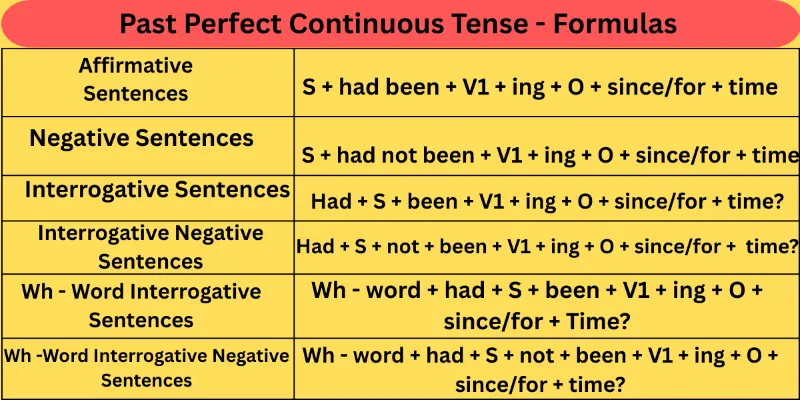
• Past Perfect Continuous Tense – Table
| Topic |
Explanation |
| Definition |
Action started in past, continued for Some time, and was still happening Until another past action. |
| Identification |
Ends with “sine/for + time” |
| Affirmative |
Subject + had been + verb(ing) + Since/for + time |
| Negative |
Subject + had not been + verb (ing) |
| Interrogative |
Had + subject + been + verb (ing) |
| Wh - word question |
Wh -word + had + subject + been + Verb(ing) + ? |
| Use of “had been” |
Used with all subjects (I, you, he, She, etc.) |
| Verb form |
V1 + ing |
| Use of “since” |
For point of time |
| Use of “for” |
For period of time |
1. Affirmative Sentences (सकारात्मक वाक्य) of Past Perfect Continuous Tense
An affirmative sentence in Past Perfect Continuous Tense shows that an action had been going on for a certain duration before another action or time in the past.
यह बताता है कि भूतकाल में कोई काम लंबे समय से चल रहा था और किसी दूसरे past action से पहले तक जारी था।
Past Perfect Continuous Tense के Affirmative वाक्य बताते हैं कि कोई कार्य भूतकाल में शुरू हुआ, कुछ समय तक लगातार चलता रहा, और किसी दूसरे भूतकाल के काम होने तक जारी रहा।
Rules of Affirmative Sentences:
RULE 1 — START WITH THE SUBJECT
The sentence always begins with a subject (I, you, he, she, it, we, they)
वाक्य की शुरुआत हमेशा subject से होती है।
Example:
• Subject = He
• Subject = They
RULE 2 — USE “had been” AFTER THE SUBJECT
After the subject, always add had been.
It NEVER changes for any subject.
Subject के तुरंत बाद had been लगता है।
Subject बदलने पर भी had been नहीं बदलता।
Example:
• He had been …
• They had been …
RULE 3 — USE VERB(ing) TO SHOW CONTINUOUS ACTION
Use V1 + ing (reading, playing, working, writing).
This shows the action was continuing.
Verb में हमेशा ing लगता है क्योंकि काम लगातार चल रहा था।
Example:
• had been studying
• had been working
RULE 4 — ADD OBJECT (IF NEEDED)
After verb(ing), add an object if the sentence requires it.
Verb के बाद object आएगा, अगर वाक्य में ज़रूरत हो।
Example:
• studying English
• writing notes
RULE 5 — USE “since” OR “for” TO SHOW TIME
Use “since” for point of time
“Since” is used for a specific starting time
(Monday, 2018, morning, 5 o’clock)
“Since” का प्रयोग निश्चित समय के साथ होता है
(सोमवार से, 2018 से, सुबह से)
Use “for” for period of time
“For” is used for a duration
(2 hours, 3 days, many months)
“For” का प्रयोग समय अवधि के लिए होता है
(दो घंटे से, तीन दिनों से)
Example:
• since morning
• for two hours
• since 2019
• for many days
RULE 6 — PUT TIME AFTER SINCE/FOR
After “since/for”, write the time period.
Since/for के बाद समय लिखा जाता है।
Example:
• for three hours
• since Monday
Examples:
1. He had been reading for two hours before the bell rang.
वह दो घंटे से पढ़ रहा था, तभी घंटी बजी।
2. She had been cooking since morning when her friend arrived.
वह सुबह से खाना बना रही थी जब उसकी दोस्त आई।
3. They had been playing for a long time before it got dark.
वे लंबे समय से खेल रहे थे, तभी अंधेरा हो गया।
4. I had been writing notes for an hour when my pen broke.
मैं एक घंटे से नोट्स लिख रहा था जब मेरी पेन टूट गई।
5. We had been studying since 5 o’clock when the teacher came.
हम पाँच बजे से पढ़ रहे थे जब शिक्षक आए।
6. He had been working in that shop for three years before he left it.
वह उस दुकान में तीन साल से काम कर रहा था, इससे पहले कि उसने छोड़ दी।
7. She had been learning dance since childhood.
वह बचपन से नृत्य सीख रही थी।
8. I had been walking for thirty minutes when it started raining.
मैं तीस मिनट से चल रहा था जब बारिश शुरू हो गई।
9. They had been discussing the topic since evening.
वे शाम से उस विषय पर चर्चा कर रहे थे।
10. The children had been shouting for a long time before the teacher entered.
बच्चे लंबे समय से शोर मचा रहे थे, तभी शिक्षक अंदर आए।
11. He had been repairing the computer for two hours.
वह दो घंटे से कंप्यूटर ठीक कर रहा था।
12. She had been cleaning the room since morning.
वह सुबह से कमरा साफ कर रही थी।
13. I had been preparing for the test for many days.
मै कई दिनों से परीक्षा की तैयारी कर रहा था।
14. They had been travelling for five hours before the bus stopped.
वे पाँच घंटे से यात्रा कर रहे थे, तभी बस रुकी।
15. We had been waiting for him since noon.
हम दोपहर से उसका इंतज़ार कर रहे थे।
16. He had been watering the plants for half an hour.
वह आधे घंटे से पौधों को पानी दे रहा था।
17. She had been knitting a sweater for two weeks.
वह दो हफ्तों से स्वेटर बुन रही थी।
18. I had been practicing guitar since last month.
मैं पिछले महीने से गिटार का अभ्यास कर रहा था।
19. They had been building the house for a year.
वे एक साल से घर बना रहे थे।
20. We had been collecting data for many hours.
हम कई घंटों से डेटा कलेक्ट कर रहे थे।
21. He had been exercising since 6 AM.
वह सुबह 6 बजे से व्यायाम कर रहा था।
22. She had been sewing clothes for three days.
वह तीन दिनों से कपड़े सी रही थी।
23. I had been waiting for your call since morning.
मैं सुबह से तुम्हारे कॉल का इंतज़ार कर रहा था।
24. They had been staying there for several months.
वे कई महीनों से वहाँ रह रहे थे।
25. We had been watching the show for one hour.
हम एक घंटे से शो देख रहे थे।
26. He had been studying English since last year.
वह पिछले साल से अंग्रेज़ी पढ़ रहा था।
27. She had been drawing pictures for two hours.
वह दो घंटे से चित्र बना रही थी।
28. I had been improving my skills for a long time.
मैं लंबे समय से अपनी स्किल्स सुधार रहा था।
29. They had been waiting outside for thirty minutes.
वे तीस मिनट से बाहर इंतज़ार कर रहे थे।
30. We had been planning a trip for several weeks.
हम कई हफ़्तों से यात्रा की योजना बना रहे थे।
Read Also
• Affirmative Sentence • Use of Had
• Active & Passive Voice • Gender
• Use of Has & Have • Use of Use of Is/am/are
2. Negative Sentences (नकारात्मक वाक्य) of Past Perfect Continuous Tense
A negative sentence in Past Perfect Continuous Tense shows that an action had not been continuing for a certain time before another past action or time.
It expresses that the action was not happening for the mentioned duration.
Past Perfect Continuous Tense के Negative वाक्य बताते हैं कि कोई कार्य भूतकाल में किसी निश्चित समय तक लगातार नहीं हो रहा था, यानी वह काम चल नहीं रहा था।
Rules of Negative Sentences:
RULE 1 — Start with the Subject
Begin the sentence with I, you, he, she, they, it, we.
वाक्य की शुरुआत हमेशा subject से होती है।
RULE 2 — Add “had not been” after the subject
To make a negative sentence, place had not been after the subject.
Negative बनाने के लिए subject के बाद had not been लगाते हैं।
RULE 3 — Use Verb(ing)
The verb must be in V1 + ing form (working, reading, playing).
Verb में हमेशा ing लगाया जाता है क्योंकि कार्य की अवधि दिखाई जा रही होती है।
RULE 4 — Add object (if needed)
Object comes after verb(ing).
Verb(ing) के बाद object आएगा (यदि वाक्य में जरूरत हो)।
RULE 5 — Use “since/for” for time
• since → specific time
• for → time duration
• since → कब से
• for → कितने समय से
RULE 6 — Place the time after since/for
Example:
• for two hours
• since Monday
Examples:
1. He had not been driving the car for many hours.
वह कई घंटों से कार नहीं चला रहा था।
2. She had not been singing since the event started.
वह कार्यक्रम शुरू होने के बाद से गाना नहीं गा रही थी।
3. I had not been doing meditation for ten minutes.
मैं दस मिनट से ध्यान नहीं कर रहा था।
4. They had not been fixing the lights since morning.
वे सुबह से लाइटें ठीक नहीं कर रहे थे।
5. We had not been meeting regularly for months.
हम महीनों से नियमित रूप से नहीं मिल रहे थे।
6. He had not been writing letters for several days.
वह कई दिनों से पत्र नहीं लिख रहा था।
7. She had not been practising yoga since last week.
वह पिछले हफ्ते से योग का अभ्यास नहीं कर रही थी।
8. I had not been collecting stamps for a long time.
मैं लंबे समय से टिकटें इकट्ठा नहीं कर रहा था।
9. They had not been cleaning the garden for two hours.
वे दो घंटे से बगीचा साफ नहीं कर रहे थे।
10. We had not been listening to the teacher since the bell rang.
घंटी बजने के बाद से हम शिक्षक की बात नहीं सुन रहे थे।
11. He had not been preparing breakfast for the family.
वह परिवार के लिए नाश्ता नहीं बना रहा था।
12. She had not been attending online classes for several weeks.
वह कई हफ्तों से ऑनलाइन क्लासेस नहीं कर रही थी।
13. I had not been painting the walls for half an hour.
मैं आधे घंटे से दीवारें नहीं पेंट कर रहा था।
14. They had not been organizing files since yesterday.
वे कल से फाइलें व्यवस्थित नहीं कर रहे थे।
15. We had not been repairing the roof since morning.
हम सुबह से छत ठीक नहीं कर रहे थे।
16. He had not been feeding the birds for many days.
वह कई दिनों से पक्षियों को दाना नहीं डाल रहा था।
17. She had not been making notes for the chapter.
वह अध्याय के नोट्स नहीं बना रही थी।
18. I had not been polishing my shoes since last night.
मैं पिछली रात से अपने जूते पॉलिश नहीं कर रहा था।
19. They had not been learning new skills for months.
वे कई महीनों से नई स्किल्स नहीं सीख रहे थे।
20. We had not been following the instructions for a long time.
हम लंबे समय से निर्देशों का पालन नहीं कर रहे थे।
21. He had not been helping his brother since the problem started.
समस्या शुरू होने से वह अपने भाई की मदद नहीं कर रहा था।
22. She had not been organising her cupboard for weeks.
वह हफ्तों से अपनी आलमारी व्यवस्थित नहीं कर रही थी।
23. I had not been charging my phone for two hours.
मैं दो घंटे से अपना फोन चार्ज नहीं कर रहा था।
24. They had not been searching for the keys since morning.
वे सुबह से चाबी नहीं ढूँढ रहे थे।
25. We had not been preparing lunch for half an hour.
हम आधे घंटे से दोपहर का खाना नहीं बना रहे थे।
26. He had not been saving money for several months.
वह कई महीनों से पैसे नहीं बचा रहा था।
27. She had not been watering the flowers since sunrise.
वह सूर्योदय से फूलों को पानी नहीं दे रही थी।
28. I had not been designing the poster for one hour.
मैं एक घंटे से पोस्टर डिजाइन नहीं कर रहा था।
29. They had not been renovating their house for many weeks.
वे कई हफ्तों से अपना घर नवीनीकरण नहीं कर रहे थे।
30. We had not been attending the workshop since Monday.
हम सोमवार से कार्यशाला में शामिल नहीं हो रहे थे।
Read Also
• Sentence Structure • Negative Sentence
• Singular & Plural Number • Articles
• Use of Do & Does • Use of Had
3. Interrogative Sentences (प्रश्नवाचक वाक्य) of Past Perfect Continuous Tense
(Yes/No Questions)
Past Perfect Continuous Interrogative sentences are questions that ask about an action which had been continuing for a period of time in the past before another action happened.
Past Perfect Continuous Interrogative वाक्य वे प्रश्न होते हैं जिनमें हम पूछते हैं कि भूतकाल में कोई काम कितने समय से लगातार चल रहा था, जब कोई दूसरा काम हुआ।
Rules of Interrogative Sentences:
RULE 1 — Start with “Had”
Every interrogative question begins with Had.
हर प्रश्नवाचक वाक्य की शुरुआत Had से होती है।
RULE 2 — Write the Subject After “Had”
After “Had”, write I, you, he, she, it, we, they
“Had” के बाद Subject आता है।
RULE 3 — Use “been” After Subject
After the subject, always use been
Subject के बाद हमेशा been लगेगा।
RULE 4 — Use Verb(ing)
Use V1 + ing to show the continuing action.
Verb में हमेशा ing लगेगा क्योंकि काम लगातार चल रहा था।
RULE 5 — Add Object (if needed)
अवश्यकता होने पर verb के बाद object आएगा।
RULE 6 — Use “since/for + time”
• Since = point of time (Monday, 2019)
• For = duration (2 hours, 5 days)
RULE 7 — Put “?” at the end
क्योंकि यह प्रश्नवाचक वाक्य है।
Examples:
1. Had he been waiting for the bus for twenty minutes?
क्या वह बीस मिनट से बस का इंतज़ार कर रहा था?
2. Had they been working on the project since morning?
क्या वे सुबह से प्रोजेक्ट पर काम कर रहे थे?
3. Had she been cooking food for an hour?
क्या वह एक घंटे से खाना बना रही थी?
4. Had you been reading this book for many days?
क्या तुम कई दिनों से यह किताब पढ़ रहे थे?
5. Had we been staying at that place since last night?
क्या हम पिछली रात से उस जगह पर ठहरे हुए थे?
6. Had he been cleaning the room for half an hour?
क्या वह आधे घंटे से कमरा साफ कर रहा था?
7. Had she been watching the movie since 6 p.m.?
क्या वह शाम 6 बजे से फिल्म देख रही थी?
8. Had they been playing cricket for two hours?
क्या वे दो घंटे से क्रिकेट खेल रहे थे?
9. Had I been writing notes for the test?
क्या मैं टेस्ट के लिए नोट्स लिख रहा था?
10. Had the students been practising since Monday?
क्या विद्यार्थी सोमवार से अभ्यास कर रहे थे?
11. Had he been repairing the bike for many hours?
क्या वह कई घंटों से बाइक ठीक कर रहा था?
12. Had she been learning dance for months?
क्या वह महीनों से डांस सीख रही थी?
13. Had you been preparing dinner since evening?
क्या तुम शाम से खाना बना रहे थे?
14. Had they been collecting information for the report?
क्या वे रिपोर्ट के लिए जानकारी इकट्ठा कर रहे थे?
15. Had we been discussing the topic for a long time?
क्या हम लंबे समय से विषय पर चर्चा कर रहे थे?
16. Had he been running for half an hour?
क्या वह आधे घंटे से दौड़ रहा था?
17. Had she been practising yoga since sunrise?
क्या वह सूर्योदय से योग कर रही थी?
18. Had I been painting the walls for two hours?
क्या मैं दो घंटे से दीवारें पेंट कर रहा था?
19. Had they been waiting outside since morning?
क्या वे सुबह से बाहर इंतज़ार कर रहे थे?
20. Had we been searching for the keys for fifteen minutes?
क्या हम पंद्रह मिनट से चाबी ढूंढ रहे थे?
21. Had he been feeding the animals since yesterday?
क्या वह कल से जानवरों को खाना खिला रहा था?
22. Had she been organising her room for many days?
क्या वह कई दिनों से अपना कमरा व्यवस्थित कर रही थी?
23. Had you been practising English for a long time?
क्या तुम लंबे समय से अंग्रेज़ी का अभ्यास कर रहे थे?
24. Had they been travelling since early morning?
क्या वे सुबह-सुबह से यात्रा कर रहे थे?
25. Had we been repairing the computer for two hours?
क्या हम दो घंटे से कंप्यूटर ठीक कर रहे थे?
26. Had he been washing clothes since noon?
क्या वह दोपहर से कपड़े धो रहा था?
27. Had she been searching for her diary for many hours?
क्या वह कई घंटों से अपनी डायरी ढूंढ रही थी?
28. Had I been working on this chapter for days?
क्या मैं कई दिनों से इस अध्याय पर काम कर रहा था?
29. Had they been attending online classes since last week?
क्या वे पिछले हफ्ते से ऑनलाइन क्लासेस कर रहे थे?
30. Had we been planning the trip for a month?
क्या हम एक महीने से यात्रा की योजना बना रहे थे?
Read Also
• Parts of Sentence • Interrogative Sentence
• Use of These & Those • Use of This & That
• Use of Was & Were • Noun
4. Interrogative Negative Sentences (प्रश्नवाचक नकारात्मक वाक्य) of Past Perfect Continuous Tense
Interrogative Negative sentences in the Past Perfect Continuous Tense are questions that ask about an action that had not been continuing for a certain time in the past before another action happened.
Past Perfect Continuous के Interrogative Negative वाक्य वे प्रश्न होते हैं जिनमें हम यह पूछते हैं कि क्या कोई काम भूतकाल में एक निश्चित समय से लगातार नहीं हो रहा था, जब कोई दूसरा काम हुआ।
Rules of Interrogative Negative Sentences
RULE 1 — Start the sentence with “Had”
हर Interrogative Negative वाक्य Had से शुरू होता है।
RULE 2 — Put the subject after “Had”
Had के बाद I, you, he, she, it, we, they लगते हैं।
RULE 3 — Add “not” before “been”
Negative बनाने के लिए not का प्रयोग subject के बाद और been के पहले होता है।
RULE 4 — Use “been” after “not”
Subject + not के बाद been अनिवार्य है।
RULE 5 — Use verb(ing)
Verb हमेशा ing रूप में होगी (working, reading, writing).
RULE 6 — Use “since/for + time”
• Since → point of time (morning, 2019)
• For → time period (2 hours, 3 days)
RULE 7 — Add “?” at the end
क्योंकि वाक्य प्रश्नवाचक है।
Examples:
1. Had he not been watering the plants since early dawn?
क्या वह भोर से पौधों को पानी नहीं दे रहा था?
2. Had she not been preparing the presentation for three days?
क्या वह तीन दिनों से प्रेज़ेंटेशन तैयार नहीं कर रही थी?
3. Had they not been stitching the costumes for hours?
क्या वे कई घंटों से कॉस्ट्यूम नहीं सिल रहे थे?
4. Had you not been checking your emails since morning?
क्या तुम सुबह से अपने ईमेल नहीं देख रहे थे?
5. Had we not been repairing the old furniture for two hours?
क्या हम दो घंटे से पुराना फर्नीचर ठीक नहीं कर रहे थे?
6. Had he not been searching for the missing file for many hours?
क्या वह कई घंटों से गुम फाइल नहीं ढूंढ रहा था?
7. Had she not been taking notes for the new lesson since yesterday?
क्या वह कल से नए पाठ के नोट्स नहीं बना रही थी?
8. Had I not been practising typing for weeks?
क्या मैं हफ्तों से टाइपिंग का अभ्यास नहीं कर रहा था?
9. Had they not been translating the document for a long time?
क्या वे लंबे समय से दस्तावेज़ का अनुवाद नहीं कर रहे थे?
10. Had you not been charging your laptop since the power came?
क्या तुम बिजली आने के बाद से अपना लैपटॉप चार्ज नहीं कर रहे थे?
11. Had he not been arranging chairs for the meeting for half an hour?
क्या वह आधे घंटे से मीटिंग के लिए कुर्सियाँ नहीं लगा रहा था?
12. Had she not been planning her schedule since the morning?
क्या वह सुबह से अपना शेड्यूल नहीं बना रही थी?
13. Had I not been organising my study table for many minutes?
क्या मैं कई मिनटों से अपनी स्टडी टेबल व्यवस्थित नहीं कर रहा था?
14. Had they not been preparing the banner since last night?
क्या वे पिछली रात से बैनर नहीं तैयार कर रहे थे?
15. Had we not been collecting books for charity for weeks?
क्या हम हफ्तों से दान के लिए किताबें इकट्ठा नहीं कर रहे थे?
16. Had he not been cleaning the aquarium for an hour?
क्या वह एक घंटे से एक्वेरियम साफ नहीं कर रहा था?
17. Had she not been revising the formulas since noon?
क्या वह दोपहर से सूत्रों को दोहरा नहीं रही थी?
18. Had you not been sorting photos for the album for two hours?
क्या तुम दो घंटे से एलबम के लिए फोटो नहीं छांट रहे थे?
19. Had I not been learning new vocabulary since evening?
क्या मैं शाम से नए शब्द नहीं सीख रहा था?
20. Had they not been searching for the lost puppy for many hours?
क्या वे कई घंटों से खोए हुए पिल्ले को नहीं ढूंढ रहे थे?
21. Had we not been updating the website for days?
क्या हम कई दिनों से वेबसाइट अपडेट नहीं कर रहे थे?
22. Had he not been writing the summary since early morning?
क्या वह सुबह-सुबह से सारांश नहीं लिख रहा था?
23. Had she not been editing the video for three hours?
क्या वह तीन घंटे से वीडियो एडिट नहीं कर रही थी?
24. Had you not been reading the instructions for a long time?
क्या तुम लंबे समय से निर्देश नहीं पढ़ रहे थे?
25. Had I not been completing the diagram since last evening?
क्या मैं पिछली शाम से डायग्राम पूरा नहीं कर रहा था?
26. Had they not been organising the files for several days?
क्या वे कई दिनों से फाइलें व्यवस्थित नहीं कर रहे थे?
27. Had we not been preparing for the science fair since Monday?
क्या हम सोमवार से साइंस फेयर की तैयारी नहीं कर रहे थे?
28. Had he not been learning guitar for months?
क्या वह महीनों से गिटार नहीं सीख रहा था?
29. Had she not been checking the attendance list since morning?
क्या वह सुबह से उपस्थिति सूची नहीं देख रही थी?
30. Had I not been updating my notes for many weeks?
क्या मैं कई हफ्तों से अपने नोट्स अपडेट नहीं कर रहा था?
Read Also
• Parts of Sentence • Conditional Sentence
• Model Verb • Use of Can & Could
• Use of Dare • Use of May & Might
5. Wh – word Interrogative Sentences (प्रश्नवाचक वाक्य) of Past Perfect Continuous Tense
WH-word interrogative sentences are those questions that begin with WH-words such as What, Why, Where, When, Who, Whom, Which, How etc.
In Past Perfect Continuous tense, these sentences ask about actions that had been continuing for some time before another action/event in the past.
WH-word interrogative वे प्रश्नवाचक वाक्य होते हैं जो What, Why, Where, When, Who, Whom, Which, How जैसे WH-words से शुरू होते हैं।
Past Perfect Continuous tense में इनका प्रयोग किसी ऐसी क्रिया के बारे में पूछने के लिए होता है,
जो भूतकाल में किसी दूसरी क्रिया से पहले कुछ समय तक जारी थी।
Rules of wh- word Interrogative Sentences
Rule 1 — WH-word हमेशा सबसे पहले आता है।
(WH-word always comes at the beginning.)
Rule 2 — WH-word के बाद हमेशा “Had” आता है।
(After the WH-word, “Had” is used.)
Rule 3 — Subject “Had” के बाद आता है।
(The subject comes after “Had”.)
Rule 4 — “Been” हमेशा इस्तेमाल होगा।
(“Been” must be used in this tense.)
Rule 5 — Verb हमेशा ING form में रहेगा।
(The verb always takes V1 + ing form.)
Rule 6 — वाक्य के अंत में Question mark (?) ज़रूर होगा।
(The sentence must end with a question mark.)
Examples:
1. Why had he been waiting outside the gate for so long?
वह इतने समय से गेट के बाहर क्यों इंतज़ार कर रहा था?
2. Where had she been studying for the final test?
वह फाइनल टेस्ट के लिए कहाँ पढ़ रही थी?
3. What had they been discussing for the last hour?
वे पिछले एक घंटे से क्या चर्चा कर रहे थे?
4. When had you been practising for the dance performance?
तुम डांस परफॉर्मेंस के लिए कब अभ्यास कर रहे थे?
5. Why had we been repairing the old machine all morning?
हम पूरी सुबह पुरानी मशीन क्यों ठीक कर रहे थे?
6. How had he been learning coding for so many months?
वह इतने महीनों से कोडिंग कैसे सीख रहा था?
7. Which book had she been reading since yesterday?
वह कल से कौन-सी किताब पढ़ रही थी?
8. Who had been guiding you for the project?
तुम्हें प्रोजेक्ट के लिए कौन मार्गदर्शन दे रहा था?
9. What had you been writing for two hours?
तुम दो घंटे से क्या लिख रहे थे?
10. Where had they been practising cricket daily?
वे रोज़ क्रिकेट कहाँ अभ्यास कर रहे थे?
11. Why had I been searching for my notebook all evening?
मैं पूरी शाम अपनी नोटबुक क्यों ढूंढ रहा था?
12. When had she been planning her trip?
वह अपनी यात्रा की योजना कब बना रही थी?
13. How had we been managing the work for so long?
हम इतने लंबे समय से काम कैसे संभाल रहे थे?
14. Which topic had he been explaining to the class?
वह कक्षा को कौन-सा टॉपिक समझा रहा था?
15. Who had been helping them with homework?
उन्हें होमवर्क में कौन मदद कर रहा था?
16. Where had you been storing important documents?
तुम महत्वपूर्ण दस्तावेज़ कहाँ रख रहे थे?
17. Why had they been shouting for several minutes?
वे कई मिनटों से क्यों चिल्ला रहे थे?
18. What had she been preparing in the kitchen?
वह रसोई में क्या तैयार कर रही थी?
19. How had I been completing tasks so quickly?
मैं काम इतने जल्दी कैसे पूरा कर रहा था?
20. When had he been checking the reports?
वह रिपोर्ट कब देख रहा था?
21. Which project had we been working on for weeks?
हम हफ्तों से किस प्रोजेक्ट पर काम कर रहे थे?
22. Where had the children been playing in the rain?
बच्चे बारिश में कहाँ खेल रहे थे?
23. Why had the teacher been repeating the same rule?
शिक्षक वही नियम बार-बार क्यों बता रहे थे?
24. Who had you been waiting for since morning?
तुम सुबह से किसका इंतज़ार कर रहे थे?
25. What had the workers been fixing since last night?
मज़दूर पिछली रात से क्या ठीक कर रहे थे?
26. How had she been collecting information for the survey?
वह सर्वे के लिए जानकारी कैसे इकट्ठा कर रही थी?
27. When had the team been planning the new strategy?
टीम नई रणनीति की योजना कब बना रही थी?
28. Why had the students been cleaning the classroom?
विद्यार्थी कक्षा क्यों साफ कर रहे थे?
29. Which files had you been organising for two days?
तुम दो दिनों से कौन-सी फाइलें व्यवस्थित कर रहे थे?
30. Where had he been travelling for weeks?
वह हफ्तों से कहाँ यात्रा कर रहा था?
Read Also
• Exclamatory Sentence • Imperative Sentence
• Use of Must & Ought • Use of Shall & Will
• Use of Should & Would • Use of Used to
6. Wh – word Interrogative Negative Sentences (प्रश्नवाचक नकारात्मक वाक्य )of Past Perfect Continuous Tense
WH-word interrogative negative sentences are those questions that begin with WH-words (What, Why, Where, When, Who, Which, How) and express negative questioning about an action that had been continuing before another past action.
WH-word interrogative negative वे प्रश्नवाचक नकारात्मक वाक्य होते हैं जो WH-words
(What, Why, Where, When, Who, Which, How) से शुरू होते हैं और ऐसी क्रिया के बारे में नकारात्मक प्रश्न पूछते हैं, जो भूतकाल में किसी दूसरी क्रिया से पहले कुछ समय तक जारी थी।
Rules of Wh – word Interrogative Negative Sentences
1. WH-word सबसे पहले आएगा।
(WH-word always comes first.)
2. WH-word के बाद “Had” और फिर Subject आएगा।
(After WH-word → Had → Subject.)
3. Negative बनाने के लिए “Not” Subject के तुरंत बाद।
(To make it negative, use “Not” after the subject.)
4. “Been” हमेशा लगेगा।
(“Been” must be used in all past perfect continuous forms.)
5. Main verb हमेशा V1 + ing रूप में।
(Verb always in V1 + ing form.)
6. अंत में Question mark ज़रूर होगा।
(End with a question mark.)
Examples:
1. Why had he not been working on the assignment since morning?
वह सुबह से असाइनमेंट पर काम क्यों नहीं कर रहा था?
2. Where had she not been going for her classes?
वह अपनी क्लास के लिए कहाँ नहीं जा रही थी?
3. What had they not been preparing for the event?
वे कार्यक्रम के लिए क्या तैयार नहीं कर रहे थे?
4. When had you not been practising for the competition?
तुम प्रतियोगिता के लिए कब अभ्यास नहीं कर रहे थे?
5. Why had we not been following the instructions properly?
हम निर्देशों का ठीक से पालन क्यों नहीं कर रहे थे?
6. How had he not been improving his skills for months?
वह महीनों से अपनी स्किल्स कैसे नहीं सुधार रहा था?
7. Which book had she not been reading for her exam?
वह परीक्षा के लिए कौन-सी किताब नहीं पढ़ रही थी?
8. Who had you not been helping during the project?
तुम प्रोजेक्ट के दौरान किसकी मदद नहीं कर रहे थे?
9. What had I not been checking for many days?
मैं कई दिनों से क्या नहीं देख रहा था?
10. Why had the students not been cleaning the classroom?
विद्यार्थी कक्षा क्यों नहीं साफ कर रहे थे?
11. Where had they not been practising cricket?
वे क्रिकेट का अभ्यास कहाँ नहीं कर रहे थे?
12. When had she not been completing her daily tasks?
वह अपने दैनिक काम कब नहीं कर रही थी?
13. How had we not been managing the work for so long?
हम इतने समय से काम कैसे नहीं संभाल रहे थे?
14. Which project had he not been finishing for weeks?
वह हफ्तों से कौन-सा प्रोजेक्ट पूरा नहीं कर रहा था?
15. Who had they not been inviting to the meeting?
वे बैठक में किसे नहीं बुला रहे थे?
16. Why had he not been repairing the cycle since yesterday?
वह कल से साइकिल क्यों नहीं ठीक कर रहा था?
17. What had she not been learning during the training?
वह प्रशिक्षण के दौरान क्या नहीं सीख रही थी?
18. Where had you not been saving your important documents?
तुम अपने महत्वपूर्ण दस्तावेज़ कहाँ नहीं रख रहे थे?
19. When had we not been using the new software?
हम नया सॉफ़्टवेयर कब उपयोग नहीं कर रहे थे?
20. Why had they not been attending online classes?
वे ऑनलाइन क्लासें क्यों नहीं ले रहे थे?
21. What had he not been writing for the project?
वह प्रोजेक्ट के लिए क्या नहीं लिख रहा था?
22. How had she not been organising her notes for exams?
वह परीक्षा के लिए अपने नोट्स कैसे व्यवस्थित नहीं कर रही थी?
23. Which files had you not been updating for months?
तुम महीनों से कौन-सी फाइलें अपडेट नहीं कर रहे थे?
24. Who had I not been contacting for the work?
मैं काम के लिए किससे संपर्क नहीं कर रहा था?
25. Where had the workers not been painting the walls?
मज़दूर दीवारों पर पेंट कहाँ नहीं कर रहे थे?
26. Why had the children not been finishing their homework?
बच्चे अपना होमवर्क क्यों नहीं पूरा कर रहे थे?
27. What had we not been following in the guidelines?
हम दिशा-निर्देशों में क्या नहीं मान रहे थे?
28. When had he not been practising meditation?
वह ध्यान का अभ्यास कब नहीं कर रहा था?
29. How had they not been collecting data for the report?
वे रिपोर्ट के लिए डेटा कैसे नहीं इकट्ठा कर रहे थे?
30. Which chapters had you not been revising before the test?
तुम टेस्ट से पहले कौन-से अध्याय दोहरा नहीं रहे थे?
Read Also
• Parts of Speech
• Noun • Pronoun
• Verb • Adverb
• Adjective • Conjunction
• Interjection • Preposition
• Uses of Past Perfect Continuous Tense
Use 1: To show an action that was going on for some time before another past action.
किसी ऐसी क्रिया को दिखाने के लिए जो भूतकाल में किसी दूसरी क्रिया से पहले कुछ समय तक चल रही थी।
Example:
She had been reading for an hour before I arrived.
मेरे आने से पहले वह एक घंटे से पढ़ रही थी।
Use 2: To express the duration of a past continuing action.
भूतकाल में किसी लगातार चल रही क्रिया की अवधि (कितने समय से) बताने के लिए।
Examples:
They had been working in that office for six months.
वे छह महीनों से उस ऑफिस में काम कर रहे थे।
Use 3: To give the reason for a past result or condition.
किसी परिणाम या स्थिति का कारण बताने के लिए।
Examples:
He was sweating because he had been running.
वह पसीना-पसीना था क्योंकि वह दौड़ रहा था।
Use 4: To show a continuous activity that was interrupted by another action.
एक लगातार चल रही क्रिया को दिखाने के लिए जिसे किसी दूसरी क्रिया ने बाधित किया हो।
Examples:
I had been waiting for the bus when it suddenly broke down.
मैं बस का इंतज़ार कर रहा था, तभी वह अचानक खराब हो गई।
Use 5: To express a long-term habit in the past.
भूतकाल में किसी आदत या नियमित क्रिया की लंबी अवधि बताने के लिए।
Examples:
She had been waking up early for many years.
वह कई सालों से जल्दी उठ रही थी।
Use 6: To show a process that continued up to a specific past time.
किसी ऐसे जारी प्रोसेस को दिखाने के लिए जो एक निश्चित भूतकाल समय तक चलता रहा।
Example:
They had been preparing the presentation until midnight.
वे आधी रात तक प्रस्तुति तैयार कर रहे थे।
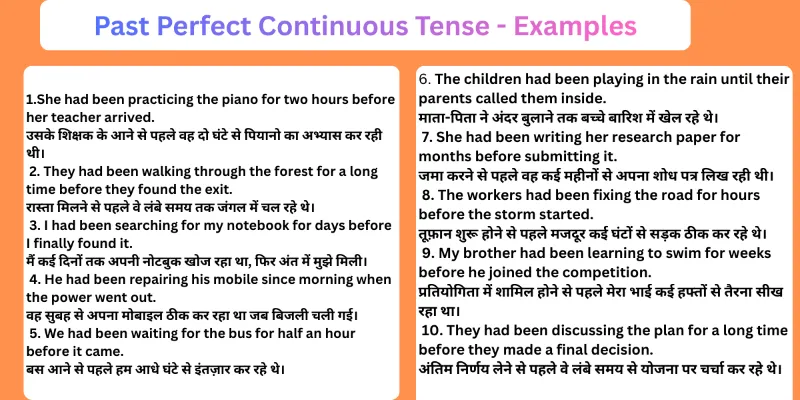
• Examples of Past Perfect Continuous Tense:
1. Why had he not been practising the piano every evening?
वह हर शाम पियानो का अभ्यास क्यों नहीं कर रहा था?
2. Where had she not been storing her art supplies?
वह अपनी आर्ट सामग्री कहाँ नहीं रख रही थी?
3. What had they not been changing in their project plan?
वे अपनी प्रोजेक्ट योजना में क्या नहीं बदल रहे थे?
4. When had you not been revising your grammar chapters?
तुम अपने ग्रामर अध्याय कब नहीं दोहरा रहे थे?
5. Why had we not been participating in the workshop regularly?
हम नियमित रूप से कार्यशाला में भाग क्यों नहीं ले रहे थे?
6. How had he not been remembering such simple instructions?
वह इतने सरल निर्देश कैसे याद नहीं कर रहा था?
7. Which lessons had she not been learning properly?
वह कौन-से पाठ ठीक से नहीं सीख रही थी?
8. Who had you not been informing about the new schedule?
तुम नए समय-सारणी के बारे में किसे जानकारी नहीं दे रहे थे?
9. What had I not been organising on my study table?
मैं अपनी स्टडी टेबल पर क्या व्यवस्थित नहीं कर रहा था?
10. Why had they not been helping the teacher during the activity?
वे गतिविधि के दौरान शिक्षक की मदद क्यों नहीं कर रहे थे?
11. Where had he not been keeping his important notes?
वह अपने महत्वपूर्ण नोट्स कहाँ नहीं रख रहा था?
12. When had she not been finishing her classwork on time?
वह समय पर अपना क्लासवर्क कब नहीं पूरा कर रही थी?
13. How had we not been improving our handwriting for months?
हम महीनों से अपनी हैंडराइटिंग कैसे नहीं सुधार रहे थे?
14. Which tasks had he not been completing in the given time?
वह दिए गए समय में कौन-से काम पूरा नहीं कर रहा था?
15. Who had they not been calling for the group meeting?
वे समूह बैठक के लिए किसे नहीं बुला रहे थे?
16. Why had you not been updating your notes since last week?
तुम पिछले हफ्ते से अपने नोट्स अपडेट क्यों नहीं कर रहे थे?
17. What had she not been checking in the library records?
वह लाइब्रेरी रिकॉर्ड में क्या नहीं जाँच रही थी?
18. Where had the students not been practising their speech?
विद्यार्थी अपना भाषण कहाँ नहीं अभ्यास कर रहे थे?
19. When had you not been preparing for your assignment?
तुम अपना असाइनमेंट कब तैयार नहीं कर रहे थे?
20. Why had he not been polishing his shoes since morning?
वह सुबह से अपने जूते क्यों नहीं पॉलिश कर रहा था?
21. What had we not been presenting during the seminar?
हम सेमिनार के दौरान क्या प्रस्तुत नहीं कर रहे थे?
22. How had she not been solving the maths problems correctly?
वह गणित के प्रश्न सही तरीके से कैसे नहीं हल कर रही थी?
23. Which files had you not been arranging on your computer?
तुम अपने कंप्यूटर में कौन-सी फाइलें व्यवस्थित नहीं कर रहे थे?
24. Who had the team not been contacting for permission?
टीम अनुमति के लिए किससे संपर्क नहीं कर रही थी?
25. Why had they not been following the new rules of the lab?
वे लैब के नए नियमों का पालन क्यों नहीं कर रहे थे?
26. Where had he not been practising his drawing skills?
वह अपनी ड्राइंग स्किल्स का अभ्यास कहाँ नहीं कर रहा था?
27. What had I not been reading in the science chapter?
मैं साइंस अध्याय में क्या नहीं पढ़ रहा था?
28. When had she not been completing her online tests?
वह अपने ऑनलाइन टेस्ट कब पूरा नहीं कर रही थी?
29. How had we not been arranging the chairs for the event?
हम कार्यक्रम के लिए कुर्सियाँ कैसे व्यवस्थित नहीं कर रहे थे?
30. Which topics had they not been discussing with the teacher?
वे शिक्षक से कौन-से विषयों पर चर्चा नहीं कर रहे थे?
Read Tense and There Types
• Tense
• Present Tense
• Present Indefinite Tense • Present continuous tense
• Present Perfect Tense • Present Perfect Continuous Tense
• Past Tense
• Past Indefinite Tense • Past continuous tense
• Past Perfect Tense • Past Perfect Continuous Tense
• Future Tense
• Future Indefinite Tense
• future continuous tense • Future Perfect Tense
• Future Perfect Continuous Tense