Definition
An affirmative Sentence is a type of sentence that express a positive statement or idea. It confirms that something is true, exists, or happens. Such sentences do not contain negative words like not, never, or no.
In shorts, an affirmative Sentence shows agreement or positivity in meaning.
परिभाषा
सकारात्मक वाक्य (Affirmative Sentence) वह वाक्य होता है जो किसी बात को सकारात्मक रूप में व्यक्त करता है या किसी तथ्य की पुष्टि करता है।
ऐसे वाक्यों में “नहीं”, “कभी नहीं” या “न” जैसे नकारात्मक शब्द नहीं होते।
सरल शब्दों में, सकारात्मक वाक्य किसी बात के सत्य या घटित होने को दर्शाता है।
या
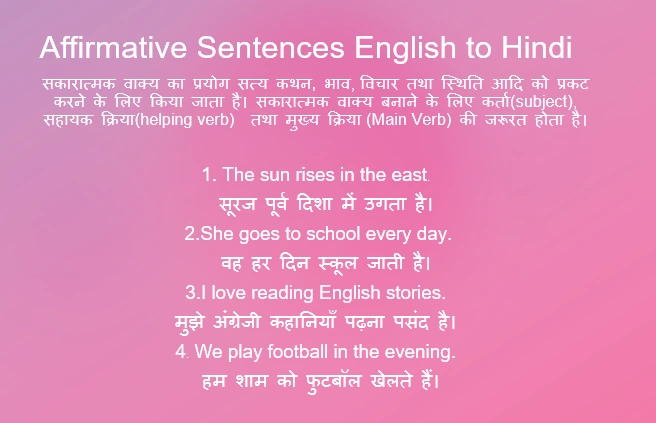
सकारात्मक वाक्य का प्रयोग सत्य कथन, भाव, विचार तथा स्थिति आदि को प्रकट करने के लिए किया जाता है। सकारात्मक वाक्य बनाने के लिए कर्ता(subject), सहायक क्रिया(helping verb) तथा मुख्य क्रिया (Main Verb) की जरूरत होता है। इन सब को साथ में लगाने से एक पूर्ण सकारात्मक वाक्य बनता है।
Examples:
1. The sun rises in the east.
सूरज पूर्व दिशा में उगता है।
2. She goes to school every day.
वह हर दिन स्कूल जाती है।
3. I love reading English stories.
मुझे अंग्रेजी कहानियाँ पढ़ना पसंद है।
4. We play football in the evening.
हम शाम को फुटबॉल खेलते हैं।
5. They are watching a movie.
वे एक फिल्म देख रहे हैं।
6. He works hard to achieve his goals.
वह अपने लक्ष्यों को पाने के लिए कड़ी मेहनत करता है।
7. The birds sing in the morning.
सुबह के समय पक्षी गाते हैं।
8. My father drives a car carefully.
मेरे पिताजी सावधानी से गाड़ी चलाते हैं।
9. The baby is sleeping peacefully.
बच्चा शांति से सो रहा है।
10. We celebrate festivals with joy.
हम त्योहारों को खुशी से मनाते हैं।
Note : उपर्युक्त सभी वाक्य सकारात्मक वाक्य है, क्योंकि इन सभी वाक्य में नकारात्मक या प्रश्न वाचक शब्द का प्रयोग नहीं हुआ है यह सभी वाक्य सत्य कथन पर आधारित है।
Read also
• Sentence - Types of Sentence
• Interrogative Sentence
• Conditional Sentence
❖ Affirmative Sentences Rules in Hindi
(सकारात्मक वाक्य के नियम)
सकारात्मक वाक्य को समझने के लिए इसके नियमों का समझना आवश्यक है। नियमों द्वारा हम सकारात्मक वाक्यों को बना पाएंगे तथा समझ पाएंगे। ये नियम टेंस के अनुसार अलग - अलग है। नियमों को ध्यान से बताया गया है ताकि आपको समझ आसानी से आ जाए।
Rule (I)- Formula
यह वाक्य किसी सकारात्मक बात या तथ्य को व्यक्त करता है — यानी "हाँ में" जवाब देने वाले वाक्य
इस फॉर्मूला के अनुसार नीचे उदाहरणों को बताया गया है जिनको साथ में लगाने से एक सकारात्मक संटेंस बनता है। नीचे दिए गए उदाहरणों को ध्यान से पढ़िए और सीखें।
Examples:
1. I am eating an apple.
मैं एक सेब खा रहा हूँ।
2. She is writing a letter.
वह एक पत्र लिख रही है।
3. They are playing cricket.
वे क्रिकेट खेल रहे हैं।
4. He was reading a book.
वह एक किताब पढ़ रहा था।
5. We have completed our homework.
हमने अपना होमवर्क पूरा कर लिया है।
6. You will learn English easily.
तुम आसानी से अंग्रेजी सीखोगे।
7. The children are watching cartoons.
बच्चे कार्टून देख रहे हैं।
8. My mother is cooking food.
मेरी माँ खाना बना रही हैं।
9. The teacher is explaining the lesson.
अध्यापक पाठ समझा रहे हैं।
10. I have bought a new phone.
मैंने एक नया फोन खरीदा है।
Note : सभी वाक्य सत्य कथन पर आधारित हैं। इन वाक्यों में कही पर ना, नहीं का प्रयोग तथा प्रश्नवाचक वाक्य का प्रयोग नहीं हुआ है।
Read Also
• Use of is/am/are
• Use of Was & Were
• Use of Do & Does
• Use of Has & Have
• Use of Had
Rule (II):
आप सभी जानते होंगे टेंस (tense) के 12 पार्ट्स होते हैं। हम इन 12 पार्ट्स को ध्यान में रखते हुए सकारात्मक वाक्य बनाना सीख पाएंगे। इसके लिए हमें इन नियमों को ध्यान में रखते हुए सीखना चाहिए।
Rule 1: Present Indefinite Tense -Affiemative Sentence
The Present Indefinite Tense is used to express daily habits, universal truths, or regular actions.
परिभाषा
Present Indefinite Tense का प्रयोग नियमित कार्यों, आदतों और सार्वभौमिक सत्य को बताने के लिए किया जाता है।
(यदि Subject — He, She, It या कोई एकवचन नाम हो तो Verb में ‘s’ या ‘es’ जोड़ते हैं)
सकारात्मक वाक्य बनाने के लिए यह नियम ध्यान में रखते हुए उदाहरणों को समझें।
1. I go to school every day.
मैं हर दिन स्कूल जाता हूँ।
2. She sings very well.
वह बहुत अच्छा गाती है।
3. They play football in the evening.
वे शाम को फुटबॉल खेलते हैं।
4. He reads the newspaper in the morning.
वह सुबह अखबार पढ़ता है।
5. We study English daily.
हम रोज़ अंग्रेजी पढ़ते हैं।
6. The sun rises in the east.
सूरज पूर्व दिशा में उगता है।
7. My brother helps me in my homework.
मेरा भाई मेरे होमवर्क में मेरी मदद करता है।
8. You speak politely.
तुम विनम्रता से बात करते हो।
9. Birds fly in the sky.
पक्षी आसमान में उड़ते हैं।
10. The baby smiles when she sees her mother.
बच्ची अपनी माँ को देखकर मुस्कुराती है।
Rule 2 : Present Continuous Tense – Affirmative Sentence
Present Continuous Tense shows an action that is happening right now or is continuing in the present time.
A Negative Assertive Sentence tells us what is not, instead of what is.
Present Continuous Tense उस क्रिया को दर्शाता है जो अभी हो रही है या वर्तमान समय में जारी है।
इस रूल को ध्यान में देते हुए नीचे दिए गए सकारात्मक वाक्य को बनाना सीखिए।
1. I am reading a book.
मैं एक किताब पढ़ रहा हूँ।
2. She is cooking food.
वह खाना बना रही है।
3. They are playing football.
वे फुटबॉल खेल रहे हैं।
4. We are watching TV.
हम टीवी देख रहे हैं।
5. He is writing a letter.
वह एक पत्र लिख रहा है।
6. The children are singing a song.
बच्चे एक गाना गा रहे हैं।
7. I am learning English.
मैं अंग्रेज़ी सीख रहा हूँ।
8. You are talking to your friend.
तुम अपने दोस्त से बात कर रहे हो।
9. It is raining outside.
बाहर बारिश हो रही है।
10. We are studying for the exam.
हम परीक्षा की तैयारी कर रहे हैं।
Read Also
• Tense
• Present Tense
• Past Tense
• Future tense Tense
Rule 3: Present perfect tense – Affirmative Sentences
The Present Perfect Tense shows that an action has already been done or has just completed, and its result is still relevant now.
Present Perfect Tense यह दर्शाता है कि कोई काम पहले ही पूरा हो चुका है या अभी-अभी पूरा हुआ है, और उसका असर अभी भी मौजूद है।
इस रूल के अनुसार सकारात्मक वाक्य नीचे दिए गए उदाहरणों में बनाए गए हैं। ध्यान में रखें और सीखें।
1. I have bought a new phone.
मैंने एक नया फ़ोन ख़रीद लिया है।
2. He has painted the wall.
उसने दीवार पर रंग कर दिया है।
3. They have built a big house.
उन्होंने एक बड़ा घर बना लिया है।
4. We have completed our project.
हमने अपना प्रोजेक्ट पूरा कर लिया है।
5. You have improved your handwriting.
तुमने अपनी लिखावट सुधार ली है।
6. She has read that story.
उसने वह कहानी पढ़ ली है।
7. I have lost my wallet.
मेरा बटुआ खो गया है।
8. It has become very cold today.
आज बहुत ठंड हो गई है।
9. They have opened a new shop.
उन्होंने नई दुकान खोल ली है।
10. We have heard this song before.
हमने यह गाना पहले भी सुना है।
Read Also
• Noun
• Pronoun
• Verb
• Adverb
• Adjective
Rule 4: Present Perfect Continuous - Affirmative Sentences
The Present Perfect Continuous Tense is used to show that an action started in the past and is still continuing in the present. It tells how long something has been happening.
Present Perfect Continuous Tense का प्रयोग तब किया जाता है जब कोई काम भूतकाल में शुरू हुआ हो और अब तक जारी हो। यह बताता है कि कोई कार्य कितने समय से चल रहा है।
Note : Use “has been” with he, she, it, singular noun
Use “have been” with I, we, you, they, plural noun
1. I have been studying since morning.
मैं सुबह से पढ़ाई कर रहा हूँ।
2. She has been cooking for two hours.
वह दो घंटे से खाना बना रही है।
3. They have been playing cricket since 5 o’clock.
वे पाँच बजे से क्रिकेट खेल रहे हैं।
4. We have been living in Delhi for three years.
हम तीन साल से दिल्ली में रह रहे हैं।
5. He has been watching TV since evening.
वह शाम से टीवी देख रहा है।
6. You have been working hard for this exam.
तुम इस परीक्षा के लिए मेहनत कर रहे हो।
7. It has been raining since morning.
सुबह से बारिश हो रही है।
8. I have been waiting for you for an hour.
मैं एक घंटे से तुम्हारा इंतज़ार कर रहा हूँ।
9. They have been learning English for six months.
वे छह महीने से अंग्रेज़ी सीख रहे हैं।
10. We have been talking since last night.
हम पिछली रात से बात कर रहे हैं।
Read Also
• Present Indefinite Tense
• Present Perfect Tense
• Present Continuous Tense
• Present Perfect Continuous Tense
Rule 5 : Past Indefinite Tense – Affirmative Sentences
The Past Indefinite Tense (also called Simple Past Tense) shows that an action happened or was completed in the past. It tells us what someone did or what happened at a definite time in the past.
Past Indefinite Tense (जिसे Simple Past Tense भी कहते हैं) उस कार्य को दर्शाता है जो भूतकाल में हुआ या पूरा हो गया। यह बताता है कि किसी ने क्या किया या क्या हुआ।
Note: Helping verb (did) is not used in affirmative sentences.
रूल के अनुसार नीचे दिए गए सकारात्मक वाक्यों को बताया गया है।ध्यान से पढ़िए और सीखें।
1. I went to school yesterday.
मैं कल स्कूल गया था।
2. She cooked delicious food.
उसने स्वादिष्ट खाना बनाया।
3. They played football in the park.
उन्होंने पार्क में फ़ुटबॉल खेला।
4. He wrote a letter to his friend.
उसने अपने दोस्त को पत्र लिखा।
5. We watched a movie last night.
हमने कल रात एक फ़िल्म देखी।
6. You helped your brother.
तुमने अपने भाई की मदद की।
7. It rained heavily yesterday.
कल ज़ोरों की बारिश हुई।
8. The teacher taught us a new lesson.
शिक्षक ने हमें एक नया पाठ पढ़ाया।
9. I bought a new book.
मैंने एक नई किताब खरीदी।
10. They visited the zoo last Sunday.
उन्होंने पिछले रविवार को चिड़ियाघर का दौरा किया।
Read Also
• Past Indefinite Tense
• Past Perfect Tense
• Past Continuous Tense
• Past Perfect Continuous Tense
Rule 6 : Past Continuous Tense – Affirmative Sentences
The Past Continuous Tense tells about an action that was going on at a certain time in the past.
Past Continuous Tense उस कार्य को दर्शाता है जो भूतकाल के किसी समय पर चल रहा था।
Note - was - I, he, she, it, singular noun
were - we, you, they, plural noun
उपयुक्त रूल के अनुसार नीचे दिए गए सकारात्मक वाक्य को समझिए।
1. I was cleaning my room in the morning.
मैं सुबह अपना कमरा साफ कर रहा था।
2. She was reading the newspaper.
वह अख़बार पढ़ रही थी।
3. They were singing a beautiful song.
वे एक सुंदर गाना गा रहे थे।
4. We were going to the market.
हम बाज़ार जा रहे थे।
5. He was driving the car carefully.
वह कार सावधानी से चला रहा था।
6. You were drawing a picture.
तुम एक चित्र बना रहे थे।
7. It was shining brightly in the sky.
वह आसमान में चमक रहा था। (यहाँ “it” सूरज या चाँद के लिए है)
8. The teacher was explaining the lesson.
अध्यापक पाठ समझा रहे थे।
9. I was sleeping when you called me.
जब तुमने मुझे कॉल किया, तब मैं सो रहा था।
10. They were waiting for the bus at the stop.
वे बस स्टॉप पर बस का इंतज़ार कर रहे थे।
Read Also
• Future Indefinite Tense
• Future Perfect Tense
• Future Continuous Tense
• Future Perfect Continuous Tense
Rule 7: Past Perfect tense – Affirmative Sentence
The Past Perfect Tense is used to express an action that was completed before another past action or a specific time in the past.
Past Perfect Tense का प्रयोग तब किया जाता है जब कोई कार्य भूतकाल में किसी दूसरे कार्य से पहले पूरा हो चुका हो।
Note: “Had” is used with all subjects (I, We, You, He, She, It, They)
इस रुल के अनुसार नीचे दिए गए वाक्य को ध्यान से पढ़े और सीखें।
1. I had taken my lunch before you arrived.
तुम्हारे आने से पहले मैंने दोपहर का खाना खा लिया था।
2. She had cleaned the house before guests came.
मेहमानों के आने से पहले उसने घर साफ कर लिया था।
3. They had completed their homework before going out.
बाहर जाने से पहले उन्होंने अपना होमवर्क पूरा कर लिया था।
4. He had repaired the car before the trip.
यात्रा से पहले उसने कार ठीक कर ली थी।
5. We had visited Jaipur before the festival started.
त्योहार शुरू होने से पहले हमने जयपुर का दौरा किया था।
6. You had called me before I reached home.
मेरे घर पहुँचने से पहले तुमने मुझे फोन किया था।
7. The teacher had checked the papers before leaving the school.
स्कूल छोड़ने से पहले शिक्षक ने कॉपियाँ जाँच ली थीं।
8. It had stopped raining before morning.
सुबह होने से पहले बारिश रुक गई थी।
9. I had met him before the meeting.
मीटिंग से पहले मैं उससे मिल चुका था।
10. They had learned the song before the function.
समारोह से पहले उन्होंने गाना सीख लिया था।
Read Also
• Negative Sentence
• Exclamatory Sentence
• Imperative Sentence
Rule 8: Past perfect Continuous Tense – Affirmative Sentences
The Past Perfect Continuous Tense is used to describe an action that had been happening for some time in the past before another past event occurred.
Past Perfect Continuous Tense का प्रयोग तब किया जाता है जब कोई कार्य भूतकाल में कुछ समय से चलता रहा हो और किसी दूसरे कार्य से पहले तक जारी रहा हो।
Note : Since – किसी निश्चित समय के लिए
For – समय अवधि के लिए
उपयुक्त रूल के अनुसार ही नीचे दिए गए सकारात्मक वाक्यों को ध्यानपूर्वक पढिये और सीखें।
1. I had been reading that novel for three days before I finished it.
उसे पूरा करने से पहले मैं तीन दिनों से वह उपन्यास पढ़ रहा था।
2. She had been singing for half an hour before the program ended.
कार्यक्रम ख़त्म होने से पहले वह आधे घंटे से गा रही थी।
3. They had been traveling since last night.
वे पिछली रात से यात्रा कर रहे थे।
4. We had been talking for two hours before he went home.
उसके घर जाने से पहले हम दो घंटे से बात कर रहे थे।
5. He had been repairing his bike for an hour.
वह एक घंटे से अपनी बाइक ठीक कर रहा था।
6. You had been learning French for six months.
तुम छह महीने से फ़्रेंच सीख रहे थे।
7. The sun had been shining since morning.
सुबह से सूरज चमक रहा था।
8. I had been waiting for my result for many days.
मैं कई दिनों से अपने परिणाम का इंतज़ार कर रहा था।
9. They had been building the bridge for two years.
वे दो साल से पुल बना रहे थे।
10. We had been playing chess since evening.
हम शाम से शतरंज खेल रहे थे।
Rule 9: Future Indefinite Tense – Affiremative Sentences
The Future Indefinite Tense (Simple Future Tense) is used to express an action that will take place in the future or a decision about the future.
Future Indefinite Tense का प्रयोग उस कार्य के लिए किया जाता है जो भविष्य में होगा या भविष्य के किसी निर्णय या योजना को दर्शाता है।
रूल को जो ध्यान में रखते हुए नीचे दिए गए सकारात्मक उदाहरणों को सीखें।
1. I will buy a new laptop next month.
मैं अगले महीने एक नया लैपटॉप खरीदूँगा।
2. She will join the new company soon.
वह जल्द ही नई कंपनी जॉइन करेगी।
3. They will celebrate your birthday tomorrow.
वे कल तुम्हारा जन्मदिन मनाएँगे।
4. We will go for a picnic on Sunday.
हम रविवार को पिकनिक पर जाएंगे।
5. He will read this book tonight.
वह आज रात यह किताब पढ़ेगा।
6. You will learn English easily.
तुम आसानी से अंग्रेज़ी सीखोगे।
7. It will be a beautiful day tomorrow.
कल का दिन बहुत सुंदर होगा।
8. The students will participate in the competition.
विद्यार्थी प्रतियोगिता में भाग लेंगे।
9. I will send you the details by email.
मैं तुम्हें विवरण ईमेल से भेज दूँगा।
10. They will visit their grandparents next week.
वे अगले हफ़्ते अपने दादा-दादी से मिलने जाए।
Read Also
• Model Auxiliaries Verb
• Use of Can & Could
• Use of May & Might
• Use of Shall & Will
• Use of Should & Would
Rule 10 : Future Continuous Tense – Affirmative Sentences
The Future Continuous Tense shows that an action will be going on at a particular time in the future.
It is used to express an action that will continue for some time in the future.
Future Continuous Tense यह दर्शाता है कि कोई कार्य भविष्य में किसी निश्चित समय पर जारी रहेगा।
इसका प्रयोग उस कार्य के लिए किया जाता है जो भविष्य में कुछ समय तक चलता रहेगा।
रूस को जो ध्यान में रखते हुए नीचे दिए गए सकारात्मक उदाहरणों को सीखें।
1. I will be writing notes in the evening.
मैं शाम को नोट्स लिख रहा होऊँगा।
2. She will be talking to her friend on the phone.
वह फोन पर अपने दोस्त से बात कर रही होगी।
3. They will be planting trees tomorrow morning.
वे कल सुबह पेड़ लगा रहे होंगे।
4. We will be visiting our grandparents next weekend.
हम अगले वीकेंड अपने दादा-दादी से मिलने जा रहे होंगे।
5. He will be repairing his car in the garage.
वह गैराज में अपनी कार ठीक कर रहा होगा।
6. You will be listening to music at that time.
तुम उस समय संगीत सुन रहे होगे।
7. It will be getting dark soon.
जल्द ही अंधेरा हो रहा होगा।
8. The students will be practicing for the annual function.
विद्यार्थी वार्षिक समारोह के लिए अभ्यास कर रहे होंगे।
9. I will be attending a meeting in the office tomorrow.
मैं कल ऑफिस में मीटिंग में शामिल हो रहा होऊँगा।
10. They will be enjoying their holidays next week.
वे अगले हफ़्ते अपनी छुट्टियों का आनंद ले रहे होंगे।
Rule 11: Future Perfect Tense – Affirmative Sentences
The Future Perfect Tense is used to express an action that will be completed before or by a certain time in the future.
It shows that the action will finish before another future action or time.
Future Perfect Tense उस कार्य को दर्शाता है जो भविष्य में किसी निश्चित समय से पहले पूरा हो जाएगा।
यह बताता है कि कोई काम भविष्य के किसी समय तक समाप्त हो चुका होगा।
नीचे दिए गए सभी सकारात्मक वाक्य उपयुक्त फार्मूला के अनुसार बने हैं ध्यान से पढें और सीखें।
1. I will have completed my work by 5 o’clock.
मैं पाँच बजे तक अपना काम पूरा कर चुका होऊँगा।
2. We shall have reached the station before the train arrives.
ट्रेन के आने से पहले हम स्टेशन पहुँच चुके होंगे।
3. He will have eaten his lunch by now.
वह अब तक अपना दोपहर का खाना खा चुका होगा।
4. She will have finished her homework before dinner.
वह रात के खाने से पहले अपना गृहकार्य पूरा कर चुकी होगी।
5. They will have left for Delhi by morning.
वे सुबह तक दिल्ली के लिए निकल चुके होंगे।
6. You will have cleaned the room by evening.
तुम शाम तक कमरा साफ कर चुके होगे।
7. It will have stopped raining by tomorrow.
कल तक बारिश रुक चुकी होगी।
8. The students will have completed their assignments by next week.
विद्यार्थी अगले हफ़्ते तक अपने असाइनमेंट पूरे कर चुके होंगे।
9. I will have read that novel before my exams start.
परीक्षा शुरू होने से पहले मैं वह उपन्यास पढ़ चुका होऊँगा।
10. She will have visited her grandparents by next month.
वह अगले महीने तक अपने दादा-दादी से मिलने जा चुकी होगी।
Read Also
• Active voice & Passive voice
Rule 12: Future Perfect Continuous Tense – Affirmative Sentences
The Future Perfect Continuous Tense is used to show that an action will continue up to a certain time in the future.
It expresses the duration of an action that will be going on before a specific time.
It tells “how long” an action will have been happening in the future.
Future Perfect Continuous Tense उस कार्य को दर्शाता है जो भविष्य में किसी निश्चित समय तक जारी रहेगा।
यह बताता है कि कोई कार्य कितने समय से चल रहा होगा जब भविष्य में कोई दूसरा समय आएगा।
नीचे दिए गए सभी सकारात्मक वाक्य उपयुक्त फार्मूला के अनुसार बने हैं ध्यान से पढें और सीखें।
1. I will have been studying for three hours by 9 o’clock.
मैं नौ बजे तक तीन घंटे से पढ़ रहा होऊँगा।
2. She will have been teaching in this school for five years by next June.
वह अगले जून तक पाँच साल से इस स्कूल में पढ़ा रही होगी।
3. They will have been working on this project since January.
वे जनवरी से इस प्रोजेक्ट पर काम कर रहे होंगे।
4. We will have been waiting for you for two hours by the time you arrive.
तुम्हारे आने तक हम दो घंटे से तुम्हारा इंतज़ार कर रहे होंगे।
5. He will have been driving for ten hours by night.
वह रात तक दस घंटे से गाड़ी चला रहा होगा।
6. You will have been living in Delhi for a long time.
तुम लंबे समय से दिल्ली में रह रहे होगे।
7. It will have been raining since morning.
सुबह से बारिश हो रही होगी।
8. The students will have been practicing for the annual function for a week.
विद्यार्थी एक हफ़्ते से वार्षिक समारोह के लिए अभ्यास कर रहे होंगे।
9. I will have been writing my novel for six months by December.
दिसंबर तक मैं छह महीने से अपना उपन्यास लिख रहा होऊँगा।
10. They will have been building this bridge for two years by next winter.
वे अगले सर्दियों तक दो साल से यह पुल बना रहे होंगे।