Future Tense (भविष्यकाल)
Definition -
Future Tense is the tense that expresses an action that will happen or is expected to happen in the time to come.
It is used to talk about plans, predictions, intentions, or events that are not yet done but will occur after the present moment.
It shows actions that are yet to happen in the future.
We use “will” or “shall” (modern usage often prefers “will” for all subjects) before the base form of the verb to express future actions.
Future Tense helps to describe what someone intends, plans, or predicts will occur.
परिभाषा -
Future Tense – भविष्यकाल वह काल है जो किसी ऐसे कार्य को दर्शाता है जो आने वाले समय में होगा या होने की संभावना है।
यह उन कार्यों को व्यक्त करता है जो अभी नहीं हुए हैं, लेकिन आगे होने वाले हैं।
भविष्यकाल यह बताता है कि कोई कार्य भविष्य में घटित होगा।
इस काल में will या shall का प्रयोग क्रिया के मूल रूप (base form) के साथ किया जाता है।
इन वाक्यों के अंत में करुँगा, होगा, रहेगा, चुका होगा आदि शब्द आते हैं।
आधुनिक अंग्रेज़ी में प्रायः सभी subjects के साथ will का प्रयोग किया जाता है।
इसका प्रयोग हम इरादे (intention), अनुमान (prediction), योजना (plan), या वचन (promise) व्यक्त करने के लिए करते हैं।
Examples :
1. She will go to school tomorrow.
वह कल स्कूल जाएगी।
2. I will call you in the evening.
मैं तुम्हें शाम को फोन करूंगा।
3. They will play football next Sunday.
वे अगले रविवार को फुटबॉल खेलेंगे।
4. We will visit the zoo next week.
हम अगले हफ्ते चिड़ियाघर जाएंगे।
5. He will help his friend.
वह अपने दोस्त की मदद करेगा।
6. The teacher will check our homework.
शिक्षक हमारा होमवर्क जांचेंगे।
7. You will learn English soon.
तुम जल्द ही अंग्रेज़ी सीख जाओगे।
8. It will rain tonight.
आज रात बारिश होगी।
9. I will write a letter to my father.
मैं अपने पिता को पत्र लिखूंगा।
0. They will arrive here at 8 o’clock.
वे यहाँ आठ बजे पहुँचेंगे।
11. She will be studying at 9 p.m.
वह रात नौ बजे पढ़ रही होगी।
12. I will be sleeping when you come.
जब तुम आओगे, मैं सो रहा होऊँगा।
13. They will be watching a movie tonight.
वे आज रात फिल्म देख रहे होंगे।
14. He will be working in the office tomorrow.
वह कल ऑफिस में काम कर रहा होगा।
15. We will be waiting for you at the station.
हम स्टेशन पर तुम्हारा इंतज़ार कर रहे होंगे।
16. The children will be playing outside.
बच्चे बाहर खेल रहे होंगे।
17. It will be raining in the evening.
शाम को बारिश हो रही होगी।
18. You will be preparing for the exam.
तुम परीक्षा की तैयारी कर रहे होंगे।
19 .She will be cooking dinner at that time.
उस समय वह रात का खाना बना रही होगी।
20. I will be travelling to Delhi next week.
मैं अगले हफ्ते दिल्ली की यात्रा कर रहा होऊँगा।
21. I will have finished my work by evening.
मैं शाम तक अपना काम पूरा कर चुका होऊँगा।
22. She will have reached home by 8 p.m.
वह रात आठ बजे तक घर पहुँच चुकी होगी।
23. They will have completed the project by tomorrow.
वे कल तक परियोजना पूरी कर चुके होंगे।
24. We will have eaten dinner before you arrive.
तुम्हारे आने से पहले हम खाना खा चुके होंगे।
25. He will have learned the lesson by next week.
वह अगले हफ्ते तक पाठ सीख चुका होगा।
26. She will have been studying for two hours by 10 p.m.
रात दस बजे तक वह दो घंटे से पढ़ रही होगी।
27. They will have been working here for five years.
वे पाँच साल से यहाँ काम कर रहे होंगे।
28. I will have been waiting for you since morning.
मैं सुबह से तुम्हारा इंतज़ार कर रहा होऊँगा।
29. We will have been living in this city for a long time.
हम इस शहर में लंबे समय से रह रहे होंगे।
30. He will have been driving for three hours continuously.
वह लगातार तीन घंटे से गाड़ी चला रहा होगा।
उपरोक्त सभी वाक्य भविष्यकाल के उदाहरण हैं। इन वाक्यों के अंत में गा, गे, गी, होगा, रहेगा, करेगा आदि शब्द आ रहे है आप ने समझ लिया होगा कि भविष्य काल किसे कहते हैं? अब आपको भविष्य काल के चारों भागों के बारे में नीचे विस्तार से समझाया गया है। निम्नलिखित की परिभाषा तथा उदाहरण को ध्यान से पढ़ें और सीखें।
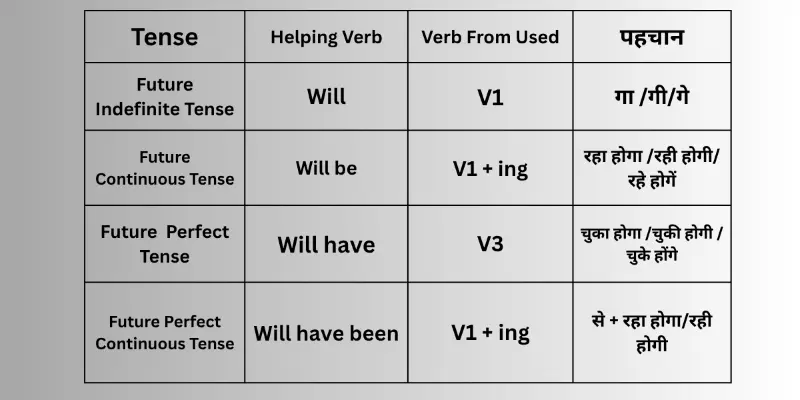
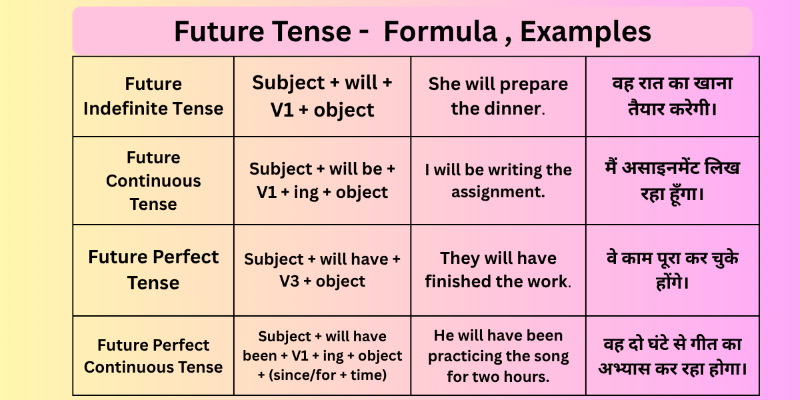
Parts of Future Tense :
भविष्य काल के भाग:
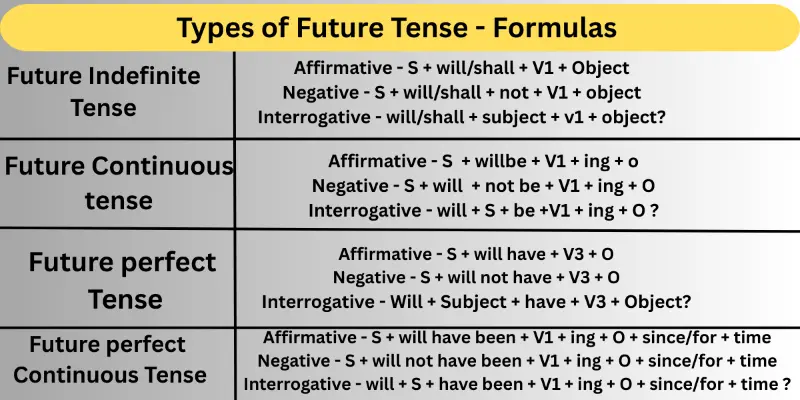
1. Future Indefinite Tense (Simple Future Tense) (सामान्य भविष्यकाल)
2. Future Continuous Tense (अपूर्ण भविष्यकाल)
3. Future Perfect Tense (पूर्ण भविष्यकाल)
4. Future Perfect Contonuous Tense (भविष्यकाल पूर्ण सतत्काल)
नीचे आपको सभी भागों के प्रत्येक भाग की परिभाषा, उदाहरण अंग्रेजी और हिंदी दोनों भाषाओं में बताया गया है, जिससे आपको भविष्य काल के बारे में पूर्ण जानकारी प्राप्त होगी।
1. Future Indefinite Tense (सामान्य भविष्यकाल)
Definition -
Future Indefinite Tense is the tense that expresses an action that will take place in the future.
It is used to talk about actions, events, promises, or plans that are not yet done but will happen later.
It shows an action that is yet to happen.
We use “will” or “shall” (though will is commonly used with all subjects in modern English) + base form of the verb to express this tense.
It is used for predictions, intentions, offers, and decisions about the future.
Read More About Future Indefinite Tense (सामान्य भविष्यकाल)
परिभाषा -
Future Indefinite Tense - भविष्य साधारण काल वह काल है जो यह बताता है कि कोई कार्य भविष्य में होगा या होने वाला है।
यह किसी योजना, वचन, अनुमान या इच्छा को व्यक्त करता है।
यह काल उस कार्य को दर्शाता है जो अभी नहीं हुआ है लेकिन आगे होगा।
इस काल में will या shall का प्रयोग क्रिया के मूल रूप (Verb की first form) के साथ किया जाता है।
आधुनिक अंग्रेज़ी में सभी subjects के साथ will का ही प्रयोग अधिक होता है। इन वाक्यों के अंत में होगा, करेगा, होगी, होगें आदि शब्द आते हैं।
Examples:
1. I will go to school tomorrow.
मैं कल स्कूल जाऊँगा।
2. She will help her mother in the kitchen.
वह रसोई में अपनी माँ की मदद करेगी।
3. They will play cricket in the evening.
वे शाम को क्रिकेट खेलेंगे।
4. We will visit our grandparents next week.
हम अगले हफ्ते अपने दादा-दादी से मिलने जाएंगे।
5. He will study hard for the exam.
वह परीक्षा के लिए कड़ी मेहनत करेगा।
6. It will rain tonight.
आज रात बारिश होगी।
7. You will get a new job soon.
तुम्हें जल्द ही नई नौकरी मिलेगी।
8. The teacher will teach a new chapter tomorrow.
शिक्षक कल नया अध्याय पढ़ाएँगे।
9. I will write a letter to my friend.
मैं अपने दोस्त को पत्र लिखूँगा।
10. They will arrive at the station at 6 o’clock.
वे छह बजे स्टेशन पर पहुँचेंगे।
Read Also
• Parts of Speech
• Noun • Verb
• Adverb • Pronoun
• Adjective • Conjunction
• Interjection • Parts of Speech
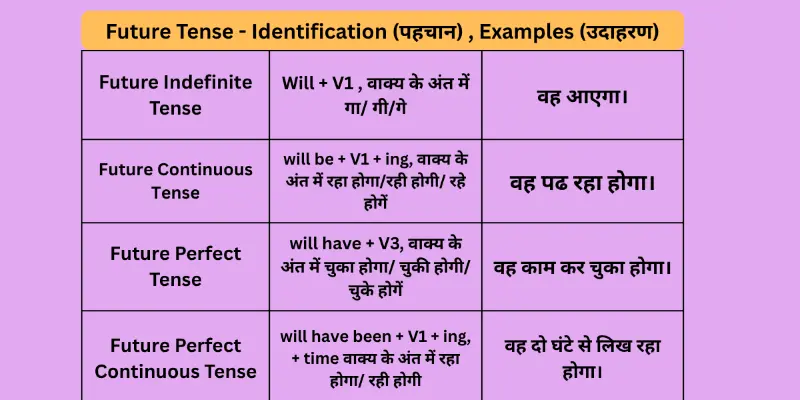
2. Future Continuous Tense (अपूर्ण भविष्यकाल)
Definition -
Future Continuous Tense is the tense that expresses an action that will be going on at a certain time in the future.
It shows that an action will continue for some time in the future.
It describes an action that will be in progress in the future.
We use will be + V₁ + ing to form the Future Continuous Tense.
It is used to talk about actions that will be in progress at a particular moment in the future, or to describe planned future activities.
परिभाषा -
Future Continuous Tense - भविष्य अपूर्ण काल वह काल है जो किसी ऐसे कार्य को दर्शाता है जो भविष्य के किसी निश्चित समय पर जारी रहेगा।
यह बताता है कि कोई कार्य आने वाले समय में कुछ देर तक चलता रहेगा।
यह काल किसी कार्य की निरंतरता (continuity) को भविष्य में दर्शाता है।
इस काल में will be + क्रिया में “ing” जोड़कर वाक्य बनाए जाते हैं।
यह उन कार्यों के लिए प्रयोग किया जाता है जो भविष्य में किसी विशेष समय पर हो रहे होंगे।
इन वाक्यों के अंत में रहेगा, होगा, होगी, होगें आदि शब्द आते हैं।
Read More About Future Continuous Tense (अपूर्ण भविष्यकाल)
Example:
1. She will be studying at 9 p.m.
वह रात नौ बजे पढ़ रही होगी।
2. I will be sleeping when you come.
जब तुम आओगे, मैं सो रहा होऊँगा।
3. They will be watching a movie tonight.
वे आज रात एक फिल्म देख रहे होंगे।
4. We will be playing cricket tomorrow evening.
हम कल शाम क्रिकेट खेल रहे होंगे।
5. He will be working in his office at that time.
उस समय वह अपने ऑफिस में काम कर रहा होगा।
6. The children will be dancing on the stage.
बच्चे मंच पर नाच रहे होंगे।
7. It will be raining in the evening.
शाम को बारिश हो रही होगी।
8. You will be waiting for me at the station.
तुम स्टेशन पर मेरा इंतज़ार कर रहे होंगे।
9. I will be writing notes for my exam.
मैं अपनी परीक्षा के लिए नोट्स लिख रहा होऊँगा।
10. They will be travelling to Delhi next week.
वे अगले हफ्ते दिल्ली की यात्रा कर रहे होंगे।
Read Also
• Affirmative Sentence • Conditional Sentence
• Use of Can & Could • Use of Dare
• Use of May & Might • Use of Must & Ought
3. Future Perfect Tense (भविष्य पूर्णकाल)
Definition -
Future Perfect Tense expresses an action that will be completed before a certain time or event in the future.
It tells that something will have happened or been done before another future event takes place.
It shows that an action will be finished before a specific future time.
We use will have + past participle (V₃) to form this tense.
It is used when we want to say that an action will be completed before another future event or time.
परिभाषा -
Future Perfect Tense (भविष्य पूर्ण काल) वह काल है जो किसी ऐसे कार्य को दर्शाता है जो भविष्य के किसी निश्चित समय या घटना से पहले पूरा हो जाएगा।
यह बताता है कि कोई कार्य भविष्य में किसी समय तक संपन्न हो चुका होगा।
यह काल उस कार्य को दिखाता है जो भविष्य में किसी निश्चित समय से पहले पूरा हो जाएगा।
इस काल में will have + क्रिया का तीसरा रूप (V₃) प्रयोग किया जाता है।
इसका प्रयोग तब किया जाता है जब यह बताना हो कि कोई कार्य भविष्य की किसी समय सीमा से पहले समाप्त हो चुका होगा।
इन वाक्यों के अंत में चुका होगा, चुके होगें, चुका होगी आदि शब्द आते हैं।
Read More About Future Perfect Tense (भविष्य पूर्णकाल)
Examples:
1. I will have finished my homework by evening.
मैं शाम तक अपना होमवर्क पूरा कर चुका होऊँगा।
2. She will have cooked food before her guests arrive.
मेहमानों के आने से पहले वह खाना बना चुकी होगी।
3. They will have reached home before it gets dark.
अंधेरा होने से पहले वे घर पहुँच चुके होंगे।
4. We will have completed the project by next week.
हम अगले हफ्ते तक परियोजना पूरी कर चुके होंगे।
5. He will have learned English before going abroad.
विदेश जाने से पहले वह अंग्रेज़ी सीख चुका होगा।
6. You will have taken your exam by Monday.
सोमवार तक तुम अपनी परीक्षा दे चुके होंगे।
7. The train will have left before we reach the station.
हमारे स्टेशन पहुँचने से पहले ट्रेन जा चुकी होगी।
8. I will have read the book before the meeting starts.
मीटिंग शुरू होने से पहले मैं किताब पढ़ चुका होऊँगा।
9. They will have built the house by next year.
वे अगले साल तक घर बना चुके होंगे।
10. She will have written five poems by then.
तब तक वह पाँच कविताएँ लिख चुकी होगी।
Read Also
• Parts of Sentences
• Negative Sentence • Exclamatory Sentence
• Parts of Speech
• Noun • Verb
• Adverb • Pronoun
4. Future Perfect Continuous Tense (भविष्य पूर्ण सतत्काल)
Definition -
Future Perfect Continuous Tense expresses an action that will have been going on for a period of time up to a certain point in the future.
It shows the duration or continuity of an action that will still be continuing until a specific future time.
It describes an action that will have been continuing for some time in the future.
We use will have been + V₁ + ing to form this tense.
It is used to talk about an activity that started before a certain future time and will continue up to that time.
It also emphasizes the duration of the action.
परिभाषा -
Future Perfect Continuous Tense - भविष्य पूर्ण अपूर्ण काल वह काल है जो उस कार्य को दर्शाता है जो भविष्य के किसी निश्चित समय तक लगातार चलता रहेगा।
यह किसी कार्य की अवधि (duration) को दिखाता है — जो भविष्य में एक निश्चित समय तक जारी रहेगा।
यह काल यह बताता है कि भविष्य के किसी समय तक कोई कार्य कितनी देर से चल रहा होगा।
इस काल में will have been + क्रिया में “ing” जोड़कर वाक्य बनाए जाते हैं।
साथ में since और for का प्रयोग समय की अवधि बताने के लिए किया जाता है।
इन वाक्यों के अंत में होगा, होगी, होगें आदि शब्द आते हैं।
Read More About Future Perfect Continuous Tense (भविष्य पूर्ण सतत्काल)
Examples:
1. I will have been studying for three hours by 9 p.m.
रात नौ बजे तक मैं तीन घंटे से पढ़ रहा होऊँगा।
2. She will have been working in this office since 2022.
वह 2022 से इस ऑफिस में काम कर रही होगी।
3. They will have been living here for five years.
वे यहाँ पाँच साल से रह रहे होंगे।
4. We will have been waiting for you since morning.
हम सुबह से तुम्हारा इंतज़ार कर रहे होंगे।
5. He will have been teaching English for ten years by next month.
अगले महीने तक वह दस साल से अंग्रेज़ी पढ़ा रहा होगा।
6. You will have been learning dance for two months.
तुम दो महीने से नृत्य सीख रहे होंगे।
7. The children will have been playing since 4 o’clock.
बच्चे चार बजे से खेल रहे होंगे।
8. It will have been raining for an hour by evening.
शाम तक एक घंटे से बारिश हो रही होगी।
9. They will have been travelling for three days by Monday.
सोमवार तक वे तीन दिन से यात्रा कर रहे होंगे।
10. I will have been writing this book for six months.
मैं छह महीने से यह किताब लिख रहा होऊँगा।
Read Tense and There Types
• Tense
• Present Tense
• Present Indefinite Tense • Present continuous tense
• Present Perfect Tense • Present Perfect Continuous Tense
• Past Tense
• Past Indefinite Tense • Past continuous tense
• Past Perfect Tense • Past Perfect Continuous Tense
• Future Tense
• Future Indefinite Tense
• future continuous tense • Future Perfect Tense
• Future Perfect Continuous Tense