Future Perfect Tense (पूर्ण भविष्यकाल)
Definition -
Future Perfect Tense is the tense that describes an action which will be completed before a specific time or event in the future.
It shows that the work will have been finished at some point in the future.
An action will be completed before a certain future time.
Future Perfect Tense is used when:
• The action is in the future
• The action will be finished before another future moment
• The focus is on completion
It always uses the pattern:
will have + past participle (V3)
परिभाषा -
Future Perfect Tense वह काल है जिसमें किसी ऐसे कार्य को बताया जाता है जो भविष्य में किसी निश्चित समय या घटना से पहले पूरा हो जाएगा।
यह दर्शाता है कि कोई काम भविष्य के किसी समय तक समाप्त हो चुका होगा।
कोई कार्य भविष्य के किसी समय से पहले पूरा हो जाएगा।
Future Perfect Tense का उपयोग तब होता है जब:
• कार्य भविष्य में है
• वह कार्य किसी और भविष्य के समय से पहले पूरा हो जाएगा
• धयान हमेशा पूरा होने पर होता है
इसका पैटर्न हमेशा होता है:
will have + V3 (क्रिया का तीसरा रूप)
इन वाक्यों के अंत में चुका होगा, चुके होगें, चुकी होगी आदि शब्द आते हैं।
Examples :
1.I will have completed my homework by night.
रात तक मैं अपना होमवर्क पूरा कर चुका होऊँगा।
2. She will have taken the class before lunch.
लंच से पहले वह क्लास ले चुकी होगी।
3. They will have left the city by tomorrow.
वे कल तक शहर छोड़ चुके होंगे।
4. He will have repaired the bike by evening.
वह शाम तक बाइक ठीक कर चुका होगा।
5. We will have finished the project by next week.
हम अगले हफ्ते तक प्रोजेक्ट पूरा कर चुके होंगे।
6. The train will have reached the station by 5 AM.
ट्रेन सुबह 5 बजे तक स्टेशन पहुँच चुकी होगी।
7. She will have written the report before the meeting.
मीटिंग से पहले वह रिपोर्ट लिख चुकी होगी।
8. I will have saved enough money by June.
जून तक मैं पर्याप्त पैसे बचा चुका होऊँगा।
9. They will have painted the house by Saturday.
वे शनिवार तक घर पेंट कर चुके होंगे।
10. Students will have completed the test before the bell.
घंटी से पहले विद्यार्थी टेस्ट पूरा कर चुके होंगे।
उपरोक्त दिए गए वाक्यों के अंत में चुका होगा, चुकी होगी, चुके होगें आदि शब्द आए हैं सभी वाक्य Future Perfect Tense के हैं।
Read Also
• Future Tense
• Future Indefinite Tense
• future continuous tense
• Future Perfect Tense
• Future Perfect Continuous Tense
• Rules of Future Perfect Tense (पूर्ण भविष्य काल के नियम) :
Rule 1: Use “will have” with all subjects
I, You, He, She, It, They, We → all take will have
सभी subjects के साथ will have ही लगता है।
Rule 2: Verb हमेशा V3 (Past Participle) होती है
The main verb must be in V3 form.
क्रिया हमेशा तीसरे रूप (V3) में होती है।
Rule 3: Tense shows completion before future time
Use this tense only when the action will be completed before future time.
इसका प्रयोग तभी होता है जब कार्य भविष्य के किसी समय से पहले पूरा हो जाए।
Rule 4: Time expressions are important Use time words:
by tomorrow, by next week, by evening, before you come
समय शब्द बहुत ज़रूरी हैं
जैसे:
कल तक, शाम तक, अगले हफ़्ते तक, तुम्हारे आने से पहले
Rule 5: Meaning always indicates “completion”
The work will be finished.
काम पूरा हो चुका होगा।
Rule 6: Identification (पहचान)
If the sentence talks about a work being completed before a future time, it is Future Perfect Tense.
अगर वाक्य बताए कि कोई काम भविष्य में किसी समय से पहले पूरा हो जाएगा, तो वह Future Perfect Tense है।
इन वाक्यों के अंत में चुका होगा, चुकी होगी, चुके होगें आदि शब्द आते हैं।
• Future Perfect Tense – Table
| Topic |
Explanation |
| Definition |
Action completed before future Time. |
| Main Helping verb |
Will have |
| Main verb form |
V3 (past participle) |
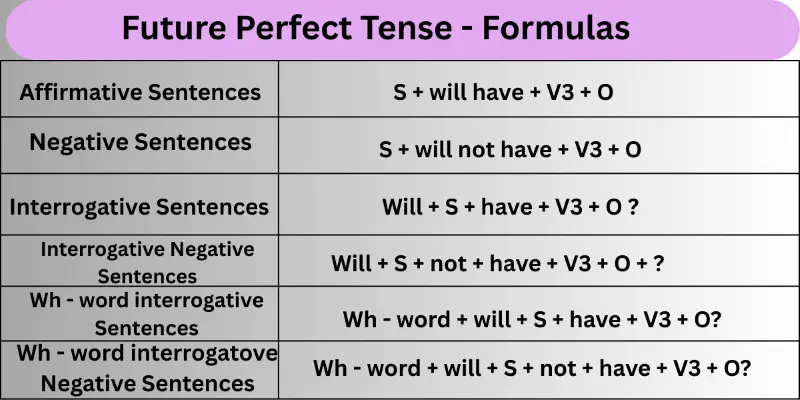
| Affirmative |
Subject + will have + V3 |
| Negative |
Subject + will not have + V3 |
| Interrogative |
Will + Subject + have + V3 + ? |
| Wh – word |
Wh – word + subject + have + V3? |
| Identification |
“will have + V3” |
उपरोक्त दी गई है टेबल में पूर्ण भविष्य काल के बारे में जानकारी दी गई ध्यानपूर्वक पढ़ें और सीखें।
Read Also
• Parts of Speech
• Noun • Verb
• Adverb • Pronoun
• Adjective • Conjunction
• Interjection • Parts of Speech
1. Affirmative Sentences (सकारात्मक वाक्य) of Future Perfect Tense
An affirmative sentence of Future Perfect Tense tells that an action will have been completed before a particular time or event in the future.
It confirms the completion of the work.
A positive statement showing the work will have been completed.
Future Perfect Tense का affirmative sentence वह वाक्य है जो बताता है कि कोई कार्य भविष्य के किसी निश्चित समय या घटना से पहले पूरा हो चुका होगा।
यह वाक्य पूरा होने की पुष्टि करता है।
काम हो चुका होगा / पूरा हो चुका होगा।
Rules -
Rule 1: Every subject uses “will have”
I, You, He, She, It, They, We → all take will have.
सभी subjects के साथ will have का प्रयोग होता है।
Rule 2: Main verb must always be in V3 (past participle)
Verb should be used in the third form (V3) like:
completed, written, eaten, finished, learned.
मुख्य क्रिया हमेशा तीसरे रूप (V3) में होती है।
Rule 3: The focus is on “completion before future time”
Sentence must show that the action will be finished before future time.
वाक्य में यह दिखना चाहिए कि कार्य भविष्य के किसी समय से पहले पूरा हो जाएगा।
Rule 4: Time expression is usually used
Use: by tomorrow, by morning, by next year, by evening, before you come.
समय शब्द जैसे: कल तक, अगले साल तक, शाम तक, तुम्हारे आने से पहले।
Rule 5: Sentence should be positive
No “not” is used — because it is affirmative.
Negative शब्द “not” का प्रयोग नहीं होगा।
Examples:
1. I will have completed my painting by next Monday.
मैं अगले सोमवार तक अपनी पेंटिंग पूरा कर चुका होऊँगा।
2. She will have prepared the notes before the class starts.
क्लास शुरू होने से पहले वह नोट्स तैयार कर चुकी होगी।
3. They will have built the new shed by winter.
वे सर्दियों तक नया शेड बना चुके होंगे।
4. We will have cleaned the terrace by evening.
हम शाम तक टैरेस साफ कर चुके होंगे।
5. He will have repaired the laptop by tomorrow afternoon.
वह कल दोपहर तक लैपटॉप ठीक कर चुका होगा।
6. Students will have submitted the files by Friday.
विद्यार्थी शुक्रवार तक फाइलें जमा कर चुके होंगे।
7. She will have finished her novel by the end of this month.
वह इस महीने के अंत तक अपना उपन्यास पूरा कर चुकी होगी।
8. I will have organized all documents by tonight.
मैं आज रात तक सभी दस्तावेज़ व्यवस्थित कर चुका होऊँगा।
9. Workers will have completed the road before rain starts.
बारिश शुरू होने से पहले मजदूर सड़क पूरा कर चुके होंगे।
10. He will have planted all the trees by morning.
वह सुबह तक सभी पेड़ लगा चुका होगा।
11. We will have shifted to our new house by next week.
हम अगले हफ्ते तक अपने नए घर में शिफ्ट हो चुके होंगे।
12. She will have learned the basics of coding by June.
वह जून तक कोडिंग की बुनियादी बातें सीख चुकी होगी।
13. They will have decorated the hall by noon.
वे दोपहर तक हॉल सजा चुके होंगे।
14. I will have bought all the groceries by the evening.
मैं शाम तक सारा सामान खरीद चुका होऊँगा।
15. He will have completed his training by next month.
वह अगले महीने तक अपनी ट्रेनिंग पूरी कर चुका होगा।
16. Students will have memorized the poem by tomorrow.
विद्यार्थी कल तक कविता याद कर चुके होंगे।
17. She will have written five chapters by Sunday.
वह रविवार तक पाँच अध्याय लिख चुकी होगी।
18. We will have arranged all chairs before the event starts.
कार्यक्रम शुरू होने से पहले हम सभी कुर्सियाँ लगा चुके होंगे।
19. I will have visited the doctor before noon.
मैं दोपहर से पहले डॉक्टर से मिल चुका होऊँगा।
20. They will have booked the tickets by tonight.
वे आज रात तक टिकट बुक कर चुके होंगे।
21. He will have designed the poster by next morning.
वह अगले सुबह तक पोस्टर डिज़ाइन कर चुका होगा।
22. We will have made all the preparations by evening.
हम शाम तक सारी तैयारियाँ कर चुके होंगे।
23. I will have learned all the formulas by the test day.
टेस्ट वाले दिन तक मैं सभी सूत्र सीख चुका होऊँगा।
24. She will have washed all the clothes by afternoon.
वह दोपहर तक सारे कपड़े धो चुकी होगी।
25. They will have shifted the furniture by Monday.
वे सोमवार तक फर्नीचर शिफ्ट कर चुके होंगे।
26. He will have printed all certificates by tomorrow.
वह कल तक सभी प्रमाणपत्र प्रिंट कर चुका होगा।
27. We will have completed the presentation by this evening.
हम आज शाम तक प्रस्तुति तैयार कर चुके होंगे।
28. I will have cooked dinner before guests arrive.
मेहमानों के आने से पहले मैं खाना बना चुका होऊँगा।
29. They will have checked all the applications by night.
वे रात तक सभी आवेदन जाँच चुके होंगे।
30. She will have saved enough money for her trip by July.
वह जुलाई तक अपनी यात्रा के लिए पर्याप्त पैसे बचा चुकी होगी।
Read Also
• Affirmative Sentence • Conditional Sentence
• Use of Can & Could • Use of Dare
• Use of May & Might • Use of Must & Ought
2. Negative Sentences (नकारात्मक वाक्य) of Future Perfect Tense
A negative sentence of Future Perfect Tense shows that an action will not have been completed before a certain time or event in the future.
Future Perfect Tense का negative sentence वह वाक्य है जो बताता है कि कोई कार्य भविष्य के किसी निश्चित समय या घटना से पहले पूरा नहीं हुआ होगा।
Rules -
Rule 1: Use “will not have” with every subject
I, you, he, she, it, they, we → all take will not have.
हर subject के साथ will not have लगेगा।
Rule 2: Main verb must be in V3 (Past Participle)
completed, written, learned, cooked, finished, cleaned etc.
मुख्य क्रिया हमेशा V3 में होगी।
Rule 3: The sentence must show “non-completion in the future”
will not have + V3 = काम भविष्य में पूरा नहीं किया होगा।
Rule 4: Usually uses time reference
by tomorrow, by evening, before you come, by next year etc.
कल तक, शाम तक, तुम्हारे आने से पहले, अगले साल तक आदि।
Example:
1. I will not have completed the artwork by Friday.
मैं शुक्रवार तक कलाकृति पूरा नहीं कर पाया होऊँगा।
2. She will not have learned the chapter by tomorrow.
वह अध्याय कल तक नहीं सीख पाई होगी।
3. They will not have finished the wall painting by noon.
वे दोपहर तक दीवार पेंटिंग पूरी नहीं कर पाए होंगे।
4. We will not have arranged the tables by evening.
हम शाम तक टेबलें नहीं लगा पाए होंगे।
5. He will not have repaired the bike by next morning.
वह अगली सुबह तक बाइक ठीक नहीं कर पाया होगा।
6. Students will not have submitted the files by tonight.
विद्यार्थी आज रात तक फाइलें जमा नहीं कर पाए होंगे।
7. I will not have prepared the report before the meeting.
मीटिंग से पहले मैं रिपोर्ट तैयार नहीं कर पाया होऊँगा।
8. She will not have packed her luggage by Sunday.
वह रविवार तक अपना सामान पैक नहीं कर पाई होगी।
9. We will not have cleaned the storeroom by afternoon.
हम दोपहर तक स्टोररूम साफ नहीं कर पाए होंगे।
10. He will not have planted the flowers by next week.
वह अगले हफ्ते तक फूल नहीं लगा पाया होगा।
11. They will not have completed the new website by July.
वे जुलाई तक नई वेबसाइट पूरी नहीं कर पाए होंगे।
12. I will not have bought the needed tools by evening.
मैं शाम तक जरूरी औज़ार नहीं खरीद पाया होऊँगा।
13. She will not have written the article by Monday.
वह सोमवार तक लेख नहीं लिख पाई होगी।
14. We will not have shifted the boxes by night.
हम रात तक बक्से नहीं हटा पाए होंगे।
15. He will not have fixed the camera before the shoot.
शूट से पहले वह कैमरा ठीक नहीं कर पाया होगा।
16. Students will not have learned all formulas by test day.
विद्यार्थी टेस्ट वाले दिन तक सभी सूत्र नहीं सीख पाए होंगे।
17. I will not have organized the files by tomorrow morning.
मैं कल सुबह तक फाइलें व्यवस्थित नहीं कर पाया होऊँगा।
18. They will not have decorated the hall before guests arrive.
मेहमानों के आने से पहले वे हॉल सजाने नहीं पाए होंगे।
19. She will not have completed her project by this weekend.
वह इस वीकेंड तक अपना प्रोजेक्ट पूरा नहीं कर पाई होगी।
20. We will not have checked all applications by tonight.
हम आज रात तक सभी आवेदन नहीं देख पाए होंगे।
21. He will not have printed the certificates by noon.
वह दोपहर तक प्रमाणपत्र प्रिंट नहीं कर पाया होगा।
22. I will not have created the presentation by Thursday.
मैं गुरुवार तक प्रस्तुति नहीं बना पाया होऊँगा।
23. They will not have washed the curtains by morning.
वे सुबह तक पर्दे नहीं धो पाए होंगे।
24. She will not have saved enough money by next month.
वह अगले महीने तक पर्याप्त पैसे नहीं बचा पाई होगी।
25. We will not have solved the issue by meeting time.
मीटिंग के समय तक हम समस्या हल नहीं कर पाए होंगे।
26. He will not have arranged the gifts by evening.
वह शाम तक उपहार व्यवस्थित नहीं कर पाया होगा।
27. I will not have completed the editing by tomorrow.
मैं कल तक एडिटिंग पूरी नहीं कर पाया होऊँगा।
28. They will not have finished building the fence by winter.
वे सर्दियों तक बाड़ तैयार नहीं कर पाए होंगे।
29. She will not have learned the song by rehearsal day.
वह रिहर्सल वाले दिन तक गीत नहीं सीख पाई होगी।
30. We will not have prepared the stage before the audience arrives.
दर्शकों के आने से पहले हम मंच तैयार नहीं कर पाए होंगे।
Read Also
• Parts of Sentences
• Negative Sentence • Exclamatory Sentence
• Parts of Speech
• Noun • Verb
• Adverb • Pronoun
3. Interrogative Sentences (प्रश्नवाचक वाक्य) of Future Perfect Tense
An interrogative sentence of Future Perfect Tense is a question that asks whether an action will have been completed before a specific time or event in the future.
Short meaning:
A question about completion of work in the future.
Future Perfect Tense का Interrogative Sentence वह प्रश्नवाचक वाक्य है जो यह पूछता है कि कोई काम भविष्य के किसी निश्चित समय से पहले पूरा हो चुका होगा या नहीं।
सरल अर्थ:
भविष्य में काम पूरा हुआ होगा या नहीं — यह पूछना।
• Rules of Interrogative Sentences
RULE 1 — सबसे पहले “Will” आएगा
प्रश्न बनाने के लिए शुरुआत में Will लगाया जाता है।
Will is placed at the beginning of the question.
सबसे पहले Will लिखते हैं।
RULE 2 — Will के बाद “Subject” आएगा
Subject कोई भी हो सकता है: I, you, he, she, it, they, we, names.
RULE 3 — Subject के बाद “have” आएगा
Interrogative में “not” नहीं होता (Negative में होता है)।
यहाँ केवल have आएगा।
RULE 4 — “Verb” हमेशा V3 में होगी
completed, written, done, learned, repaired, cleaned, cooked आदि।
RULE 5 — Verb के बाद Object आएगा
जिस पर कार्य किया जा रहा है वही Object।
RULE 6 — अंत में Time Expression आएगा
by tomorrow, by evening, by next week, before you come इत्यादि।
Examples:
1. Will you have finished the sketch by tonight?
क्या तुम आज रात तक स्केच पूरा कर चुके होगे?
2. Will she have completed her notes by morning?
क्या वह सुबह तक अपने नोट्स पूरा कर चुकी होगी?
3. Will they have cleaned the backyard by Sunday?
क्या वे रविवार तक पिछवाड़ा साफ कर चुके होंगे?
4. Will he have learned the poem by next week?
क्या वह अगले हफ्ते तक कविता याद कर चुका होगा?
5. Will we have arranged the chairs before the guests arrive?
क्या हम मेहमानों के आने से पहले कुर्सियाँ लगा चुके होंगे?
6. Will I have written the report by noon?
क्या मैं दोपहर तक रिपोर्ट लिख चुका होऊँगा?
7. Will she have packed her clothes by the evening?
क्या वह शाम तक अपने कपड़े पैक कर चुकी होगी?
8. Will they have set up the projector before class?
क्या वे क्लास से पहले प्रोजेक्टर सेट कर चुके होंगे?
9. Will he have repaired his cycle by tomorrow?
क्या वह कल तक अपनी साइकिल ठीक कर चुका होगा?
10. Will we have painted the room by next Monday?
क्या हम अगले सोमवार तक कमरा पेंट कर चुके होंगे?
11. Will you have prepared the presentation by Friday?
क्या तुम शुक्रवार तक प्रस्तुति तैयार कर चुके होगे?
12. Will she have saved enough money by next month?
क्या वह अगले महीने तक पर्याप्त पैसे बचा चुकी होगी?
13. Will they have booked the tickets by evening?
क्या वे शाम तक टिकट बुक कर चुके होंगे?
14. Will he have uploaded the documents by tonight?
क्या वह आज रात तक डॉक्यूमेंट अपलोड कर चुका होगा?
15. Will I have organized the files by morning?
क्या मैं सुबह तक फाइलें व्यवस्थित कर चुका होऊँगा?
16. Will we have decorated the hall before the ceremony?
क्या हम समारोह से पहले हॉल सजा चुके होंगे?
17. Will she have finished her artwork by this weekend?
क्या वह इस वीकेंड तक अपनी कलाकृति पूरी कर चुकी होगी?
18. Will they have completed the survey by next week?
क्या वे अगले हफ्ते तक सर्वे पूरा कर चुके होंगे?
19. Will he have installed the software by afternoon?
क्या वह दोपहर तक सॉफ़्टवेयर इंस्टॉल कर चुका होगा?
20. Will you have written the article by morning?
क्या तुम सुबह तक लेख लिख चुके होगे?
21. Will she have cleaned the kitchen by lunchtime?
क्या वह लंच टाइम तक किचन साफ कर चुकी होगी?
22. Will they have built the stage before evening?
क्या वे शाम से पहले मंच बना चुके होंगे?
23. Will I have collected all the forms by tomorrow?
क्या मैं कल तक सभी फॉर्म इकट्ठा कर चुका होऊँगा?
24. Will he have baked the cake by 5 PM?
क्या वह पाँच बजे तक केक बना चुका होगा?
25. Will we have fixed the lights before the event starts?
क्या हम कार्यक्रम शुरू होने से पहले लाइटें ठीक कर चुके होंगे?
26. Will she have washed the clothes by sunset?
क्या वह सूर्यास्त तक कपड़े धो चुकी होगी?
27. Will they have reached the station by morning?
क्या वे सुबह तक स्टेशन पहुँच चुके होंगे?
28. Will you have learned the topic by test day?
क्या तुम टेस्ट वाले दिन तक टॉपिक सीख चुके होगे?
29. Will he have organized the tools by tonight?
क्या वह आज रात तक औज़ार व्यवस्थित कर चुका होगा?
30. Will we have prepared the gifts by next Sunday?
क्या हम अगले रविवार तक उपहार तैयार कर चुके होंगे?
Read Also
• Interrogative Sentence
• Imperative Sentence • Use of Shall & Will
4. Interrogative Negative Sentences (प्रश्नवाचक वाक्य )of Future Perfect Tense
An interrogative negative sentence of Future Perfect Tense is a question that asks whether an action will not have been completed before a specific time or event in the future.
Short meaning:
A question about non-completion of work in the future.
Future Perfect Tense का Interrogative Negative Sentence वह प्रश्न होता है, जिसमें पूछा जाता है कि कोई काम भविष्य के किसी निश्चित समय तक पूरा नहीं हुआ होगा।
सरल अर्थ:
भविष्य में काम पूरा नहीं हुआ होगा — यह पूछना।
• Rules of Interrogative Negative Sentences
Rule 1 — Sentence की शुरुआत “Will” से होगी
Rule 1 — Sentence की शुरुआत “Will” से होगी
Rule 2 — Will के तुरंत बाद “Subject” आएगा
I, you, he, she, it, they, we, names — सभी यहाँ आ सकते हैं।
Rule 3 — Subject के बाद “not have” का block आएगा
Negative बनाने के लिए यह fixed block है:
not have
इसे अलग नहीं करना है।
Rule 4 — Main Verb हमेशा V3 (Past Participle) में होगी
completed, written, done, cooked, repaired, prepared, learned etc.
Rule 5 — Verb के बाद Object आएगा
जिस पर काम होना है वही object बनेगा।
Rule 6 — अंत में Time Expression आएगा
by tomorrow, by evening, before you come, by next month आदि।
Examples:
1. Will you not have finished the homework by night?
क्या तुम रात तक होमवर्क पूरा नहीं कर चुके होगे?
2. Will she not have completed the file by tomorrow morning?
क्या वह कल सुबह तक फाइल पूरी नहीं कर चुकी होगी?
3. Will they not have cleaned the garden by Sunday?
क्या वे रविवार तक बगीचा साफ नहीं कर चुके होंगे?
4. Will he not have repaired the door by evening?
क्या वह शाम तक दरवाज़ा ठीक नहीं कर चुका होगा?
5. Will we not have arranged the books by noon?
क्या हम दोपहर तक किताबें नहीं सजा चुके होंगे?
6. Will I not have written the article by Friday?
क्या मैं शुक्रवार तक लेख नहीं लिख चुका होऊँगा?
7. Will she not have washed the clothes by morning?
क्या वह सुबह तक कपड़े नहीं धो चुकी होगी?
8. Will they not have decorated the stage before the event?
क्या वे कार्यक्रम से पहले स्टेज नहीं सजा चुके होंगे?
9. Will he not have learned the chapter by next week?
क्या वह अगले हफ्ते तक अध्याय नहीं सीख चुका होगा?
10. Will you not have bought the vegetables by evening?
क्या तुम शाम तक सब्जियाँ नहीं खरीद चुके होगे?
11. Will we not have set up the chairs before the meeting?
क्या हम मीटिंग से पहले कुर्सियाँ नहीं लगा चुके होंगे?
12. Will she not have prepared the presentation by Monday?
क्या वह सोमवार तक प्रस्तुति नहीं बना चुकी होगी?
13. Will they not have checked the emails by tonight?
क्या वे आज रात तक ईमेल नहीं देख चुके होंगे?
14. Will he not have packed his bag by morning?
क्या वह सुबह तक अपना बैग पैक नहीं कर चुका होगा?
15. Will you not have completed the registration by tomorrow?
क्या तुम कल तक रजिस्ट्रेशन पूरा नहीं कर चुके होगे?
16. Will I not have collected all the documents by noon?
क्या मैं दोपहर तक सभी दस्तावेज़ नहीं इकट्ठा कर चुका होऊँगा?
17. Will they not have booked the hall by next month?
क्या वे अगले महीने तक हॉल बुक नहीं कर चुके होंगे?
18. Will she not have edited the video by tonight?
क्या वह आज रात तक वीडियो एडिट नहीं कर चुकी होगी?
19. Will we not have completed the survey by this weekend?
क्या हम इस वीकेंड तक सर्वे पूरा नहीं कर चुके होंगे?
20. Will he not have painted the walls before guests arrive?
क्या वह मेहमानों के आने से पहले दीवारें नहीं पेंट कर चुका होगा?
21. Will they not have posted the parcel by evening?
क्या वे शाम तक पार्सल नहीं भेज चुके होंगे?
22. Will you not have filled the form by tomorrow?
क्या तुम कल तक फॉर्म नहीं भर चुके होगे?
23. Will she not have completed her artwork by Sunday?
क्या वह रविवार तक अपनी कलाकृति पूरी नहीं कर चुकी होगी?
24. Will he not have arranged the lights before the function?
क्या वह कार्यक्रम से पहले लाइटें नहीं लगा चुका होगा?
25. Will we not have reached the station by morning?
क्या हम सुबह तक स्टेशन नहीं पहुँच चुके होंगे?
26. Will I not have saved enough money by next year?
क्या मैं अगले साल तक पर्याप्त पैसे नहीं बचा चुका होऊँगा?
27. Will they not have repaired the computer by afternoon?
क्या वे दोपहर तक कंप्यूटर ठीक नहीं कर चुके होंगे?
28. Will she not have learned the song before rehearsal?
क्या वह रिहर्सल से पहले गीत नहीं सीख चुकी होगी?
29. Will he not have organized the files by tonight?
क्या वह आज रात तक फाइलें व्यवस्थित नहीं कर चुका होगा?
30. Will you not have prepared the dinner by 8 PM?
क्या तुम आठ बजे तक खाना तैयार नहीं कर चुके होगे?
Read Also
• Use of Can & Could • Use of Dare
• Use of May & Might • Use of Must & Ought
• Use of Shall & Will • Use of Should & Would
• Use of Used to • Use of Need to
5. Wh – word Interrogative sentences (प्रश्नवाचक वाक्य ) of Future Perfect Tense
A WH-word interrogative sentence of Future Perfect Tense is a question that asks what action will have been completed before a specific future time, using WH-words like What, Why, When, Where, How, Which, Whom etc.
Short meaning:
A WH-question about completion of an action in the future.
Future Perfect Tense का WH-word Interrogative Sentence वह प्रश्न होता है जिसमें What, Why, When, Where, How, Which आदि WH-words का उपयोग करके पूछा जाता है कि कोई काम भविष्य के किसी निश्चित समय तक पूरा हो चुका होगा।
सरल अर्थ:
WH-word के साथ यह पूछना कि काम भविष्य में कब/क्यों/कैसे/कहाँ पूरा हुआ होगा।
Rules (नियम):
Rule 1 — वाक्य की शुरुआत हमेशा किसी WH-word से होगी
(What, Why, When, Where, How, Which, Whom आदि)
Rule 2 — WH-word के तुरंत बाद “Will” आएगा
Rule 3 — Will के बाद “Subject” आएगा
Rule 4 — उसके बाद “have + V3” आएगा
V3 = completed, written, cooked, cleaned, repaired, learned आदि।
Rule 5 — उसके बाद Object आएगा
Rule 6 — अंत में Future Time Expression आएगा
by tomorrow, by next week, before you come, by evening आदि।
Examples:
(What / Why / When)
1. What will you have completed by next Sunday?
तुम अगले रविवार तक क्या पूरा कर चुके होगे?
2. What will she have written before the class starts?
वह क्लास शुरू होने से पहले क्या लिख चुकी होगी?
3. Why will they have left the village by winter?
वे सर्दियों तक गाँव क्यों छोड़ चुके होंगे?
4. Why will he have changed his plan by tomorrow morning?
वह कल सुबह तक अपनी योजना क्यों बदल चुका होगा?
5. When will you have finished your online course?
तुम अपना ऑनलाइन कोर्स कब पूरा कर चुके होगे?
6. When will she have cleaned the storeroom by the weekend?
वह वीकेंड तक स्टोररूम कब साफ कर चुकी होगी?
7. What will they have repaired by the end of the day?
वे दिन के अंत तक क्या ठीक कर चुके होंगे?
8. Why will you have arranged the documents before evening?
तुम शाम से पहले दस्तावेज़ क्यों व्यवस्थित कर चुके होगे?
9. When will he have submitted the project by tomorrow?
वह कल तक प्रोजेक्ट कब जमा कर चुका होगा?
10. What will we have learned by the next session?
हम अगले सत्र तक क्या सीख चुके होंगे?
(Where / How / Which)
11. Where will he have placed the keys by night?
वह रात तक चाबियाँ कहाँ रख चुका होगा?
12. Where will they have shifted the boxes by morning?
वे सुबह तक बक्से कहाँ शिफ्ट कर चुके होंगे?
13. How will you have prepared the report by evening?
तुम शाम तक रिपोर्ट कैसे तैयार कर चुके होगे?
14. How will she have improved her skills by next month?
वह अगले महीने तक अपनी स्किल्स कैसे सुधार चुकी होगी?
15. Which book will you have completed by Monday?
तुम सोमवार तक कौन-सी किताब पूरी कर चुके होगे?
16. Which tasks will they have finished before lunch?
वे लंच से पहले कौन-से काम पूरा कर चुके होंगे?
17. Where will she have stored the old files by afternoon?
वह दोपहर तक पुरानी फाइलें कहाँ रख चुकी होगी?
18. How will we have arranged the room by tomorrow?
हम कल तक कमरा कैसे सजा चुके होंगे?
19. Which project will he have chosen by next week?
वह अगले हफ्ते तक कौन-सा प्रोजेक्ट चुन चुका होगा?
20. Where will you have travelled by next holiday?
तुम अगली छुट्टी तक कहाँ घूम चुके होगे?
(Whom / Whose / Mixed WH)
21. Whom will she have invited by tonight?
वह आज रात तक किसे आमंत्रित कर चुकी होगी?
22. Whom will they have selected for the event by tomorrow?
वे कल तक कार्यक्रम के लिए किसे चुन चुके होंगे?
23. Whose idea will you have accepted by next month?
तुम अगले महीने तक किसका विचार स्वीकार कर चुके होगे?
24. Whose suggestion will he have followed by morning?
वह सुबह तक किसकी सलाह मान चुका होगा?
25. What will you have arranged for the guests by evening?
तुम शाम तक मेहमानों के लिए क्या व्यवस्था कर चुके होगे?
26. Where will they have installed the new lights by Monday?
वे सोमवार तक नई लाइटें कहाँ लगा चुके होंगे?
27. How will she have decorated the hall by afternoon?
वह दोपहर तक हॉल कैसे सजा चुकी होगी?
28. When will he have updated the software by tomorrow?
वह कल तक सॉफ़्टवेयर कब अपडेट कर चुका होगा?
29. Which tools will we have collected by the end of the week?
हम हफ्ते के अंत तक कौन-से औज़ार इकट्ठा कर चुके होंगे?
30. Why will you have changed your schedule by next Friday?
तुम अगले शुक्रवार तक अपना शेड्यूल क्यों बदल चुके होगे?
Read Also
• Use of Has & Have • Use of Is/am/are
• Singular & Plural • Article
6. Wh -Word Interrogative Negative Sentences of Future Perfect Tense
A WH-word interrogative negative sentence of Future Perfect Tense is a question that asks why, what, when, where, how, which, whom, etc., about an action that will NOT have been completed before a specific future time.
Simple meaning:
A WH-question about a future action that will not be completed.
Future Perfect Tense का WH-word Interrogative Negative Sentence वह प्रश्न है जिसमें WH-word (What, Why, When, Where, How, Which, Whom) का उपयोग करके यह पूछा जाता है कि भविष्य के किसी निश्चित समय तक कोई काम क्यों/क्या/कहाँ/कैसे पूरा नहीं हुआ होगा।
सरल अर्थ:
WH-word से यह पूछना कि काम भविष्य में पूरा क्यों या कैसे नहीं हुआ होगा।
Rules (नियम):
Rule 1 — सबसे पहले केवल WH-word आएगा
(What, Why, When, Where, How, Which, Whom, Whose…)
>Rule 2 — WH-word के तुरंत बाद “Will” आएगा
Rule 3 — उसके बाद “Subject” आएगा
I, You, He, She, They, We, Name आदि।
Rule 4 — Subject के तुरंत बाद “not have” आएगा
ये Negative बनाता है।
Rule 5 — उसके बाद Verb हमेशा V3 फ़ॉर्म में आएगी
done, written, cleaned, prepared, repaired, etc.
Rule 6 — Verb (V3) के बाद Object आएगा
Rule 7 — अंत में Future Time आएगा
by tomorrow, by next week, before evening आदि
Examples:
(What / Why / When)
1. Why will you not have finished the form by tonight?
तुम आज रात तक फ़ॉर्म क्यों पूरा नहीं कर पाए होगे?
2. What will she not have completed by next Monday?
वह अगले सोमवार तक क्या पूरा नहीं कर पाई होगी?
3. When will they not have repaired the machine by tomorrow?
वे कल तक मशीन कब तक ठीक नहीं कर पाए होंगे?
4. Why will he not have written the article by evening?
वह शाम तक लेख क्यों नहीं लिख पाया होगा?
5. What will you not have learned by the end of this week?
तुम इस हफ्ते के अंत तक क्या नहीं सीख पाए होगे?
6. When will she not have submitted the file by tomorrow morning?
वह कल सुबह तक फ़ाइल कब तक जमा नहीं कर पाई होगी?
7. Why will they not have shifted the furniture by tonight?
वे आज रात तक फर्नीचर क्यों नहीं शिफ्ट कर पाए होंगे?
8. What will he not have organized by next Friday?
वह अगले शुक्रवार तक क्या व्यवस्थित नहीं कर पाया होगा?
9. When will we not have completed the list by evening?
हम शाम तक सूची कब तक पूरी नहीं कर पाए होंगे?
10. Why will you not have checked the emails by morning?
तुम सुबह तक ईमेल क्यों नहीं देख पाए होगे?
(Where / How / Which)
11. Where will he not have placed the tools by night?
वह रात तक औज़ार कहाँ नहीं रख पाया होगा?
12. Where will they not have moved the chairs by afternoon?
वे दोपहर तक कुर्सियाँ कहाँ नहीं ले जा पाए होंगे?
13. How will you not have prepared the notes by tomorrow?
तुम कल तक नोट्स कैसे तैयार नहीं कर पाए होगे?
14. How will she not have improved her speed by next month?
वह अगले महीने तक अपनी गति कैसे नहीं बढ़ा पाई होगी?
15. Which topic will you not have studied by Sunday?
तुम रविवार तक कौन-सा विषय नहीं पढ़ पाए होगे?
16. Which tasks will they not have completed before lunch?
वे लंच से पहले कौन-से काम पूरे नहीं कर पाए होंगे?
17. Where will she not have stored the new files by morning?
वह सुबह तक नई फाइलें कहाँ नहीं रख पाई होगी?
18. How will we not have arranged the documents by evening?
हम शाम तक दस्तावेज़ कैसे व्यवस्थित नहीं कर पाए होंगे?
19. Which idea will he not have accepted by next week?
वह अगले हफ्ते तक कौन-सा विचार स्वीकार नहीं कर पाया होगा?
20. Where will you not have travelled by next summer?
तुम अगले गर्मियों तक कहाँ यात्रा नहीं कर पाए होगे?
(Whom / Whose / Mixed WH)
21. Whom will she not have invited by tonight?
वह आज रात तक किसे आमंत्रित नहीं कर पाई होगी?
22. Whom will they not have selected for the job by tomorrow?
वे कल तक नौकरी के लिए किसे नहीं चुन पाए होंगे?
23. Whose advice will you not have followed by next month?
तुम अगले महीने तक किसकी सलाह नहीं मान पाए होगे?
24. Whose message will he not have replied to by morning?
वह सुबह तक किसके संदेश का जवाब नहीं दे पाया होगा?
25. What will you not have arranged for the guests by afternoon?
तुम दोपहर तक मेहमानों के लिए क्या व्यवस्था नहीं कर पाए होगे?
26. Where will they not have installed the cameras by Sunday?
वे रविवार तक कैमरे कहाँ नहीं लगा पाए होंगे?
27. How will she not have decorated the hall by next evening?
वह अगली शाम तक हॉल कैसे नहीं सजा पाई होगी?
28. When will he not have updated the software by tomorrow?
वह कल तक सॉफ़्टवेयर कब तक अपडेट नहीं कर पाया होगा?
29. Which documents will we not have collected by the end of this week?
हम इस हफ्ते के अंत तक कौन-से दस्तावेज़ इकट्ठा नहीं कर पाए होंगे?
30. Why will you not have changed the plan by next Friday?
तुम अगले शुक्रवार तक योजना क्यों नहीं बदल पाए होगे?
Read Also
• Use of Do & Does • Use of Had
• Use of These & Those • Use of This & That
• Uses of Future Perfect Tense (पूर्ण भविष्य काल के प्रयोग) :
USE 1 — To show a work that will be completed before a specific future time
We use this tense when an action will be finished before a certain time in the future.
जब कोई काम भविष्य के किसी निश्चित समय से पहले ही पूरा हो चुका होगा, तब इस tense का उपयोग होता है।
Examples:
1. I will have finished the assignment by tonight.
मैं आज रात तक असाइनमेंट पूरा कर चुका होऊँगा।
USE 2 — To indicate expectation (हम अनुमान लगाते हैं कि काम पूरा हो चुका होगा)
Used when we expect or assume that something will already be completed by a future moment.
जब हम अनुमान लगाते हैं कि कोई काम भविष्य में किसी समय तक पूरा हो चुका होगा।
Examples:
1. She will have reached home by now.
वह अब तक घर पहुँच चुकी होगी।
USE 3 — To express completion before another future action
Used when one action will finish before another future action starts.
जब भविष्य में कोई दूसरा काम होने से पहले पहला काम पूरा हो जाएगा।
Examples:
1. They will have cooked dinner before you arrive.
तुम्हारे पहुँचने से पहले वे खाना बना चुके होंगे।
USE 4 — To talk about deadlines (Future deadlines)
Used for speaking about tasks that will be completed before a deadline.
जब किसी भविष्य की समय सीमा (Deadline) के भीतर काम पूरा हो जाएगा।
Examples:
1. We will have submitted the report by Monday.
हम सोमवार तक रिपोर्ट जमा कर चुके होंगे।
USE 5 — To show gradual progress that leads to completion
Used when small progress over time will result in full completion by a future time.
जब धीरे-धीरे होते हुए छोटा-छोटा काम मिलकर भविष्य के समय तक पूरा हो जाएगा।
Example:
1. He will have improved his skills by next month.
वह अगले महीने तक अपनी स्किल्स में सुधार कर चुका होगा।
Read Also
• Use of Was & Were • Active & Passive Voice
• Negative Sentence • Gender
• Examples of Future Perfect Tense :
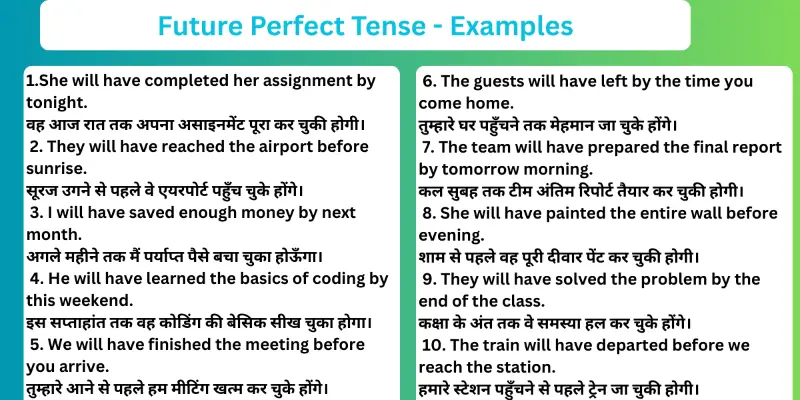
1. I will have arranged all the books by tomorrow morning.
मैं कल सुबह तक सारी किताबें व्यवस्थित कर चुका होऊँगा।
2. She will have painted the balcony by next weekend.
वह अगले वीकेंड तक बालकनी पेंट कर चुकी होगी।
3. They will have replaced the old boards by evening.
वे शाम तक पुराने बोर्ड बदल चुके होंगे।
4. You will have saved enough money by the end of this year.
तुम इस साल के अंत तक पर्याप्त पैसा बचा चुके होगे।
5. He will have ironed all the clothes by tonight.
वह आज रात तक सारे कपड़े प्रेस कर चुका होगा।
6. We will have cleared the backyard before you return.
तुम्हारे लौटने से पहले हम पिछवाड़ा साफ कर चुके होंगे।
7. The teacher will have checked all notebooks by Monday.
शिक्षक सोमवार तक सभी कॉपी जाँच चुके होंगे।
8. She will have created a new design by next Friday.
वह अगले शुक्रवार तक नया डिज़ाइन बना चुकी होगी।
9. I will have downloaded all required files by lunchtime.
मैं लंच टाइम तक सभी ज़रूरी फाइलें डाउनलोड कर चुका होऊँगा।
10. They will have built the wooden fence by winter.
वे सर्दियों तक लकड़ी की बाड़ बना चुके होंगे।
11. You will have cleaned the aquarium by tomorrow.
तुम कल तक एक्वेरियम साफ कर चुके होगे।
12. He will have solved the entire worksheet by evening.
वह शाम तक पूरी वर्कशीट हल कर चुका होगा।
13. We will have organised the event plan by next week.
हम अगले हफ्ते तक कार्यक्रम की योजना बना चुके होंगे।
14. She will have recorded the audio lesson by tonight.
वह आज रात तक ऑडियो लेसन रिकॉर्ड कर चुकी होगी।
15. I will have rearranged my study table by afternoon.
मैं दोपहर तक अपनी स्टडी टेबल दुबारा सेट कर चुका होऊँगा।
16. They will have fixed the computer system by tomorrow.
वे कल तक कंप्यूटर सिस्टम ठीक कर चुके होंगे।
17. You will have learned the basic rules by next class.
तुम अगली क्लास तक बुनियादी नियम सीख चुके होगे।
18. He will have planted all the new saplings by evening.
वह शाम तक सभी नए पौधे लगा चुका होगा।
19. She will have decorated the notice board by Monday.
वह सोमवार तक नोटिस बोर्ड सजा चुकी होगी।
20. We will have prepared the entire presentation by tomorrow morning.
हम कल सुबह तक पूरी प्रेज़ेंटेशन तैयार कर चुके होंगे।
21. I will have completed the registration process by next evening.
मैं अगली शाम तक रजिस्ट्रेशन प्रक्रिया पूरी कर चुका होऊँगा।
22. They will have repaired the bicycle before the rain starts.
बारिश शुरू होने से पहले वे साइकिल ठीक कर चुके होंगे।
23. You will have set up the camera by the start of the program.
तुम कार्यक्रम शुरू होने तक कैमरा सेट कर चुके होगे।
24. She will have organised her wardrobe by Sunday.
वह रविवार तक अपनी अलमारी व्यवस्थित कर चुकी होगी।
25. He will have written all the invitations by night.
वह रात तक सभी निमंत्रण कार्ड लिख चुका होगा।
26. We will have finished the group discussion by noon.
हम दोपहर तक समूह चर्चा पूरी कर चुके होंगे।
27. They will have uploaded the new video by next morning.
वे कल सुबह तक नया वीडियो अपलोड कर चुके होंगे।
28. She will have printed the worksheets by afternoon.
वह दोपहर तक वर्कशीट प्रिंट कर चुकी होगी।
29. I will have updated my mobile apps by tonight.
मैं आज रात तक अपने मोबाइल ऐप अपडेट कर चुका होऊँगा।
30. You will have polished the shoes by tomorrow evening.
तुम कल शाम तक जूते पॉलिश कर चुके होगे।
Read Tense and There Types
• Tense
• Present Tense
• Present Indefinite Tense • Present continuous tense
• Present Perfect Tense • Present Perfect Continuous Tense
• Past Tense
• Past Indefinite Tense • Past continuous tense
• Past Perfect Tense • Past Perfect Continuous Tense
• Future Tense
• Future Indefinite Tense
• future continuous tense • Future Perfect Tense
• Future Perfect Continuous Tense