Present Indefinite Tense (साधारण वर्तमान काल)
Definition -
Present Indefinite Tense is the tense that expresses a habitual action, a universal truth, a fact, or an action that happens regularly in the present time.
It is also used to describe general truths, feelings, and actions that are repeated or happen daily.
It tells what happens usually or regularly.
परिभाषा -
Present Indefinite Tense - साधारण वर्तमान काल उस कार्य को दर्शाता है जो नियमित रूप से होता है, सत्य होता है या आदत के रूप में किया जाता है।
यह काल किसी सामान्य सत्य, आदत, या दैनिक कार्य को व्यक्त करने के लिए प्रयोग किया जाता है।
यह काल बताता है कि क्या होता है या रोज़ क्या किया जाता है।
इन वाक्यों के अंत में ता है, ती है, ते है, ता हूँ आदि शब्द आते हैं।
Present Indefinite Tense को Simple Present Tense भी कहा जाता है।
यह उन कार्यों के लिए प्रयोग किया जाता है जो —
• बार-बार होते हैं,
• आदतन किए जाते हैं,
• या हमेशा सत्य रहते हैं।
इसमें क्रिया का मूल रूप (V₁) प्रयोग किया जाता है।
लेकिन, यदि कर्ता (Subject) एकवचन (He, She, It या किसी एक व्यक्ति/वस्तु का नाम) हो,
तो क्रिया के अंत में “s” या “es” लगाया जाता है।
Examples :
1. I play football.
मैं फुटबॉल खेलता हूँ।
2. She reads a book.
वह किताब पढ़ती है।
3. They go to school.
वे स्कूल जाते हैं।
4. He writes a letter.
वह एक पत्र लिखता है।
5. We watch TV.
हम टीवी देखते हैं।
Rules Of Present Indefinite Tense:
1. Present Indefinite Tense में Positive Sentences में helping verb Do/Does का प्रयोग नहीं किया जाता लेकिन Negative and Interrogative Sentences के साथ Do/Does का प्रयोग किया जाता है।
2. Do” का प्रयोग I, We, You, They के साथ किया जाता है,
3. जबकि “Does” का प्रयोग He, She, It या किसी एकवचन नाम के साथ किया जाता है।
4. यदि कर्ता (Subject) एकवचन (He, She, It या किसी एक व्यक्ति का नाम) है, तो क्रिया के साथ s या es लगाया जाता है।
5. यदि कर्ता बहुवचन (I, We, You, They) है, तो क्रिया का मूल रूप ही प्रयोग होता है।
6. Rules for Adding “s” or “es” to Verbs:
1. यदि क्रिया o, sh, ch, ss, x, z पर समाप्त होती है “es” लगाते हैं।
• go → goes
• wash → washes
• teach → teaches
• fix → fixes
• buzz → buzzes
2. यदि क्रिया व्यंजन + y पर समाप्त होती है → “y” को “ies” में बदलते हैं।
• study → studies
• fly → flies
3. अन्य सभी मामलों में केवल “s” लगाते हैं।
• read → reads
• write → writes
• eat → eats
अब आपको नीचे Present Indefinite Tense वाक्य द्वारा सकारात्मक, नकारात्मक, प्रश्नवाचक Etc. सभी उदाहरणों के द्वारा समझाया गया है। सभी वाक्यों को उनके स्ट्रक्चर के द्वारा समझे तथा सीखें।
Read Also
• Present Tense
• Present Indefinite Tense • Present Continuous Tense
• Present Perfect Tense • Present Perfect Continuous Tense
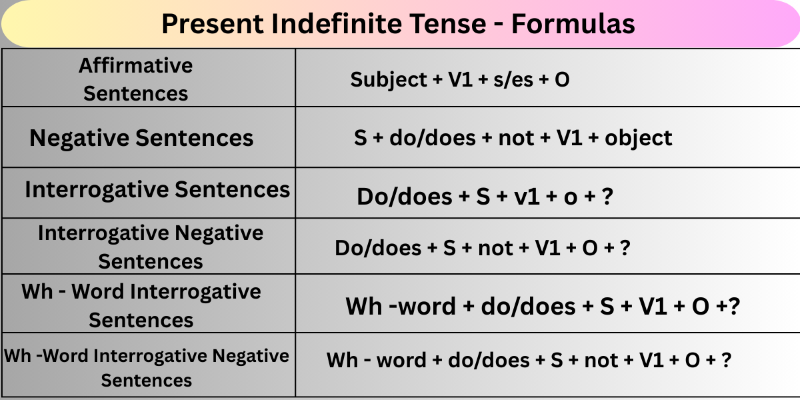
1. Affirmative Sentences of Present Indefinite Tense (सकारात्मक वाक्य)
Rules:
यह काल उन कार्यों को दर्शाता है जो आदतन, सदैव, या नियमित रूप से होते हैं।
• इसमें सहायक क्रिया (helping verb) का प्रयोग नहीं होता, केवल मुख्य क्रिया (main verb) का प्रयोग होता है।
• Singular subject के साथ “s/es” जोड़ना आवश्यक है।
• Hindi translation में वाक्य के अंत में प्रायः ता है / ती है / ते हैं आता है।
फॉर्मूला को ध्यान में रखते हुए नीचे दिए गए उदाहरण को ध्यान से पढ़ें और सीखें तभी आपको अंग्रेजी से हिंदी अनुवाद करना आएगा।
Examples:
1. I go to school every day.
मैं रोज़ स्कूल जाता हूँ।
2. She sings beautifully.
वह सुरीले ढंग से गाती है।
3. They play cricket on Sundays.
वे रविवार को क्रिकेट खेलते हैं।
4. He reads the newspaper daily.
वह रोज़ अखबार पढ़ता है।
5. You speak English well.
तुम अंग्रेज़ी अच्छी बोलते हो।
6. We work hard to succeed.
हम सफल होने के लिए मेहनत करते हैं।
7. The sun rises in the east.
सूरज पूर्व दिशा में उगता है।
8. My father drives a car.
मेरे पिता कार चलाते हैं।
9. I like cold coffee.
मुझे ठंडी कॉफी पसंद है।
10. She teaches in a school.
वह एक स्कूल में पढ़ाती है।
11. They watch TV in the evening.
वे शाम को टीवी देखते हैं।
12. He writes a letter.
वह एक पत्र लिखता है।
13. I help my mother in the kitchen.
मैं रसोई में अपनी माँ की मदद करता हूँ।
14. We celebrate festivals together.
हम त्योहार साथ में मनाते हैं।
15. You run fast.
तुम तेज़ दौड़ते हो।
16. Birds fly in the sky.
पक्षी आसमान में उड़ते हैं।
17. The earth revolves around the sun.
पृथ्वी सूर्य के चारों ओर घूमती है।
18. She loves music.
वह संगीत से प्रेम करती है।
19. My brother studies in class ten.
मेरा भाई दसवीं कक्षा में पढ़ता है।
20. I take breakfast at 8 o’clock.
मैं आठ बजे नाश्ता करता हूँ।
21. We visit our grandparents every year.
हम हर साल अपने दादा-दादी से मिलने जाते हैं।
22. He washes his clothes himself.
वह अपने कपड़े खुद धोता है।
23. They live in Delhi.
वे दिल्ली में रहते हैं।
24. She dances gracefully.
वह सुंदरता से नृत्य करती है।
25. I believe in honesty.
मैं ईमानदारी में विश्वास करता हूँ।
26. You always tell the truth.
तुम हमेशा सच बोलते हो।
27. The baby cries at night.
बच्चा रात में रोता है।
28. My mother cooks delicious food.
मेरी माँ स्वादिष्ट खाना बनाती है।
29. Students obey their teachers.
विद्यार्थी अपने शिक्षकों की बात मानते हैं।
30. He watches cartoons every morning.
वह हर सुबह कार्टून देखता है।
Read Also
• Affirmative Sentence • Use of Had
• Active & Passive Voice • Gender
• Use of Has & Have • Use of Use of Is/am/are
2. Negative Sentences of Present Indefinite Tense (नकारात्मक वाक्य)
Present Indefinite Tense (Negative Sentences) का प्रयोग तब किया जाता है जब किसी कार्य के न होने को बताया जाता है।
इन वाक्यों में सहायक क्रिया “do” या “does” का प्रयोग मुख्य क्रिया से पहले किया जाता है।
मुख्य क्रिया हमेशा अपने मूल रूप (V₁) में रहती है।
Rules (नियम):
1. Helping Verb “Do” or “Does” का प्रयोग किया जाता है।
• “Do” → I, We, You, They के साथ
• “Does” → He, She, It, या किसी एकवचन नाम के साथ
2. Main Verb (मुख्य क्रिया) हमेशा अपने base form (V₁) में रहती है।
• “He does not play”
3. Hindi वाक्य के अंत में प्रायः “ता नहीं है / ती नहीं है / ते नहीं हैं” आता है।
4. Short Forms (संक्षिप्त रूप):
• do not - don’t
• does not - doesn’t
उपरोक्त फॉर्मूला को देखते हुए नीचे दिए गए सभी उदाहरणों को ध्यान से पढ़ें और सीखें।
Example:
1. I do not play cricket.
मैं क्रिकेट नहीं खेलता हूँ।
2. He does not read books.
वह किताबें नहीं पढ़ता है।
3. She does not sing songs.
वह गाने नहीं गाती है।
4. We do not watch TV.
हम टीवी नहीं देखते हैं।
5. They do not go to school.
वे स्कूल नहीं जाते हैं।
6. You do not tell a lie.
तुम झूठ नहीं बोलते हो।
7. It does not rain here.
यहाँ बारिश नहीं होती है।
8. My father does not smoke.
मेरे पिता धूम्रपान नहीं करते हैं।
9. I do not eat junk food.
मैं जंक फूड नहीं खाता हूँ।
10. She does not cook food.
वह खाना नहीं बनाती है।
11. He does not drive a car.
वह कार नहीं चलाता है।
12. They do not help others.
वे दूसरों की मदद नहीं करते हैं।
13. We do not play football.
हम फुटबॉल नहीं खेलते हैं।
14. You do not go to market.
तुम बाजार नहीं जाते हो।
15. I do not like milk.
मुझे दूध पसंद नहीं है।
16. She does not wear jeans.
वह जीन्स नहीं पहनती है।
17. He does not write letters.
वह पत्र नहीं लिखता है।
18. They do not dance well.
वे अच्छा नृत्य नहीं करते हैं।
19. I do not get up early.
मैं जल्दी नहीं उठता हूँ।
20. My mother does not work in office.
मेरी माँ ऑफिस में काम नहीं करती है।
21. He does not know the truth.
वह सच्चाई नहीं जानता है।
22. We do not speak loudly.
हम ज़ोर से नहीं बोलते हैं।
23. You do not study properly.
तुम ठीक से पढ़ाई नहीं करते हो।
24. The sun does not rise in the west.
सूरज पश्चिम में नहीं उगता है।
25. She does not go to college.
वह कॉलेज नहीं जाती है।
26. I do not use social media much.
मैं सोशल मीडिया ज़्यादा इस्तेमाल नहीं करता हूँ।
27. They do not drink tea.
वे चाय नहीं पीते हैं।
28. He does not play guitar.
वह गिटार नहीं बजाता है।
29. We do not waste time.
हम समय बर्बाद नहीं करते हैं।
30. You do not eat meat.
तुम मांस नहीं खाते हो।
Read Also
• Sentence Structure • Negative Sentence
• Singular & Plural Number • Articles
• Use of Do & Does • Use of Had
3. Interrogative Sentences of Present Indefinite Tense (प्रश्नवाचक वाक्य)
Yes – No Types Questions
जब हमें किसी के कार्य या आदत के बारे में प्रश्न पूछना हो, तो Present Indefinite Tense के Interrogative form का प्रयोग किया जाता है।
वाक्य की शुरुआत में “Do” या “Does” आता है, फिर Subject, और फिर Verb का base form।
Rules (नियम):
1. प्रश्नवाचक वाक्यों में हमेशा Do या Does वाक्य के शुरुआत में आता है।
2. मुख्य क्रिया (Verb) हमेशा अपने मूल रूप (V₁) में रहती है।
3. Do का प्रयोग – I, We, You, They के साथ।
4. Does का प्रयोग – He, She, It, या एकवचन नाम के साथ।
5. ऐसे वाक्यों के अंत में “?” (question mark) लगाया जाता है।
6. “Does” के साथ कभी भी s/es क्रिया में नहीं लगाया जाता।
(क्योंकि “does” पहले से singular दर्शाता है)
उपरोक्त फॉर्मूला को ध्यान में रखते हुए नीचे दिए गए प्रश्न वाचक वाक्य को ध्यान से पढ़ें और सीखें, जिससे आपको प्रश्नवाचक वाक्य बनाने में आसानी होगी।
Examples:
1. Do you play cricket?
क्या तुम क्रिकेट खेलते हो?
2. Does he read books?
क्या वह किताबें पढ़ता है?
3. Do they go to school?
क्या वे स्कूल जाते हैं?
4. Does she sing well?
क्या वह अच्छा गाती है?
5. Do I look fine?
क्या मैं ठीक दिखता हूँ?
6. Does it rain here?
क्या यहाँ बारिश होती है?
7. Do we study daily?
क्या हम रोज़ पढ़ाई करते हैं?
8. Does your brother play football?
क्या तुम्हारा भाई फुटबॉल खेलता है?
9. Do you like coffee?
क्या तुम्हें कॉफी पसंद है?
10. Does she help you?
क्या वह तुम्हारी मदद करती है?
11. Do they speak English?
क्या वे अंग्रेज़ी बोलते हैं?
12. Does he drive a car?
क्या वह कार चलाता है?
13. Do you know the answer?
क्या तुम उत्तर जानते हो?
14. Does your father work in an office?
क्या तुम्हारे पिता ऑफिस में काम करते हैं?
15. Do students obey teachers?
क्या विद्यार्थी शिक्षकों की बात मानते हैं?
16. Does she live in Delhi?
क्या वह दिल्ली में रहती है?
17. Do birds fly in the sky?
क्या पक्षी आसमान में उड़ते हैं?
18. Does he watch TV?
क्या वह टीवी देखता है?
19. Do you believe in God?
क्या तुम भगवान में विश्वास करते हो?
20. Does it hurt you?
क्या यह तुम्हें दर्द देता है?
21. Do we play in the park?
क्या हम पार्क में खेलते हैं?
22. Does she love music?
क्या वह संगीत से प्रेम करती है?
23. Do they eat rice daily?
क्या वे रोज़ चावल खाते हैं?
24. Does your friend come here?
क्या तुम्हारा दोस्त यहाँ आता है?
25. Do you understand me?
क्या तुम मुझे समझते हो?
26. Does he study in class ten?
क्या वह दसवीं कक्षा में पढ़ता है?
27. Do we help the poor?
क्या हम गरीबों की मदद करते हैं?
28. Does she dance beautifully?
क्या वह सुंदरता से नृत्य करती है?
29. Do you wake up early?
क्या तुम जल्दी उठते हो?
30. Does he work hard?
क्या वह मेहनत करता है?
Read Also
• Parts of Sentence • Interrogative Sentence
• Use of These & Those • Use of This & That
• Use of Was & Were • Noun
4. Interrogative Sentences of Present Indefinite Tense (प्रश्नवाचक नकारात्मक वाक्य)
जब हम किसी की आदत या कार्य को लेकर नकारात्मक सवाल करते हैं,
तो Interrogative Negative Sentences का प्रयोग होता है।
Rules (नियम):
1. “Do” का प्रयोग – I, We, You, They के साथ किया जाता है।
2. “Does” का प्रयोग – He, She, It या Singular name के साथ होता है।
3. “Not” हमेशा Subject के बाद आता है।
4. Verb हमेशा अपने मूल रूप V₁ में रहती है।
5. वाक्य के अंत में हमेशा “?” (प्रश्नचिह्न) आता है।
6. “Does” के साथ कभी s/es नहीं जोड़ा जाता।
उपरोक्त फॉर्मूला को देखते हुए प्रश्न वाचक नकारात्मक वाक्यों के उदाहरण नीचे दिए गए हैं, जिन्हें ध्यान से पढ़ें और सीखें।
Examples:
1. I do not eat junk food.
मैं जंक फूड नहीं खाता हूँ।
2. He does not play football.
वह फुटबॉल नहीं खेलता है।
3. They do not go to the market.
वे बाज़ार नहीं जाते हैं।
4. She does not like coffee.
उसे कॉफी पसंद नहीं है।
5. We do not watch TV at night.
हम रात में टीवी नहीं देखते हैं।
6. You do not come here every day.
तुम यहाँ रोज़ नहीं आते हो।
7. It does not rain in summer.
गर्मियों में बारिश नहीं होती है।
8. My father does not smoke.
मेरे पिता धूम्रपान नहीं करते हैं।
9. Birds do not fly at night.
पक्षी रात में नहीं उड़ते हैं।
10. The sun does not rise in the west.
सूरज पश्चिम से नहीं निकलता।
11. I do not study after dinner.
मैं रात के खाने के बाद पढ़ाई नहीं करता।
12. He does not go to school by bus.
वह बस से स्कूल नहीं जाता है।
13. We do not play in the rain.
हम बारिश में नहीं खेलते हैं।
14. She does not sing loudly.
वह ज़ोर से नहीं गाती है।
15. They do not believe in lies.
वे झूठ पर विश्वास नहीं करते हैं।
16. You do not help your friends.
तुम अपने दोस्तों की मदद नहीं करते हो।
17. It does not bark at strangers.
यह अजनबियों पर नहीं भौंकता।
18. My brother does not eat sweets.
मेरा भाई मिठाई नहीं खाता है।
19. Students do not talk in class.
विद्यार्थी कक्षा में बात नहीं करते हैं।
20. The baby does not sleep early.
बच्चा जल्दी नहीं सोता है।
21. I do not drink cold water.
मैं ठंडा पानी नहीं पीता हूँ।
22. She does not read newspapers.
वह अख़बार नहीं पढ़ती है।
23. They do not waste time.
वे समय बर्बाद नहीं करते हैं।
24. We do not visit that park.
हम उस पार्क में नहीं जाते हैं।
25. He does not wear formal clothes.
वह फॉर्मल कपड़े नहीं पहनता है।
26. You do not listen to me.
तुम मेरी बात नहीं सुनते हो।
27. The cat does not eat bread.
बिल्ली रोटी नहीं खाती है।
28. She does not dance well.
वह अच्छा नृत्य नहीं करती है।
29. I do not open the window in winter.
मैं सर्दियों में खिड़की नहीं खोलता हूँ।
30. They do not study on Sundays.
वे रविवार को पढ़ाई नहीं करते हैं।
Read Also
• Parts of Sentence • Conditional Sentence
• Model Verb • Use of Can & Could
• Use of Dare • Use of May & Might
5. Wh – Type Interrogative Sentences (Wh – Type प्रश्नवाचक वाक्य)
Wh-word Interrogative Sentences are those questions that begin with Wh-family words like What, Where, When, Who, Why, Which, Whose, Whom, How, etc.
In Present Indefinite Tense, such sentences are used to ask about daily actions, general truths, or repeated activities.
They always use Do/Does as helping verbs, except when “who” or “what” itself is the subject.
Wh-word वाले प्रश्नवाचक वाक्य वे वाक्य होते हैं जिनकी शुरुआत Wh-family के शब्दों जैसे — What, Where, When, Who, Why, Which, Whose, How आदि से होती है।
Present Indefinite Tense में इनका प्रयोग दैनिक क्रियाओं, सामान्य तथ्यों या आदतों के बारे में पूछने के लिए किया जाता है।
इन वाक्यों में Do या Does का प्रयोग सहायक क्रिया के रूप में होता है,
लेकिन अगर Who / What स्वयं Subject हों, तो Do/Does नहीं लगाया जाता।
Wh – Words List :
| Wh – Word |
Hindi Meaning |
| What |
क्या |
| Where |
कहाँ |
| When |
कब |
| Who |
कौन |
| Whose |
किसका |
| Whom |
किसे |
| Why |
क्यों |
| Which |
कौन-सा |
| How |
कैसे |
| How many |
कितने |
| How much |
कितना |
Rules (नियम):
1. अगर Wh-word Subject नहीं है, तो Do/Does का प्रयोग होता है।
2. Do → I, We, You, They के साथ।
3. Does → He, She, It, या Singular नाम के साथ।
4. अगर Wh-word Subject है, तो Do/Does नहीं लगाया जाता।
5. Verb हमेशा मूल रूप (V₁) में रहती है।
6. वाक्य के अंत में हमेशा “?” लगता है।
7. हिंदी वाक्यों की शुरुआत Wh-word के हिंदी रूप (क्या, कहाँ, कब, कौन, क्यों आदि) से होती है।
उपयुक्त दिए गए फॉर्मूला द्वारा नीचे दिए गए वाक्यों को ध्यान से पढ़िए तथा समझिए।
Examples:
1. What do you eat?
तुम क्या खाते हो?
2. Where do you live?
तुम कहाँ रहते हो?
3. When do you get up?
तुम कब उठते हो?
4. Who teaches you English?
तुम्हें अंग्रेज़ी कौन पढ़ाता है?
5. Why do you cry?
तुम रोते क्यों हो?
6. Which book do you read?
तुम कौन-सी किताब पढ़ते हो?
7. Whose pen do you use?
तुम किसका पेन इस्तेमाल करते हो?
8. Whom do you love?
तुम किससे प्रेम करते हो?
9. How do you go to school?
तुम स्कूल कैसे जाते हो?
10. How many friends do you have?
तुम्हारे कितने दोस्त हैं?
11. How much water do you drink?
तुम कितना पानी पीते हो?
12. What does he want?
वह क्या चाहता है?
13. Where does she work?
वह कहाँ काम करती है?
14. When does he play cricket?
वह क्रिकेट कब खेलता है?
15. Why does she laugh?
वह हँसती क्यों है?
16. Which movie does he like?
उसे कौन-सी फ़िल्म पसंद है?
17. Whose bag does she carry?
वह किसका बैग उठाती है?
18. Whom does he call?
वह किसे फोन करता है?
19. How does she cook food?
वह खाना कैसे बनाती है?
20. What makes you happy?
तुम्हें क्या खुश करता है?
21. Who helps you?
तुम्हारी मदद कौन करता है?
22. Who plays the guitar?
गिटार कौन बजाता है?
23. What causes noise here?
यहाँ शोर किससे होता है?
24. Who opens the door?
दरवाज़ा कौन खोलता है?
25. When do you study English?
तुम अंग्रेज़ी कब पढ़ते हो?
26. Why do they come late?
वे देर से क्यों आते हैं?
27. Where does your father work?
तुम्हारे पिता कहाँ काम करते हैं?
28. Which subject do you like most?
तुम्हें कौन-सा विषय सबसे ज़्यादा पसंद है?
29. How do they play cricket?
वे क्रिकेट कैसे खेलते हैं?
30. Who cleans this room?
यह कमरा कौन साफ करता है?
Read Also
• Exclamatory Sentence • Imperative Sentence
• Use of Must & Ought • Use of Shall & Will
• Use of Should & Would • Use of Used to
6. Wh – Word Interrogative Negative Sentences ( Wh- Word प्रश्नवाचक नकारात्मक वाक्य)
WH-word interrogative negative sentences are those questions in the Present Indefinite Tense that use WH-words (like what, why, where, who, etc.) along with the negative form of “do/does” to ask something that does not happen or exist.
WH-word interrogative negative sentences वे वाक्य होते हैं जिनमें “WH-words” (जैसे — What, Why, Where, Who, When, How आदि) और “do/does not” का प्रयोग किया जाता है ताकि किसी ऐसे कार्य या स्थिति के बारे में प्रश्न पूछा जा सके जो नहीं होती है।
Rules:
1. WH-word हमेशा वाक्य की शुरुआत में आता है।
2. “Do/Does not” हमेशा subject के बाद आता है।
3. Verb हमेशा first form (V₁) में होता है।
4. Singular subjects (he, she, it) के साथ does not आता है।
5. Plural subjects (I, we, you, they) के साथ do not आता है।
6. ऐसे वाक्यों में “?” प्रश्न चिन्ह लगाना आवश्यक होता है।
उपरोक्त दिए गए फॉर्मूला द्वारा नीचे दिए गए वाक्यों को ध्यान से यह पड़े ताकि आप अंग्रेजी से हिंदी अनुवाद करना सीख पाए।
Examples:
1. Why do you not go to school?
तुम स्कूल क्यों नहीं जाते हो?
2. Why does he not help his parents?
वह अपने माता-पिता की मदद क्यों नहीं करता है?
3. Where do they not play in the evening?
वे शाम को कहाँ नहीं खेलते हैं?
4. When do you not study at night?
तुम रात में कब नहीं पढ़ते हो?
5. What do you not like to eat?
तुम्हें क्या खाना पसंद नहीं है?
6. Who does not come to the party?
पार्टी में कौन नहीं आता है?
7. Why does she not sing in the function?
वह समारोह में गाना क्यों नहीं गाती है?
8. Where does it not rain in India?
भारत में कहाँ बारिश नहीं होती है?
9. How do you not know this answer?
तुम्हें यह उत्तर कैसे नहीं पता?
10. When does he not watch TV?
वह टीवी कब नहीं देखता है?
11. What do they not understand in class?
वे कक्षा में क्या नहीं समझते हैं?
12. Why do we not play together?
हम साथ में क्यों नहीं खेलते हैं?
13. Who does not work in this office?
इस दफ्तर में कौन काम नहीं करता है?
14. Where do you not visit on weekends?
तुम सप्ताहांत में कहाँ नहीं जाते हो?
15. How does your brother not wake up early?
तुम्हारा भाई जल्दी कैसे नहीं उठता है?
16. What do students not do in exams?
विद्यार्थी परीक्षा में क्या नहीं करते हैं?
17. Why does your friend not talk to you?
तुम्हारा दोस्त तुमसे बात क्यों नहीं करता है?
18. Who does not respect elders?
बुजुर्गों का सम्मान कौन नहीं करता है?
19. When do you not meet your cousins?
तुम अपने चचेरे भाइयों से कब नहीं मिलते हो?
20. Why do you not attend the meeting?
तुम बैठक में शामिल क्यों नहीं होते हो?
21. What does she not buy from the market?
वह बाज़ार से क्या नहीं खरीदती है?
22. Where does he not work on Sundays?
वह रविवार को कहाँ काम नहीं करता है?
23. How do they not know the rules?
उन्हें नियम कैसे नहीं पता हैं?
24. Why does it not move properly?
यह ठीक से क्यों नहीं चलता है?
25. What do you not teach your students?
तुम अपने छात्रों को क्या नहीं सिखाते हो?
26. When do birds not sing?
पक्षी कब नहीं गाते हैं?
27. Why does your sister not cook food?
तुम्हारी बहन खाना क्यों नहीं बनाती है?
28. Where do children not play safely?
बच्चे कहाँ सुरक्षित रूप से नहीं खेलते हैं?
29. Who does not believe in truth?
सच्चाई पर कौन विश्वास नहीं करता है?
30. What do you not write in your diary?
तुम अपनी डायरी में क्या नहीं लिखते हो?
Uses of Present Indefinite tense and Examples in English and Hindi
(साधारण वर्तमान काल के प्रयोग)
Present Indefinite Tense का प्रयोग निम्नलिखित बातें प्रकट करने के लिए किया जाता है नीचे दिए गए सभी प्रयोग को ध्यान से पढ़ें तथा उनके साथ - साथ उनके उदाहरणों को भी पढ़े और समझे।
1. To express Habitual or Regular Actions
(आदतन या नियमित कार्यों को व्यक्त करने के लिए)
Definition:
We use the Present Indefinite Tense to describe actions that happen regularly or habitually.
हम इस काल का प्रयोग उन कार्यों के लिए करते हैं जो नियमित रूप से या आदतन किए जाते हैं।
Examples:
1. I wake up early every morning.
मैं हर सुबह जल्दी उठता हूँ।
2. She drinks tea every day.
वह रोज़ चाय पीती है।
3. They play cricket in the evening.
वे शाम को क्रिकेट खेलते हैं।
4. My brother goes to college daily.
मेरा भाई रोज़ कॉलेज जाता है।
5. We study together every night.
हम हर रात साथ में पढ़ाई करते हैं।
6. He brushes his teeth twice a day.
वह दिन में दो बार अपने दाँत साफ करता है।
2. To express Universal Truths or Facts
(सार्वभौमिक सत्य या वैज्ञानिक तथ्यों के लिए)
Definition:
This tense is used to express facts or truths that are always true and never change.
इस काल का प्रयोग उन बातों के लिए होता है जो हमेशा सत्य रहती हैं और कभी नहीं बदलतीं।
Examples:
1. The sun rises in the east.
सूरज पूर्व दिशा में निकलता है।
2. The earth revolves around the sun.
पृथ्वी सूर्य के चारों ओर घूमती है।
3. Water freezes at 0°C.
पानी 0°C पर जमता है।
4. Fire gives heat.
आग गर्मी देती है।
5. The moon shines at night.
चाँद रात में चमकता है।
6. The sky looks blue.
आसमान नीला दिखता है।
3. To express General Truths or Permanent Situations
(सामान्य सच्चाइयों या स्थायी स्थितियों को बताने के लिए)
Definition:
It is used to express things that are generally or permanently true.
इसका प्रयोग उन बातों के लिए किया जाता है जो हमेशा एक जैसी रहती हैं या स्थायी होती हैं।
Examples:
1. Honesty brings respect.
ईमानदारी सम्मान लाती है।
2. Time waits for no one.
समय किसी का इंतज़ार नहीं करता।
3. Money does not buy happiness.
पैसा खुशी नहीं खरीद सकता।
4. Hard work leads to success.
मेहनत सफलता की ओर ले जाती है।
5. Truth always wins.
सत्य हमेशा जीतता है।
6. Good deeds bring peace.
अच्छे कर्म शांति लाते हैं।
4. To express Feelings, Emotions, or Opinions
(भावनाएँ, राय या पसंद-नापसंद बताने के लिए)
Definition:
It is used to show likes, dislikes, emotions, and opinions.
इस काल का प्रयोग पसंद, नापसंद, भावनाएँ और विचारों को व्यक्त करने के लिए किया जाता है।
Examples:
1. I like mangoes.
मुझे आम पसंद हैं।
2. She hates noise.
उसे शोर से नफ़रत है।
3. We love our parents.
हम अपने माता-पिता से प्रेम करते हैं।
4. He believes in God.
वह भगवान पर विश्वास करता है।
5. They enjoy music.
उन्हें संगीत का आनंद आता है।
6. I prefer coffee to tea.
मैं चाय से ज़्यादा कॉफी पसंद करता हूँ।
5. To express Instructions or Directions
(निर्देश या दिशा बताने के लिए)
Definition:
It is used to give directions, instructions, or commands in a polite way.
इसका प्रयोग निर्देश देने, दिशा बताने, या आदेश देने के लिए किया जाता है।
Examples:
1. You open the door.
तुम दरवाज़ा खोलो।
2. First, read the question carefully.
पहले प्रश्न को ध्यान से पढ़ो।
3. Mix sugar with milk.
दूध में चीनी मिलाओ।
4. You turn left at the corner.
मोड़ पर बाएँ मुड़ो।
5. Go straight and stop near the school.
सीधे जाओ और स्कूल के पास रुक जाओ।
6. Close your books now.
अब अपनी किताबें बंद करो।
6. To express Future Events (Fixed or Scheduled)
(भविष्य की निश्चित या तय घटनाओं को बताने के लिए)
Definition:
It is used to express future actions that are fixed by schedule or timetable.
इसका प्रयोग उन भविष्य की घटनाओं के लिए होता है जो समय सारिणी या कार्यक्रम के अनुसार निश्चित होती हैं।
Examples:
1. The train leaves at 7 a.m.
ट्रेन सुबह 7 बजे चलती है।
2. The meeting starts at 10 o’clock.
बैठक 10 बजे शुरू होती है।
3. My exam begins next week.
मेरी परीक्षा अगले सप्ताह शुरू होती है।
4. The shop opens at 9 a.m.
दुकान सुबह 9 बजे खुलती है।
5. The bus arrives at 6 p.m.
बस शाम 6 बजे पहुँचती है।
6. The school reopens on Monday.
स्कूल सोमवार को फिर से खुलता है।
7. To express Proverbs or Sayings
(लोकोक्तियों या कहावतों को बताने के लिए)
Read Also
• Parts of Speech
• Noun • Pronoun
• Verb • Adverb
• Adjective • Conjunction
• Interjection • Preposition
Definition:
It is used in proverbs and sayings to express general truths or moral lessons.
इसका प्रयोग कहावतों या लोकोक्तियों में किया जाता है जो सामान्य सत्य या नैतिक शिक्षा देती हैं।
Examples:
1. Practice makes a man perfect.
अभ्यास मनुष्य को परिपूर्ण बनाता है।
2. Time heals all wounds.
समय हर घाव को भर देता है।
3. Hard work brings success.
मेहनत सफलता लाती है।
4. Honesty is the best policy.
ईमानदारी सबसे अच्छी नीति है।
5. Actions speak louder than words.
कर्म शब्दों से अधिक बोलते हैं।
6. God helps those who help themselves.
भगवान उनकी मदद करता है जो अपनी मदद करते हैं।
8. To express Commentary or Stage Directions
(कमेंट्री या मंच-निर्देशन में प्रयोग)
Definition:
Used in commentary or stage descriptions to make actions sound lively and real.
कमेंट्री या नाट्य वर्णन में कार्यों को जीवंत और वर्तमान दिखाने के लिए इसका प्रयोग किया जाता है।
Examples:
1. The hero enters the stage.
नायक मंच पर प्रवेश करता है।
2. She opens the window and smiles.
वह खिड़की खोलती है और मुस्कुराती है।
3. The batsman hits the ball hard.
बल्लेबाज़ गेंद को ज़ोर से मारता है।
4. The crowd cheers loudly.
भीड़ ज़ोर से जयकार करती है।
5. The player runs towards the goal.
खिलाड़ी गोल की ओर दौड़ता है।
6. The dancer moves gracefully.
नृत्यांगना सुंदरता से नृत्य करती है।
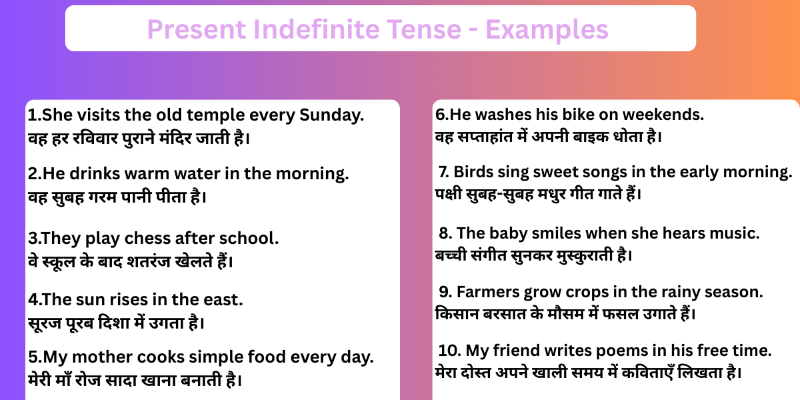
Present Indefinite Tense Examples English to Hindi
1. I read a book every night.
मैं हर रात एक किताब पढ़ता हूँ।
2. She sings beautifully.
वह बहुत सुंदर गाती है।
3. They visit the park on Sundays.
वे रविवार को पार्क जाते हैं।
4. He helps his mother in the kitchen.
वह अपनी माँ की रसोई में मदद करता है।
5. We celebrate every festival with joy.
हम हर त्योहार खुशी से मनाते हैं।
6. My father drives to office daily.
मेरे पिता रोज़ ऑफिस गाड़ी से जाते हैं।
7. The teacher explains the lesson clearly.
अध्यापक पाठ को स्पष्ट रूप से समझाते हैं।
8. Children play outside after school.
बच्चे स्कूल के बाद बाहर खेलते हैं।
9. I write in my diary every evening.
मैं हर शाम अपनी डायरी में लिखता हूँ।
10. Birds sing in the morning.
पक्षी सुबह गाते हैं।
11. She wears traditional clothes on festivals.
वह त्योहारों पर पारंपरिक कपड़े पहनती है।
12. We go for a walk every morning.
हम हर सुबह टहलने जाते हैं।
13. He watches news at night.
वह रात में समाचार देखता है।
14. The sun sets in the west.
सूरज पश्चिम में डूबता है।
15. My mother cooks tasty food.
मेरी माँ स्वादिष्ट खाना बनाती हैं।
16. I play the guitar in my free time.
मैं अपने खाली समय में गिटार बजाता हूँ।
17. They study hard for their exams.
वे अपनी परीक्षाओं के लिए मेहनत से पढ़ते हैं।
8. She teaches English at a school.
वह एक स्कूल में अंग्रेज़ी पढ़ाती है।
19. The train arrives on time.
ट्रेन समय पर पहुँचती है।
20. He walks to school every day.
वह हर दिन पैदल स्कूल जाता है।
21. We enjoy cold drinks in summer.
हम गर्मियों में ठंडे पेय का आनंद लेते हैं।
22. My sister paints beautiful pictures.
मेरी बहन सुंदर चित्र बनाती है।
23. Dogs bark at strangers.
कुत्ते अजनबियों पर भौंकते हैं।
24. The farmer works in the field.
किसान खेत में काम करता है।
25. I visit my grandparents once a month.
मैं महीने में एक बार अपने दादा-दादी से मिलने जाता हूँ।
26. He cleans his room every weekend.
वह हर सप्ताहांत अपना कमरा साफ करता है।
27. We drink water after meals.
हम भोजन के बाद पानी पीते हैं।
28. She writes letters to her friend.
वह अपने दोस्त को पत्र लिखती है।
29. They play football in the ground.
वे मैदान में फुटबॉल खेलते हैं।
30. The baby cries when she is hungry.
बच्ची भूख लगने पर रोती है।
Read Tense and There Types
• Tense
• Present Tense
• Present Indefinite Tense • Present continuous tense
• Present Perfect Tense • Present Perfect Continuous Tense
• Past Tense
• Past Indefinite Tense • Past continuous tense
• Past Perfect Tense • Past Perfect Continuous Tense
• Future Tense
• Future Indefinite Tense
• future continuous tense • Future Perfect Tense
• Future Perfect Continuous Tense