Class 12 Maths Chapter 9 – Differential Equations NCERT Solutions – FREE PDF Download |Hand – Written Notes
Chapter 9, Differential Equations, is one of the most important chapters of calculus in Class 12. This chapter explains how to form and solve equations involving derivatives. It connects differentiation and integration and shows how mathematics is used to study change in real-life situations.
This chapter has fixed question patterns, so with proper practice, students can score very well. At Edu Tehri, this chapter is explained with step-by-step methods, handwritten notes, solved NCERT exercises, and free PDFs.
What Is a Differential Equation?
A differential equation is an equation that contains:
• A function
• One or more of its derivatives
In simple words, it shows the relationship between a variable and its rate of change.
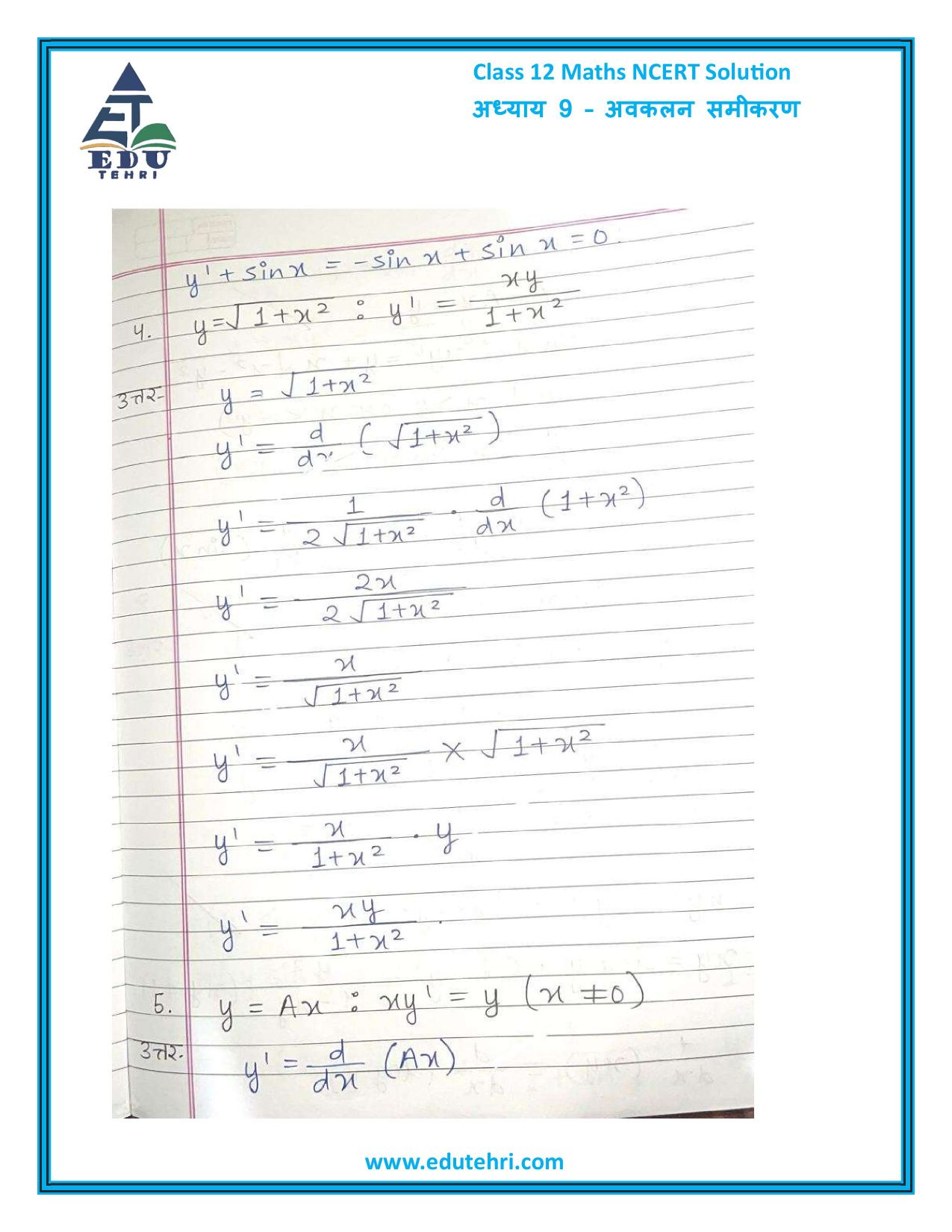
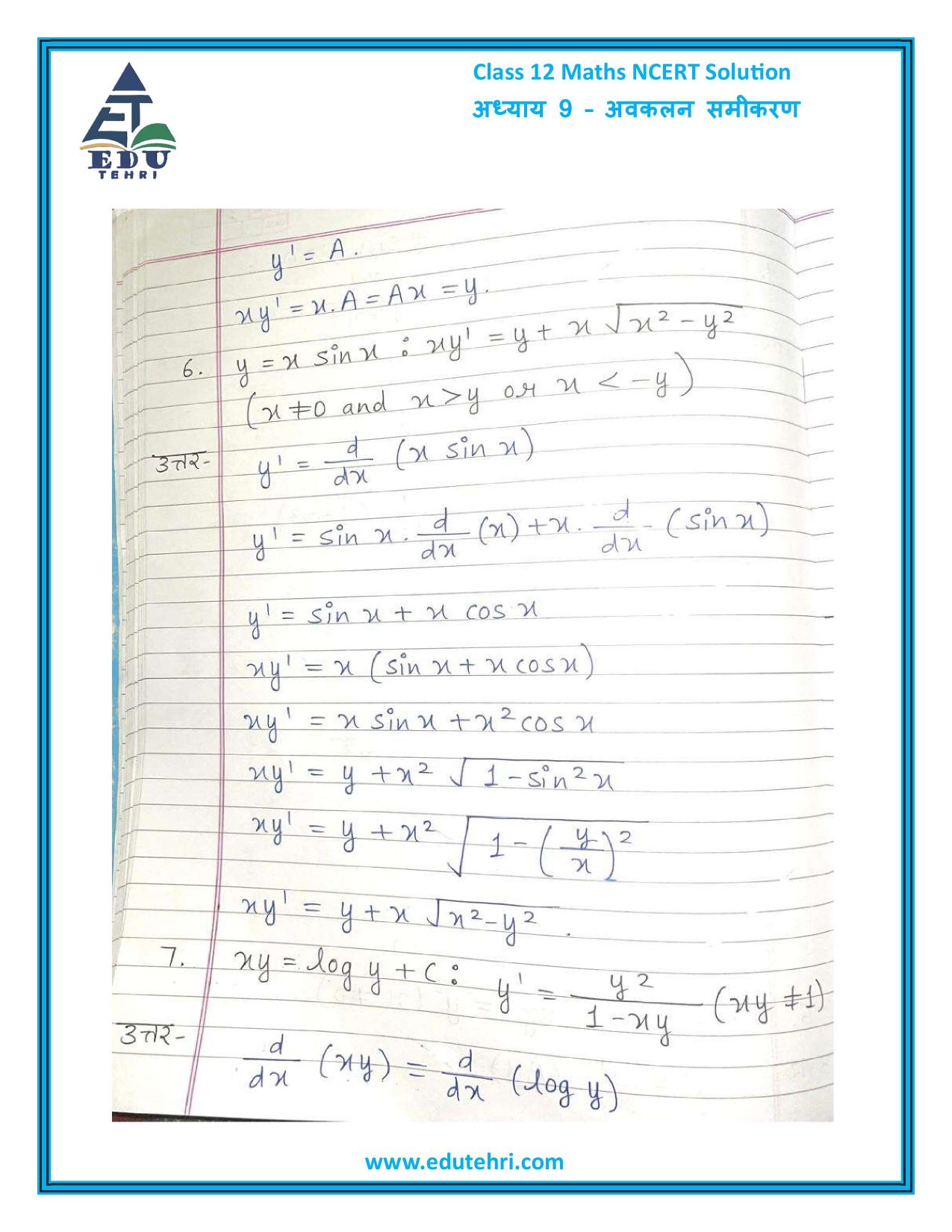
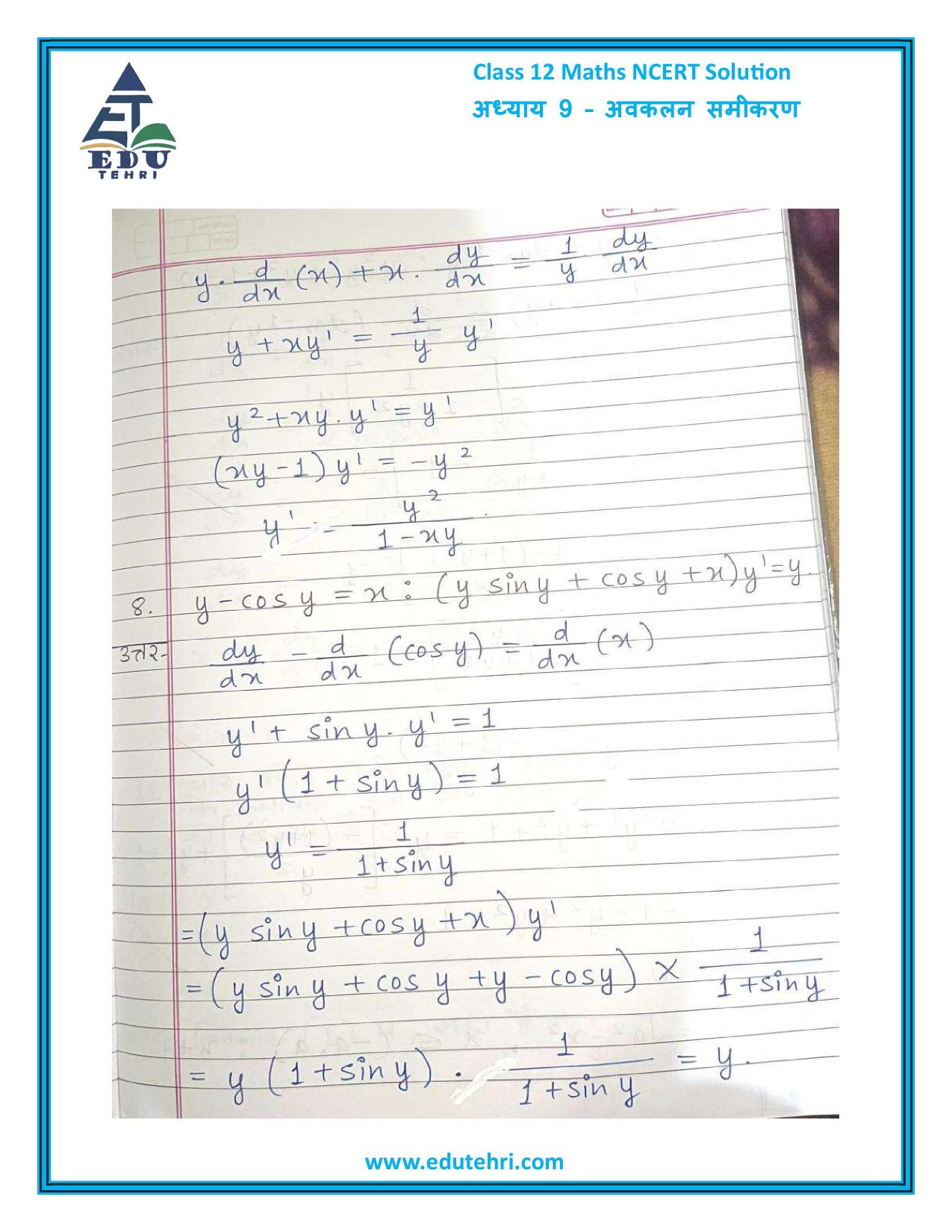
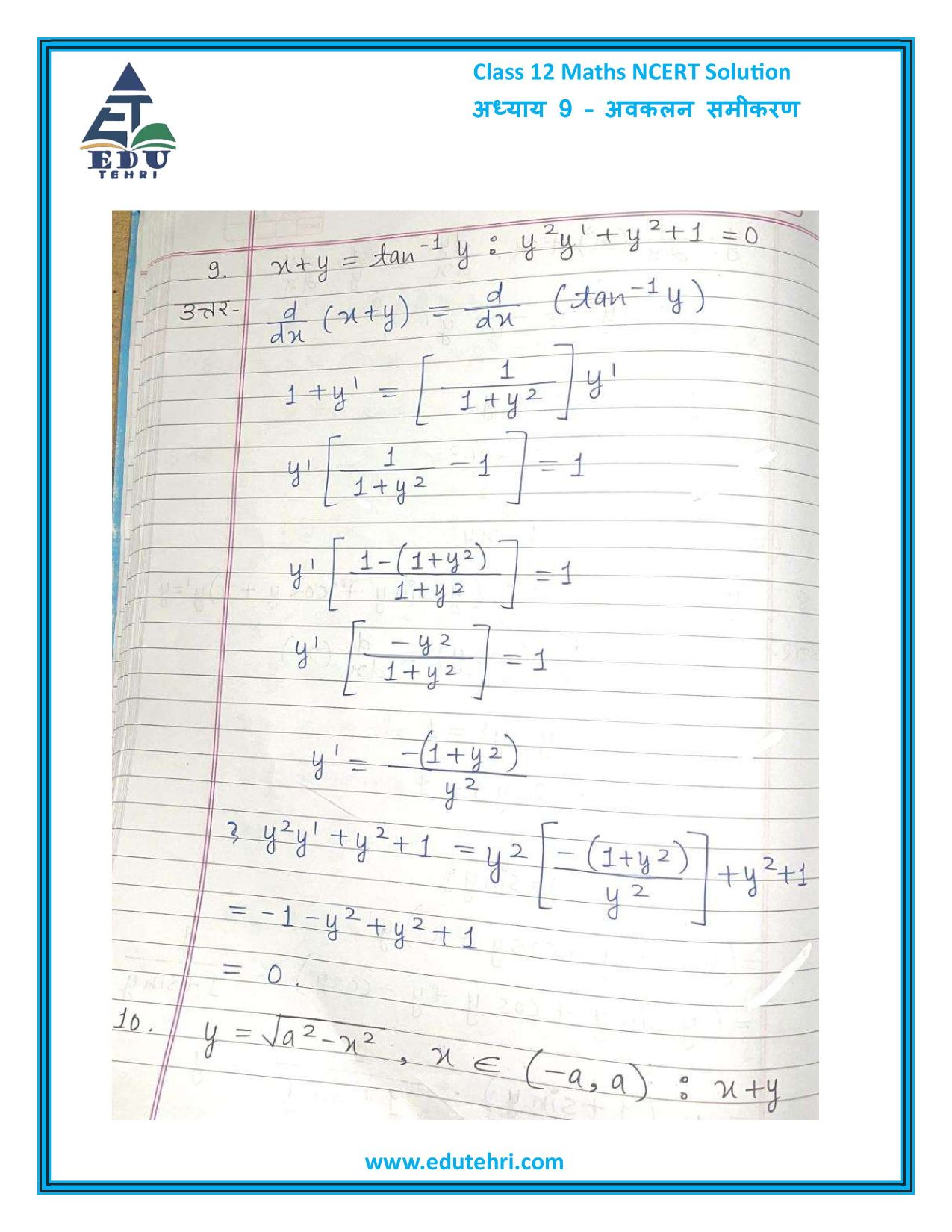
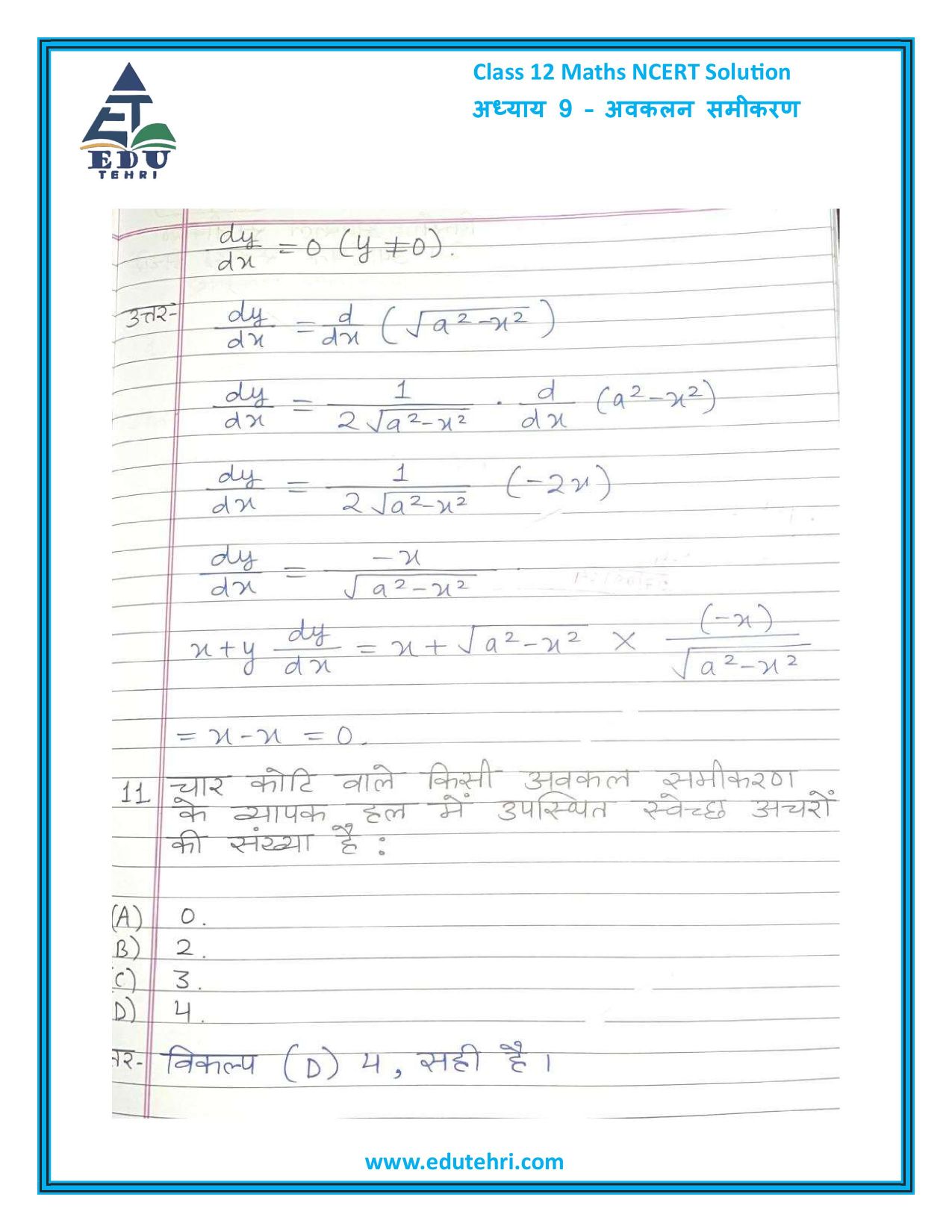
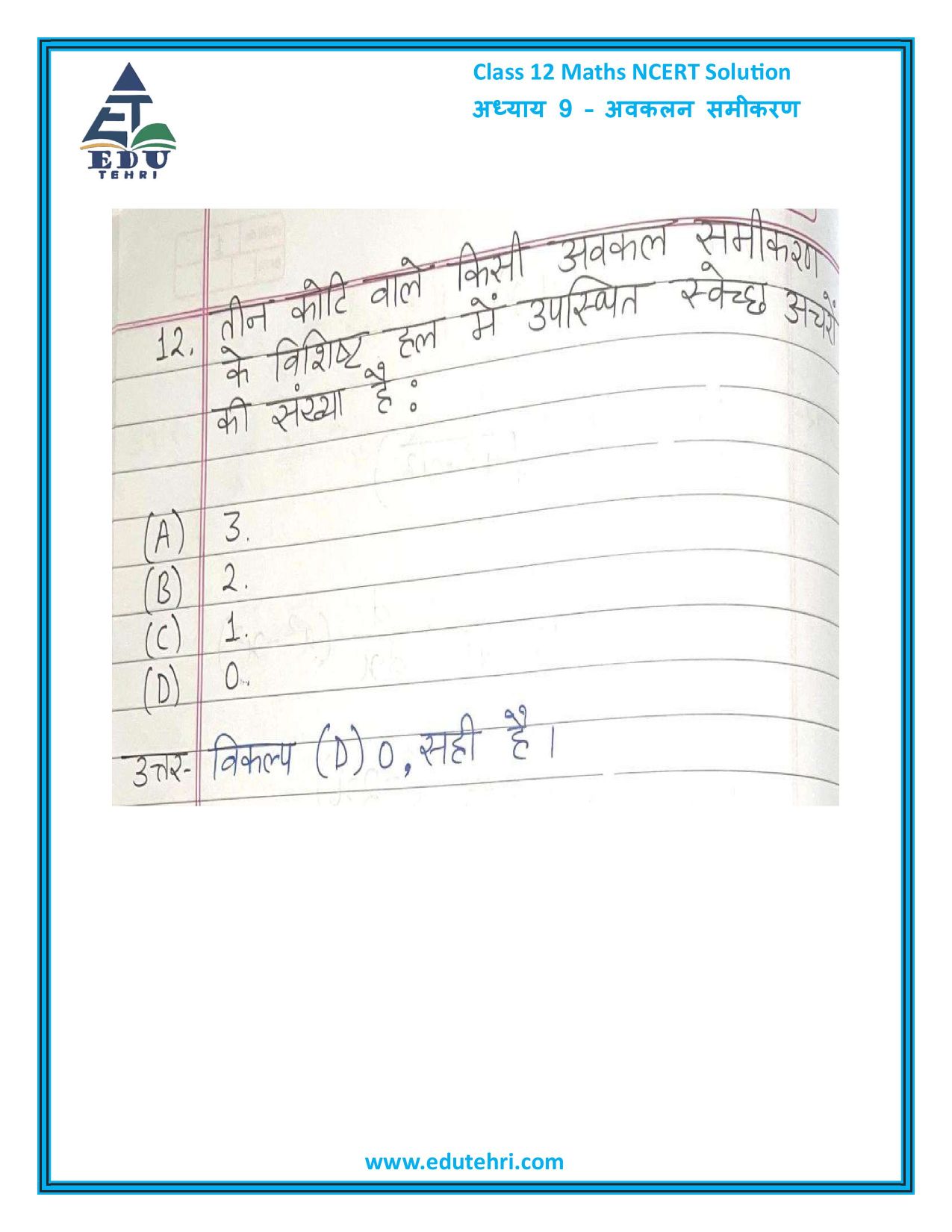
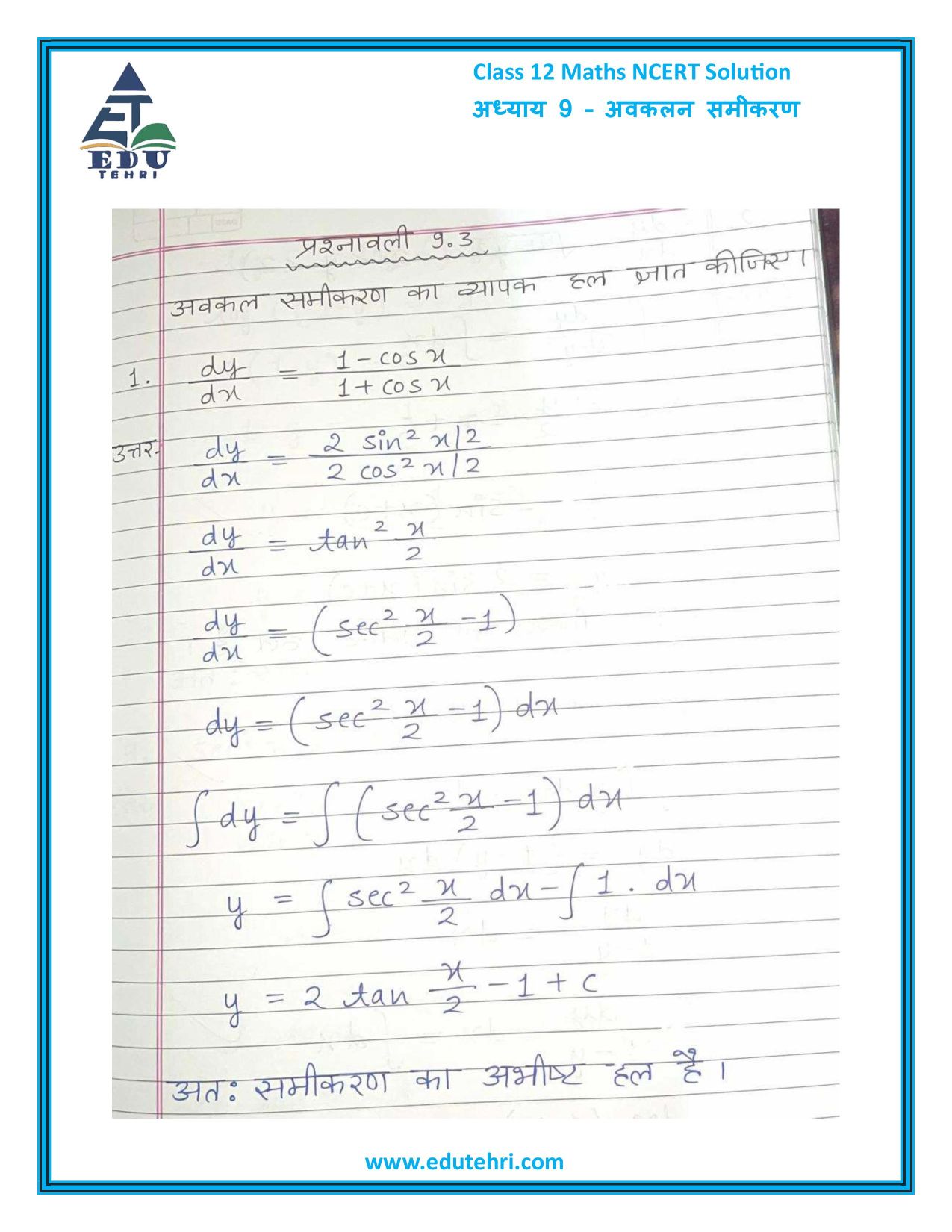
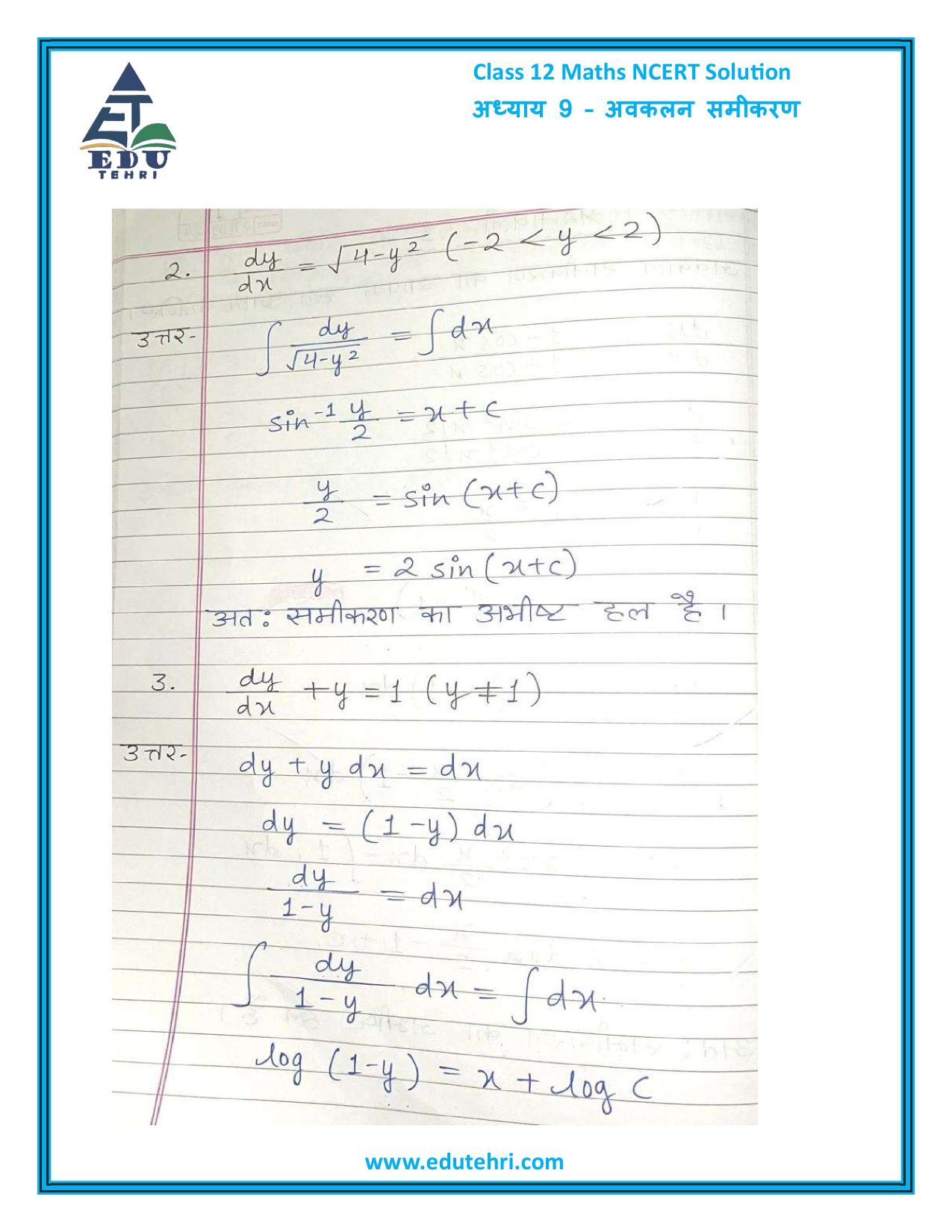
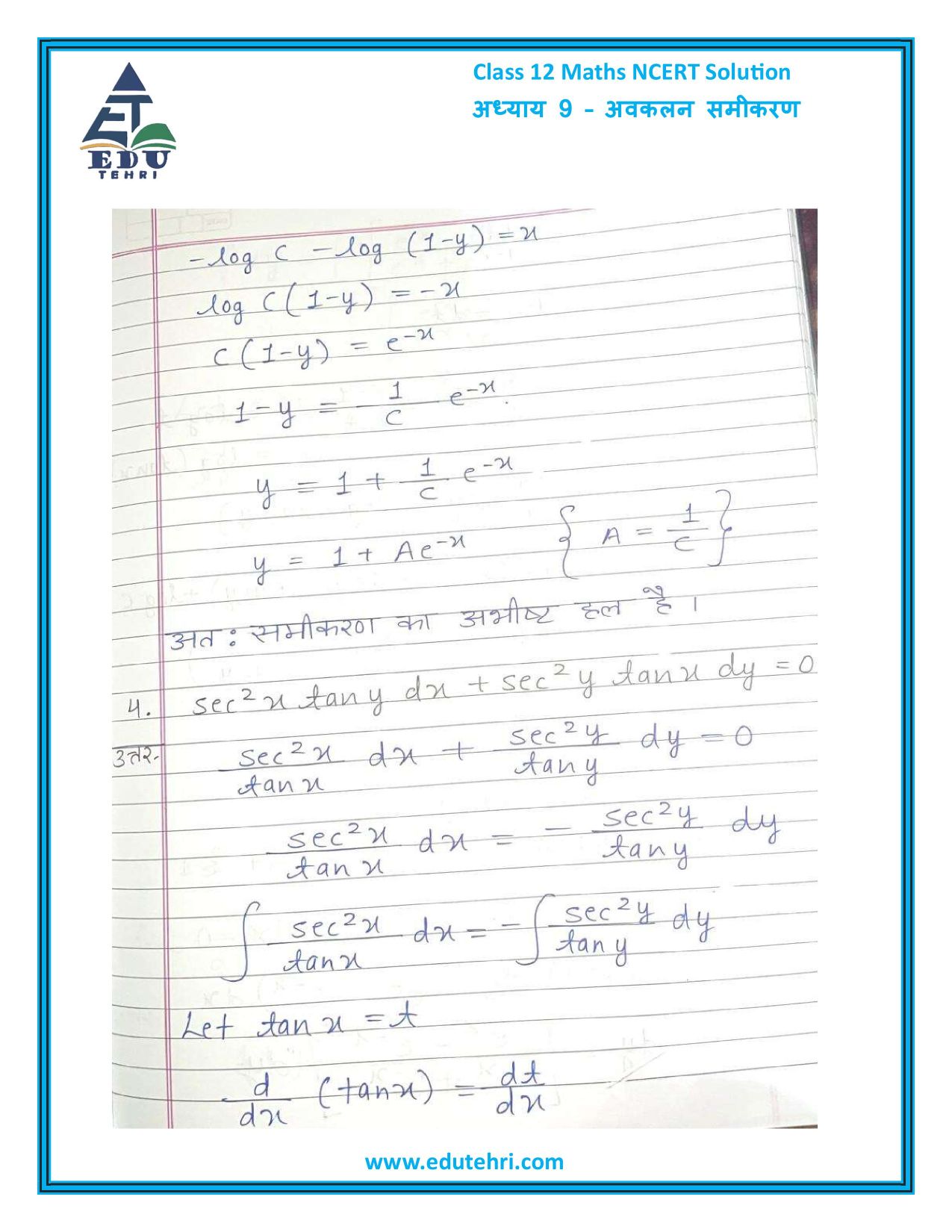
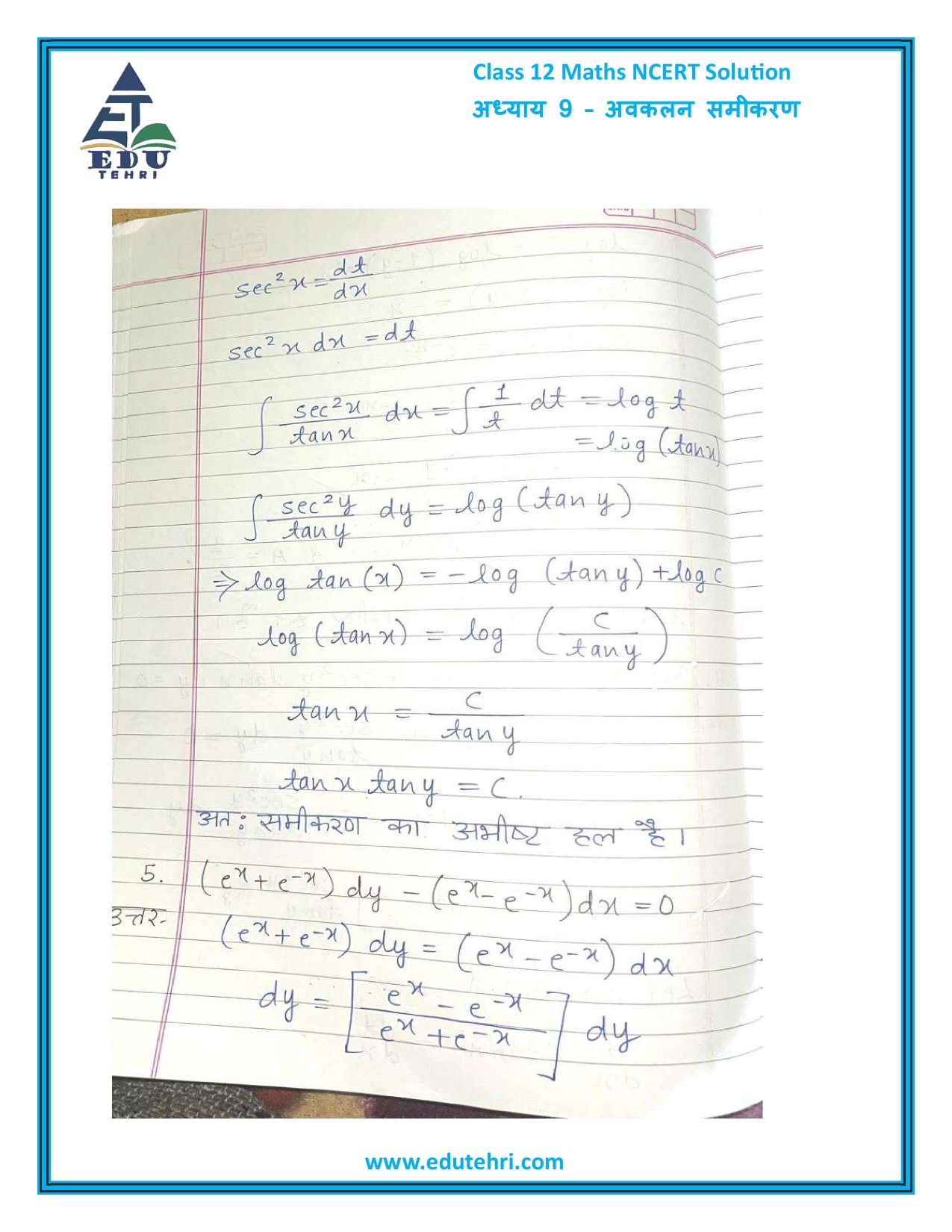
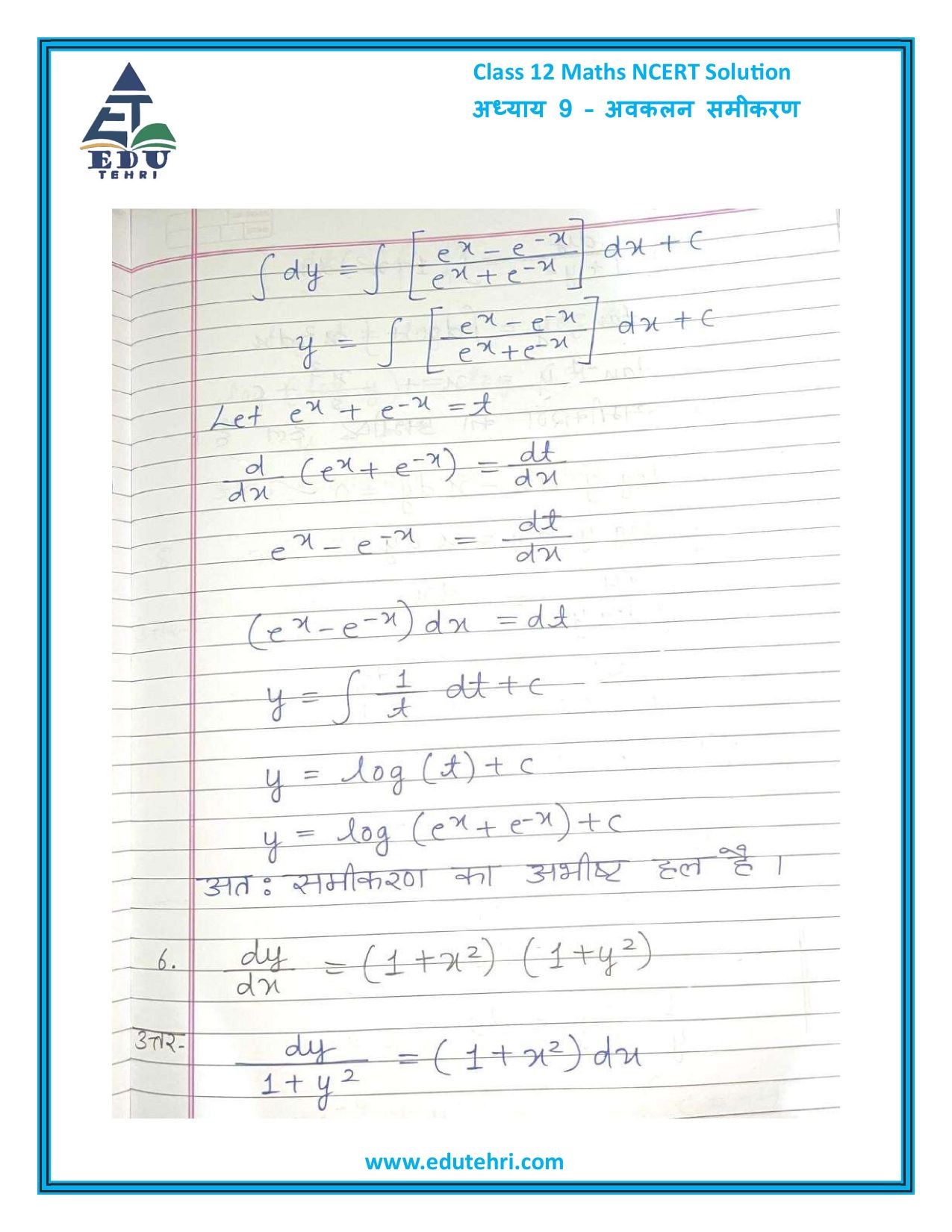
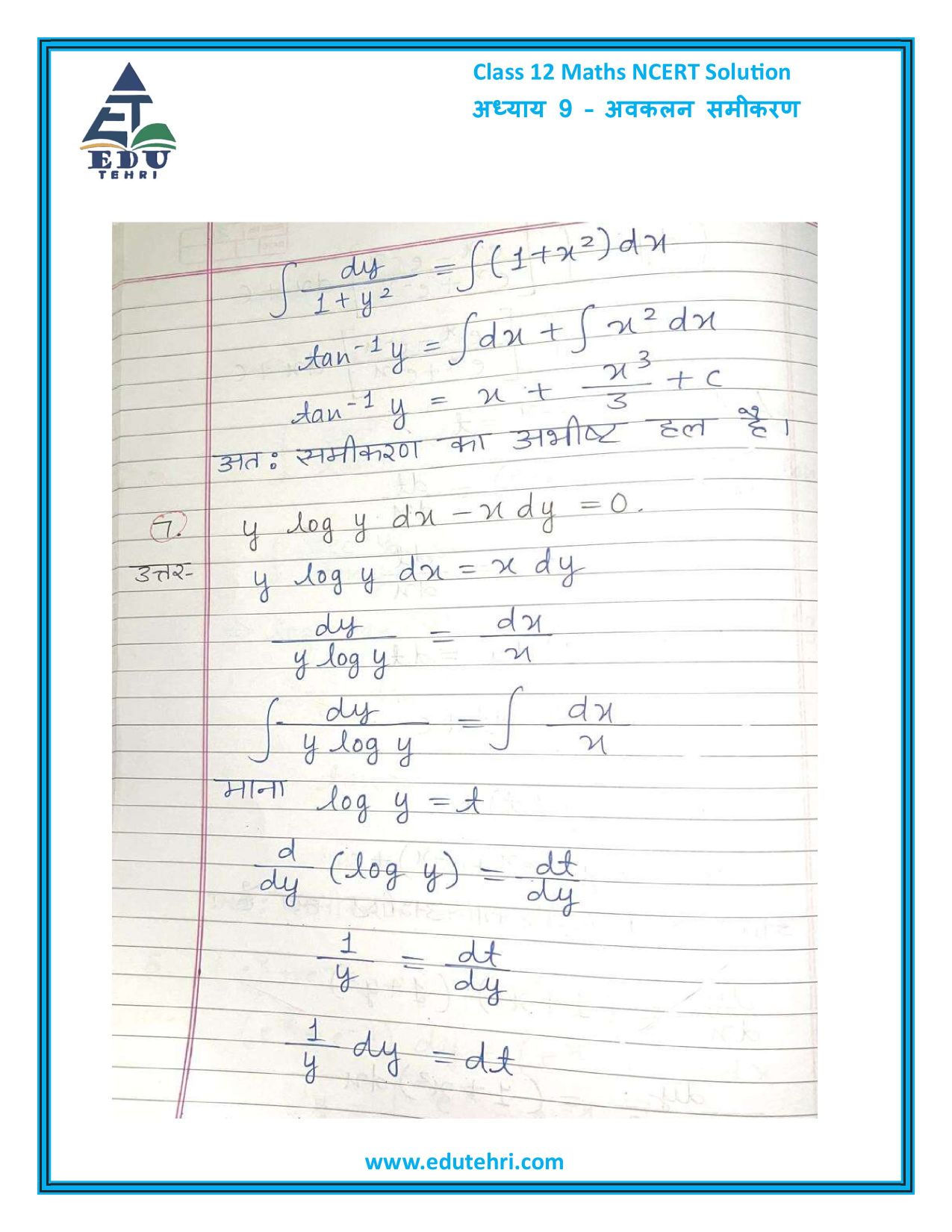
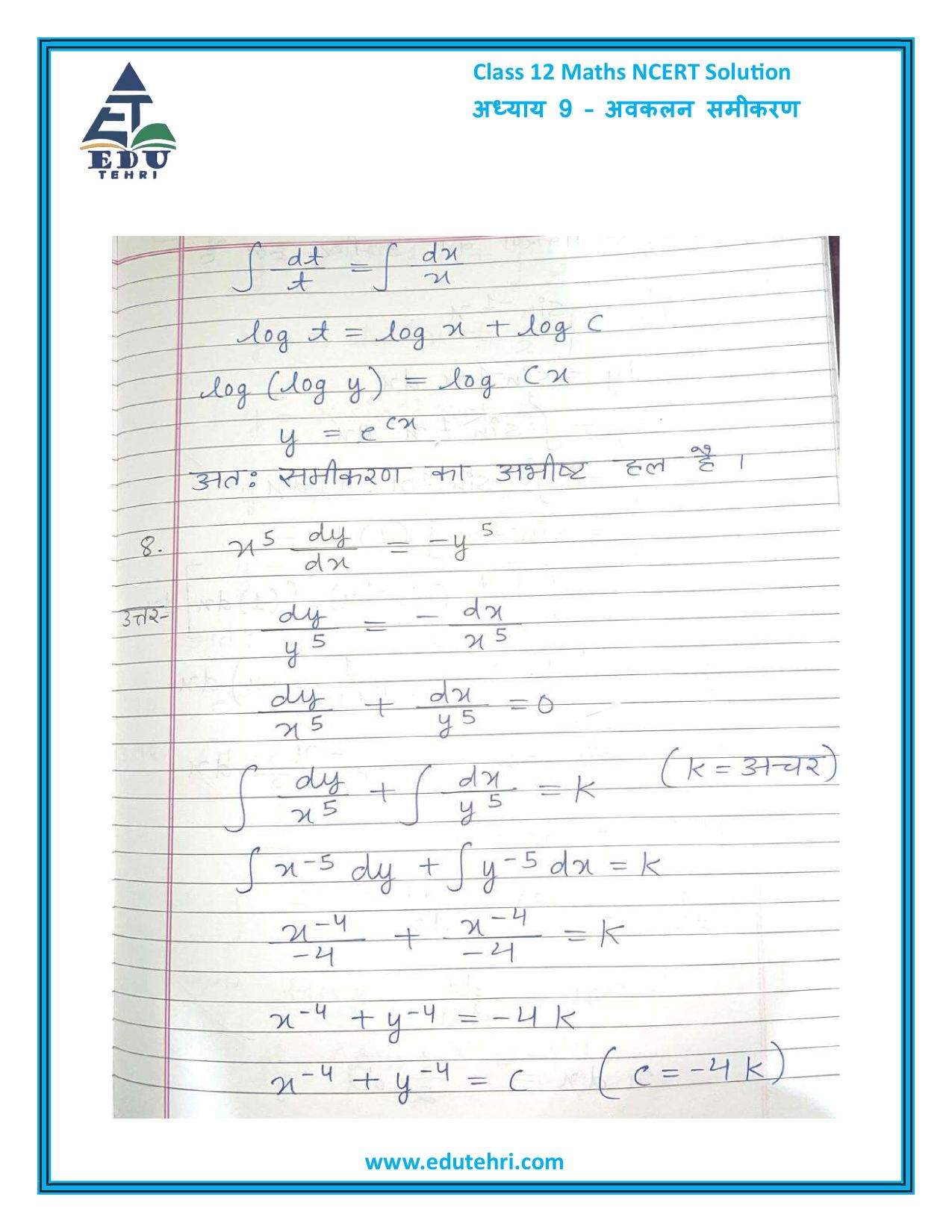
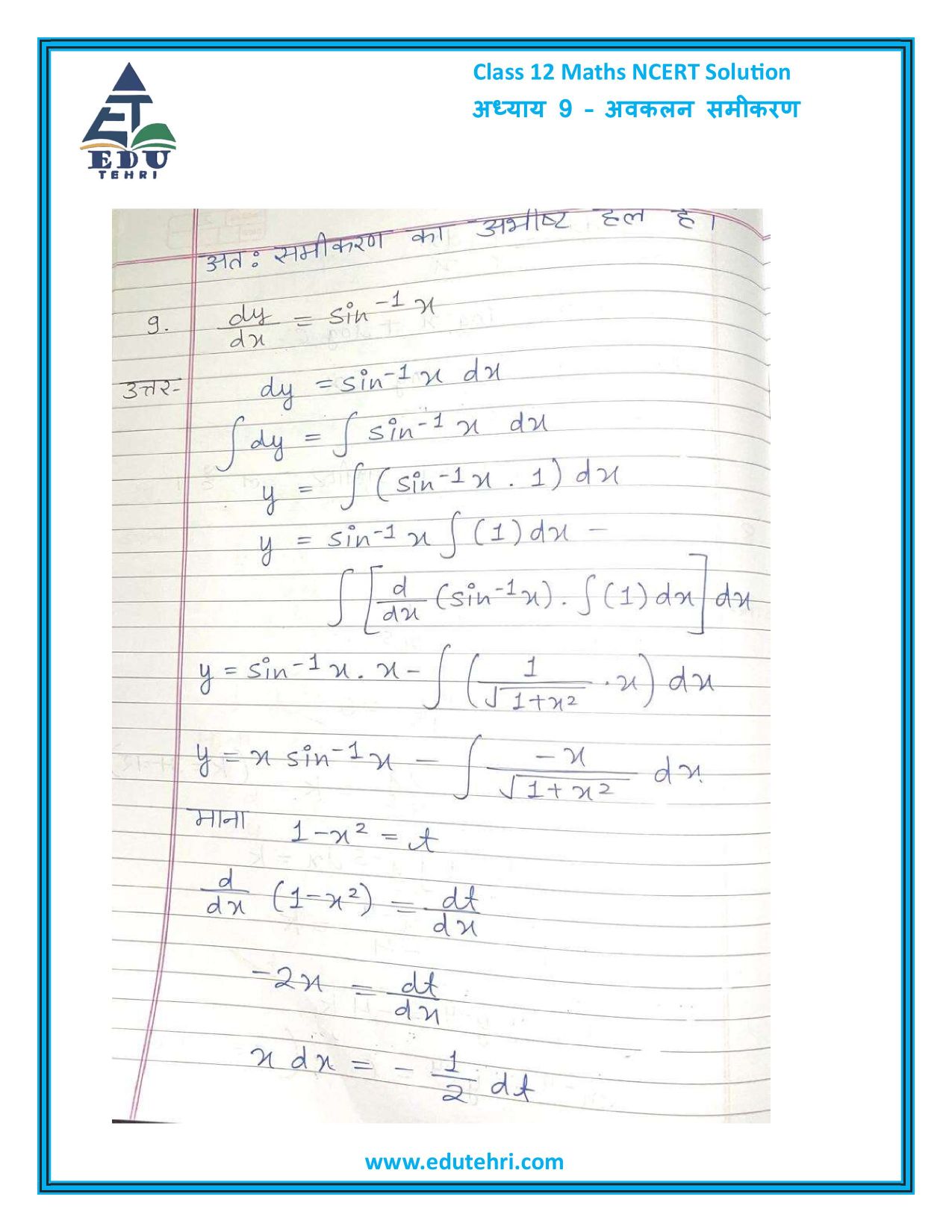
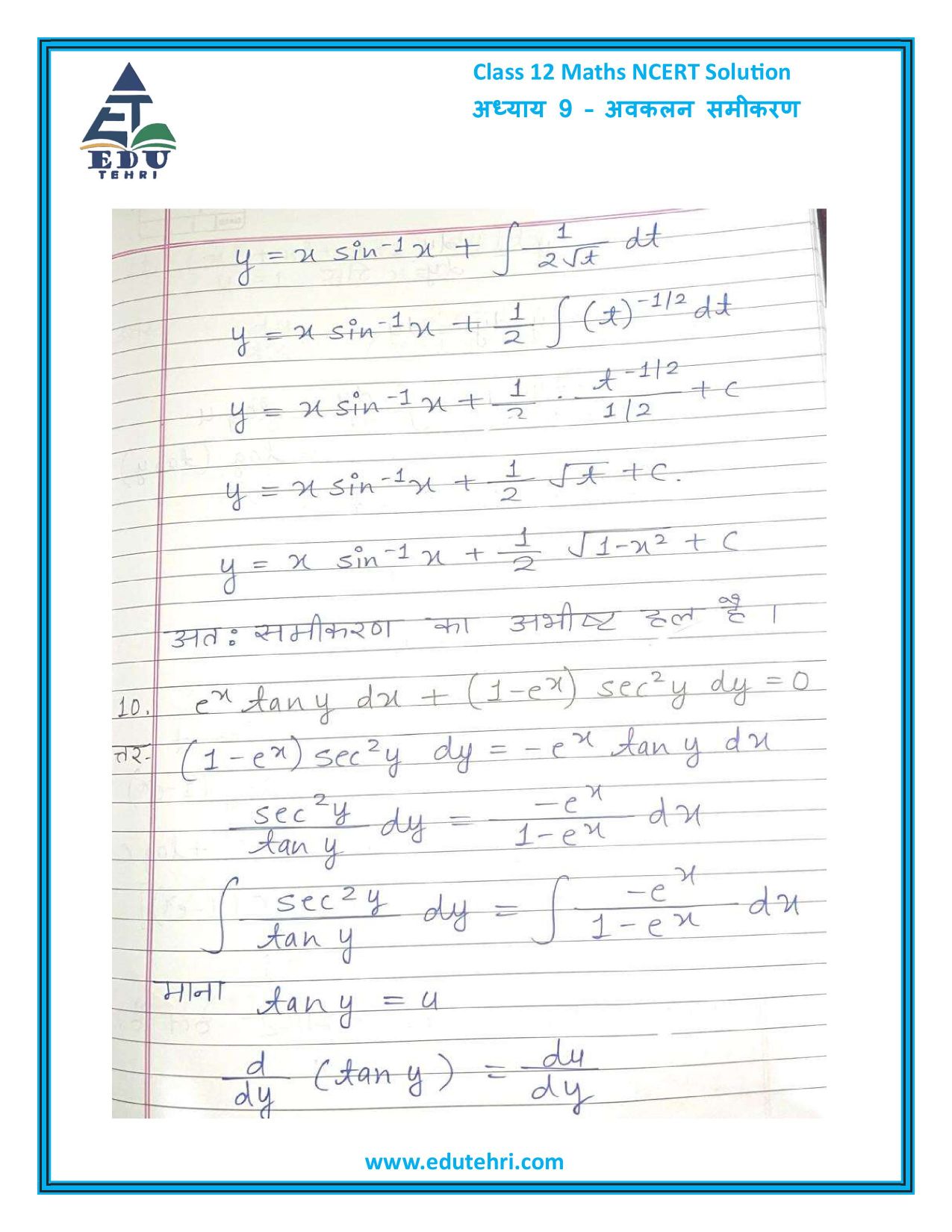
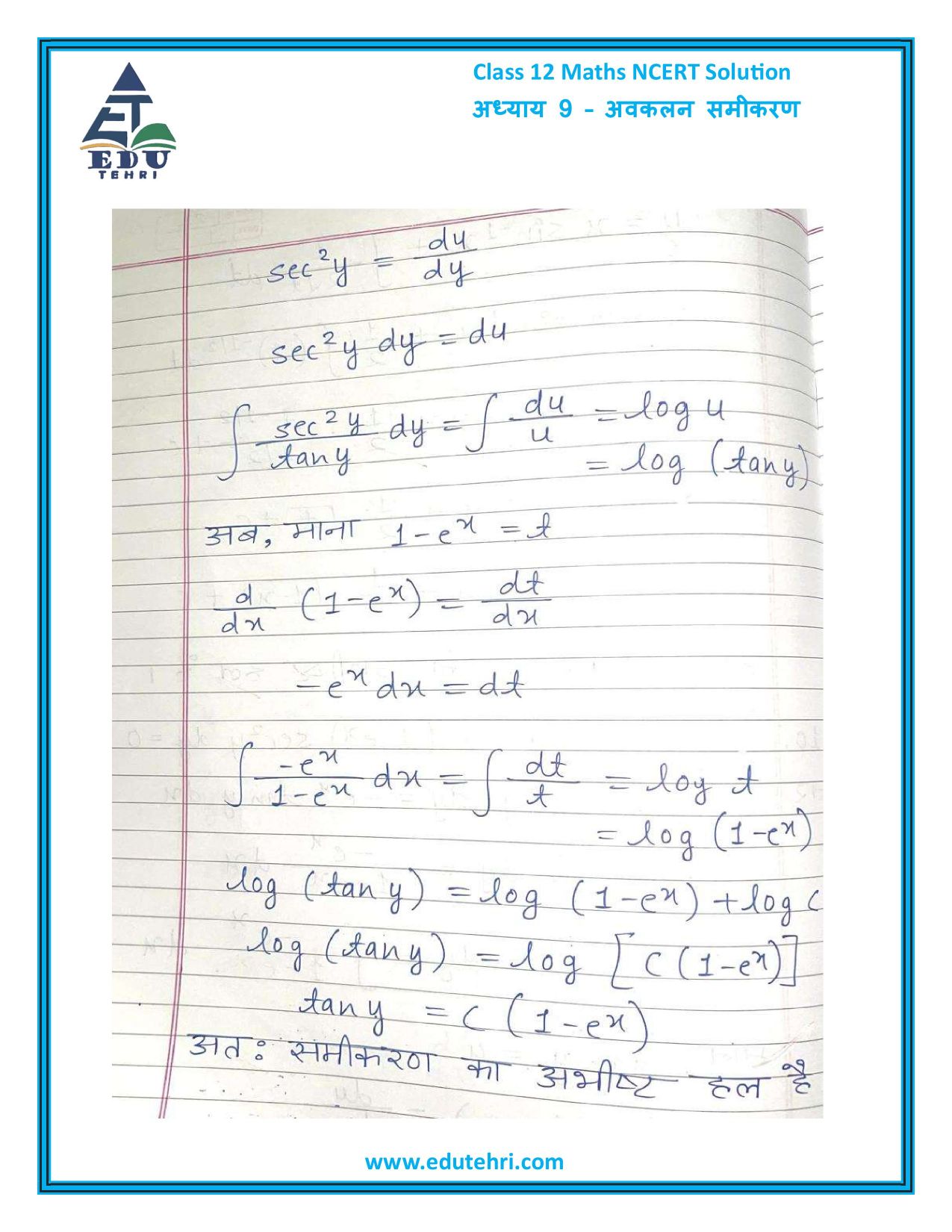
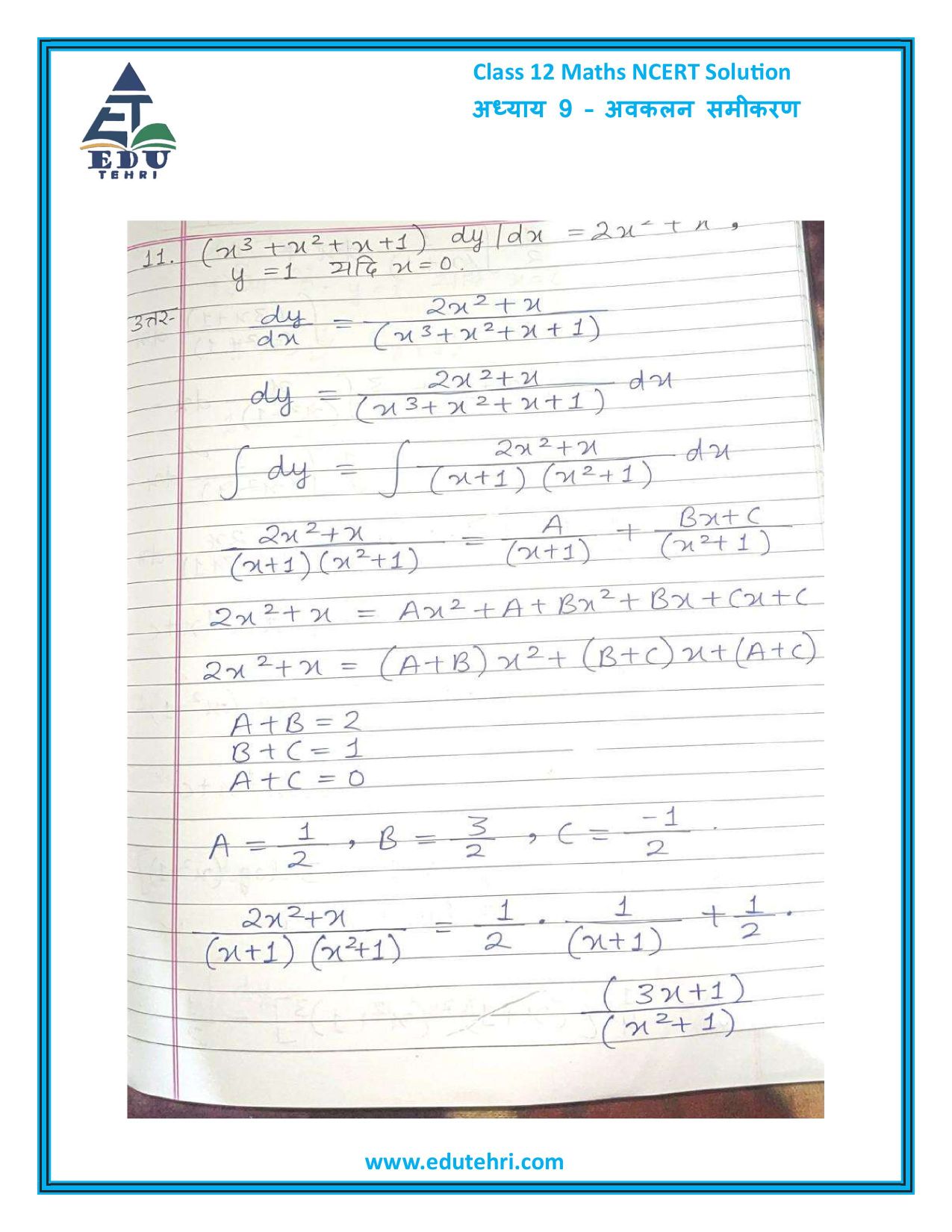
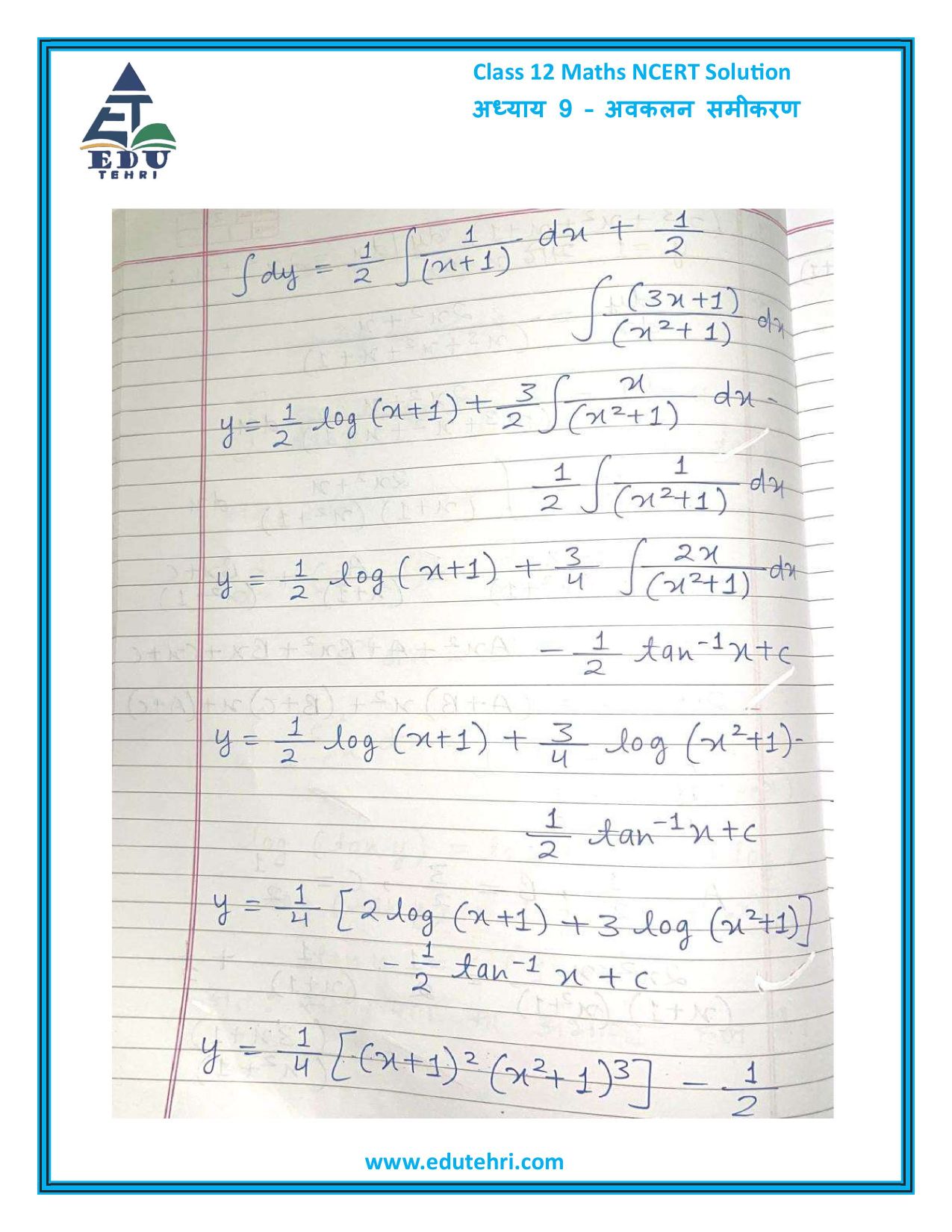
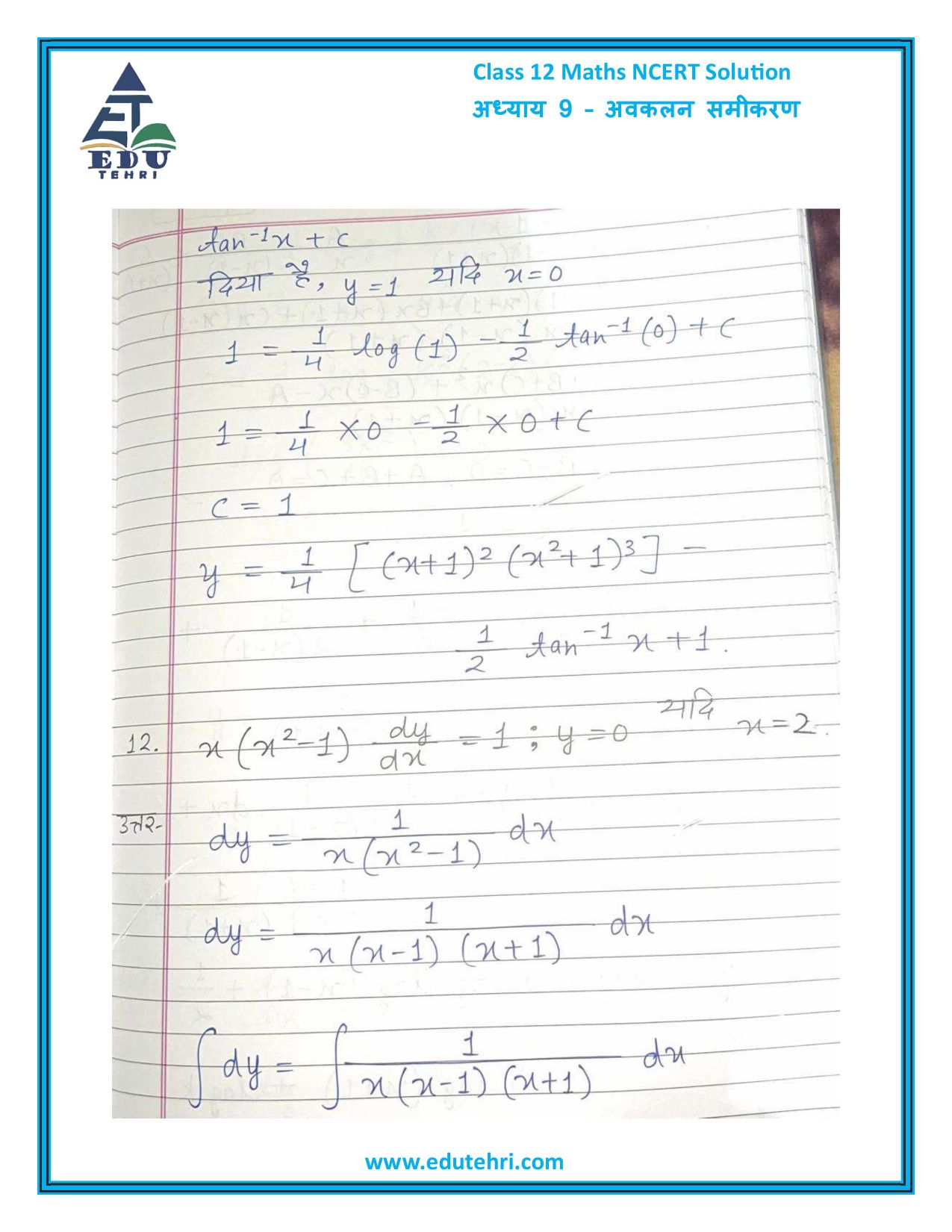
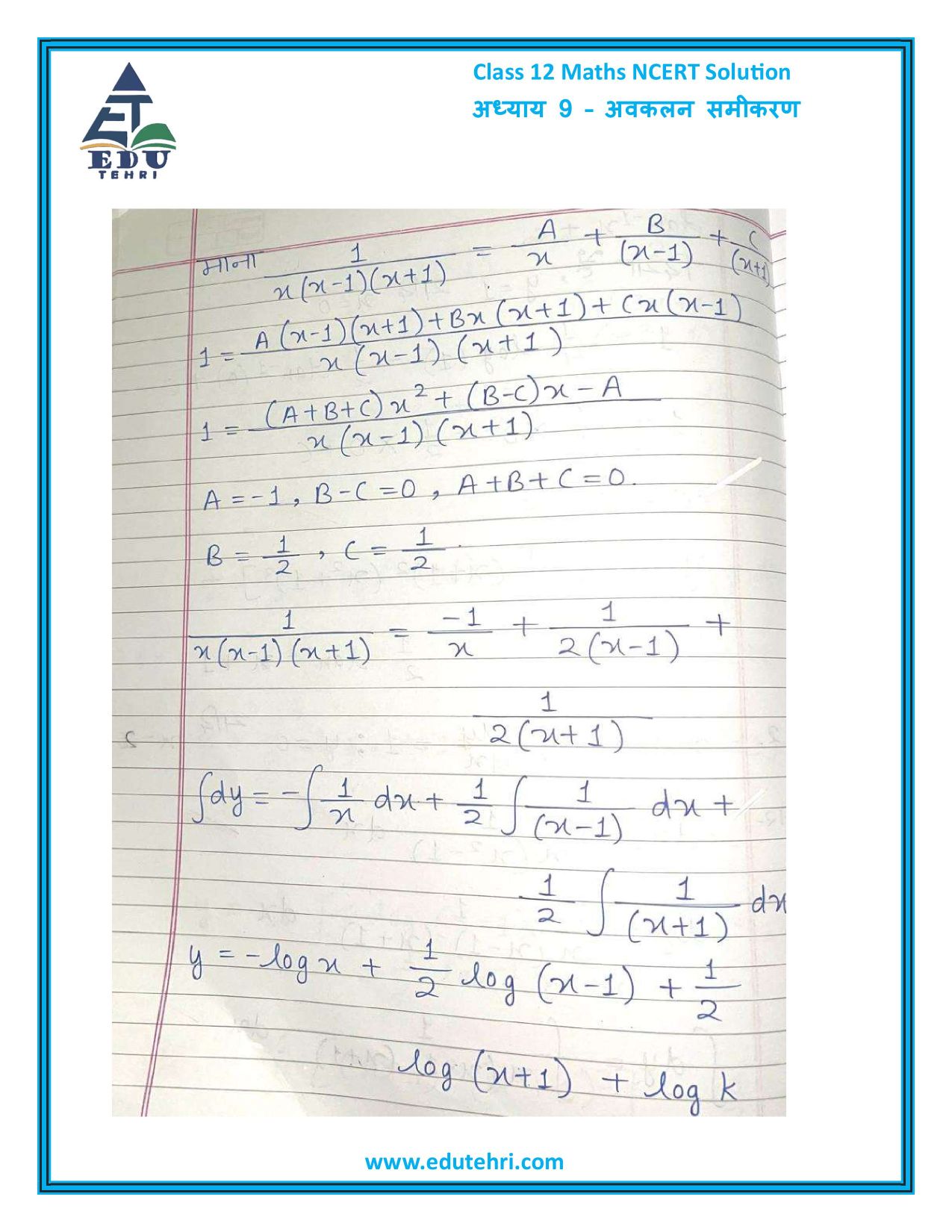
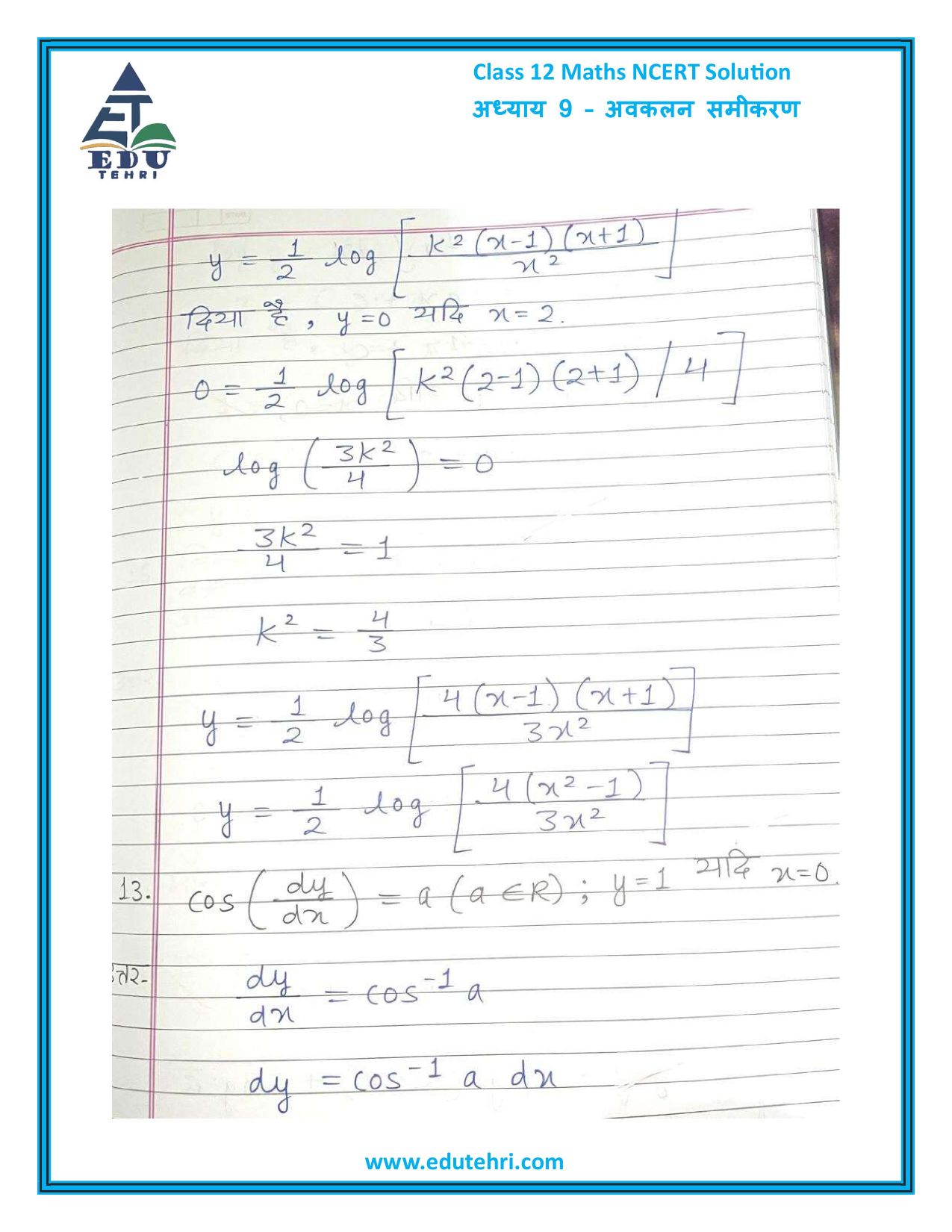
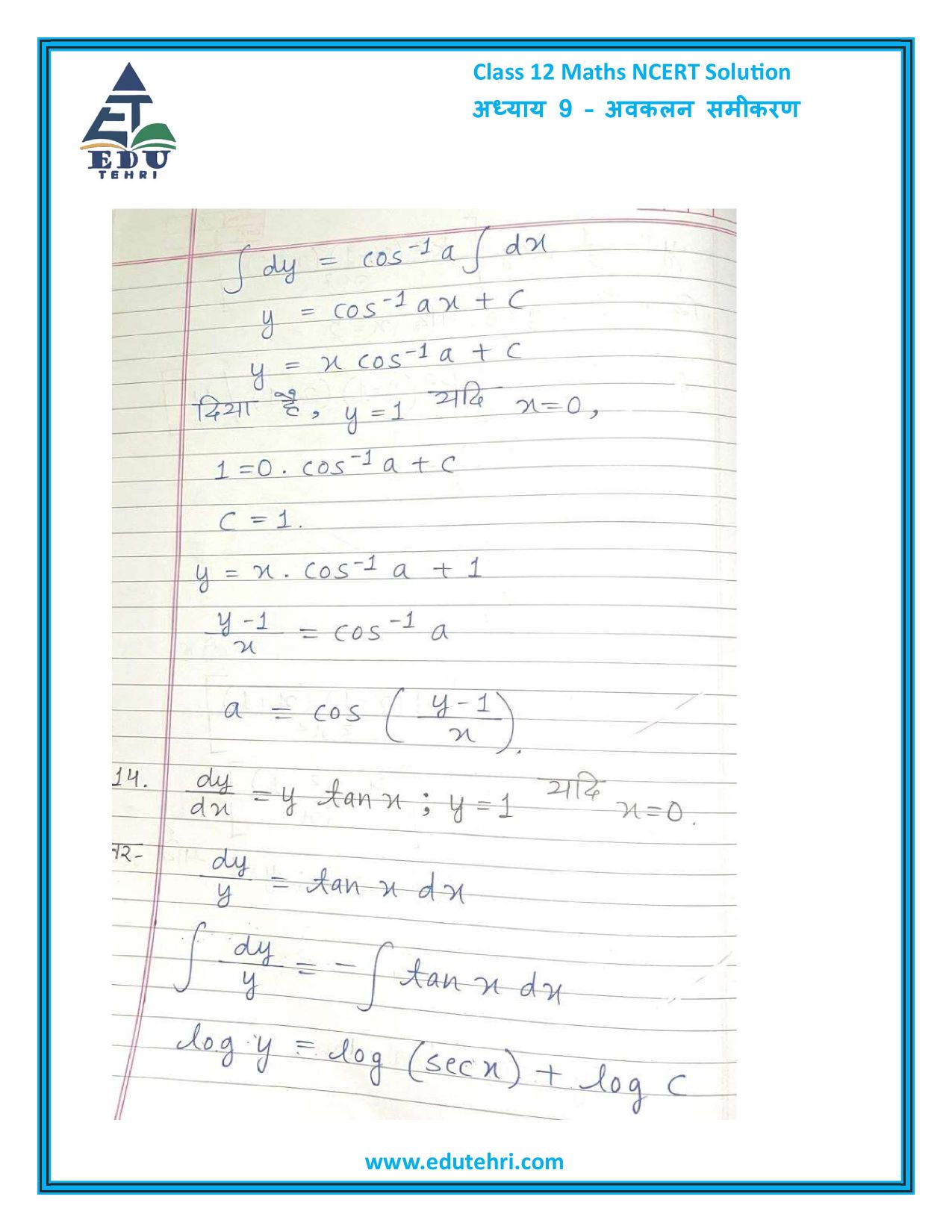
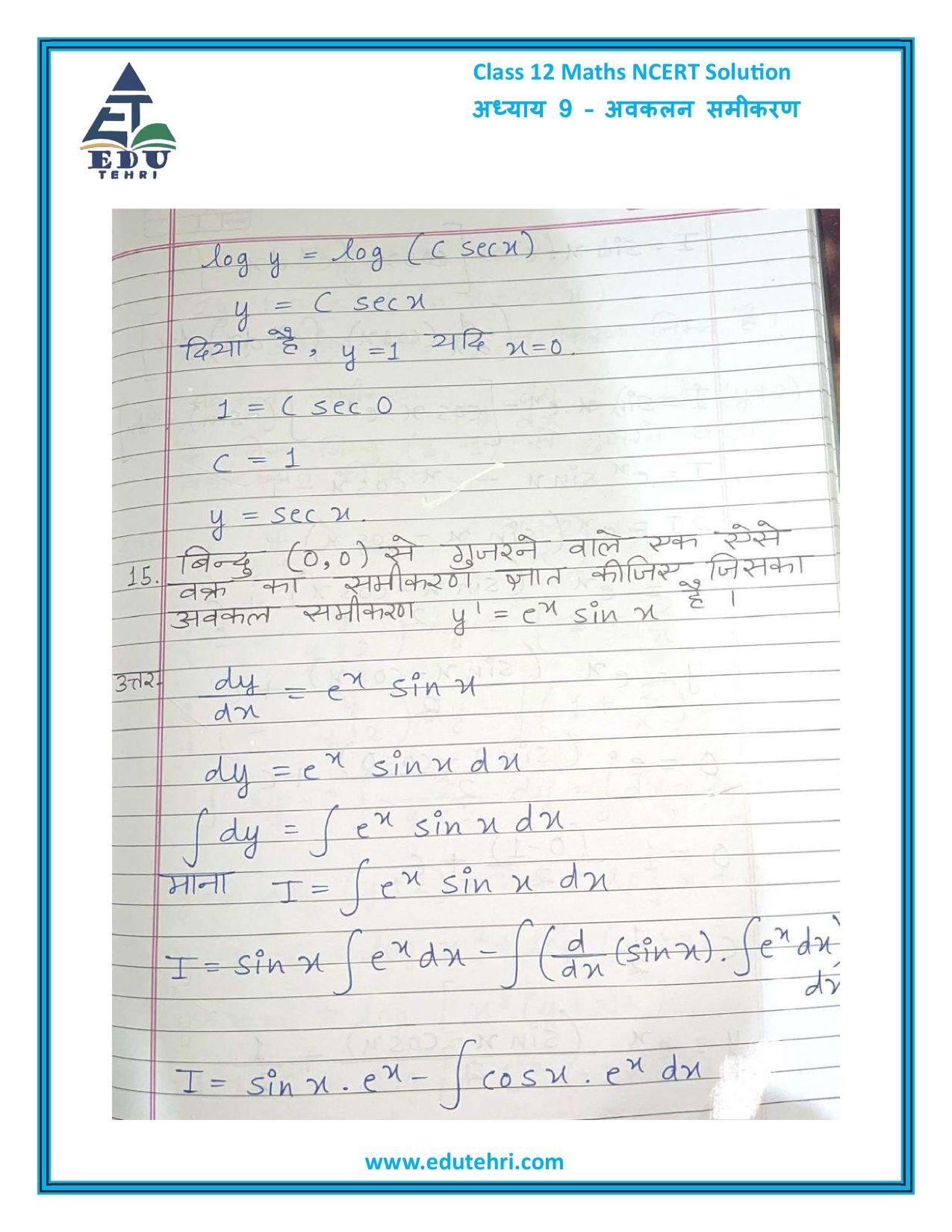
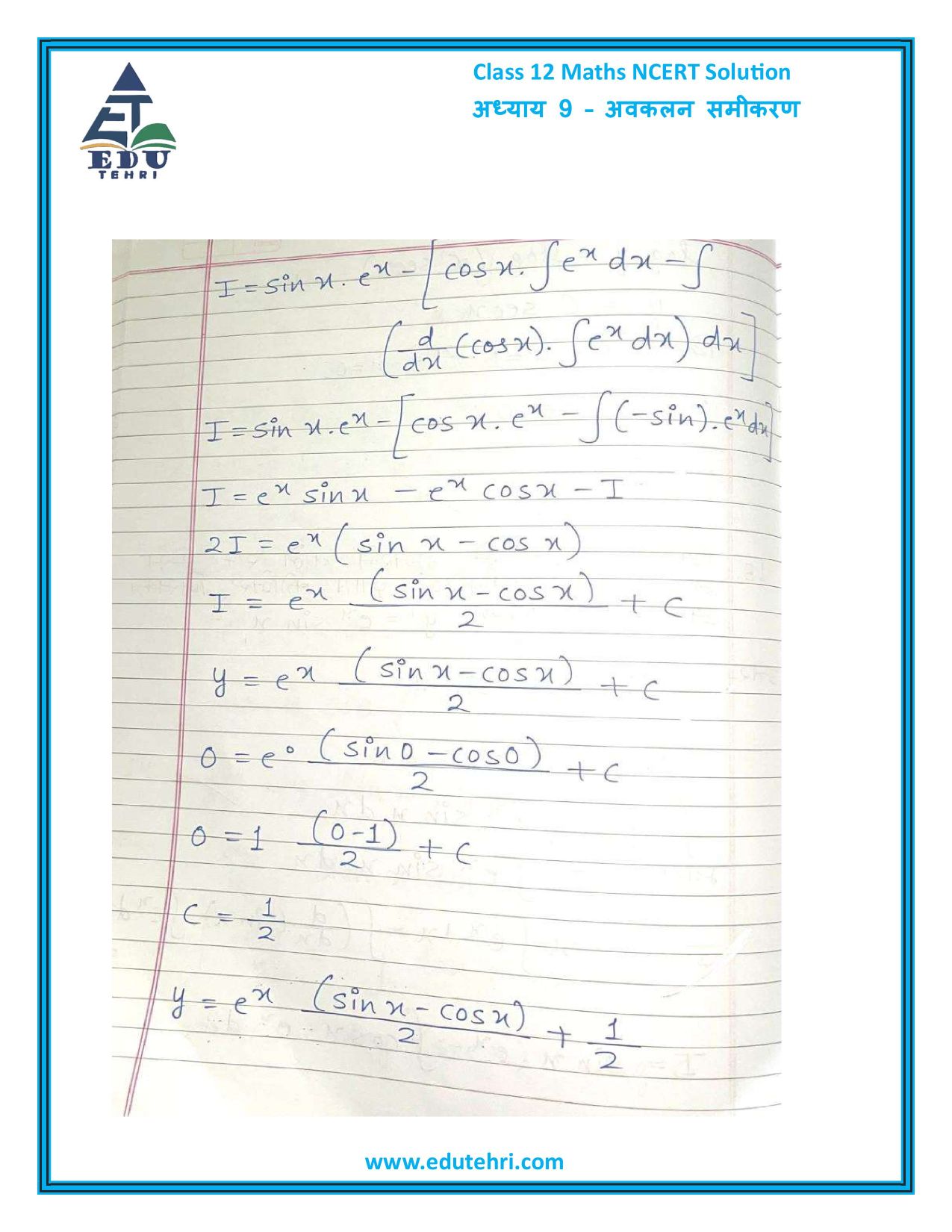
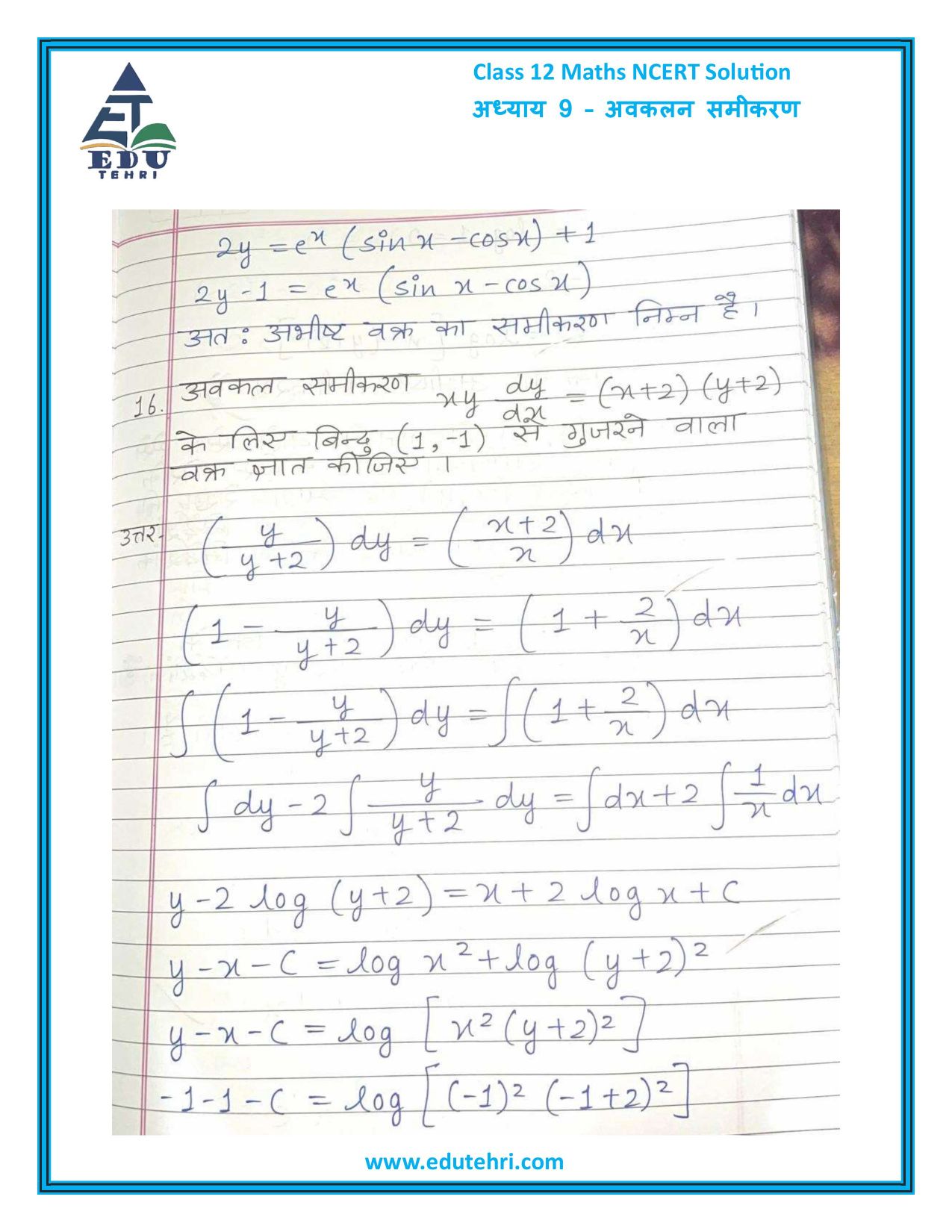
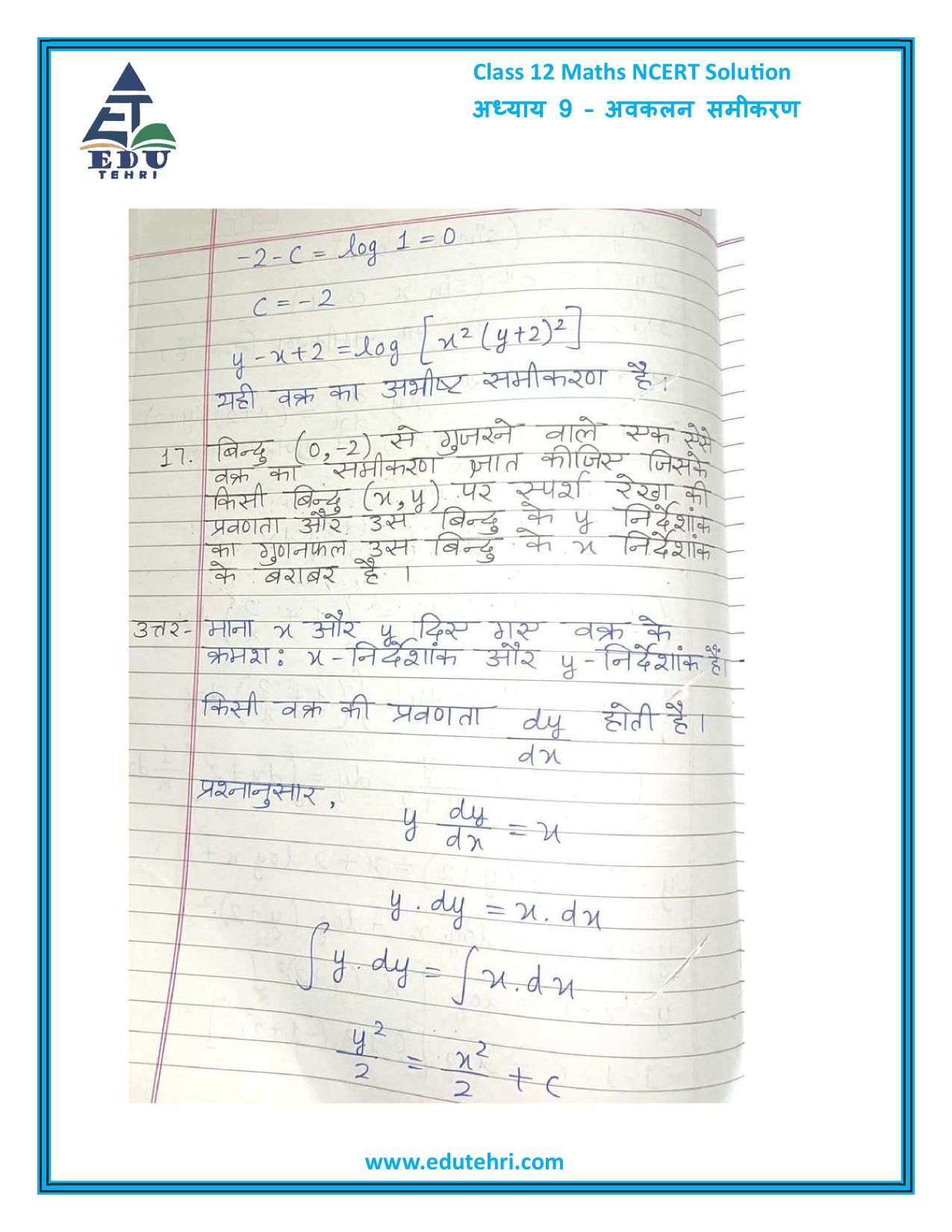
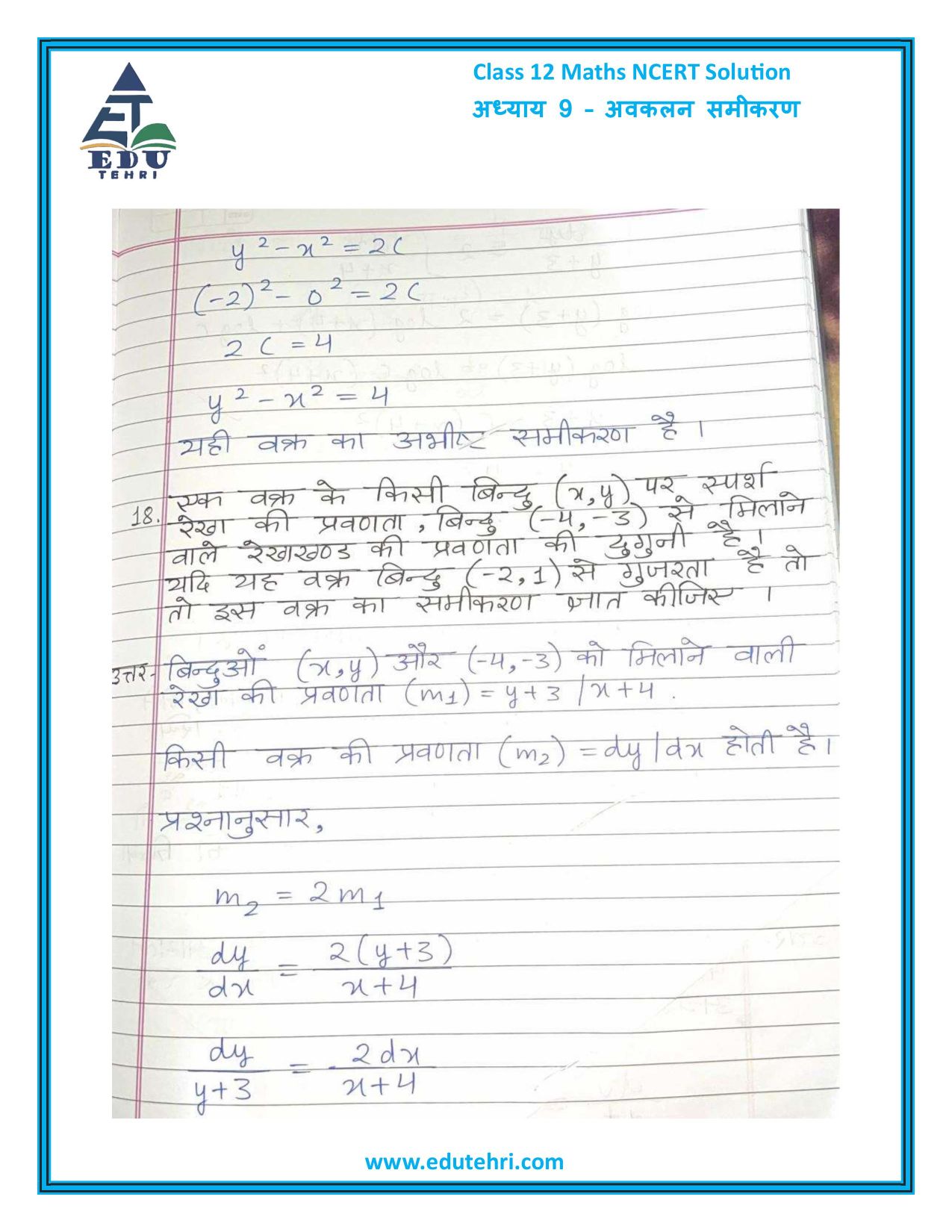
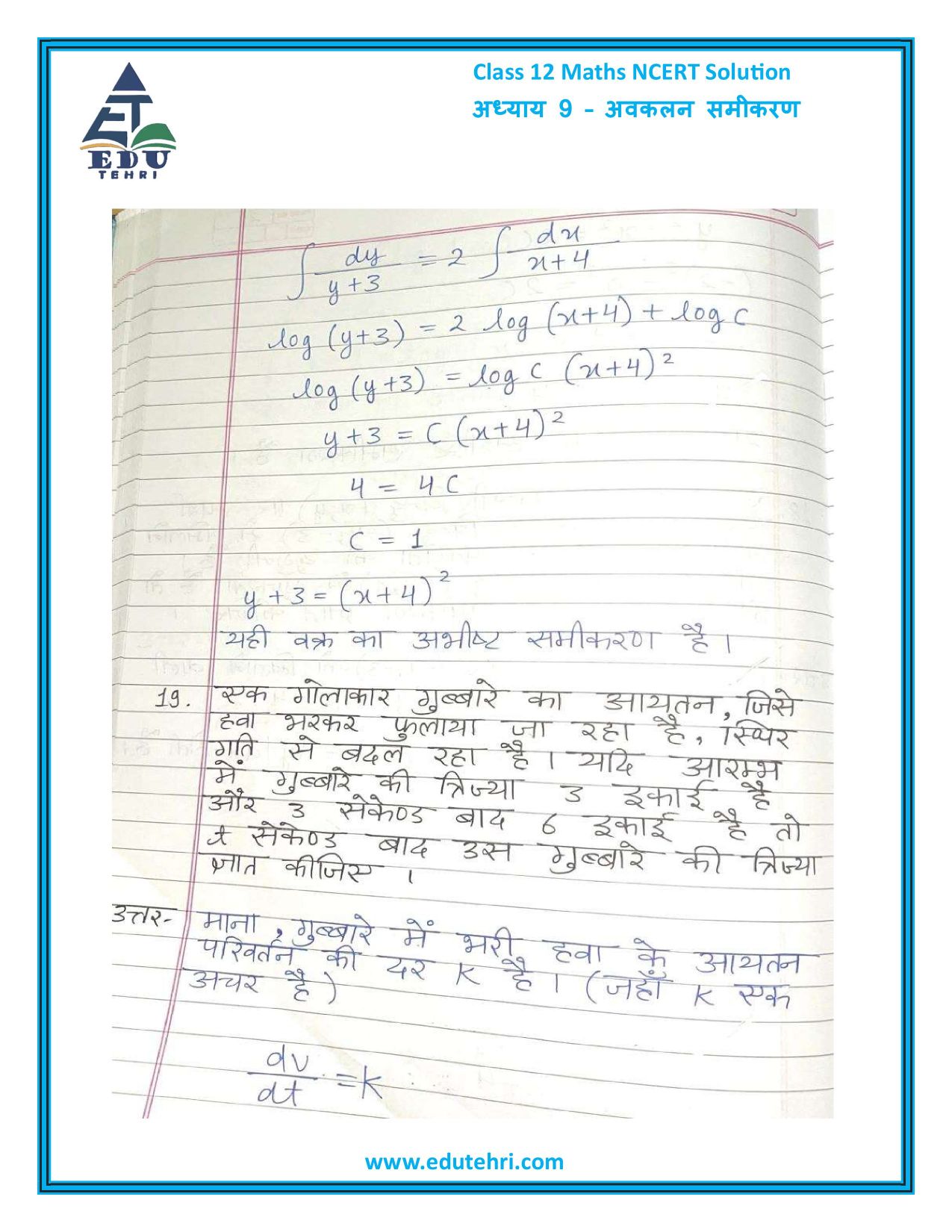
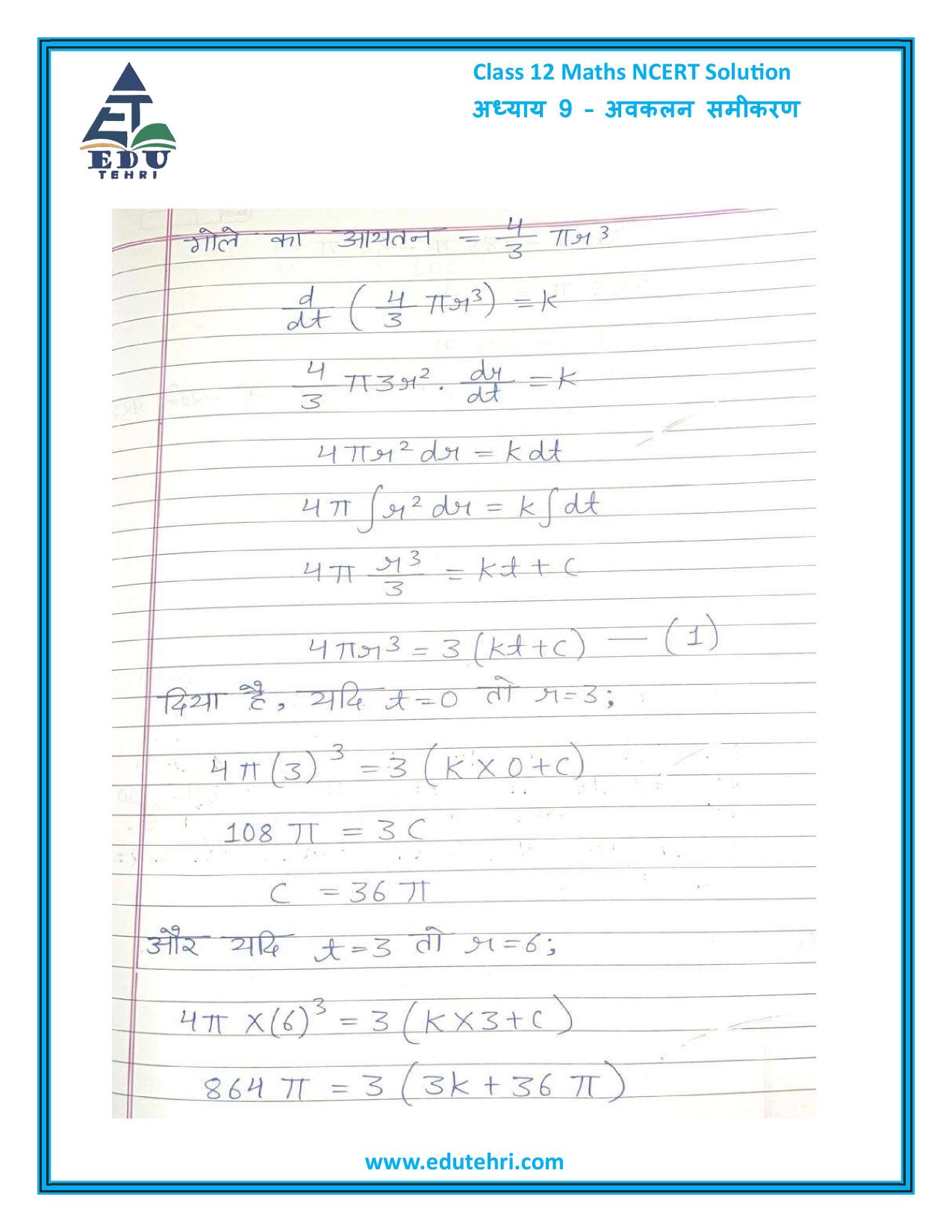
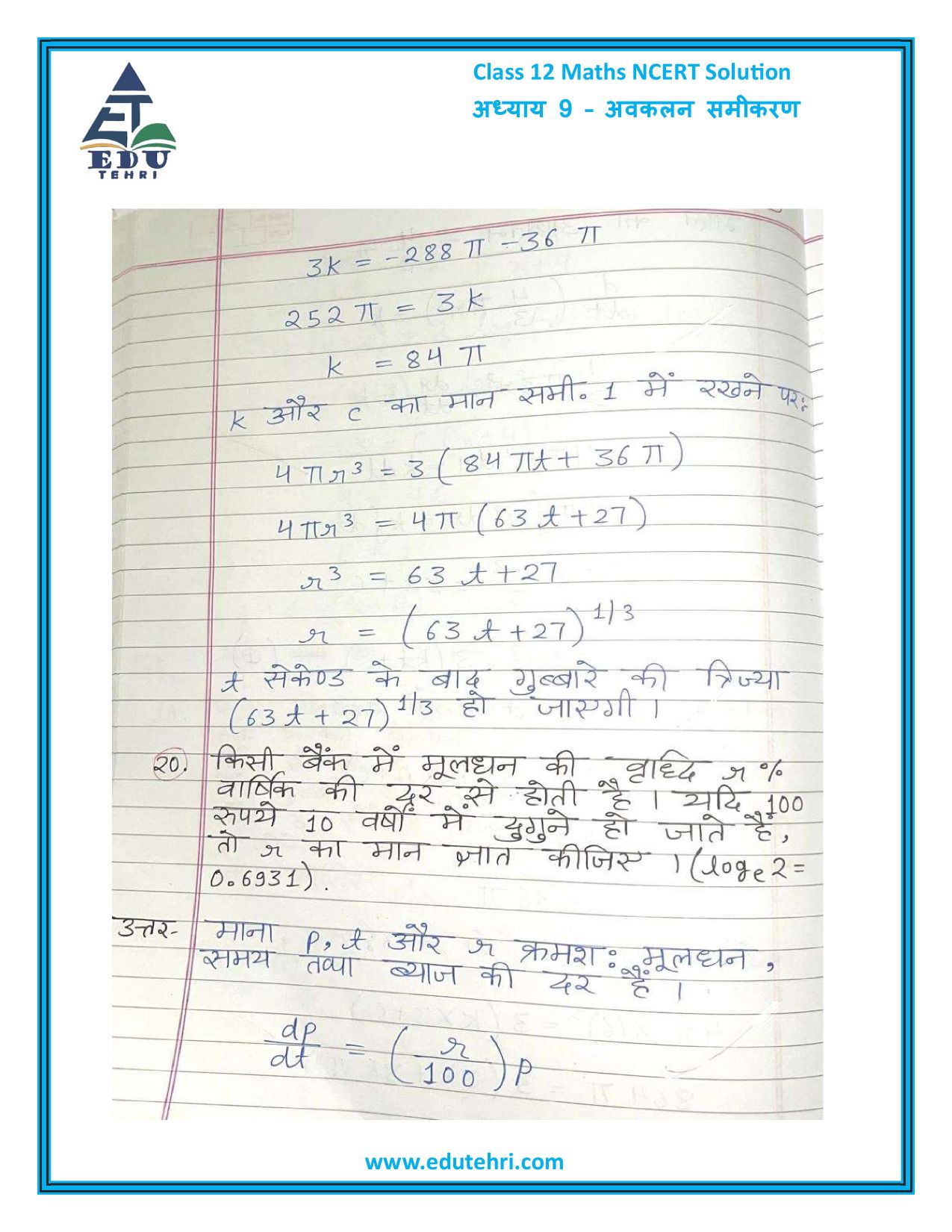
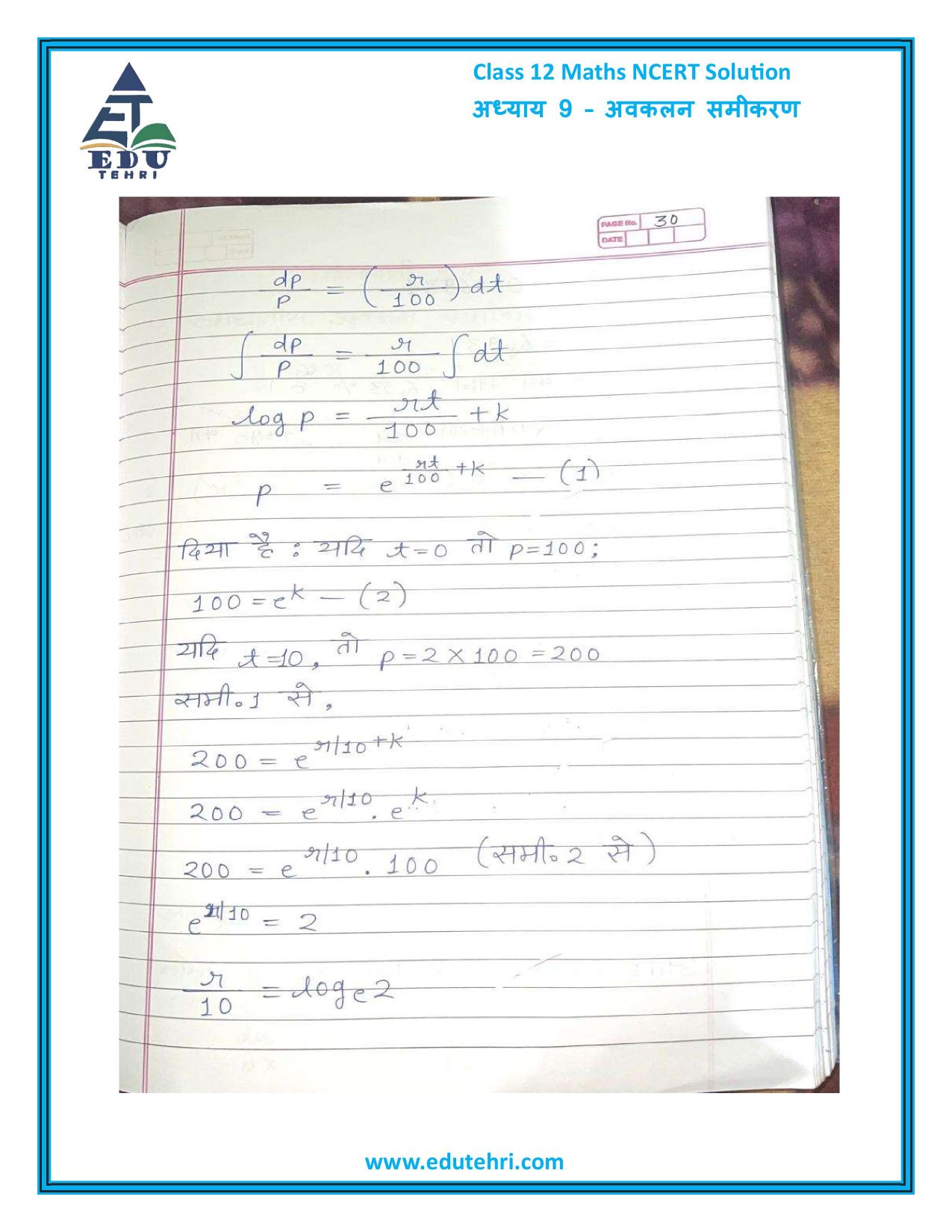
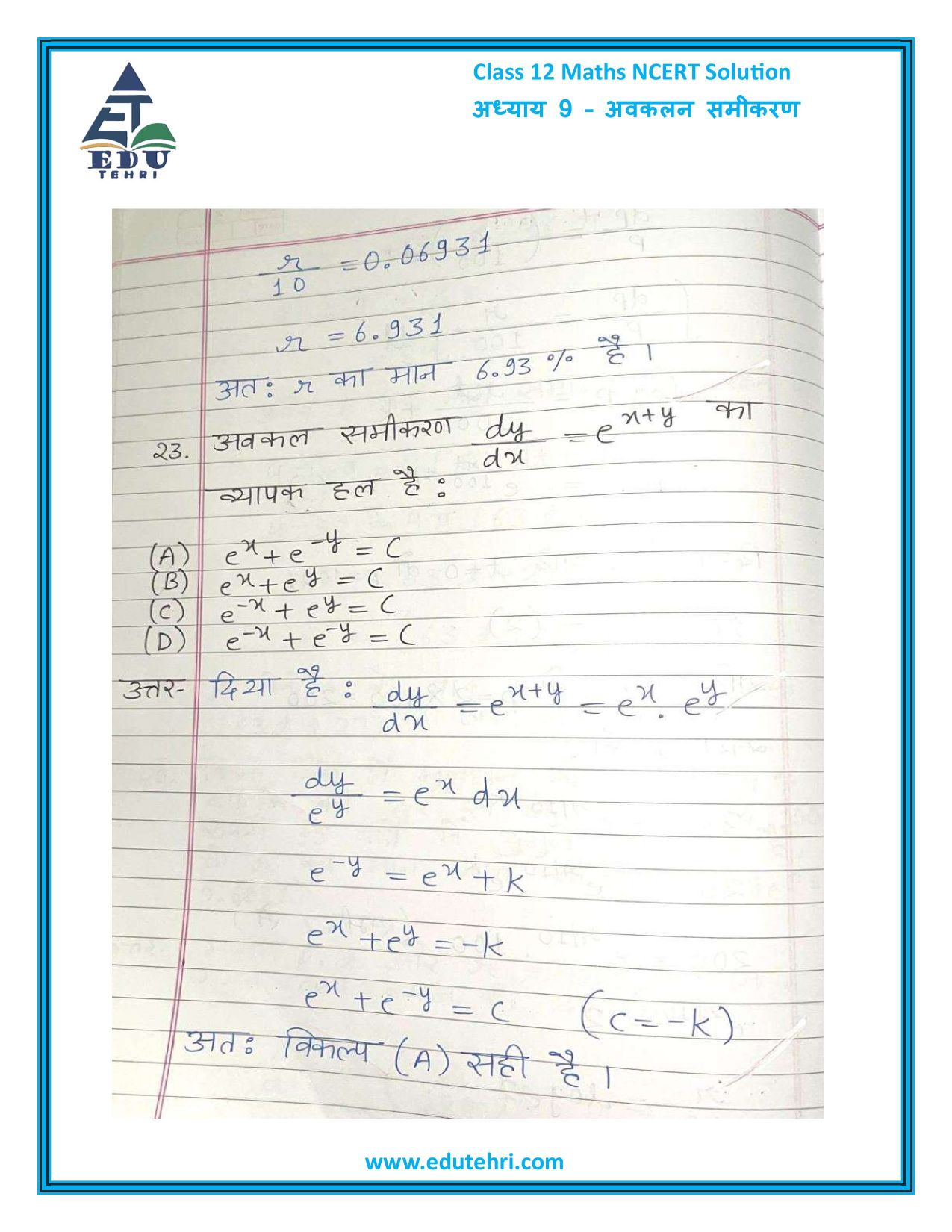
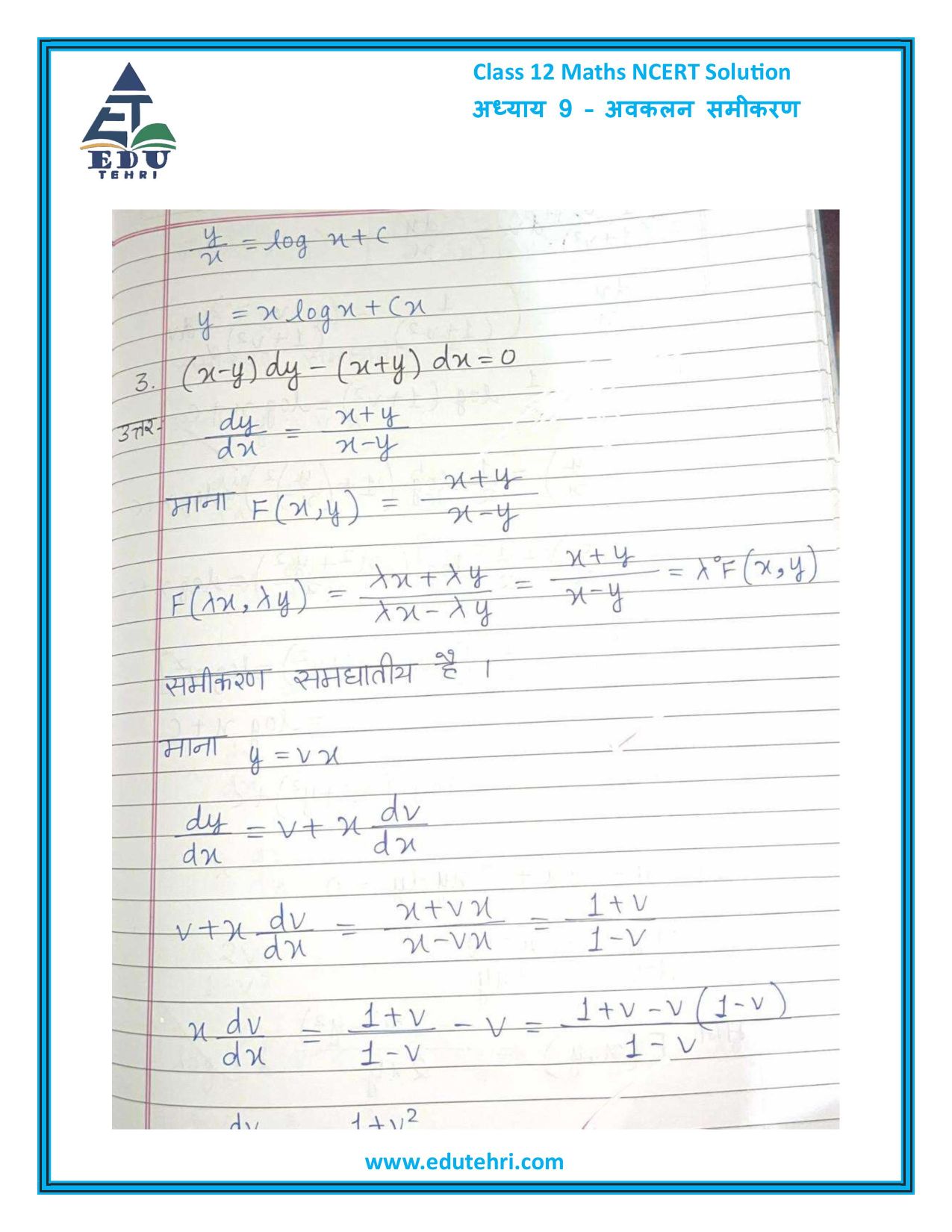
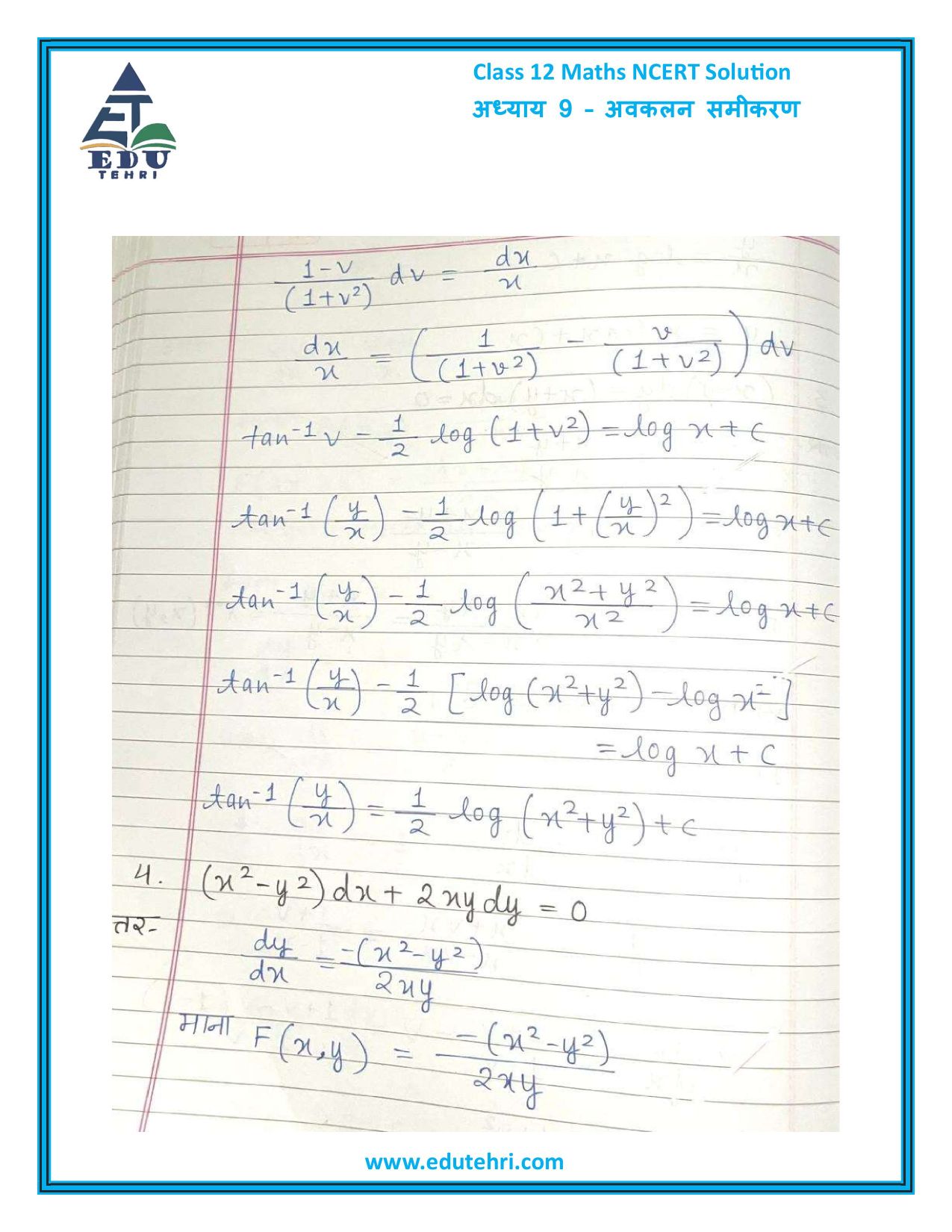
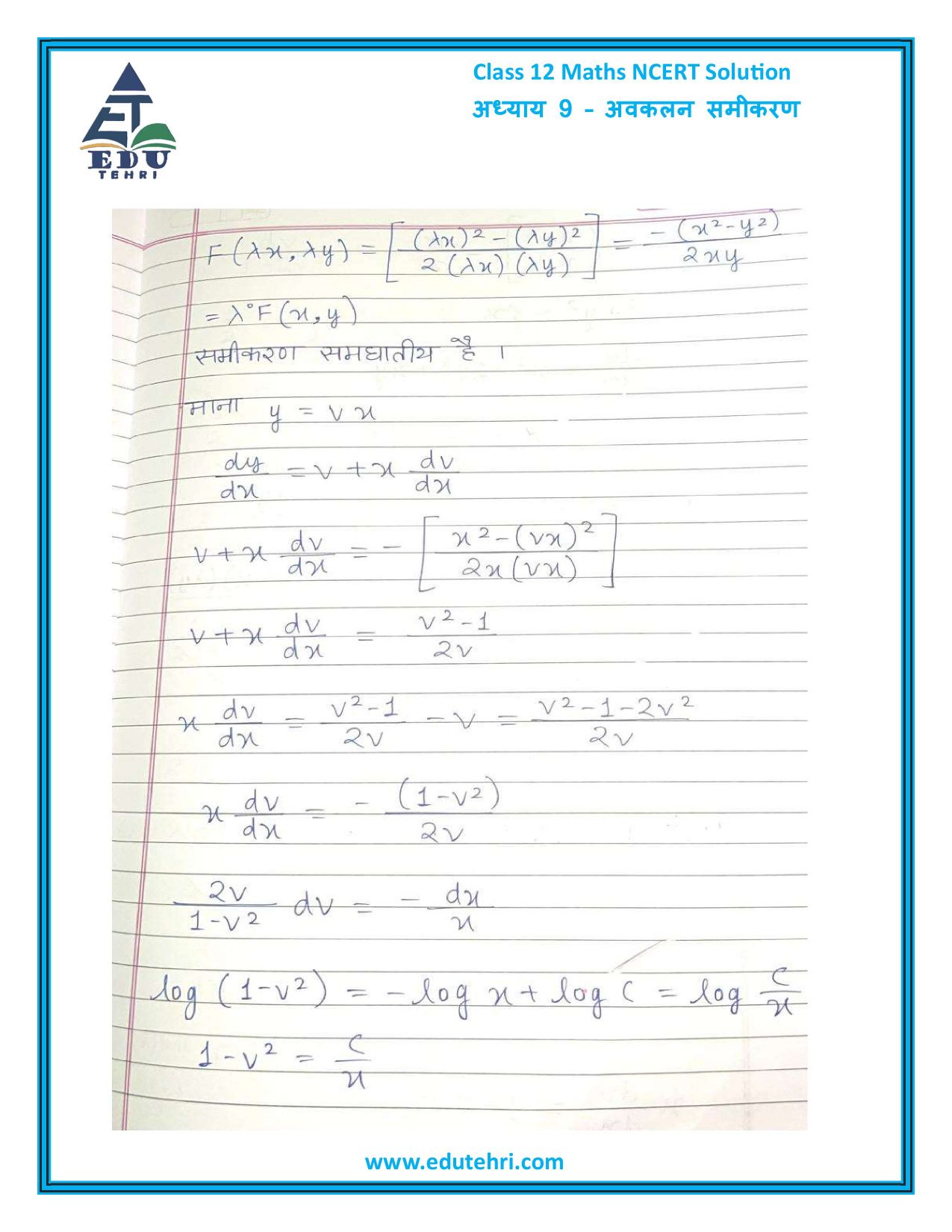
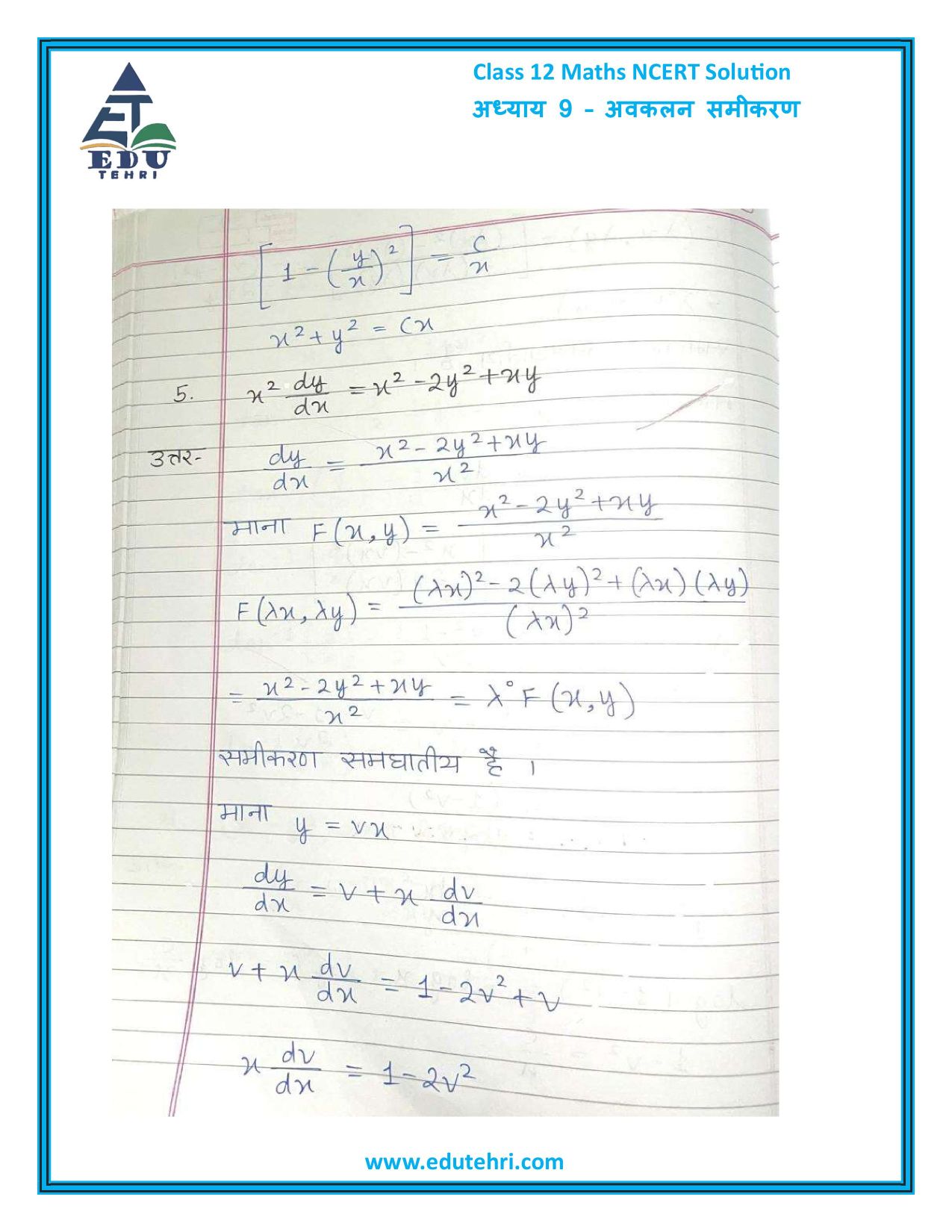
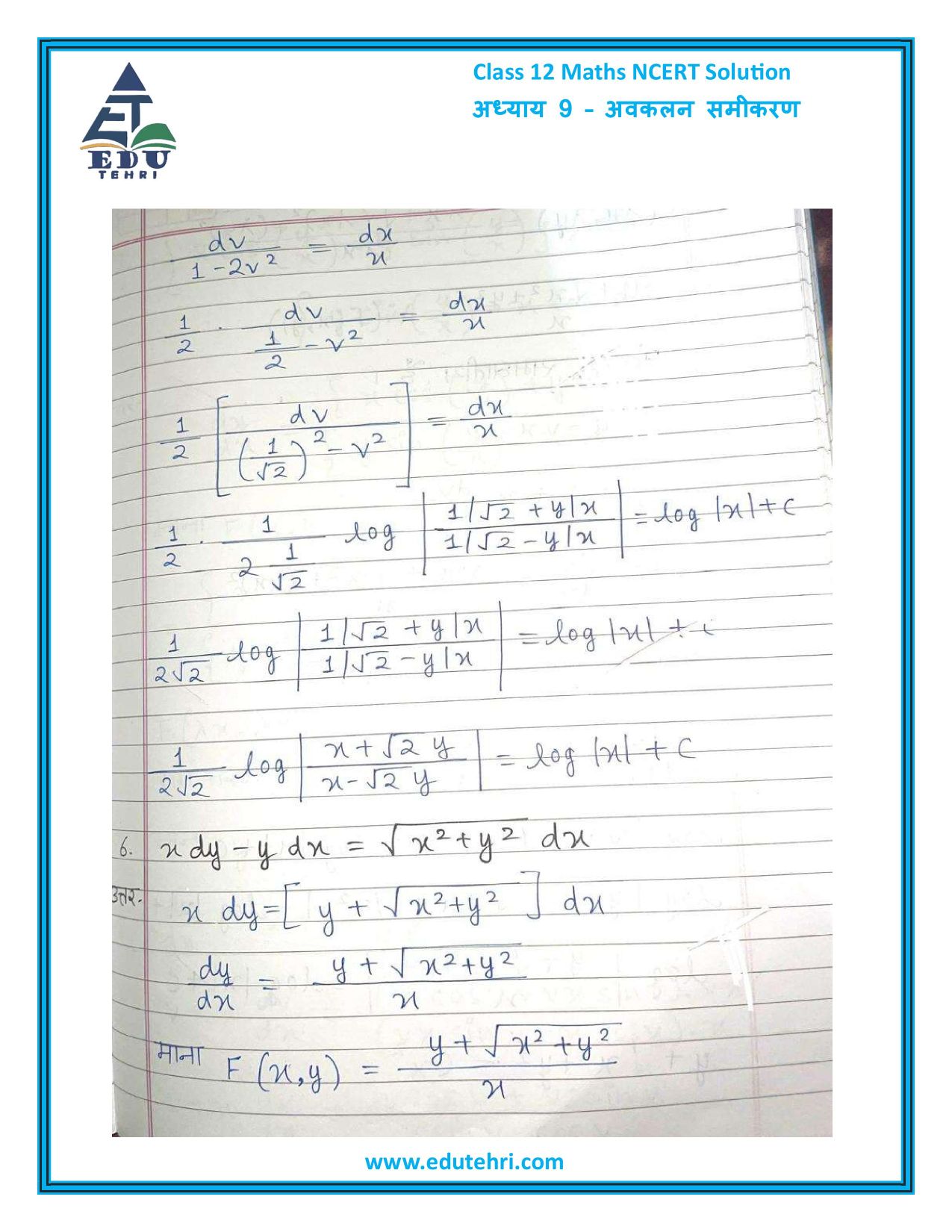
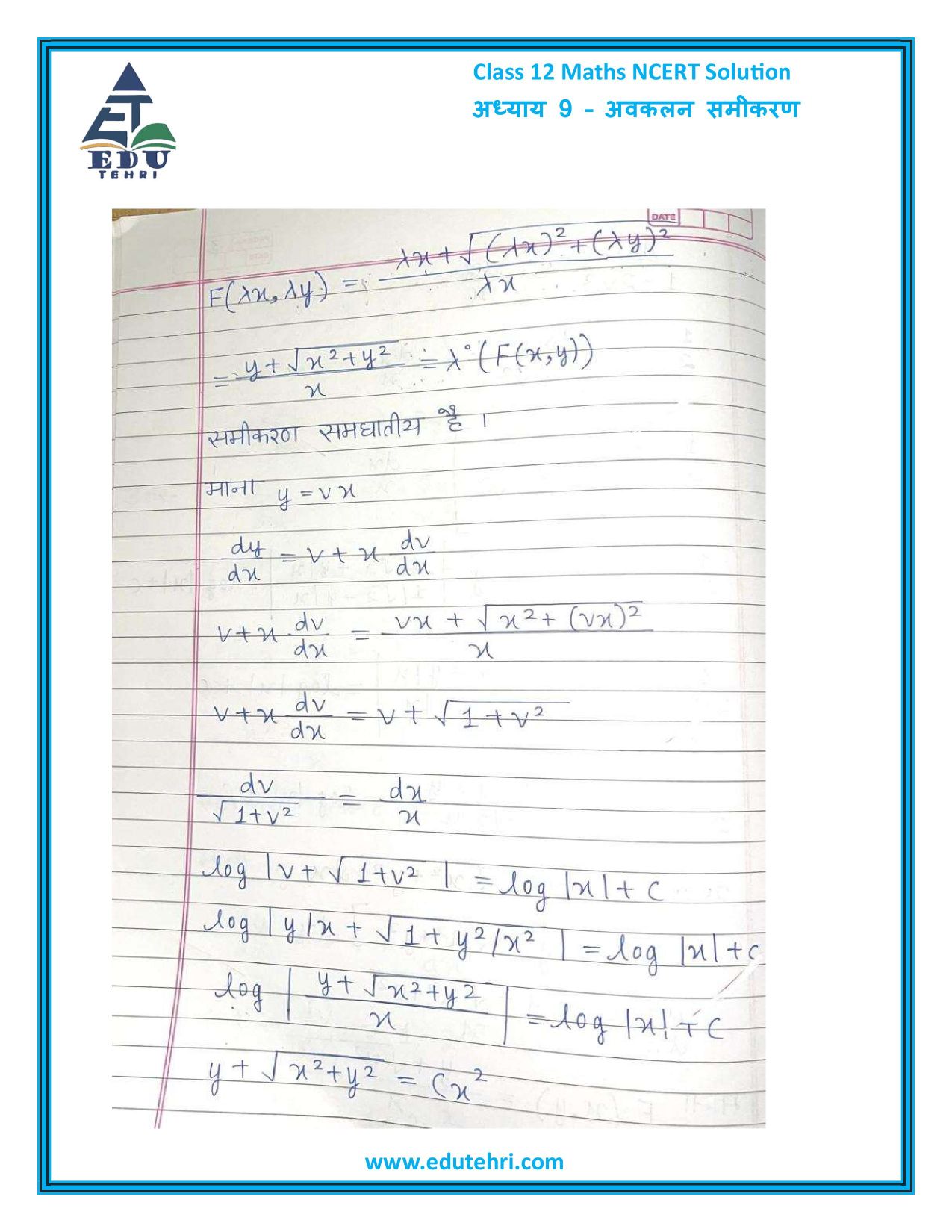
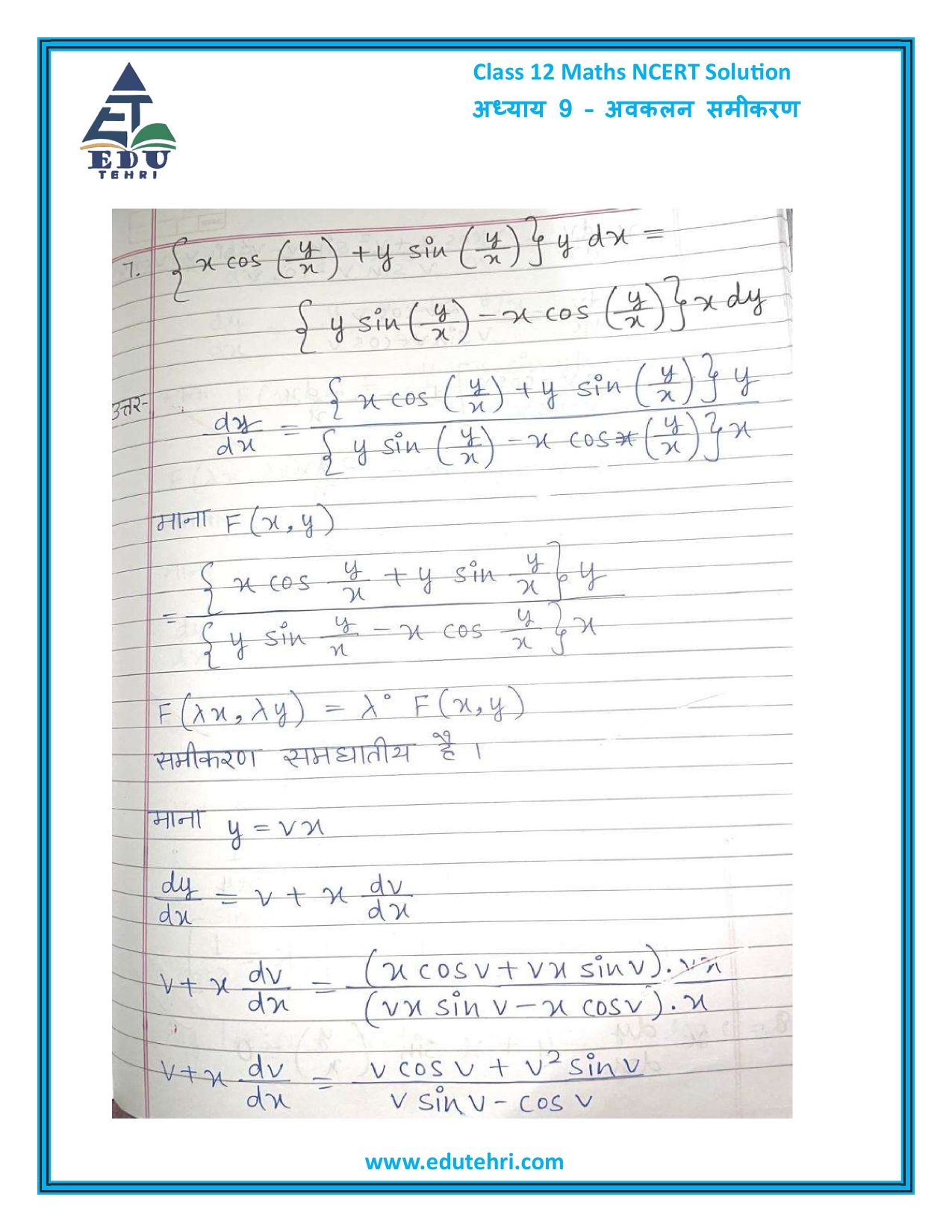
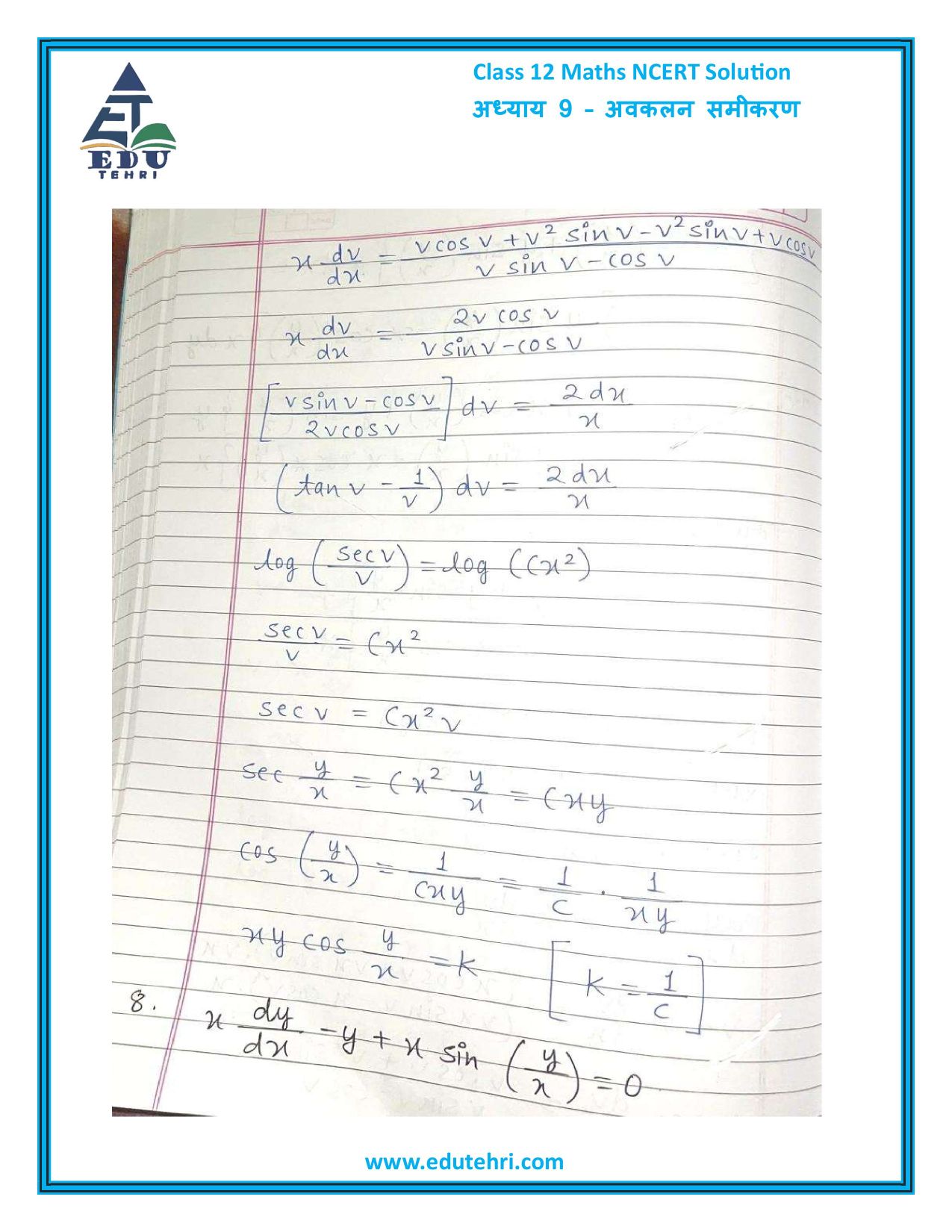
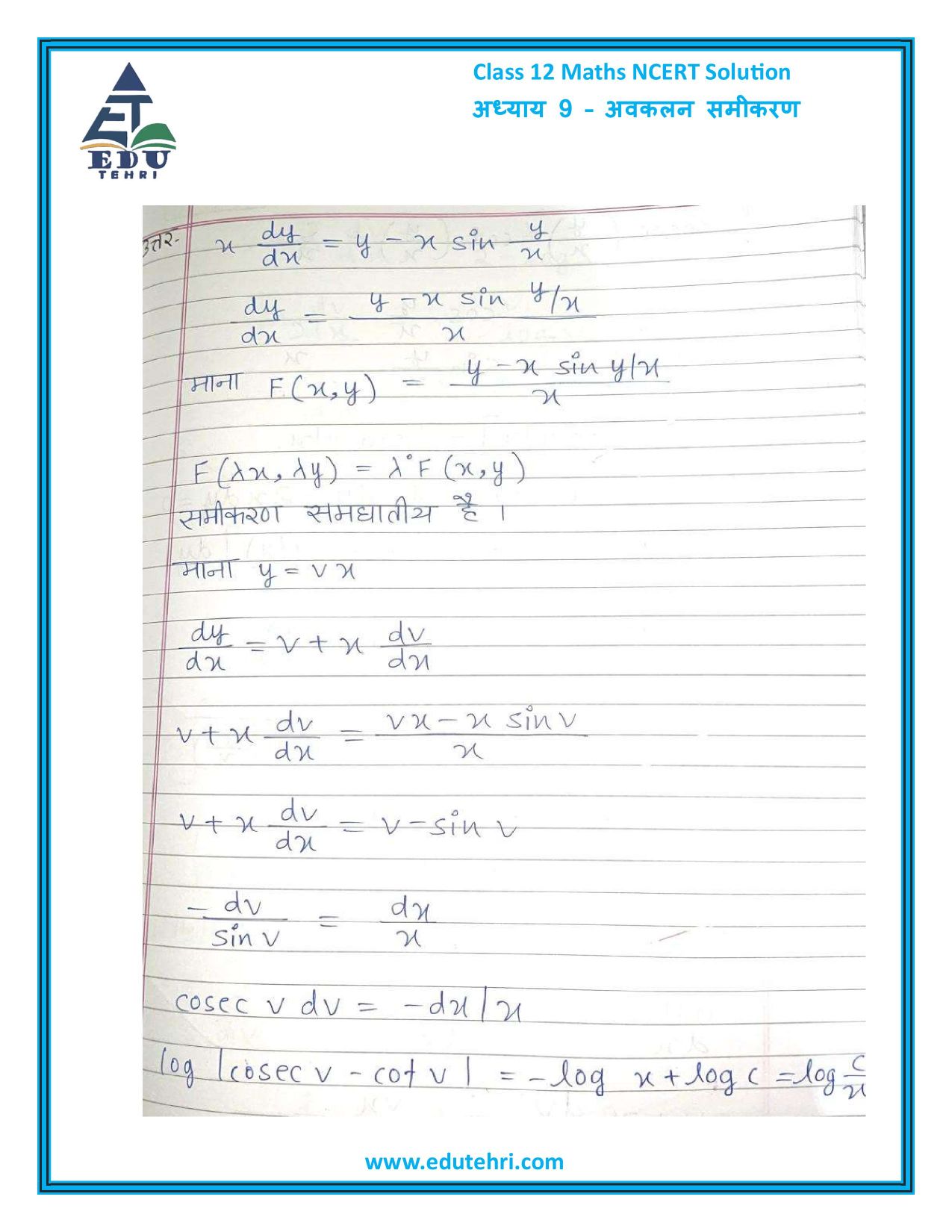
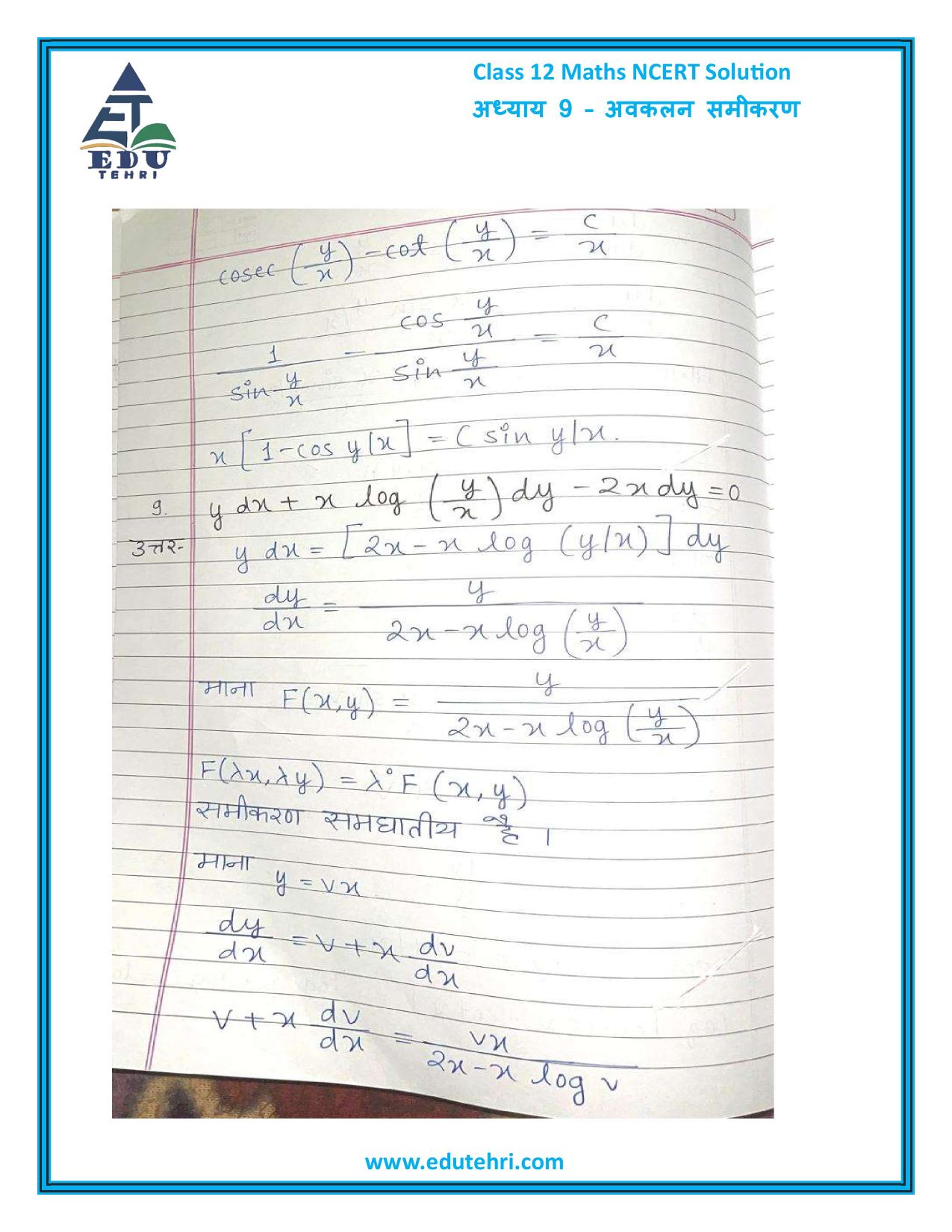
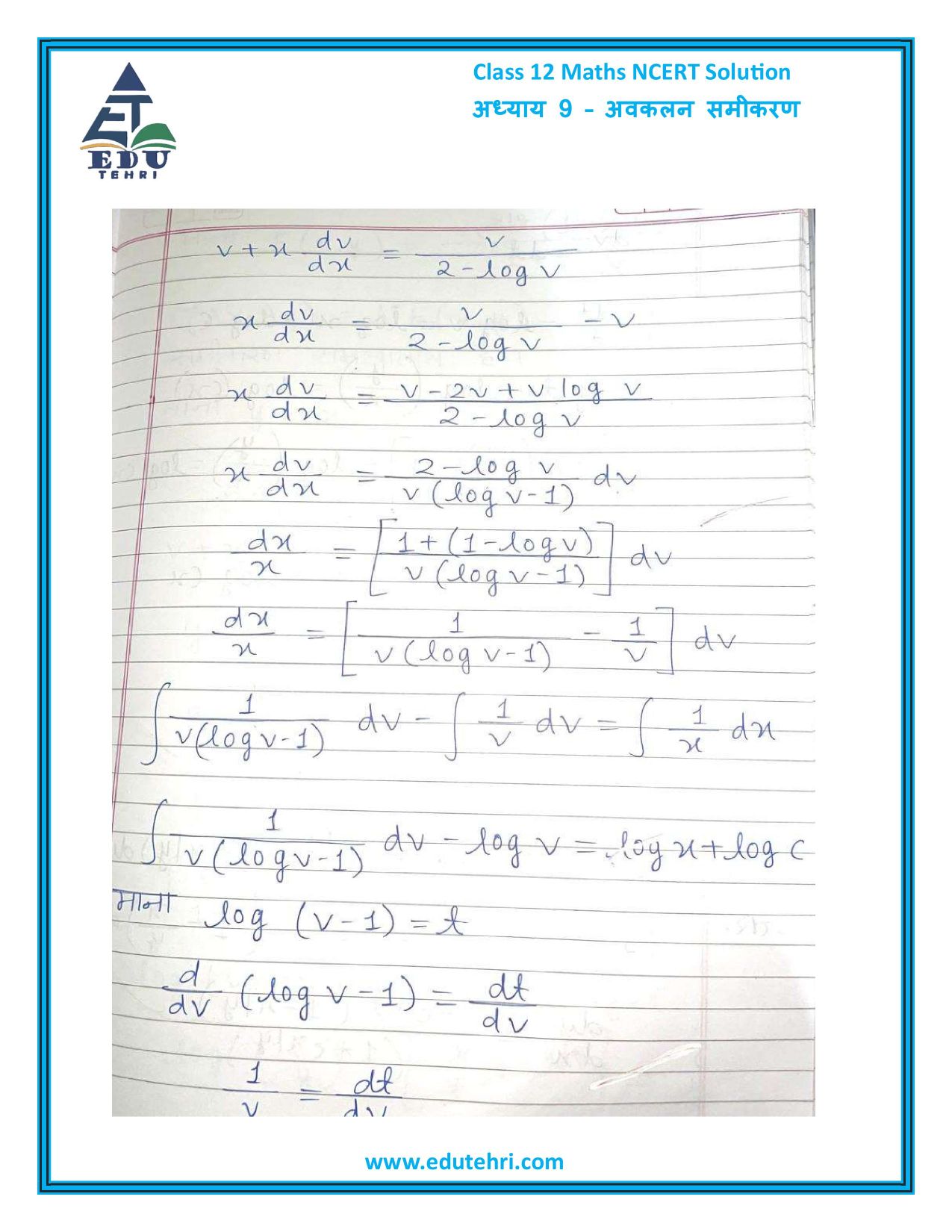
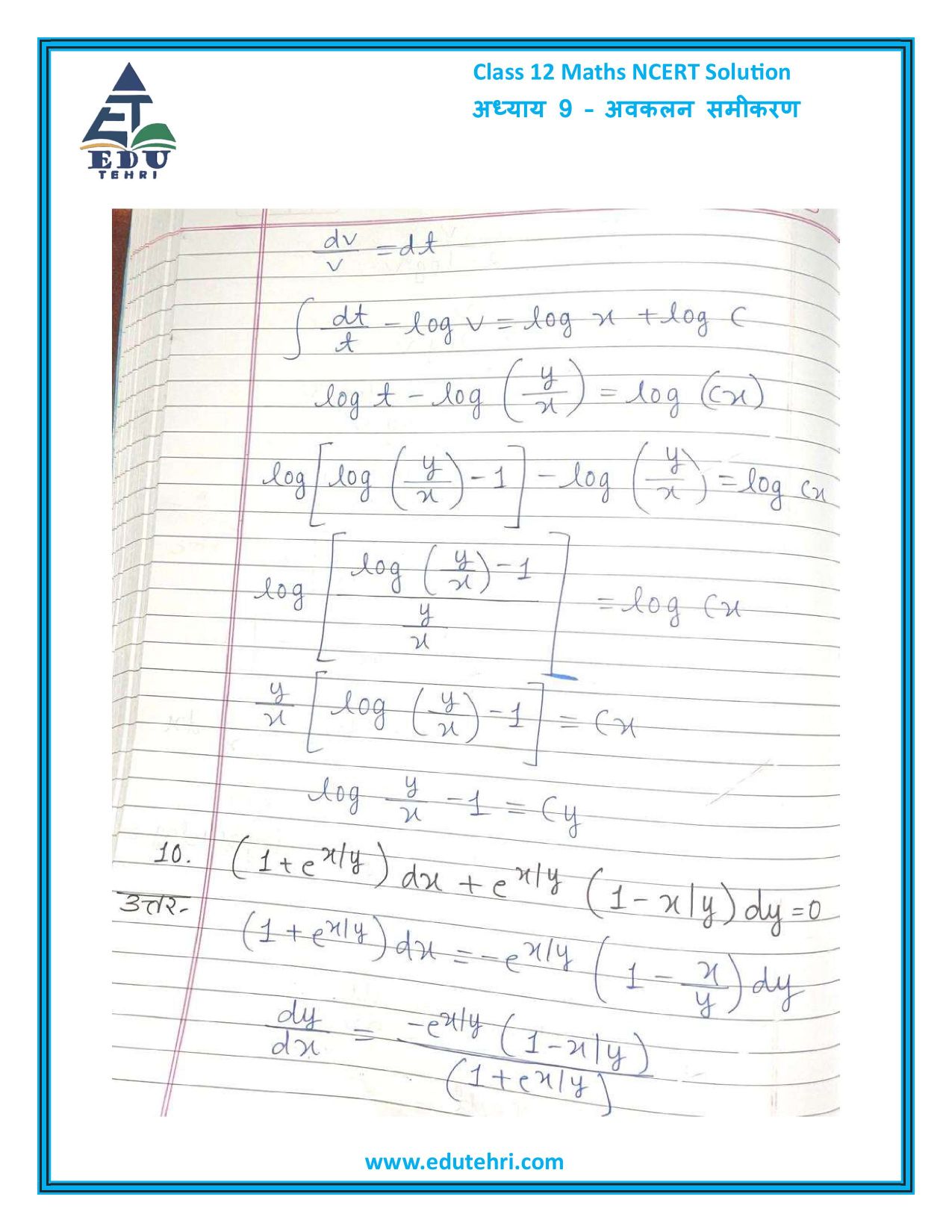
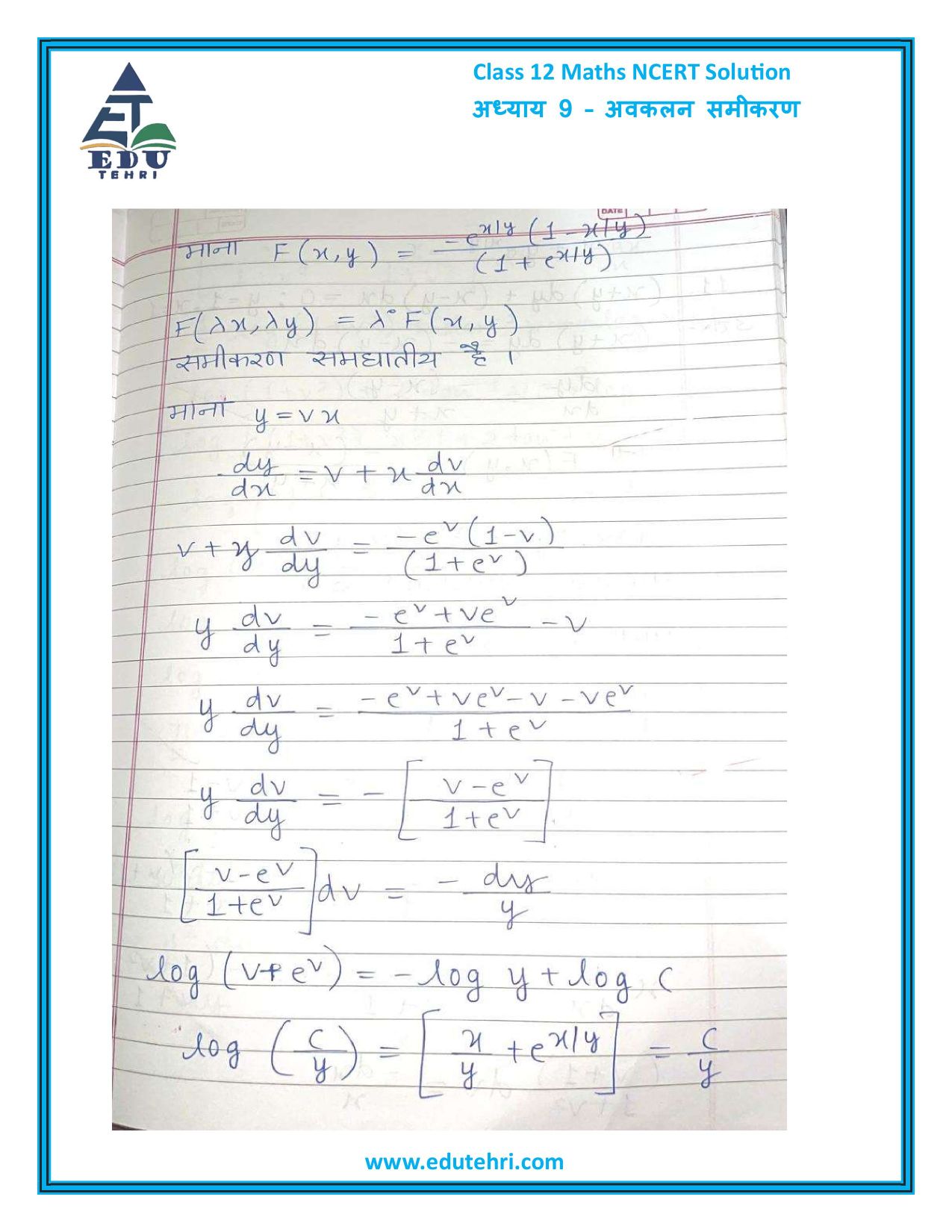
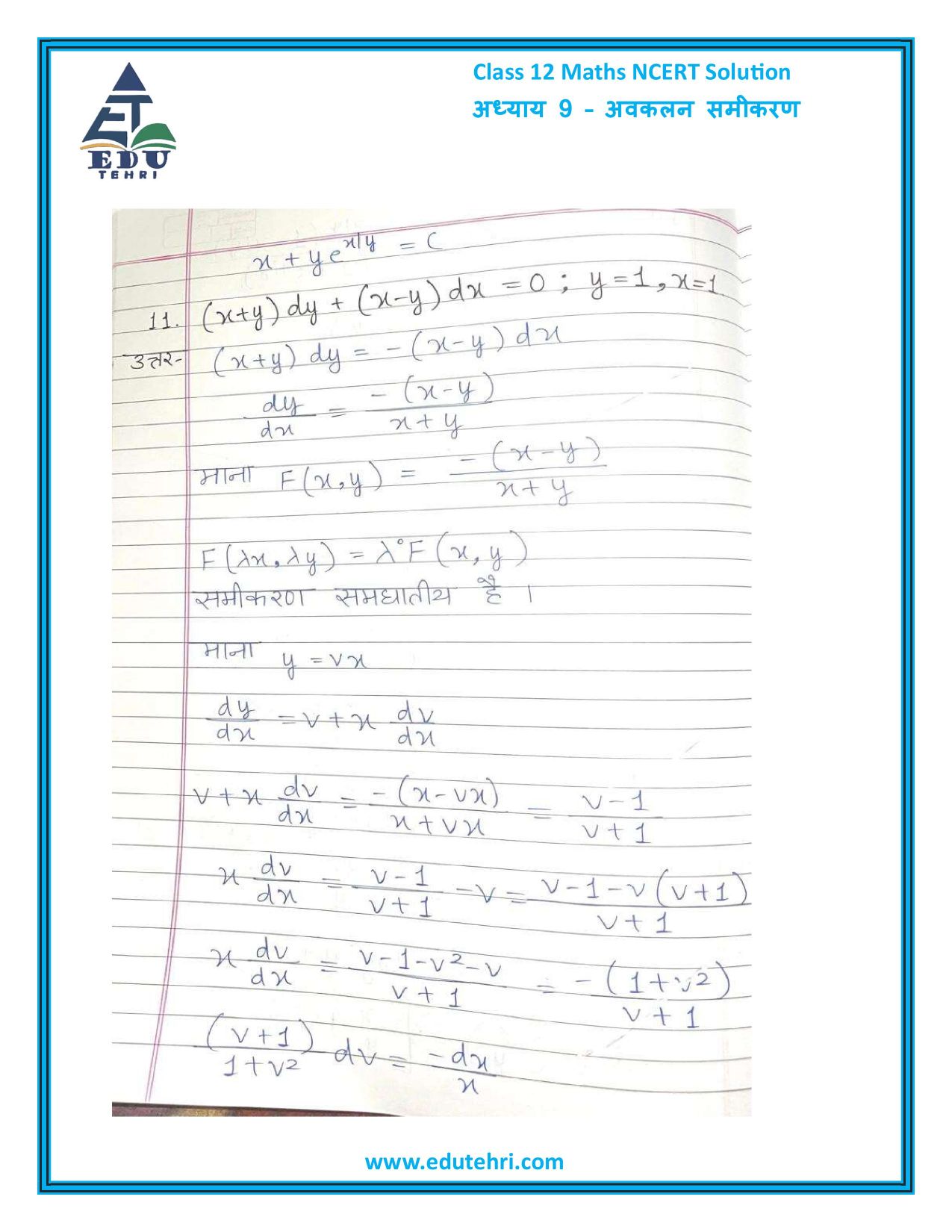
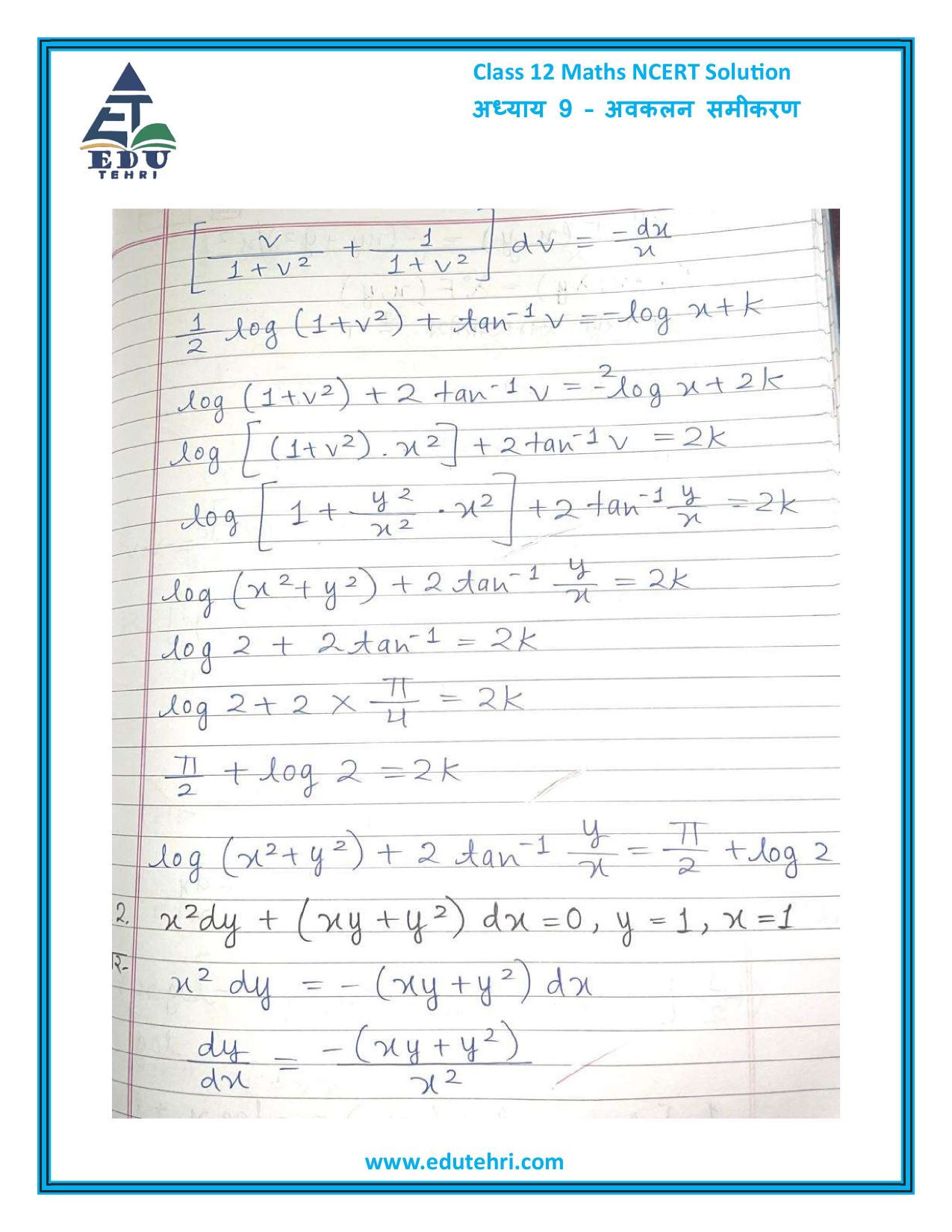
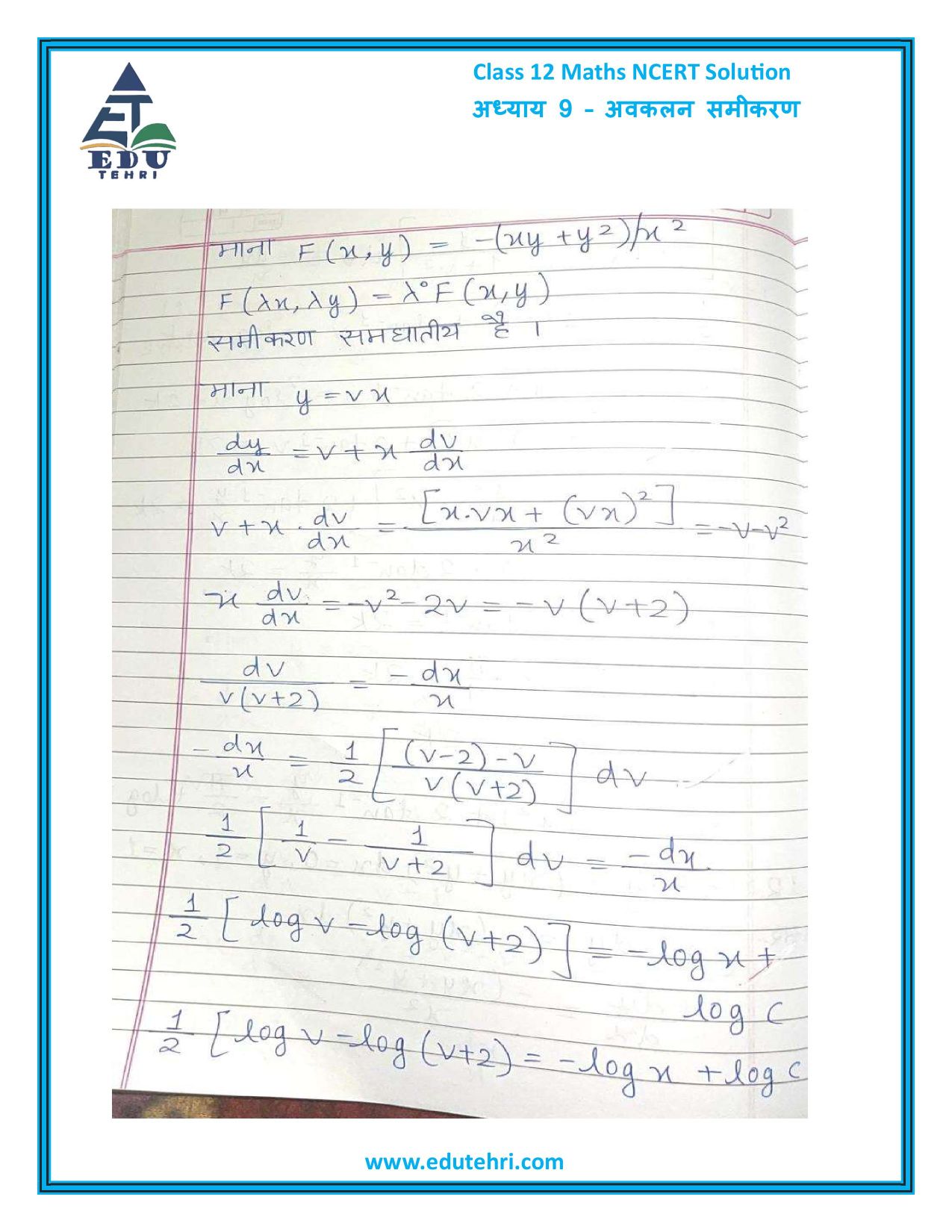
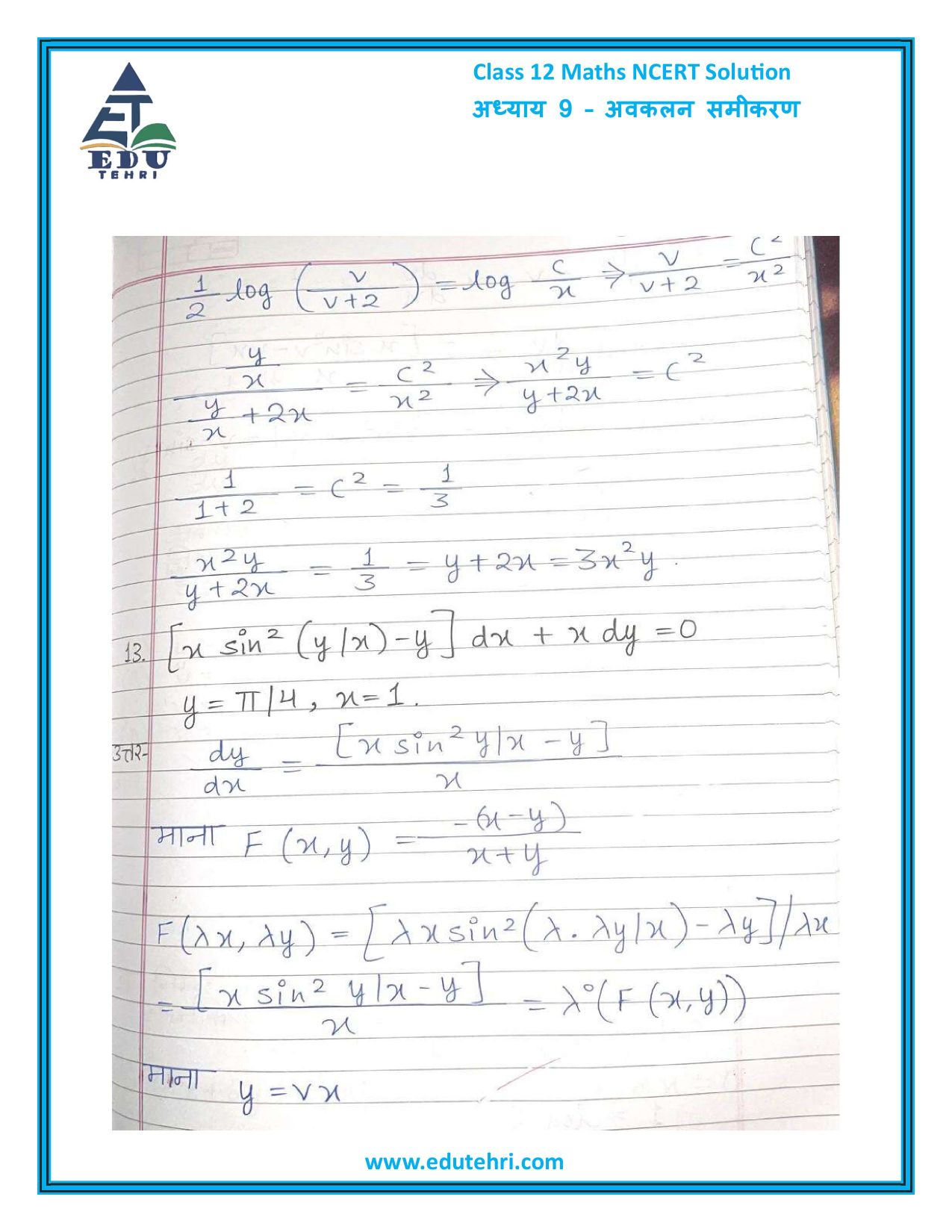
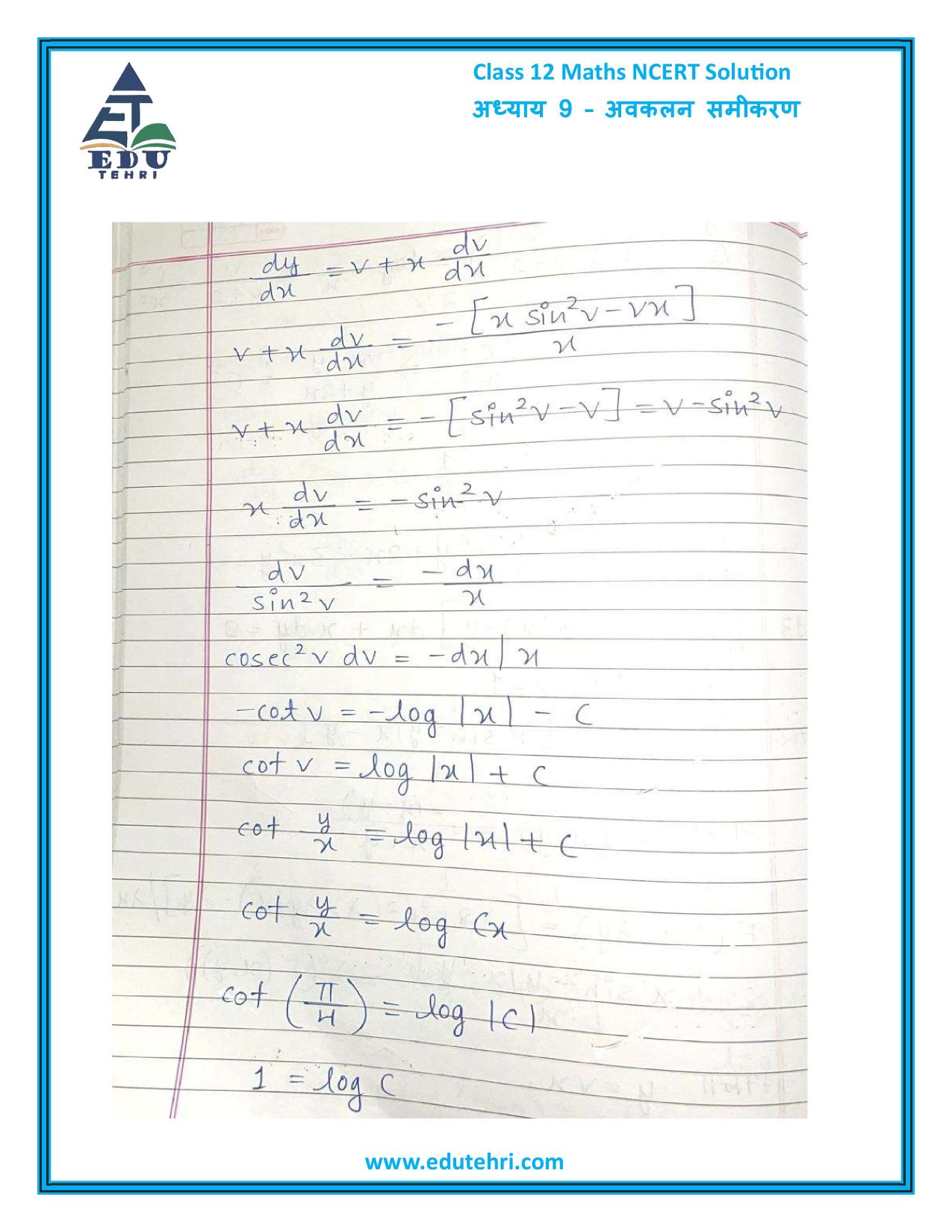
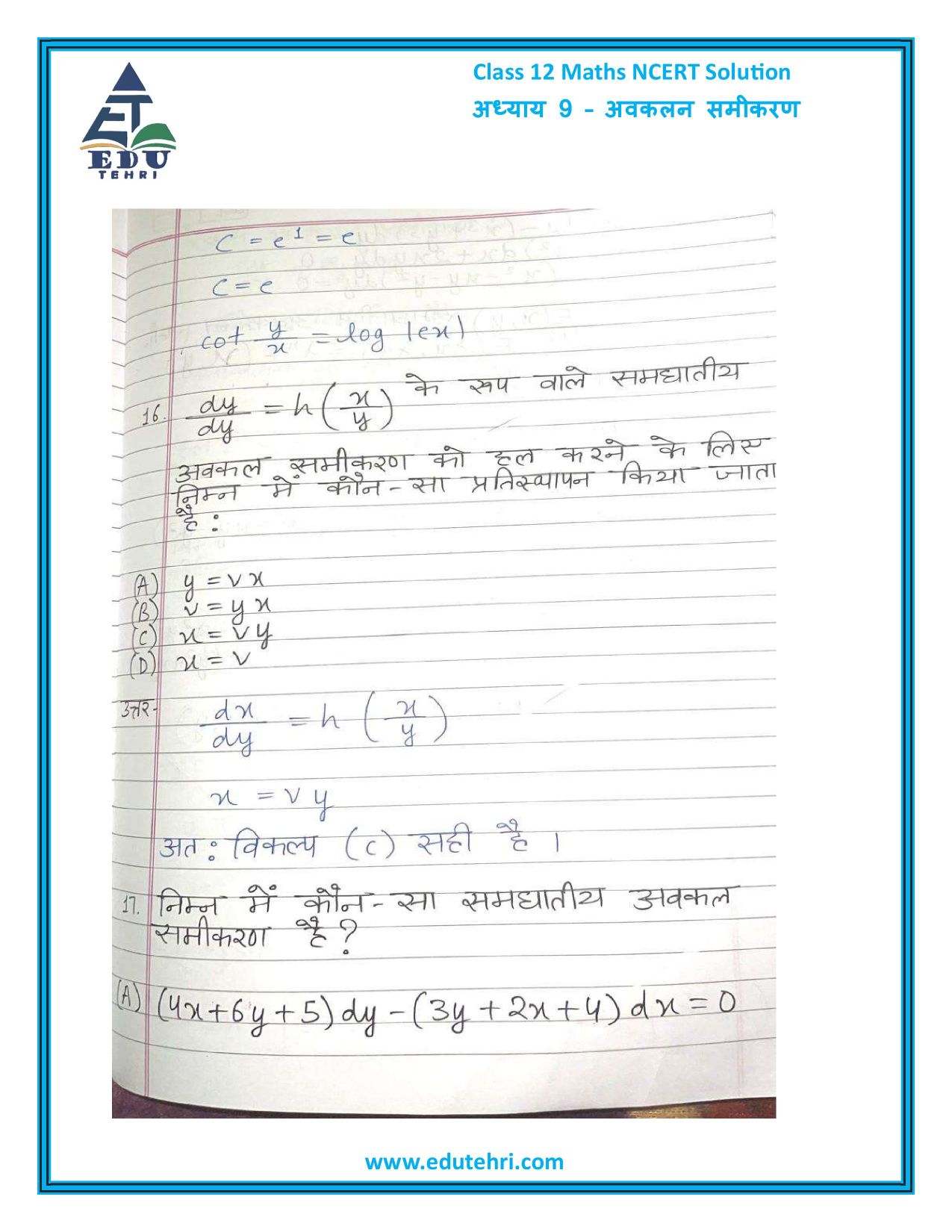
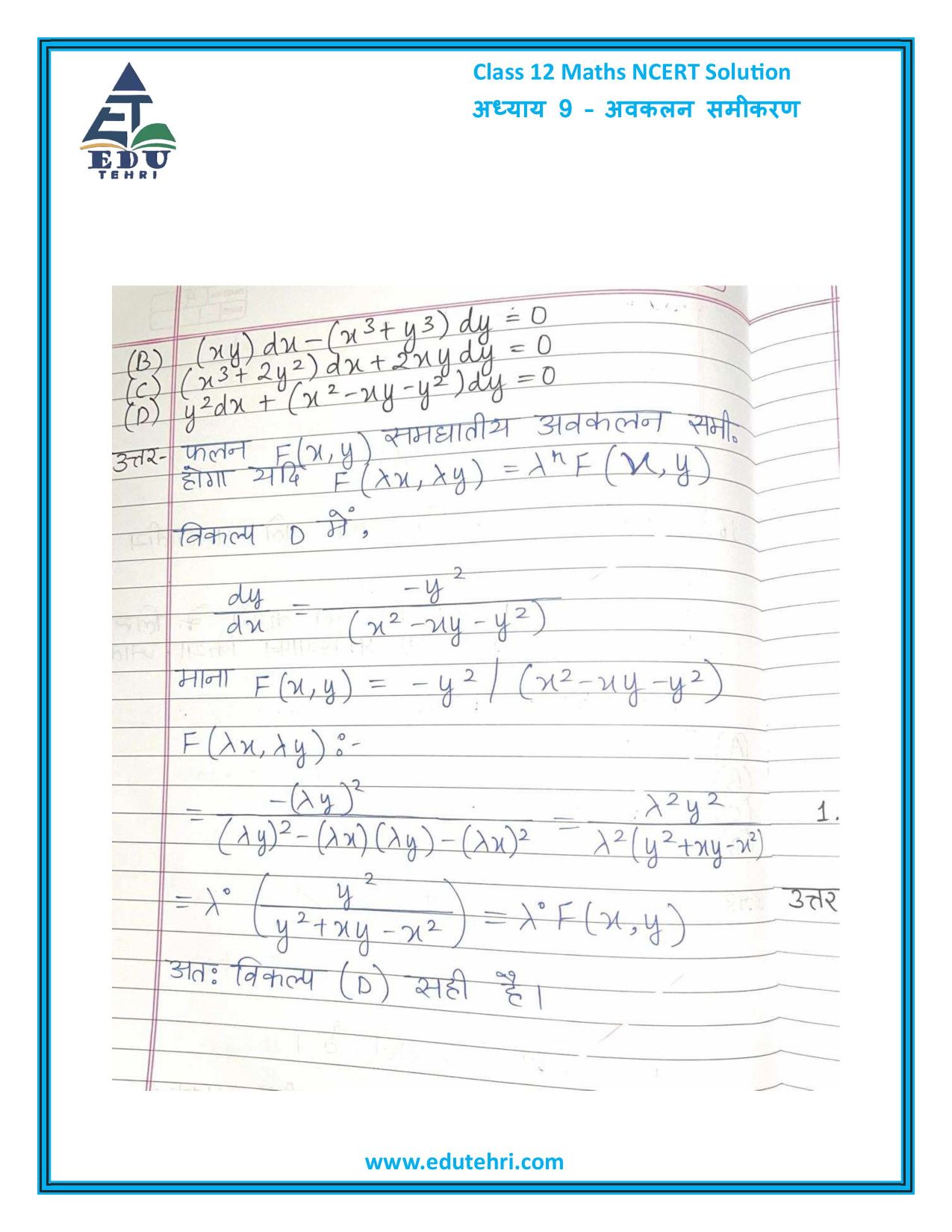
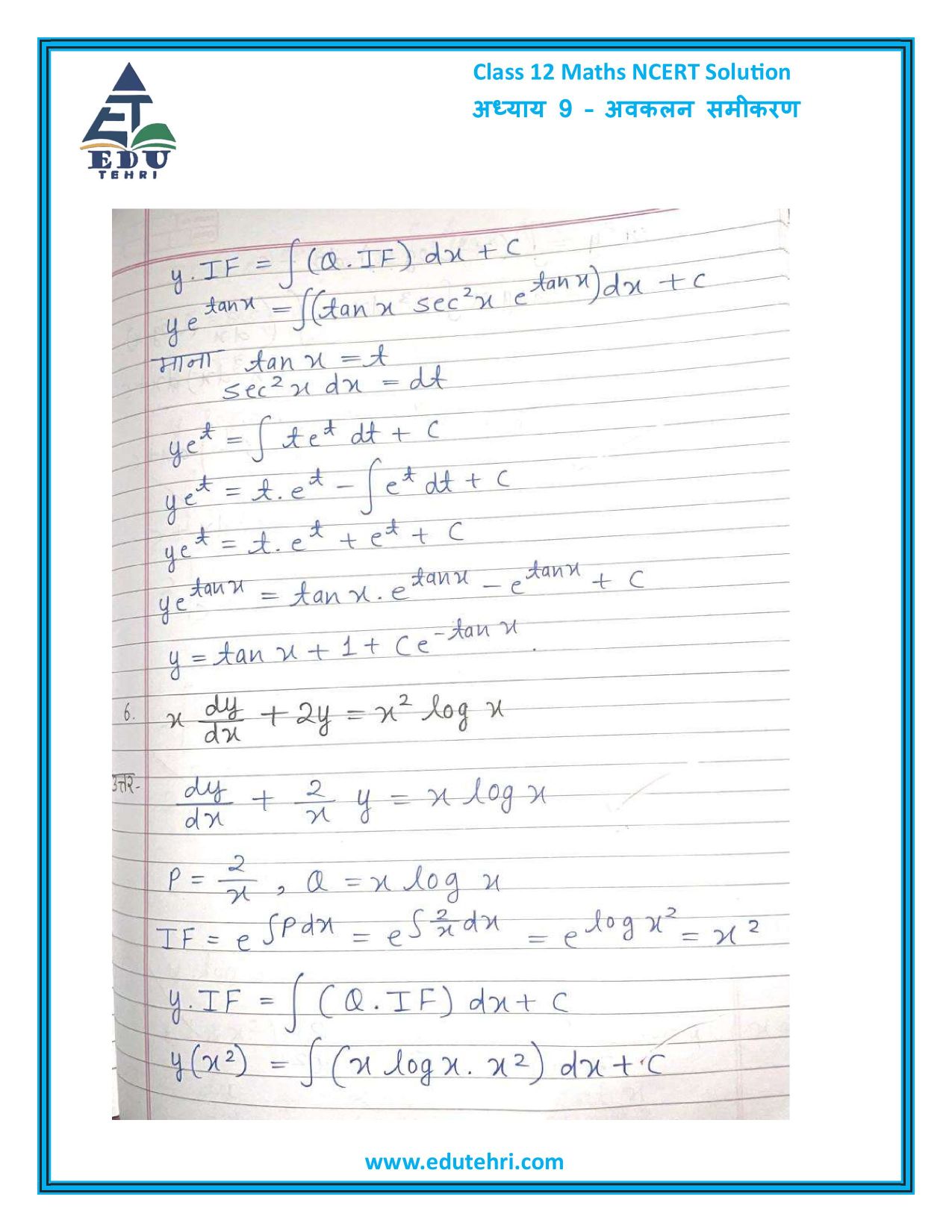
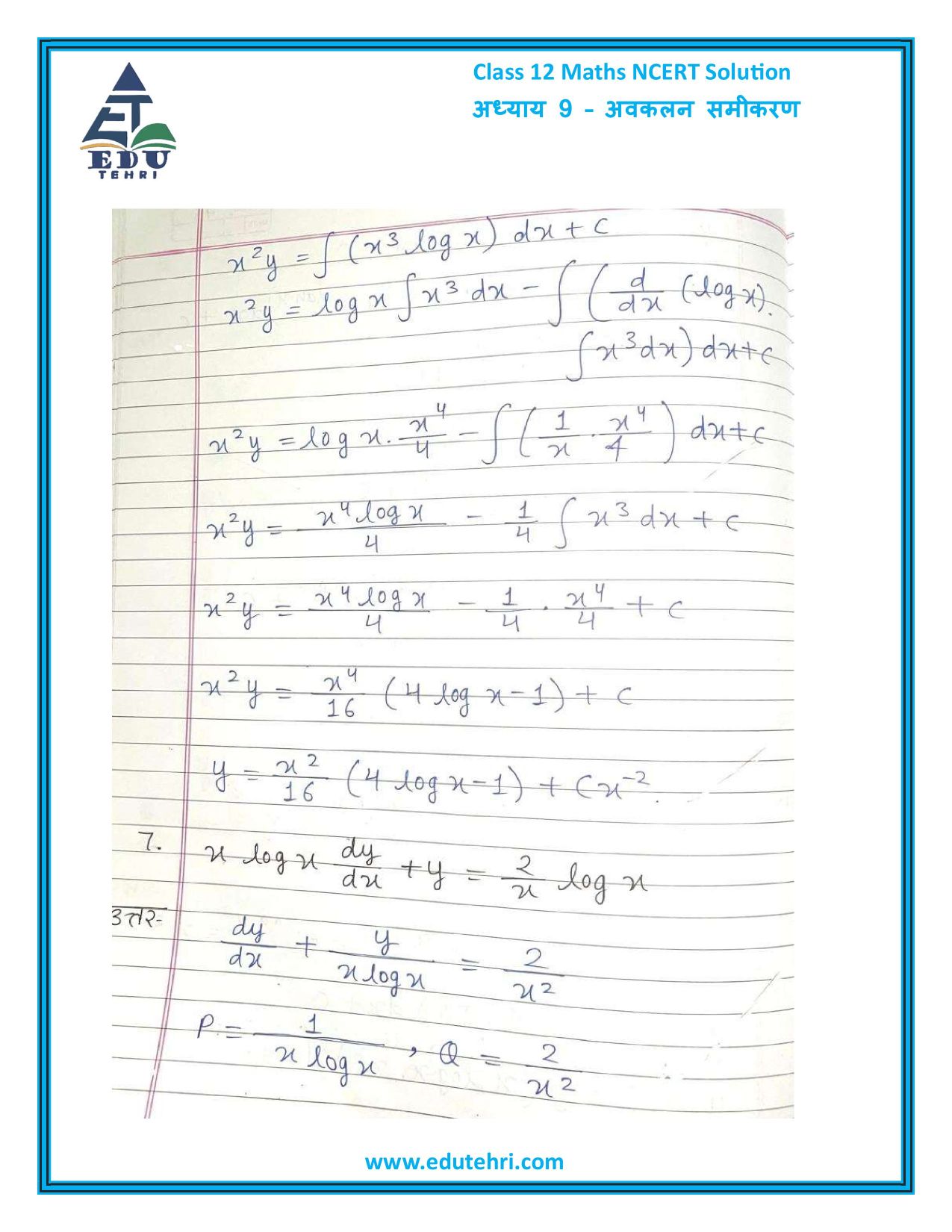
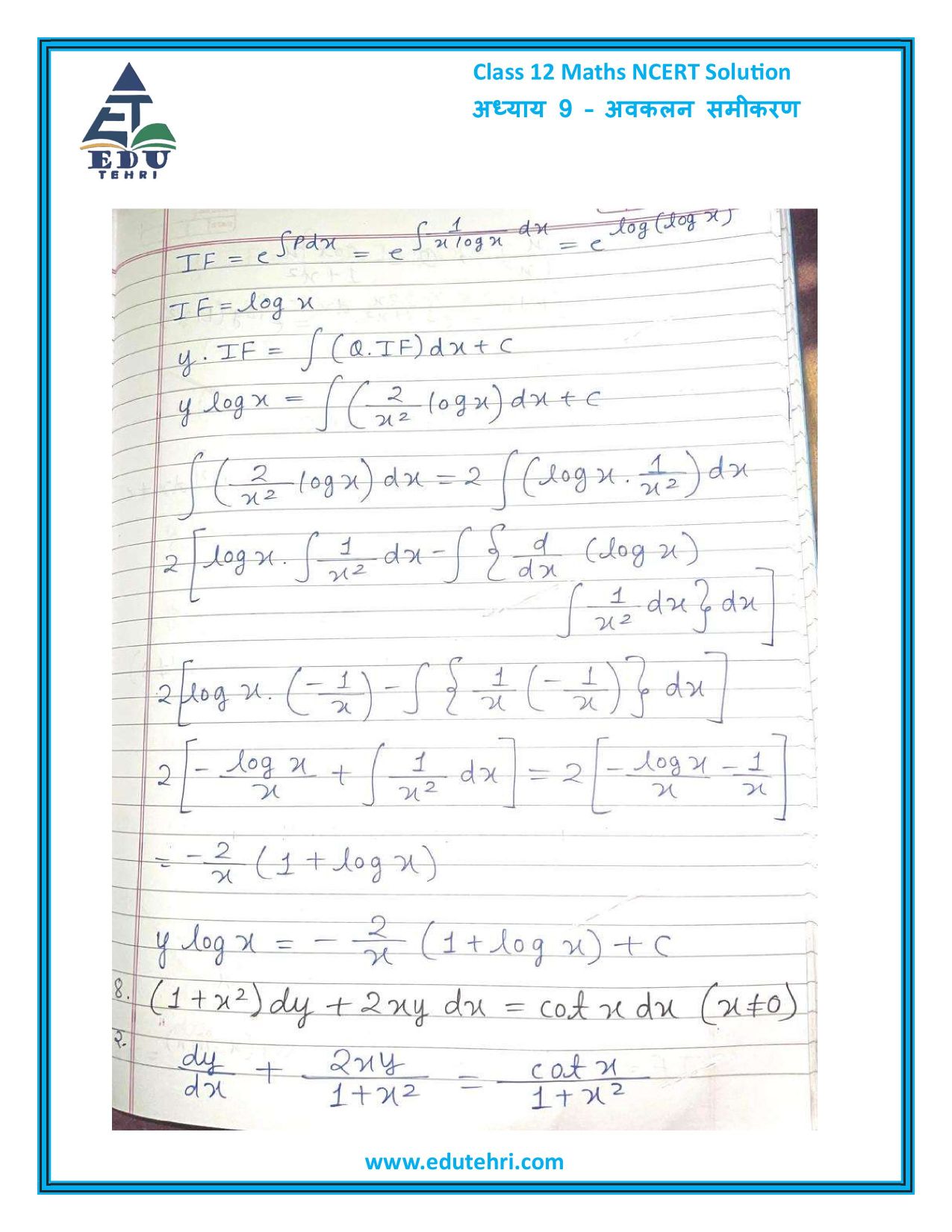
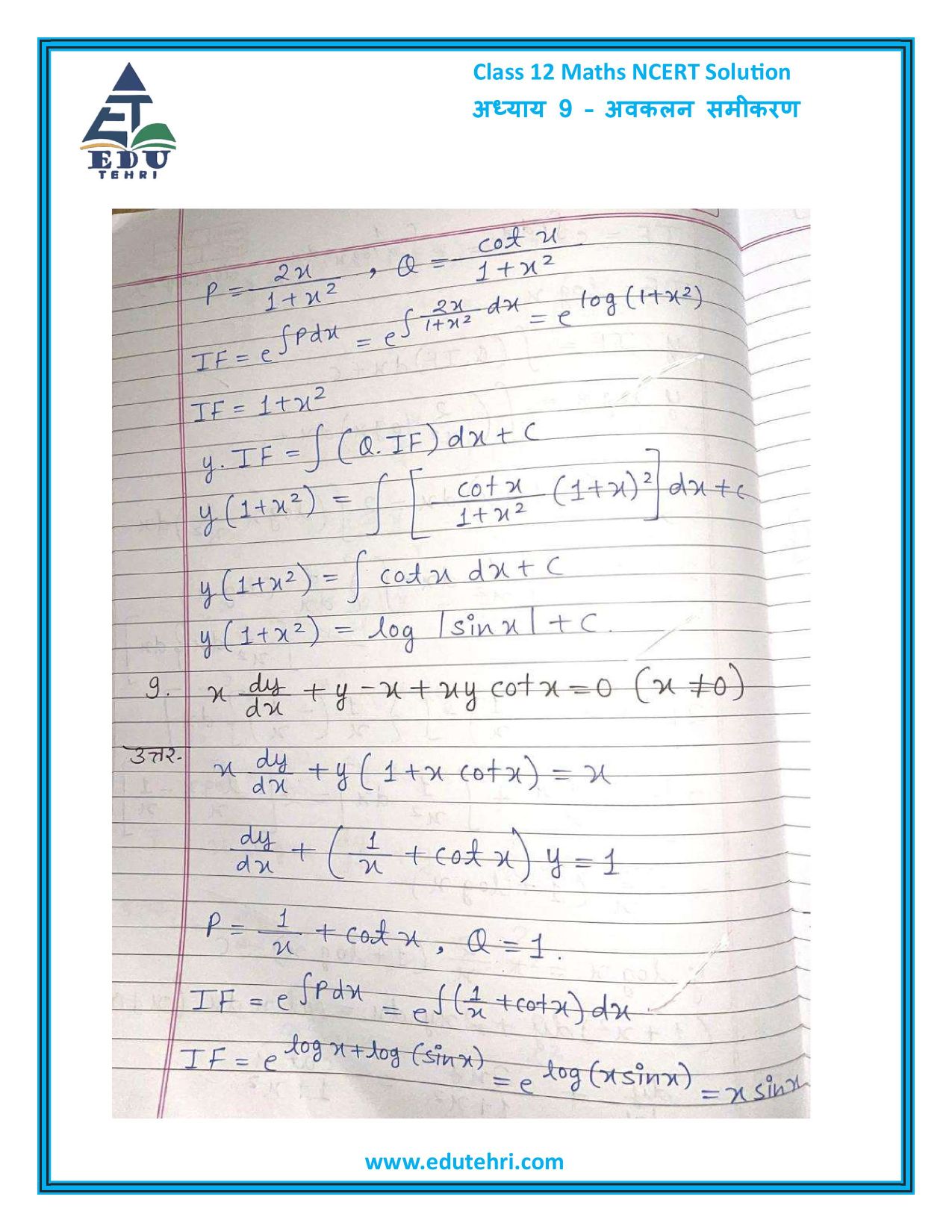
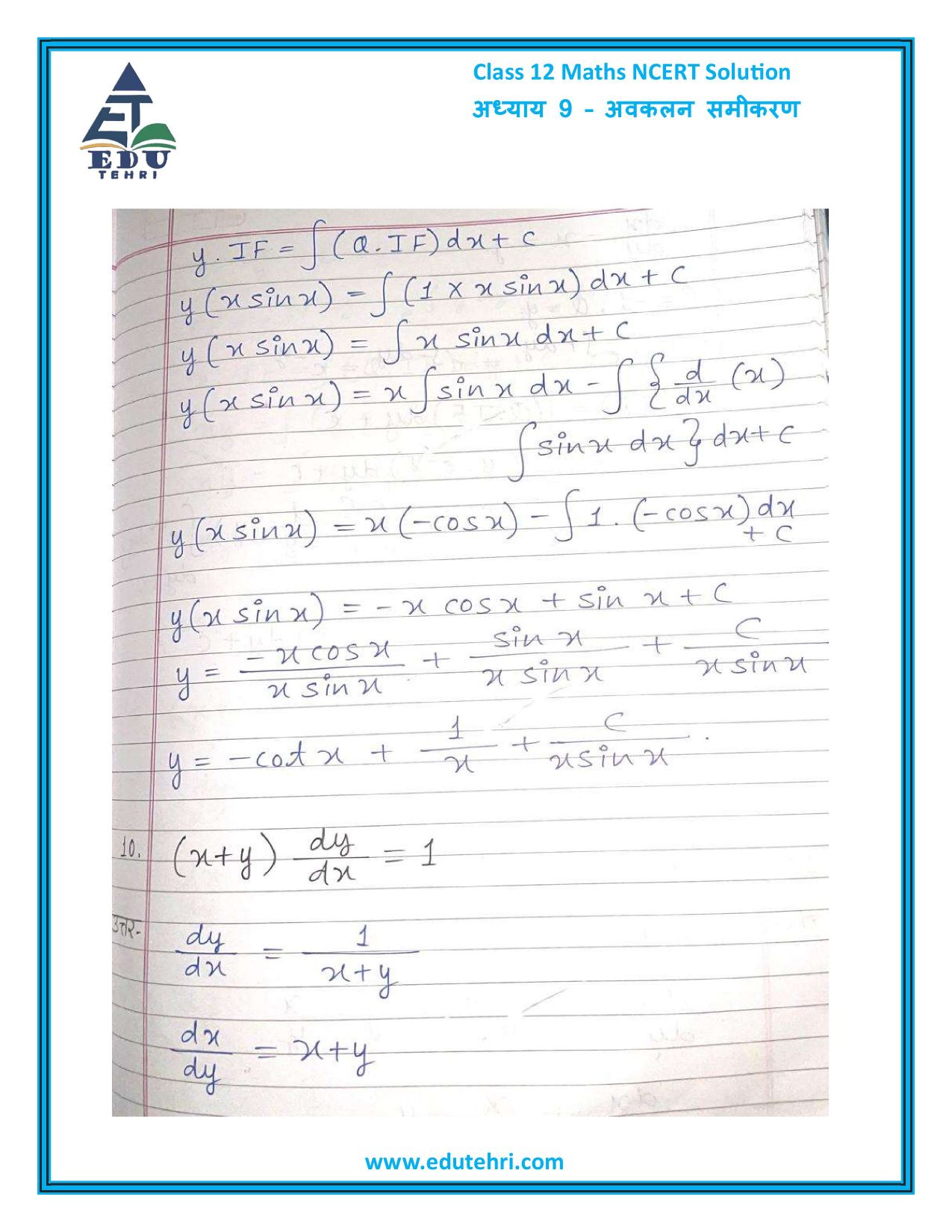
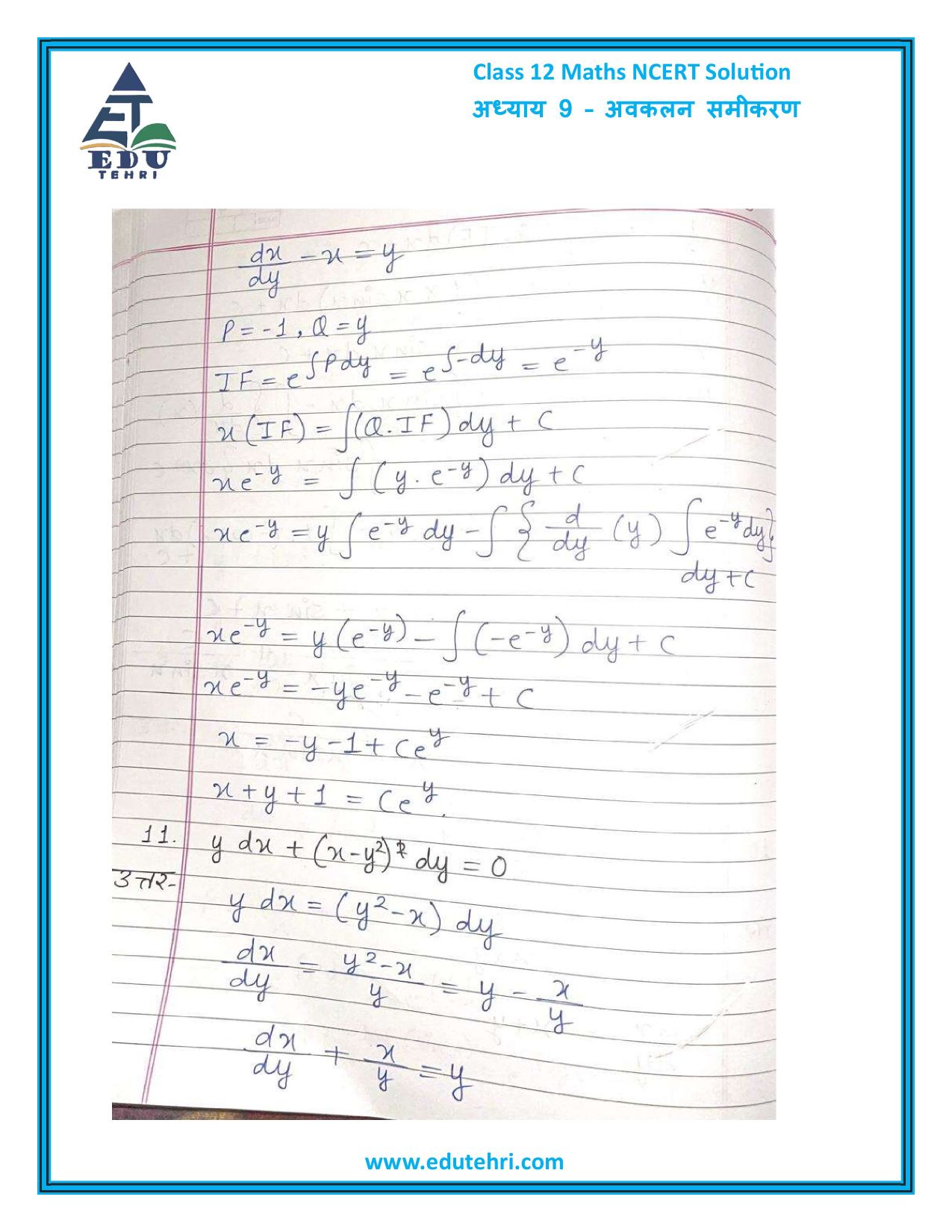
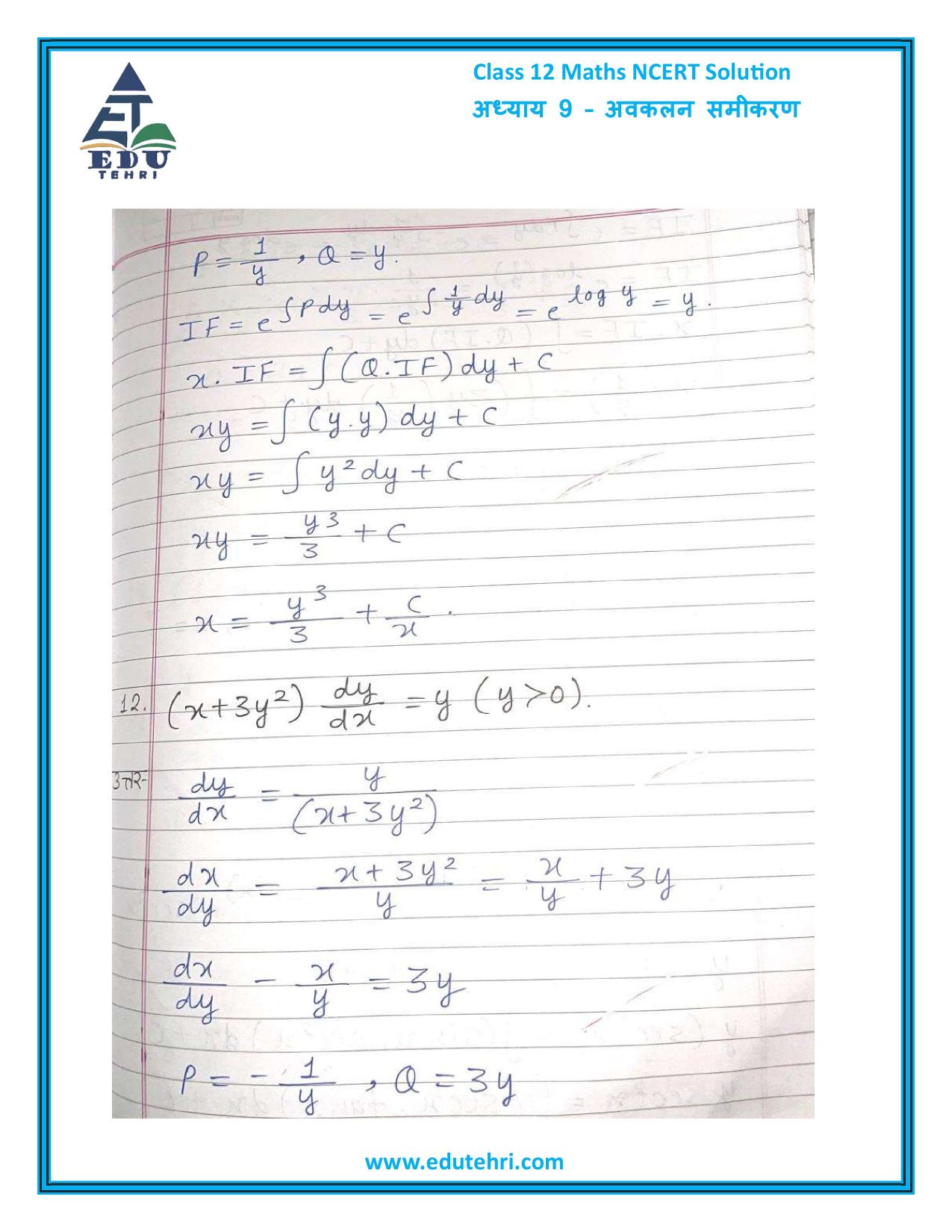
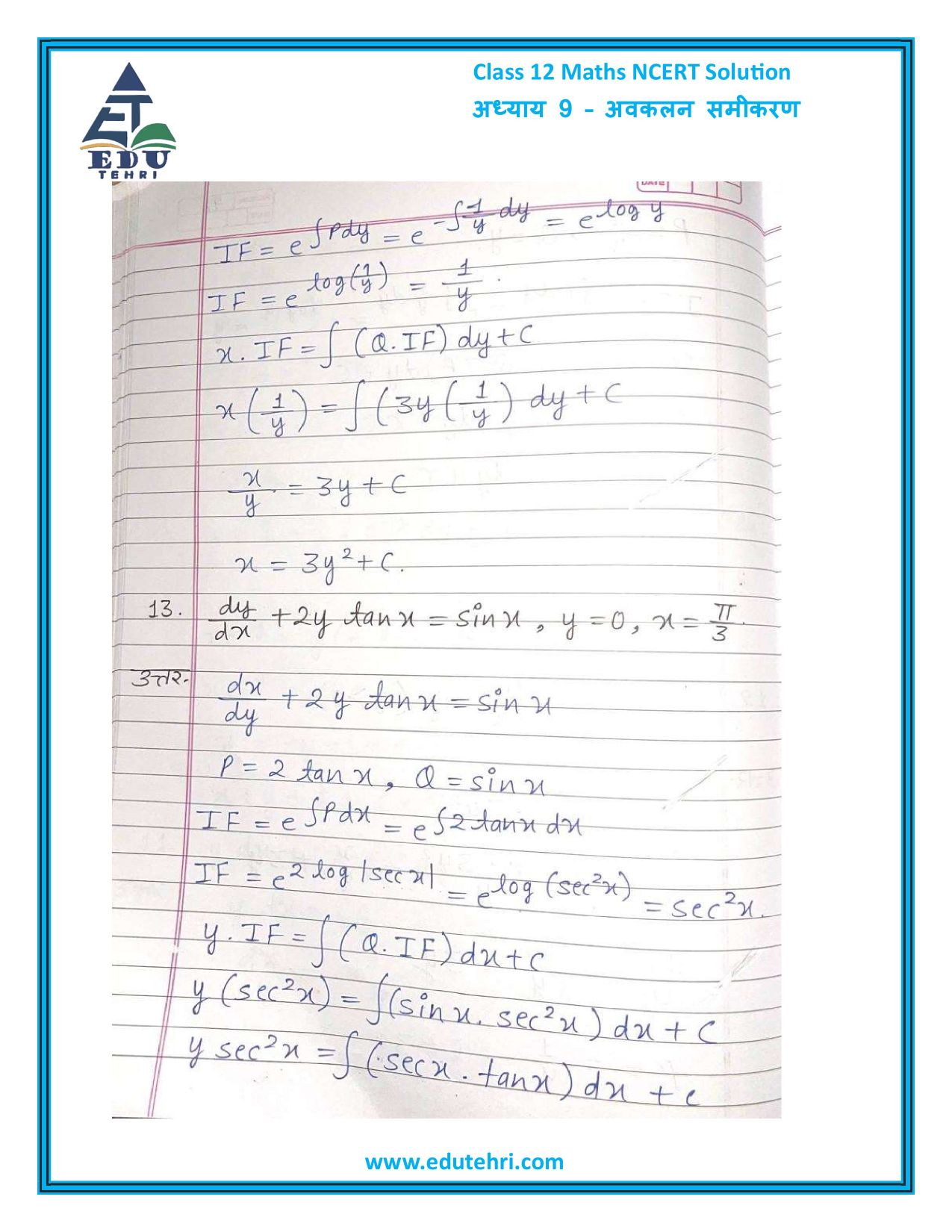
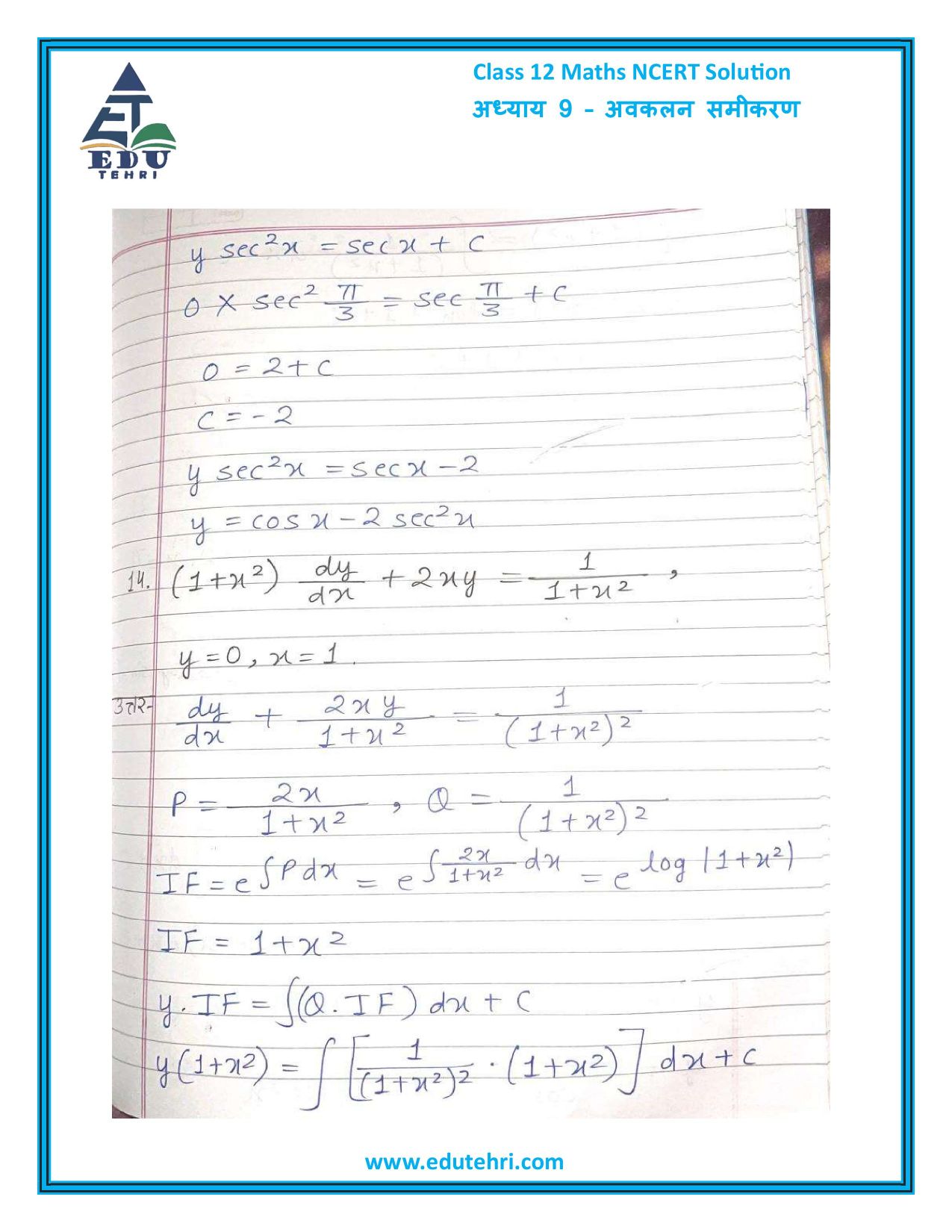
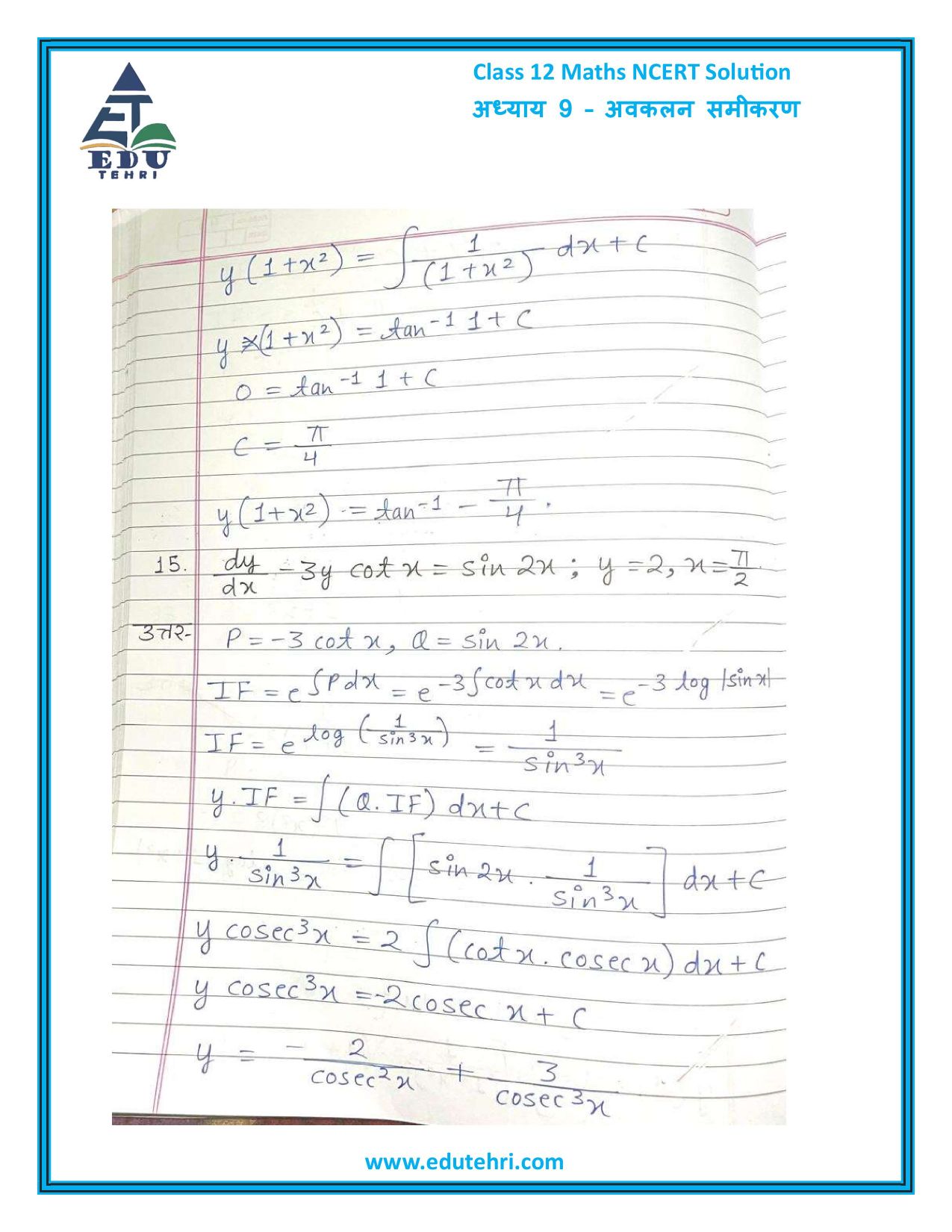
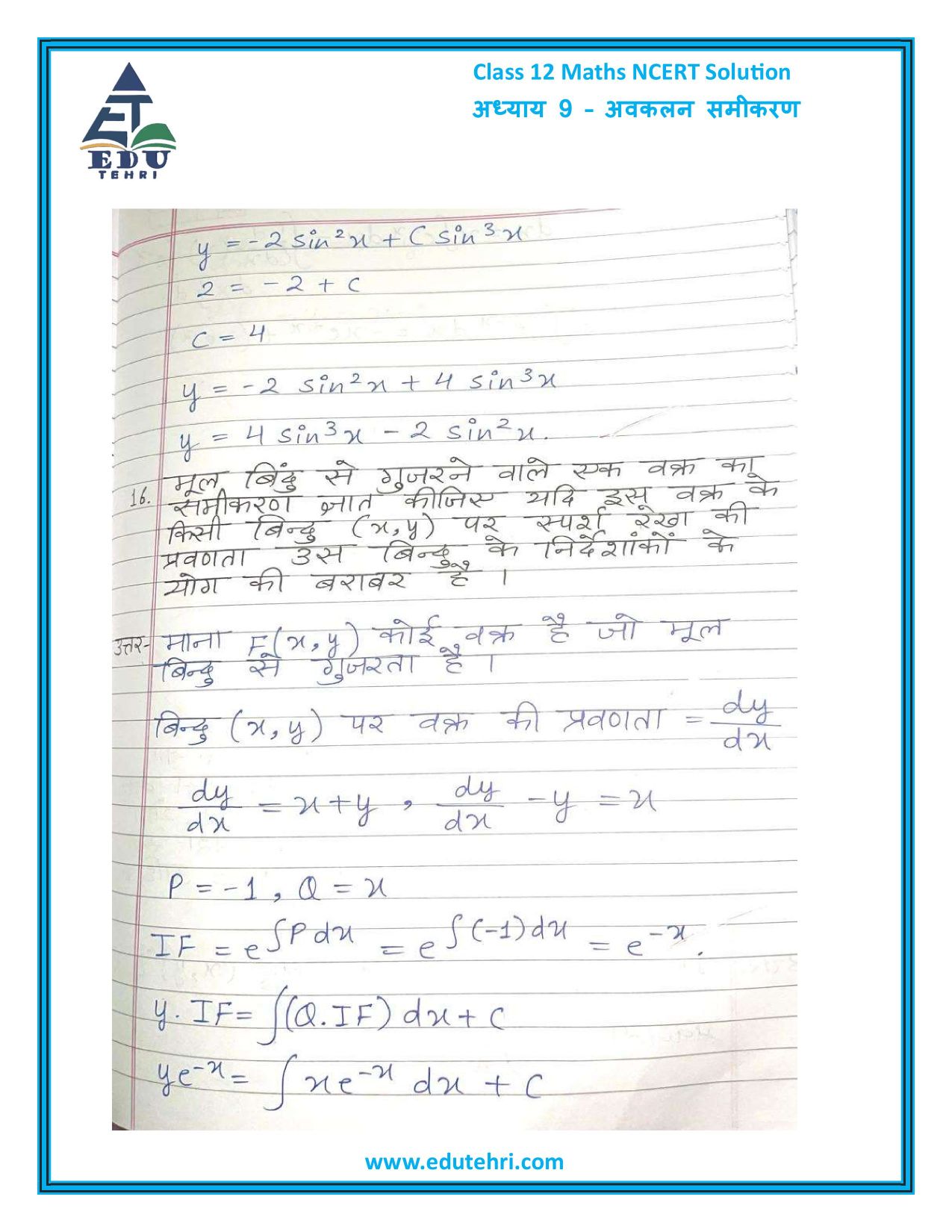
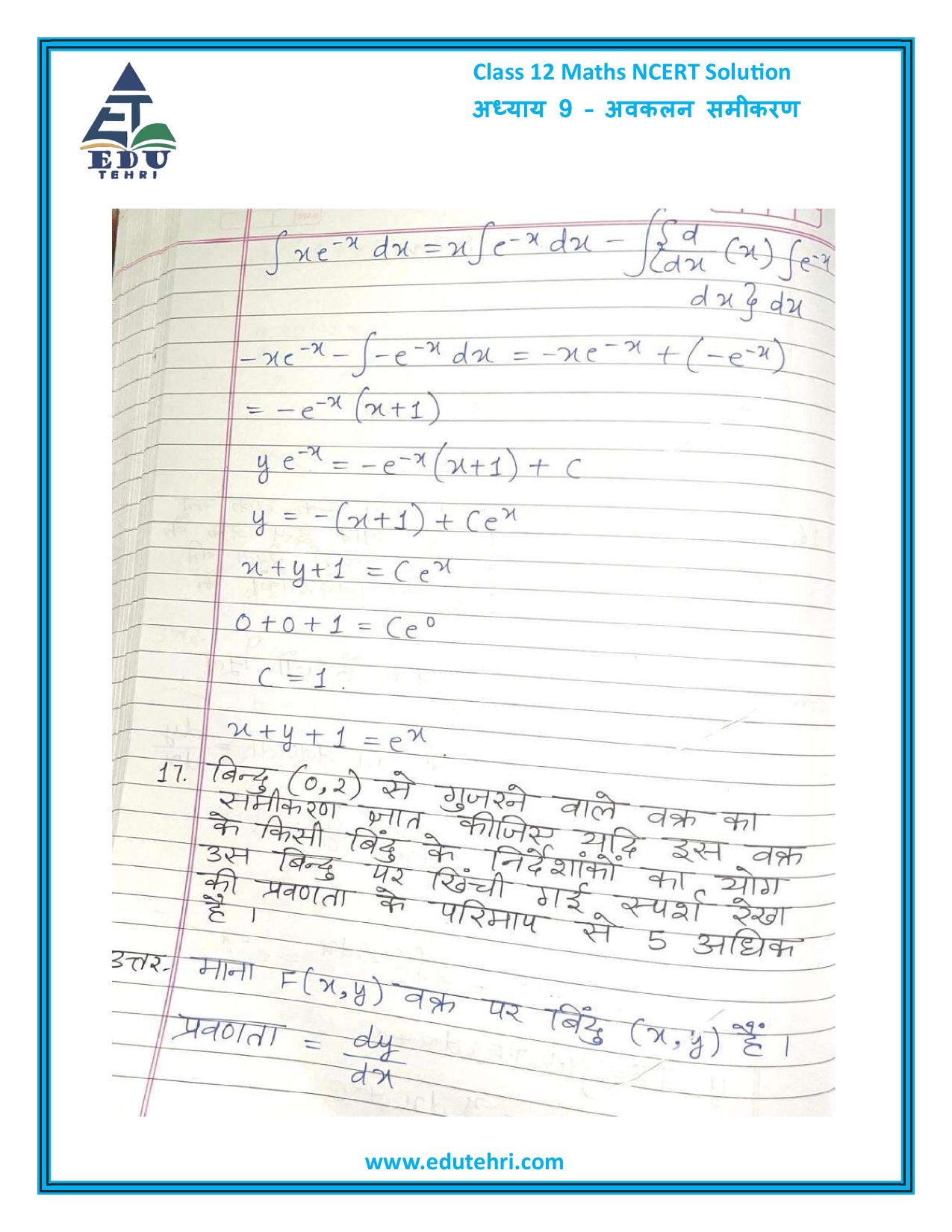
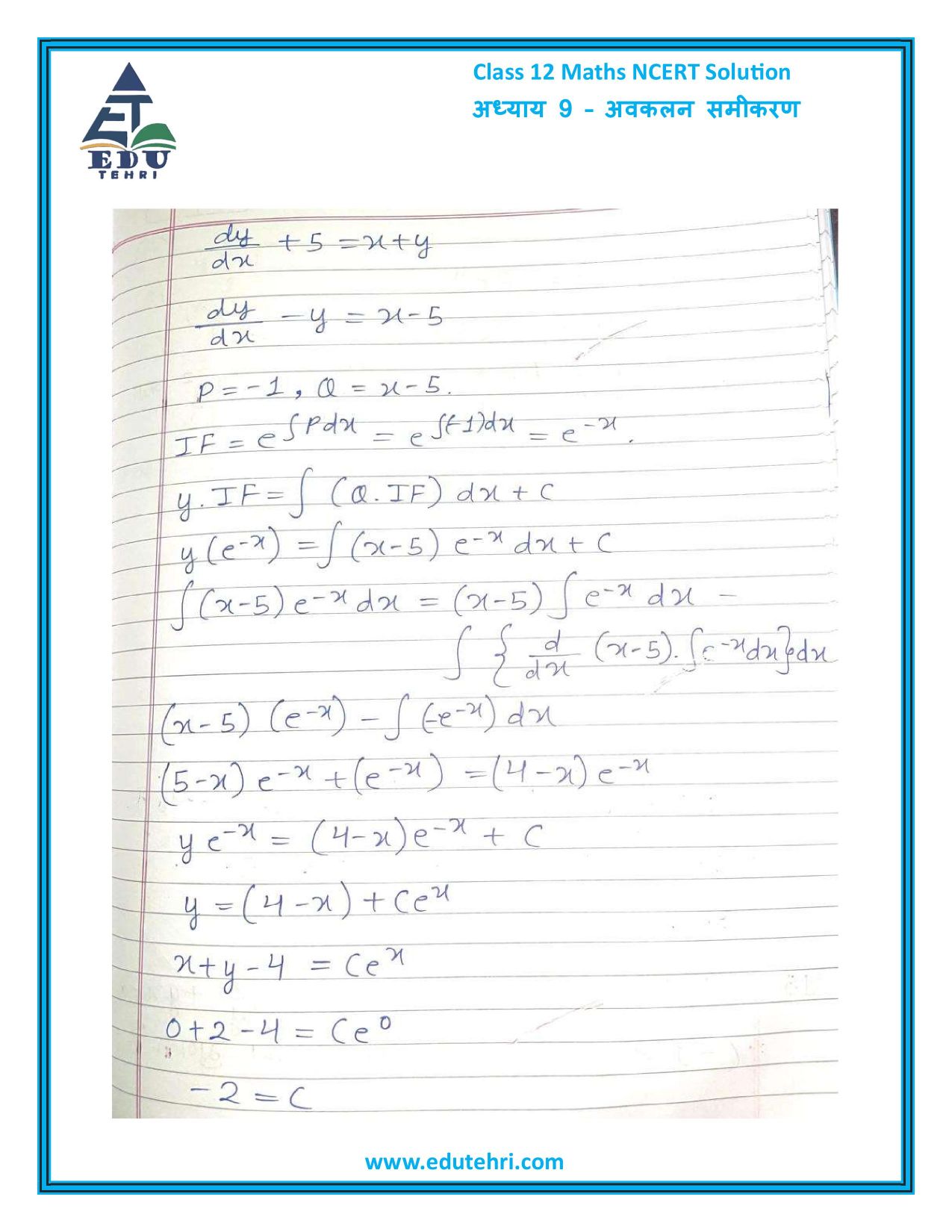
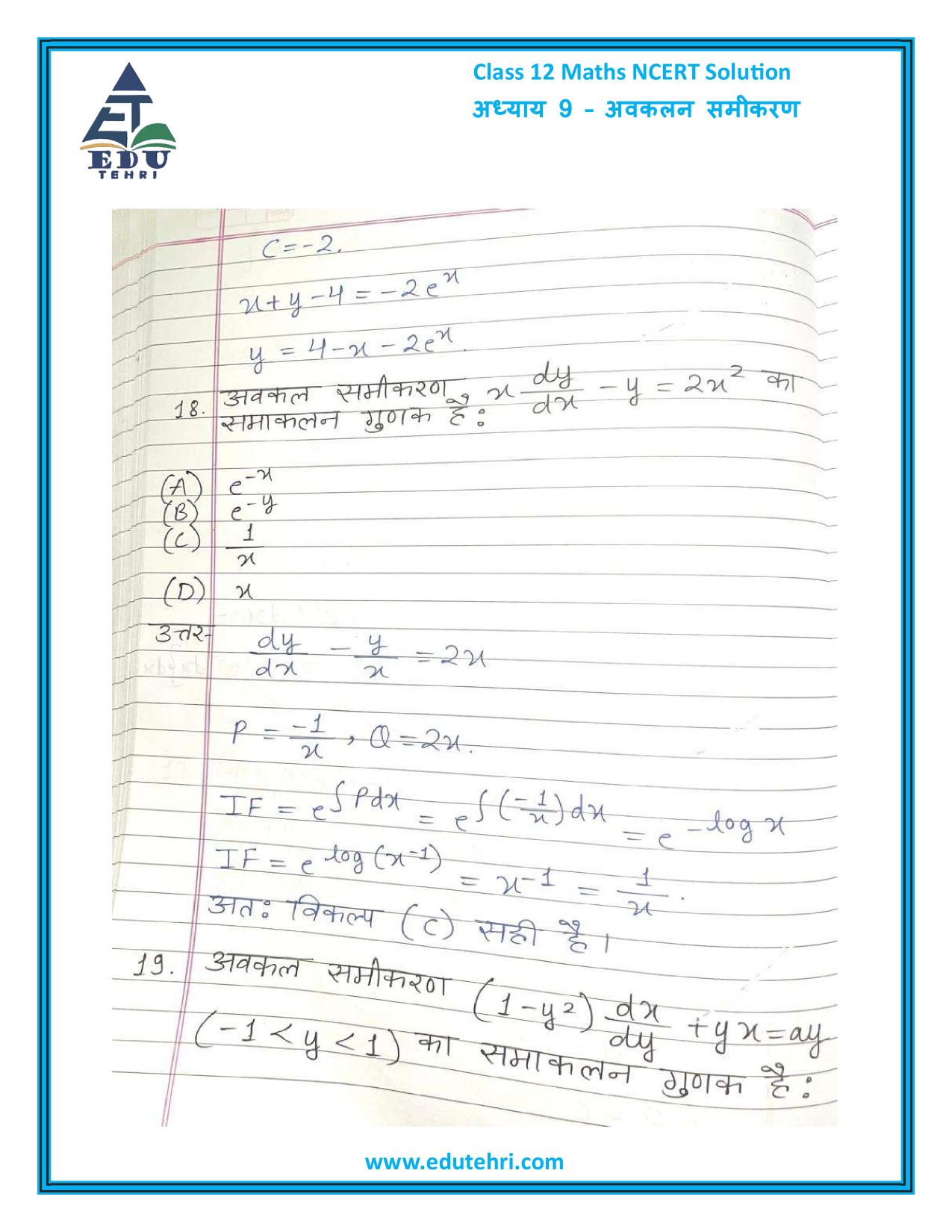
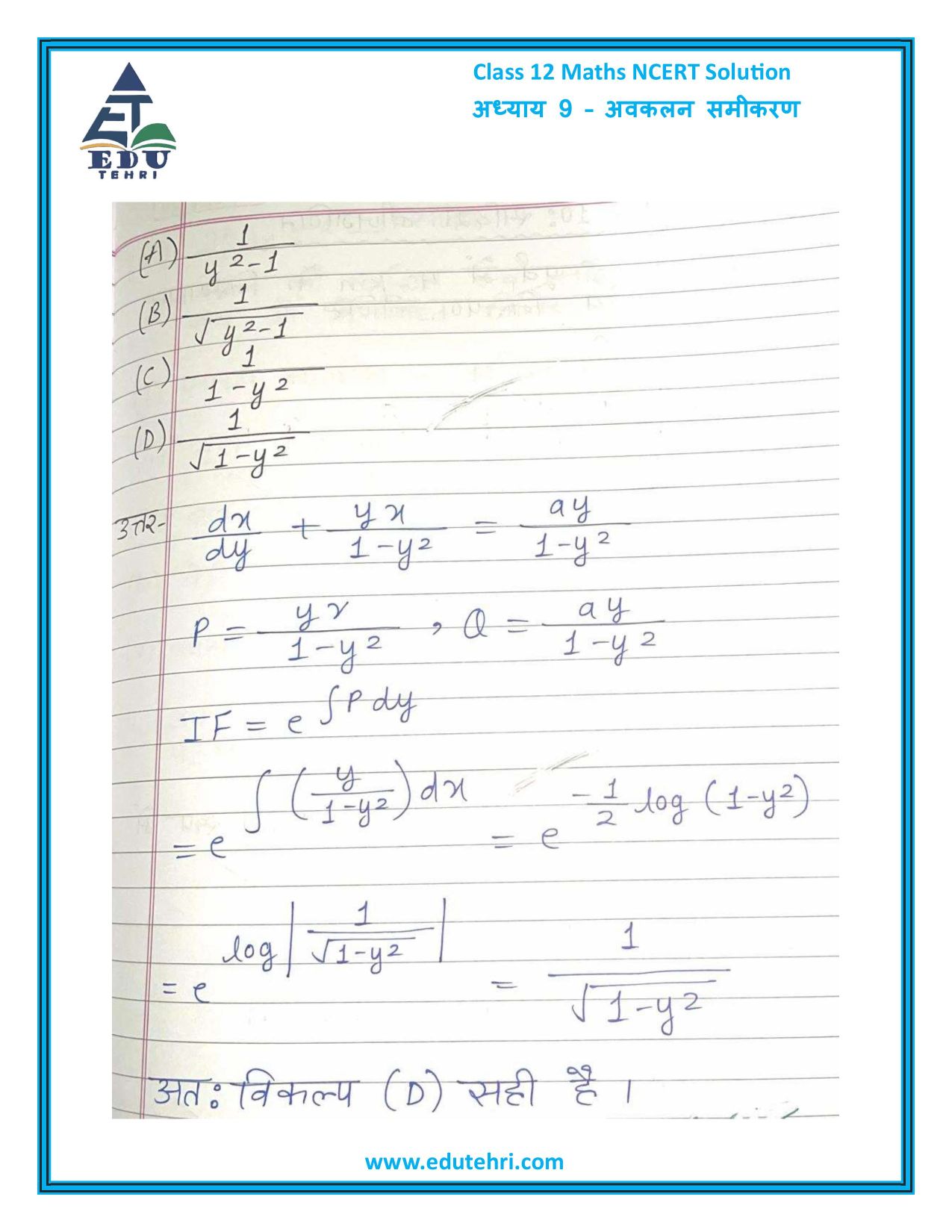
Scroll through the pages below to view the Chapter-9
Why Do We Study Differential Equations?
Differential equations are used to describe many real-life problems, such as:
• Growth of population
• Motion of objects
• Cooling and heating processes
• Spread of diseases
• Electrical circuits
This chapter helps students understand how mathematics explains continuous change.
Order of a Differential Equation
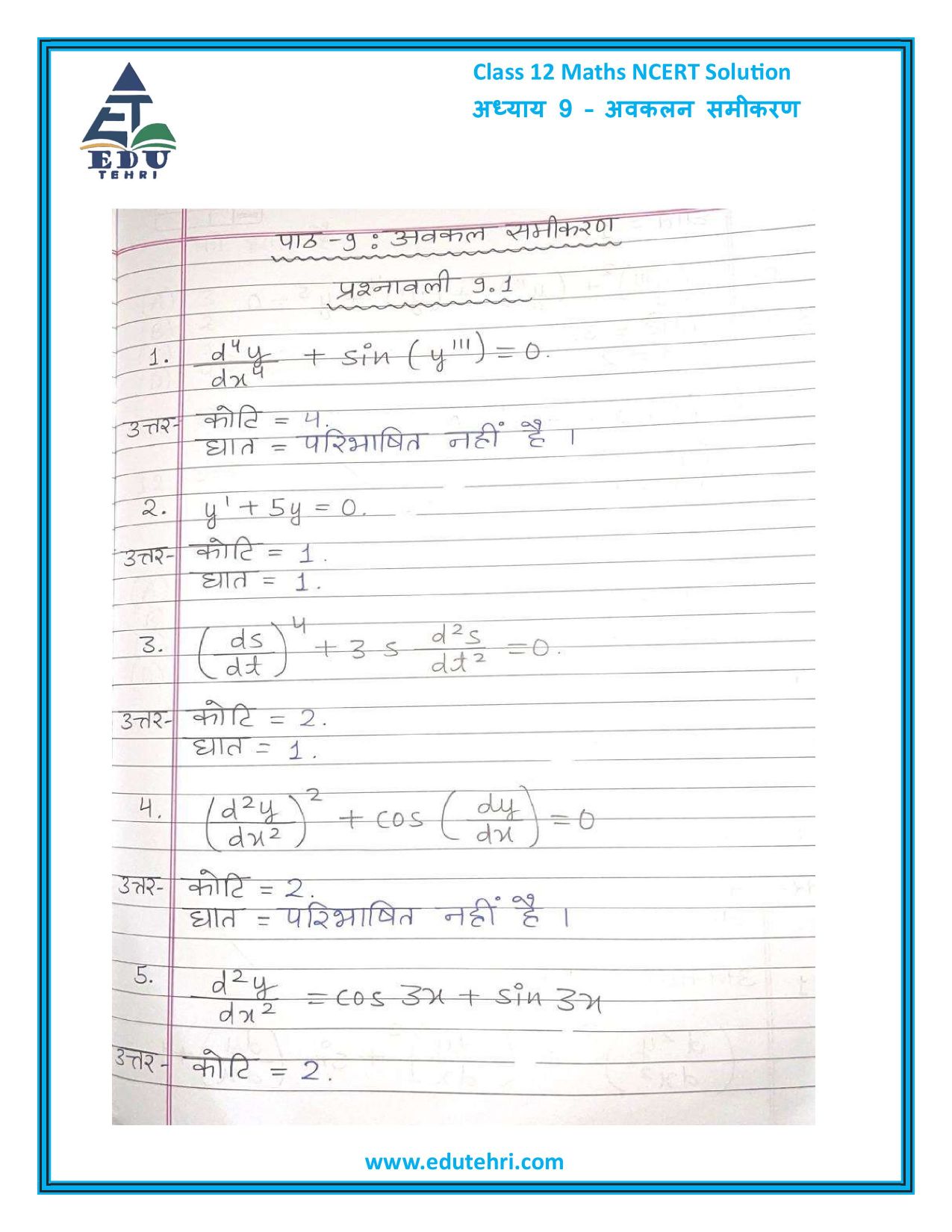
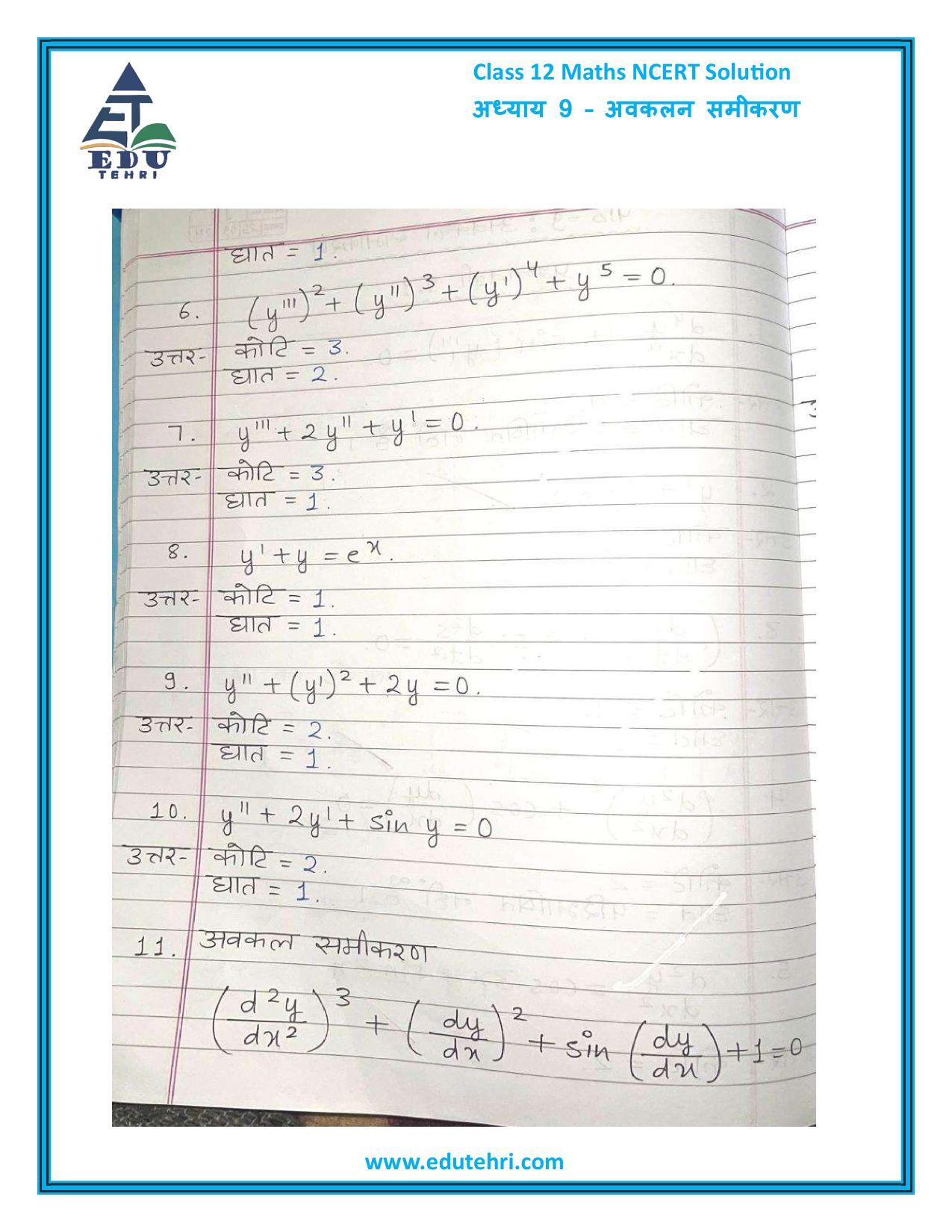
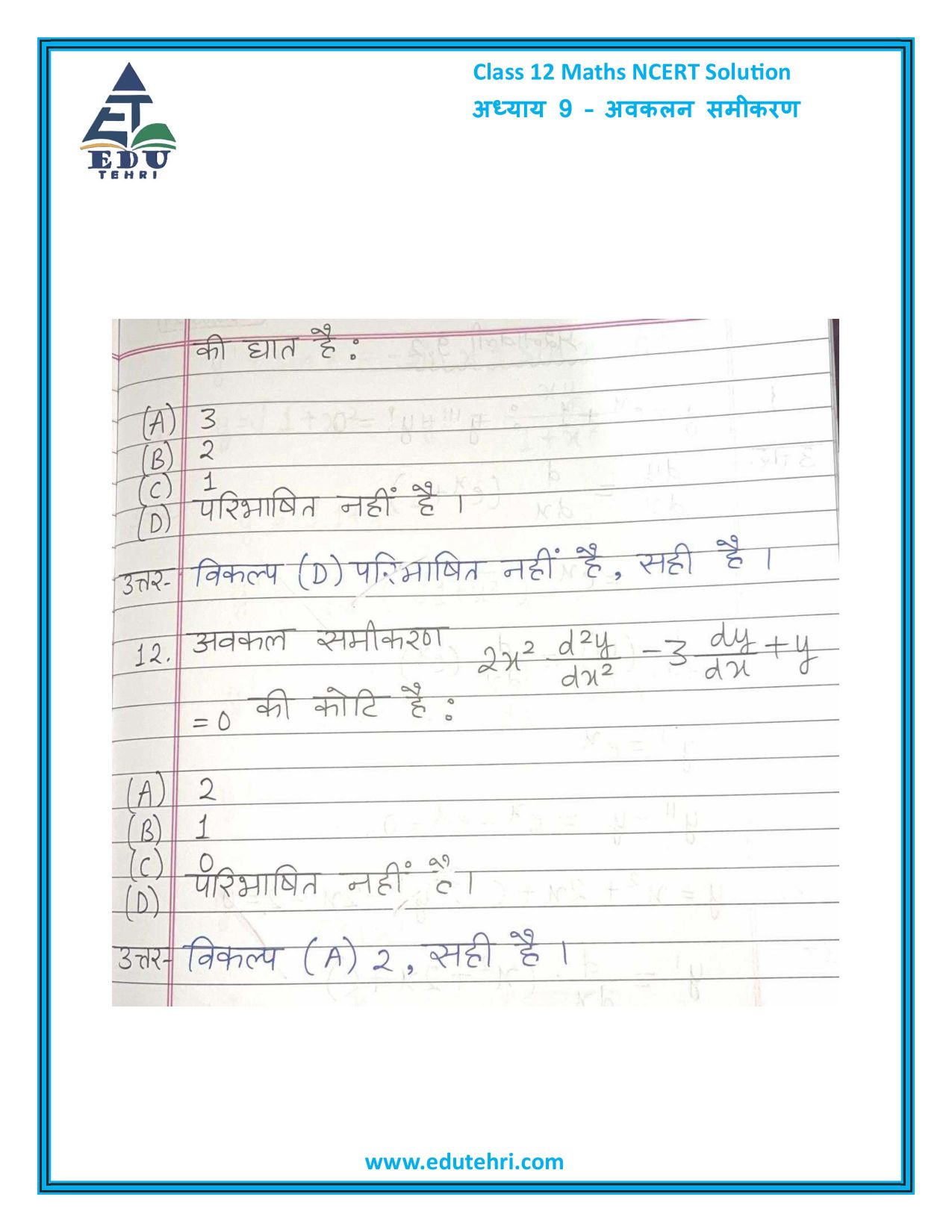
The order of a differential equation is defined as the highest order derivative present in the equation.
In Class 12, NCERT focuses mainly on first-order differential equations.
Degree of a Differential Equation
The degree of a differential equation is the power of the highest order derivative, provided the equation is polynomial in derivatives.
Solution of a Differential Equation
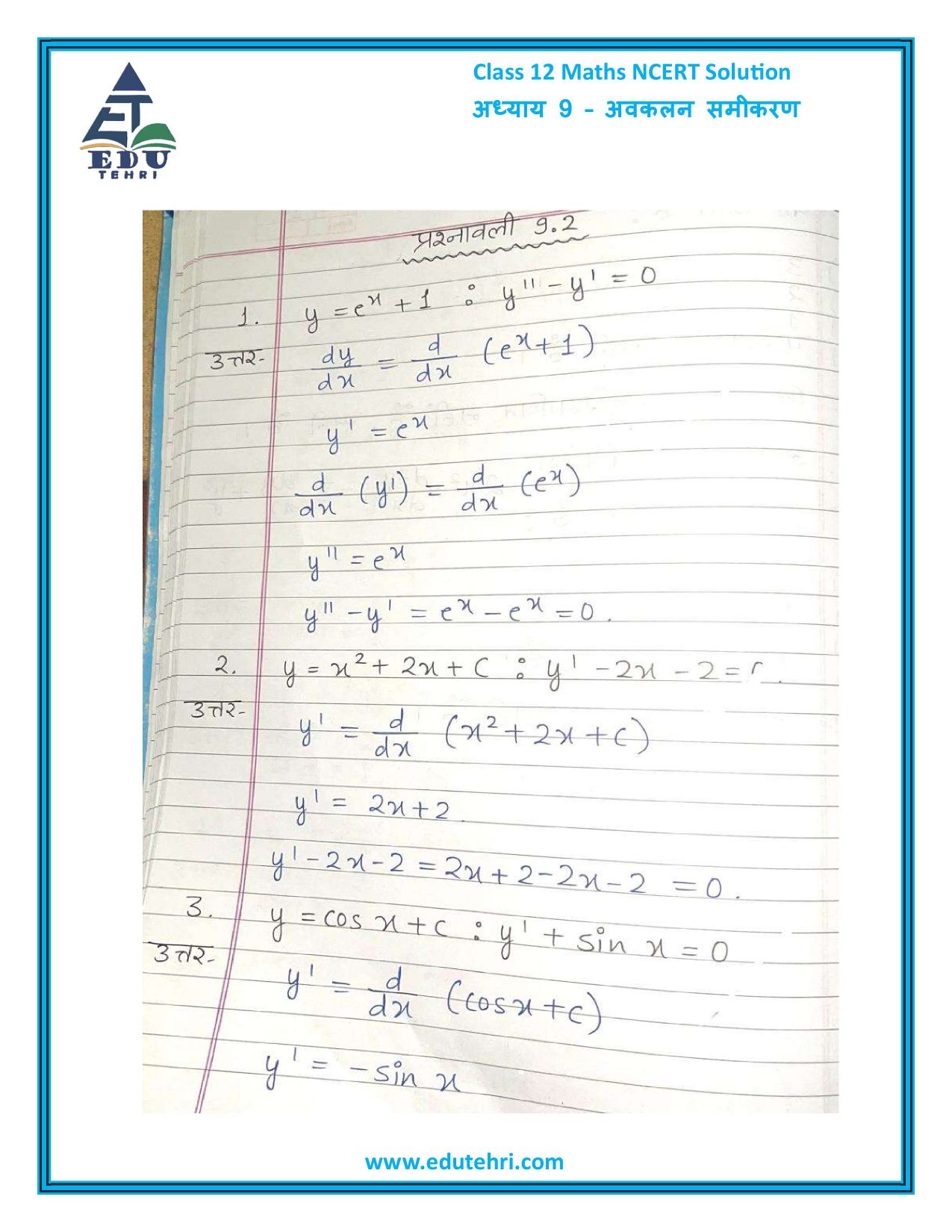
A solution of a differential equation is a function that satisfies the given equation.
This function is a solution because its derivative gives the original equation.
General Solution
A general solution of a differential equation contains an arbitrary constant (C). It represents a family of solutions.
Particular Solution
A particular solution is obtained by assigning a specific value to the constant using a given condition.
Formation of Differential Equations
Differential equations can be formed by eliminating constants from given equations.
Steps:
1. Write the given equation
2. Differentiate it
3. Eliminate constants
This topic is theory-based and usually asked as short answer questions.
Types of Differential Equations in NCERT
NCERT Class 12 Chapter 9 mainly focuses on first-order differential equations of the following types:
1. Variable separable
2. Homogeneous
3. Linear differential equations
Variable Separable Differential Equations (Most Important)
A differential equation is called variable separable if variables x and y can be separated on opposite sides.
Steps to Solve:
1. Separate variables
2. Integrate both sides
3. Add constant of integration
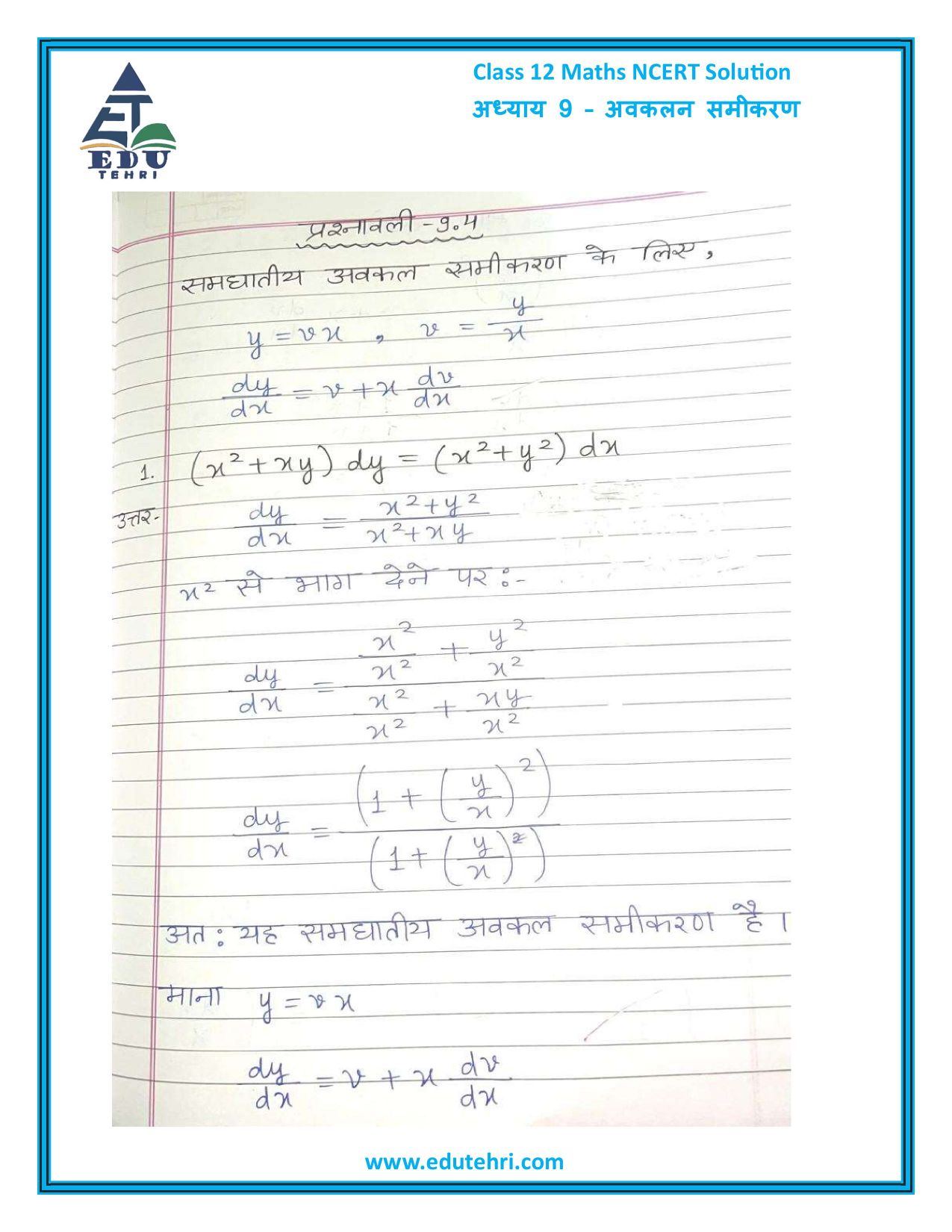
Homogeneous Differential Equations
A first-order differential equation is called homogeneous if it can be written in the form:
\ frac {dy} {dx} = F \ left (\frac{y} {x}\right)
Method of Solution:
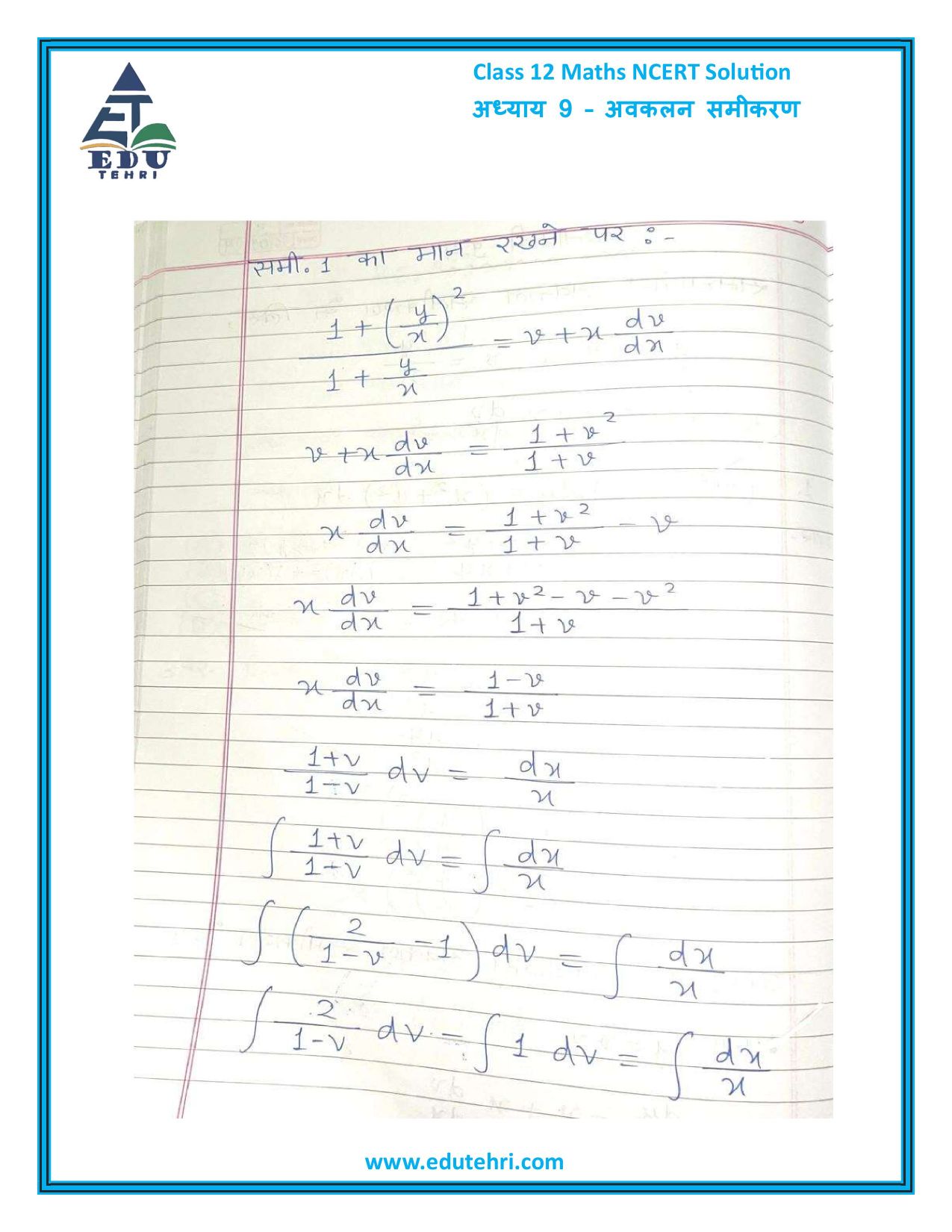
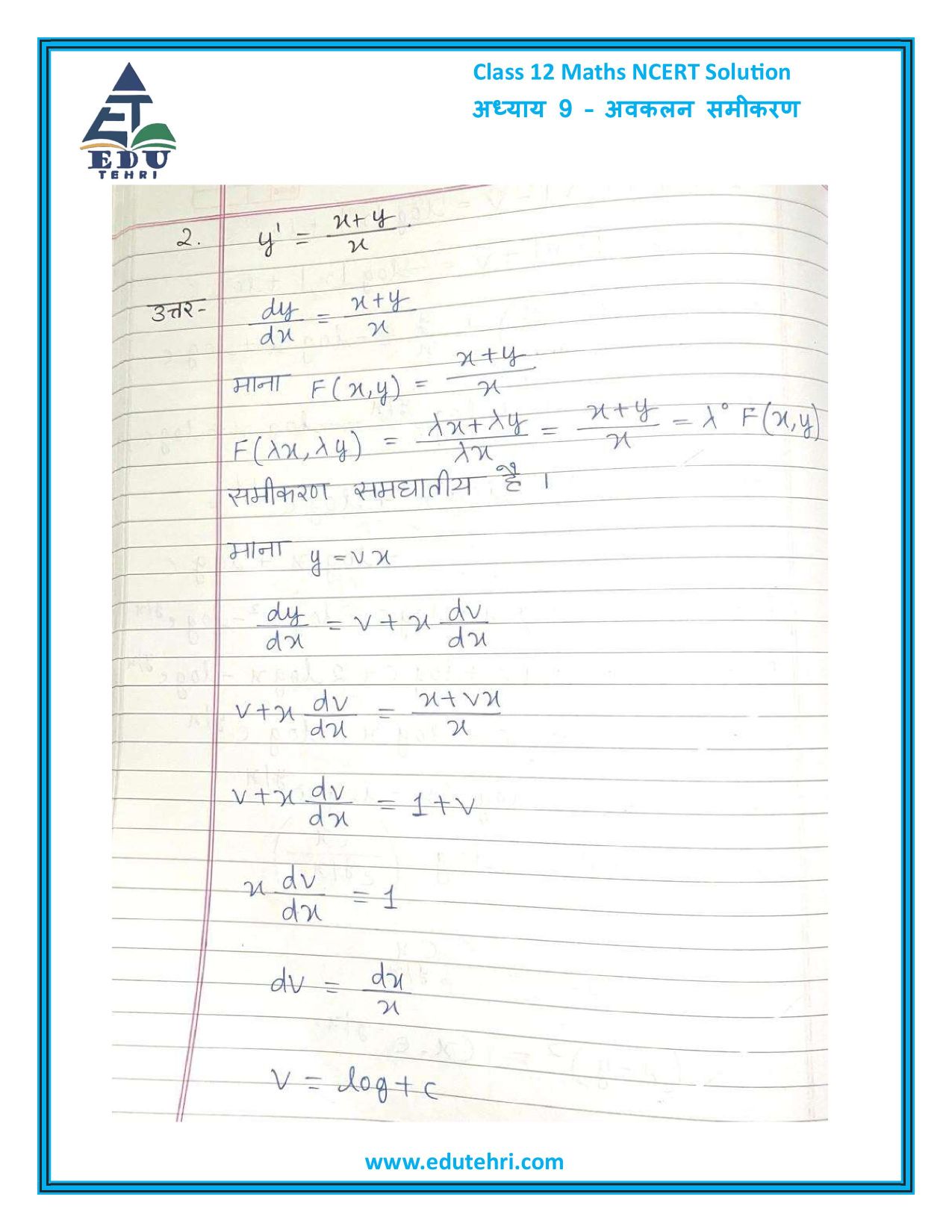
1. Put y = vx
2. Then \frac{dy}{dx} = v + x\frac {dv}{dx}
3. Substitute and simplify
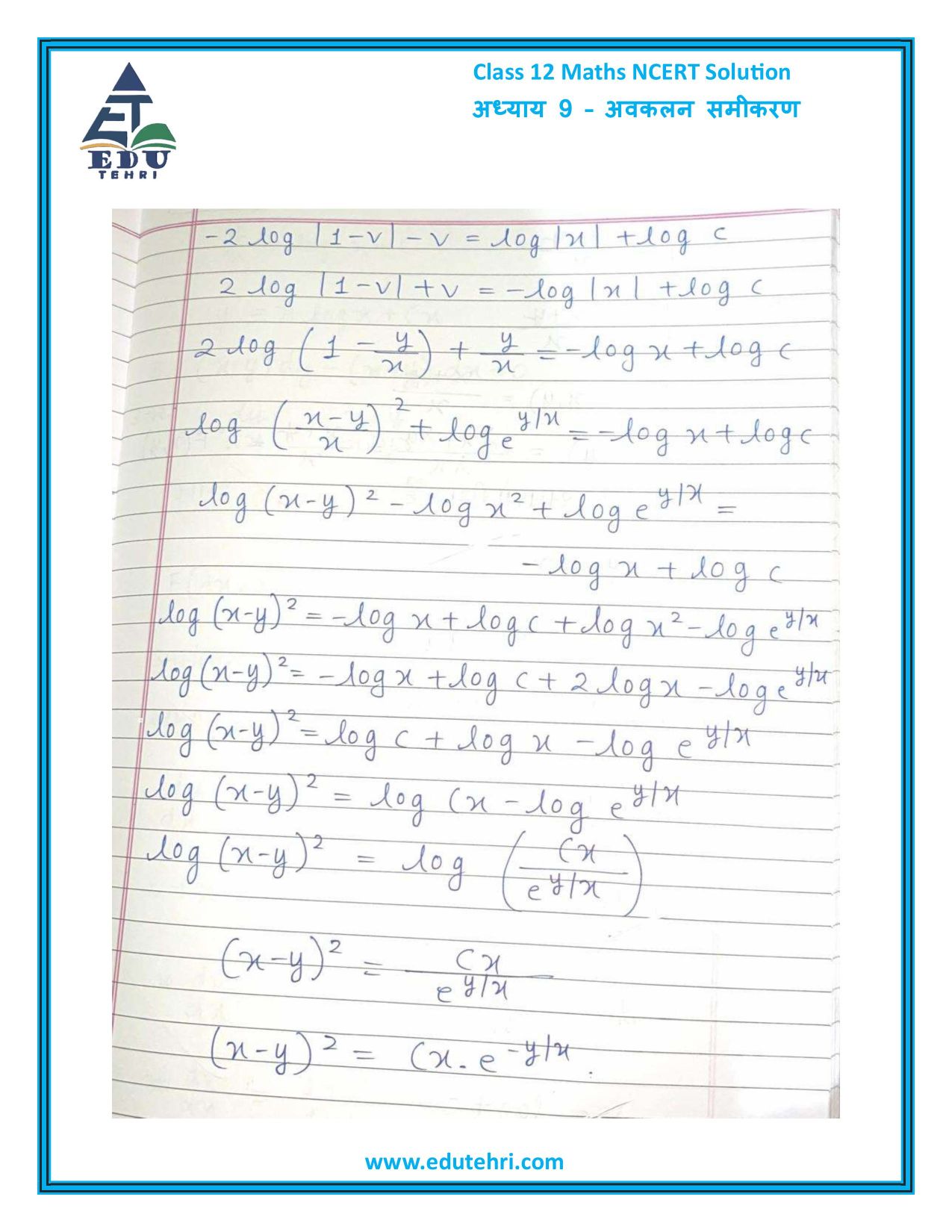
4. Convert into separable form
5. Integrate
Homogeneous equations are frequently asked in board exams.
Linear Differential Equations
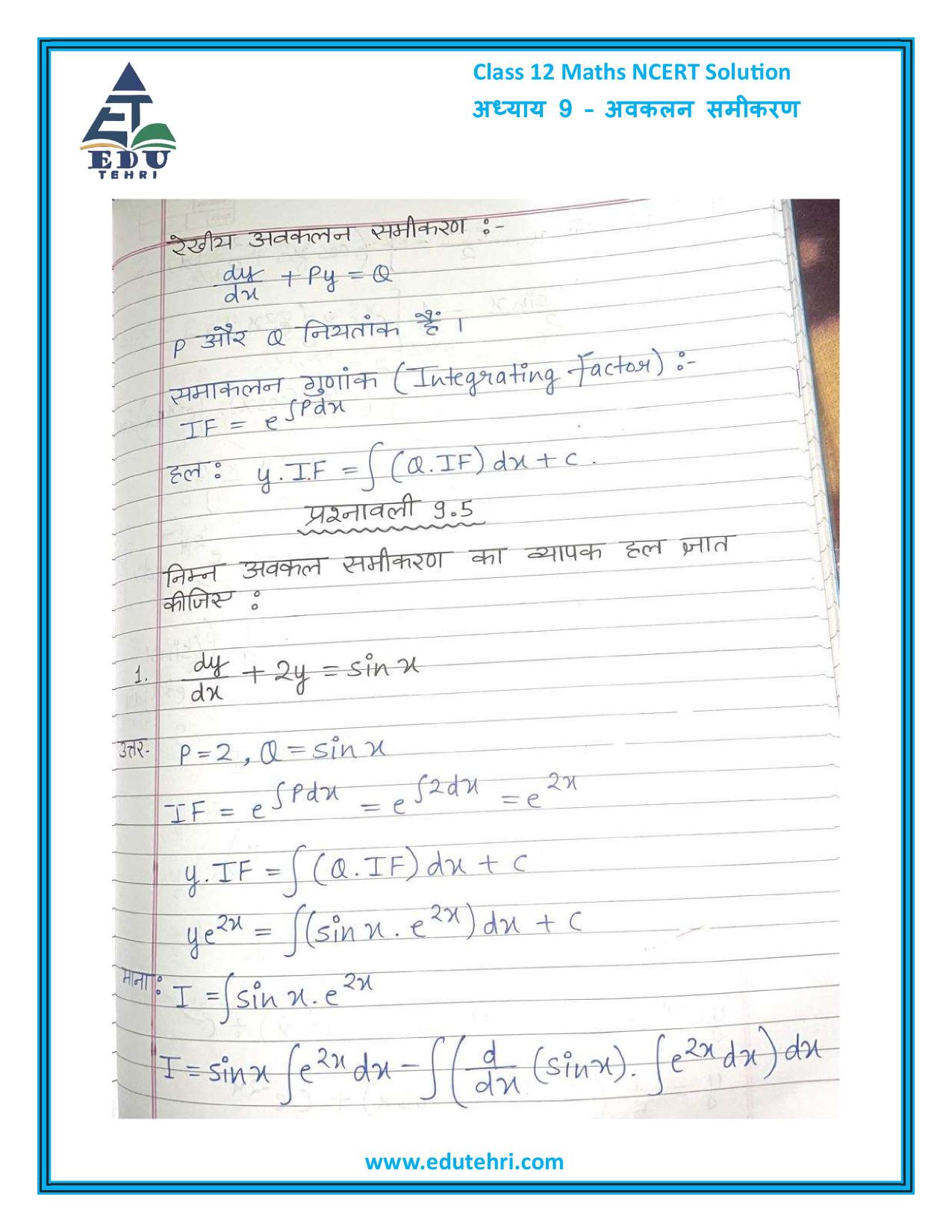
A first-order linear differential equation is of the form:
\frac{dy}{dx} + Py = Q
Where P and Q are functions of x.
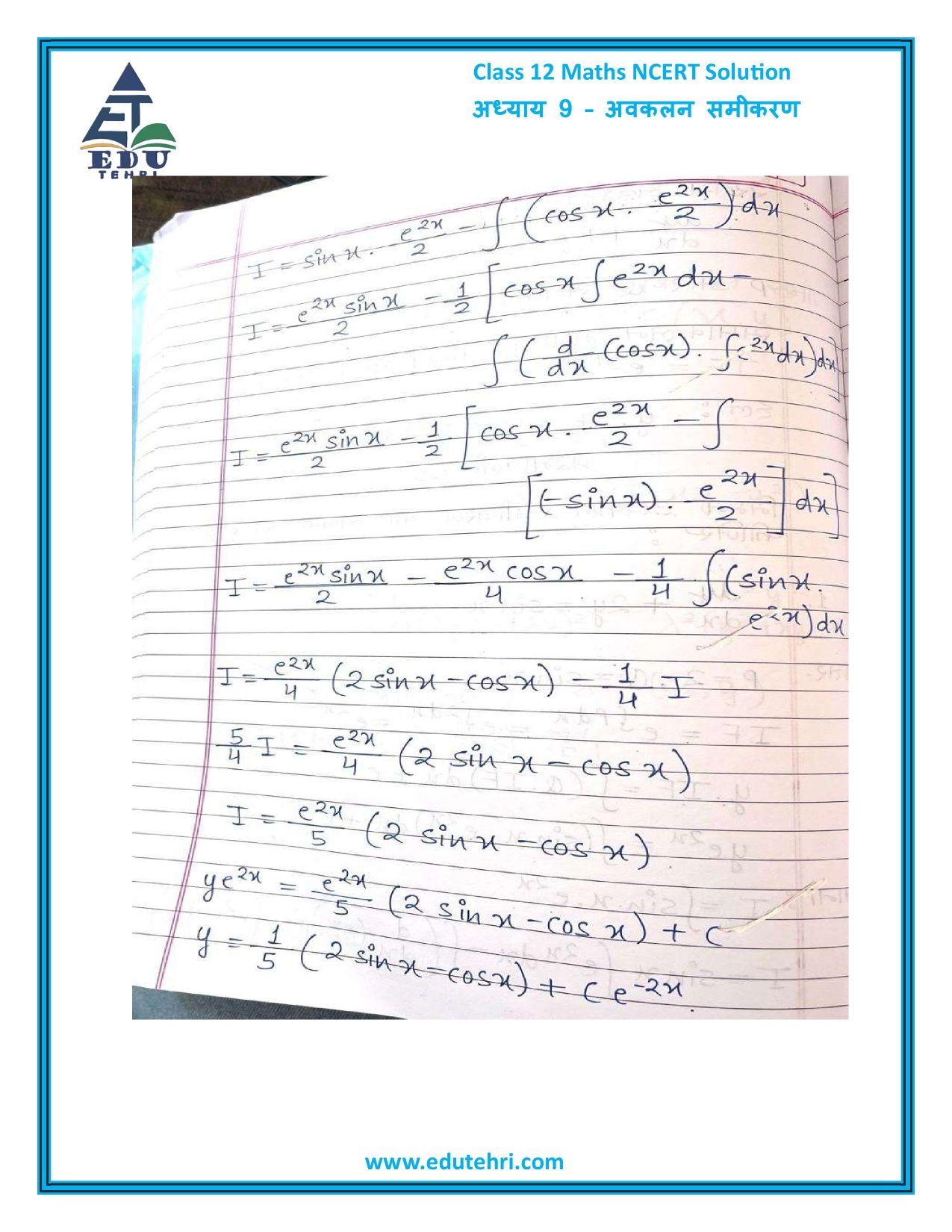
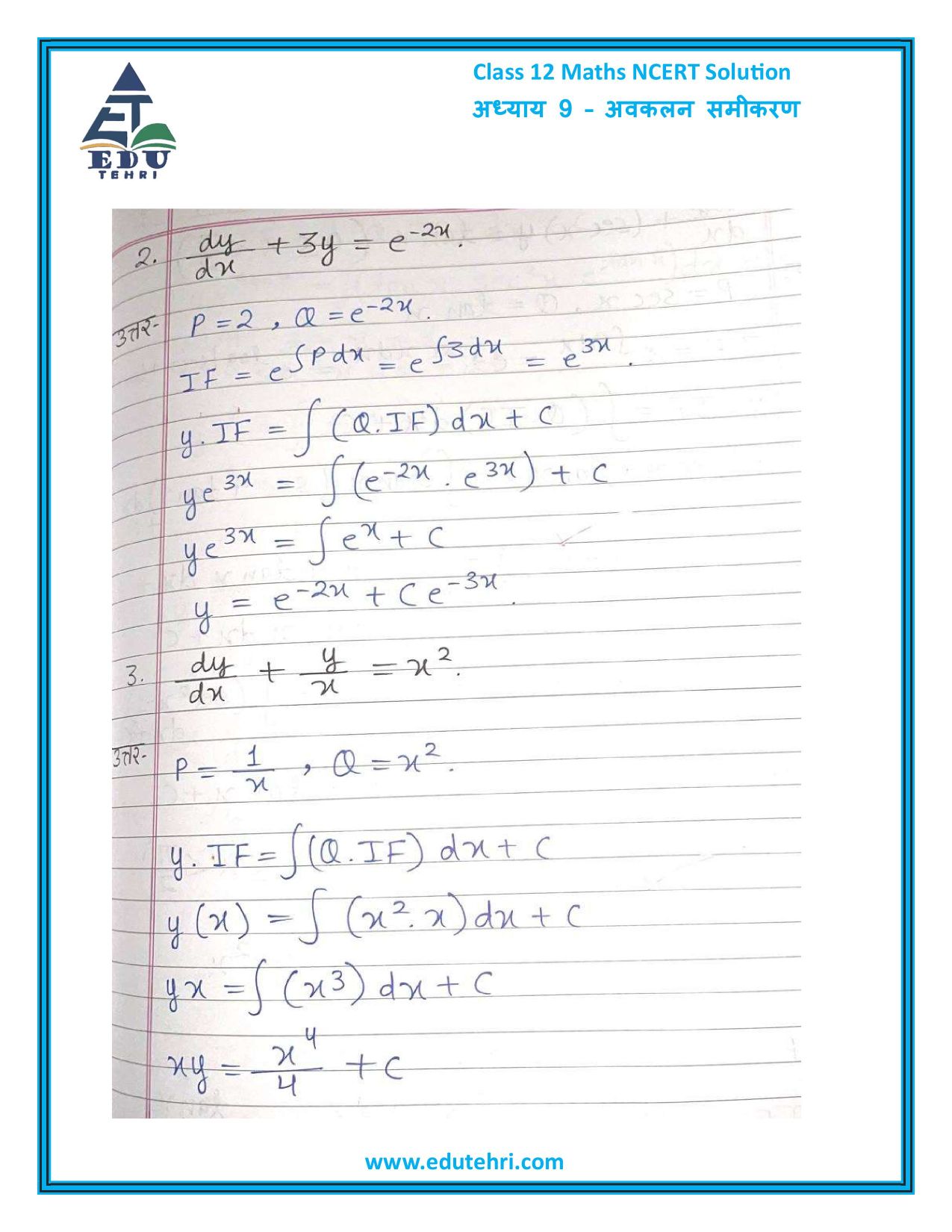
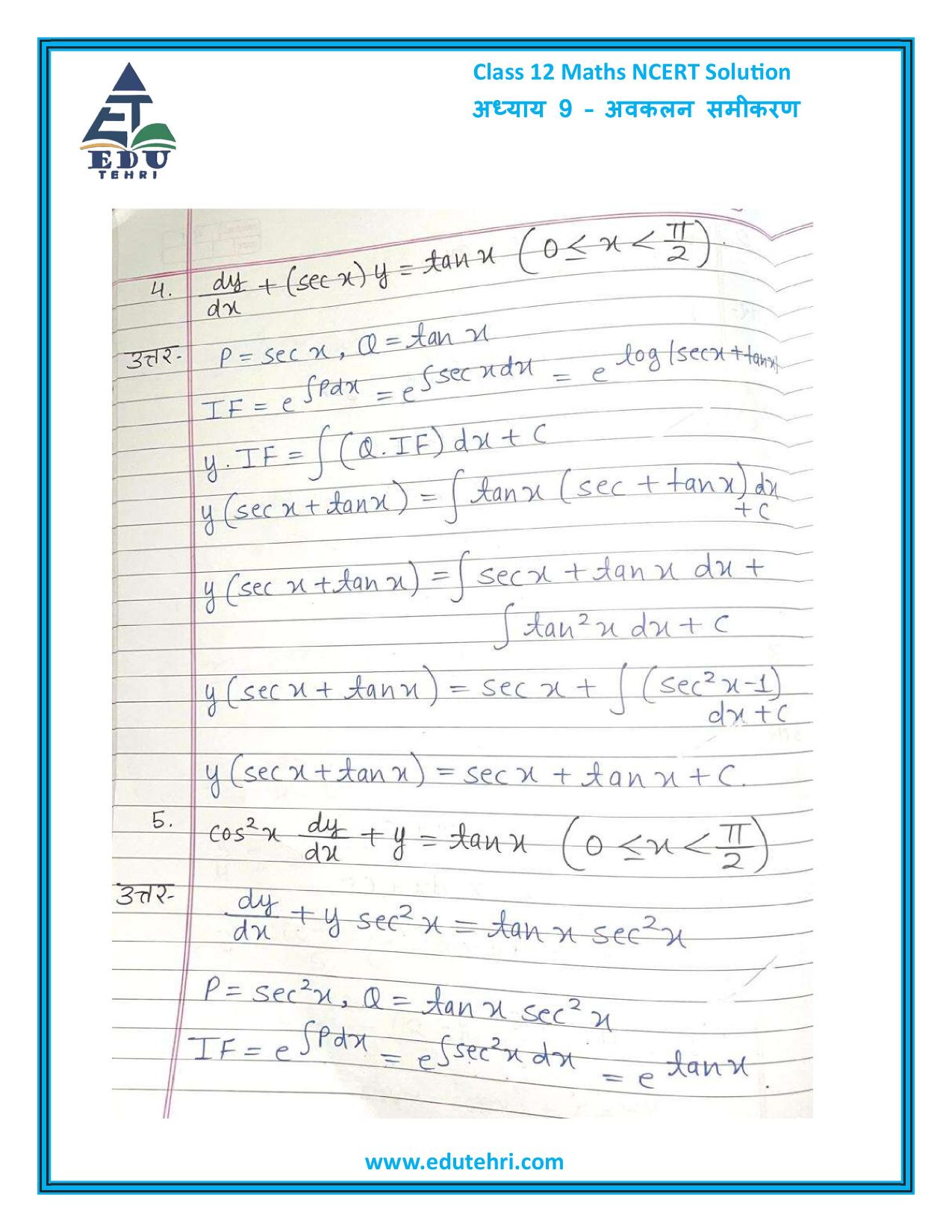
Steps to Solve:
1. Identify P and Q
2. Find Integrating Factor (IF):
IF = e^{\int P dx}
3. Multiply equation by IF
4. Integrate both sides
5. Find solution
This method is very important for 5-mark questions.
Important Formulas – Chapter 9
Download Important Formula - Free PDF
Key Formulas to Remember:
1. General solution: y = f(x) + C
2. Homogeneous substitution: y = vx
3. Linear equation form: \frac {dy}{dx} + Py = Q
4. Integrating factor: IF = e^{\int P dx}
Exercises in Chapter 9
NCERT Chapter 9 contains 5 exercises.
Download Chapter-9 with Exercises - Free PDF
Exercise Details:
Exercise 9.1
• Order and degree
• Formation of equations
Exercise 9.2
• Variable separable equations
Exercise 9.3
• Homogeneous equations
Exercise 9.4
• Linear differential equations
Exercise 9.5
Exercises 9.2, 9.3, and 9.4 are most important for exams.
Exam Weightage & Importance
• Usually asked as 4–5 mark questions
• Patterns are repeated every year
• Very scoring chapter if methods are clear
Edu Tehri – Free PDFs & Handwritten Notes
Edu Tehri provides complete Chapter 9 learning support, including:
• Free NCERT solutions PDF
• Handwritten step-by-step notes
• Formula sheets
• Board-focused practice questions
• Easy explanation videos (if applicable)
Key Features of Chapter 9
• Connects differentiation and integration
• Real-life applications
• Fixed exam pattern
• Concept + practice based
• Highly scoring
Frequently Asked Questions
FAQ 1. What is a differential equation?
A differential equation is an equation that involves a function and its derivative. In simple words, it shows the relationship between a variable and its rate of change.
For example
dy\dx = x
is a differential equation because it contains the derivative of y with respect to x.
Differential equations are used to describe real-life situations such as growth and decay, motion, population changes, and temperature variation.
FAQ 2. What is the order of a differential equation?
The order of a differential equation is the highest order of derivative present in the equation.
Exampes:
• dy \ dx = x → Order = 1
• d2y \ dx2 + y = 0 → Order = 2
In Class 12 NCERT, students mainly study first-order differential equations.
FAQ 3. What is the degree of a differential equation?
The degree of a differential equation is the power of the highest order derivative, after removing fractions and radicals involving derivatives.
Example:
(dy \ dx)2 + y = 0
Here, degree = 2.
Degree is defined only when the equation is polynomial in derivatives.
FAQ 4. What is a solution of a differential equation?
A solution of a differential equation is a function that satisfies the given differential equation.
For example:
if
dy\dx = 2x
then
y = x^2 + C
is a solution, because its derivative gives back 2x.
In exams, students are mainly asked to find the general or particular solution.
FAQ 5. What is a general solution?
A general solution of a differential equation contains an arbitrary constant (C).
It represents a family of solutions, not just one.
Example:
\frac{dy}{dx} = x
General solution:
y = \frac {x^2} {2} + C
General solutions are important because they show all possible solutions of the differential equation.
FAQ 6. What is a particular solution?
A particular solution is obtained from the general solution by using a given condition (also called initial condition).
Example:
If
y = \frac {x^2} {2} + C
and given that y = 1 when x = 0, then
C = 1
So the particular solution becomes:
y = \frac{x^2}{2} + 1
FAQ 7. What are variables separable differential equations?
A separable differential equation is one in which variables x and y can be separated on opposite sides of the equation.
General form:
\ frac {dy} {dx} = f(x) g(y)
Steps to solve:
1. Separate x and y terms
2. Integrate both sides
3. Add constant of integration
This is the most important and most asked type in board exams.
FAQ 8. What is a homogeneous differential equation?
A differential equation is called homogeneous if it can be written in the form:
\frac {dy} {dx} = F\left (\frac {y} {x} \right)
To solve it:
• Put y = vx
• Convert equation into separable form
• Integrate
Homogeneous differential equations are frequently asked in 4–5 mark questions.
Classs- 12th Mathematics NCERT Solutions All Chapters - Hand Written Notes | Free download PDF's | 2026-2027